Connect with us

Food and Beverage

3 basic ingredients, a million possibilities: How small pizzerias succeed with uniqueness in an age of chain restaurants

Published

on

pizzerias
Variety is the sauce of life. Suzanne Kreiter/Boston Globe via Getty Images
Paula de la Cruz-Fernández, University of Florida and Avi Ackerman, University of Florida At its heart, pizza is deceptively simple. Made from just a few humble ingredients – baked dough, tangy sauce, melted cheese and maybe a few toppings – it might seem like a perfect candidate for the kind of mass-produced standardization that defines many global food chains, where predictable menus reign supreme. Yet, visit two pizzerias in different towns – or even on different blocks of the same town – and you’ll find that pizza stubbornly refuses to be homogenized. We are researchers working on a local business history project that documents the commercial landscape of Gainesville, Florida, in the 20th and 21st centuries. As part of that project, we’ve spent a great many hours over the past two years interviewing local restaurant owners, especially those behind Gainesville’s independent pizzerias. What we’ve found reaffirms a powerful truth: Pizza resists sameness – and small pizzerias are a big reason why.

Why standardized pizza rose but didn’t conquer

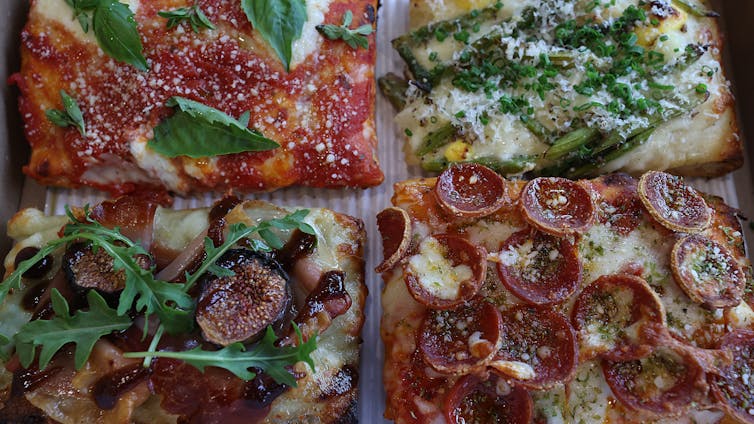
While tomatoes were unknown in Italy until the mid-16th century, they have since become synonymous with Italian cuisine – especially through pizza. Pizza arrived in the U.S. from Naples in the early 20th century, when Italian immigration was at its peak. Two of the biggest destinations for Italian immigrants were New York City and Chicago, and today each has a distinctive pizza style. A New York slice can easily be identified by its thin, soft, foldable crust, while Chicago pies are known for deep, thick, buttery crusts. After World War II, other regions developed their own types of pizza, including the famed New Haven and Detroit styles. The New Haven style is known for being thin, crispy and charred in a coal-fired oven, while the Detroit style has a rectangular, deep-dish shape and thick, buttery crust. By the latter half of the 20th century, pizza had become a staple of the American diet. And as its popularity grew, so did demand for consistent, affordable pizza joints. Chains such as Pizza Hut, founded in 1958, and Papa John’s, established in 1984, applied the model pioneered by McDonalds in the late 1940s, adopting limited menus, assembly line kitchens and franchise models built for consistency and scale. New technologies such as point-of-sale systems and inventory management software made things even more efficient. As food historian Carol Helstosky explains in “Pizza: A Global History,” the transformation involved simplifying recipes, ensuring consistent quality and developing formats optimized for rapid expansion and franchising. What began as a handcrafted, regional dish became a highly replicable product suited to global mass markets. Today, more than 20,000 Pizza Huts operate worldwide. Papa John’s, which runs about 6,000 pizzerias, built its brand explicitly on a promise rooted in standardization. In this model, success means making pizza the same way, everywhere, every time. So, what happened to the independent pizzerias? Did they get swallowed up by efficiency? Not quite. Chain restaurants don’t necessarily suffocate small competitors, recent research shows. In fact, in the case of pizza, they often coexist, sometimes even fueling creativity and opportunity. Independent pizzerias – there are more than 44,000 nationwide – lean into what makes them unique, carving out a niche. Rather than focusing only on speed or price, they compete by offering character, inventive toppings, personal service and a sense of place that chains just can’t replicate.

A local pizza scene: Creativity in a corporate age

For an example, look no farther than Gainesville. A college town with fewer than 150,000 residents, Gainesville doesn’t have the same culinary cache as New York or Chicago, but it has developed a very unique pizza scene. With 13 independent pizzerias serving Neapolitan, Detroit, New York and Mediterranean styles and more, hungry Gators have a plethora of options when craving a slice. What makes Gainesville’s pizza scene especially interesting is the range of backgrounds its proprietors have. Through interviews with pizzeria owners, we found that some had started as artists and musicians, while others had worked in engineering or education – and each had their own unique approach to making pizzas. The owner of Strega Nona’s Oven, for example, uses his engineering background to turn dough-making into a science, altering the proportions of ingredients by as little as half of a percent based on the season or even the weather. Satchel’s Pizza, on the other hand, is filled with works made by its artist owner, including mosaic windows, paintings, sculptures and fountains. Gainesville’s independent pizzerias often serve as what sociologists call “third places”: spaces for gathering that aren’t home or work. And their owners think carefully about how to create a welcoming environment. For example, the owner of Scuola Pizza insisted the restaurant be free of TVs, so diners can focus on their food. Squarehouse Pizza features a large outdoor space; an old, now repurposed school bus outfitted with tables and chairs to dine in, and a stage for live music. Squarehouse also is known for its unusual toppings on square, Detroit-style pies – for example, the Mariah Curry, topped with curry chicken or cauliflower and coconut curry sauce. It refreshes its specialty menus every semester or two. While the American pizza landscape may be shaped by big brands and standardized menus, small pizzerias continue to shine. Gainesville is a perfect example of how a local pizza scene in a small Southern college town can be so unique, even in a globalized industry. Small pizzerias don’t just offer food – they offer a flavorful reminder that the marketplace rewards distinctiveness and local character, too. Paula de la Cruz-Fernández, Cultural Digital Collections Manager, University of Florida and Avi Ackerman, Researcher, Inquire Capitalism UF, University of Florida This article is republished from The Conversation under a Creative Commons license. Read the original article.

Discover more from Daily News

Subscribe to get the latest posts sent to your email.

Continue Reading
Advertisement Winter Super Sale – Enjoy 25% Off Your Entire Purchase + Free Shipping. Use Code: BPWARM25

Food and Beverage

Savory, Satisfying Ideas for Lunch and Dinner

Lunch or Dinner. During cold and flu season, enhance meals with versatile pearl couscous, which elevates comfort food offerings. Try recipes like Italian Penicillin Soup and Simple Lemon Butter Couscous for hearty, satisfying dishes.

Published

on

Last Updated on March 3, 2026 by Daily News Staff

17783 detail intro

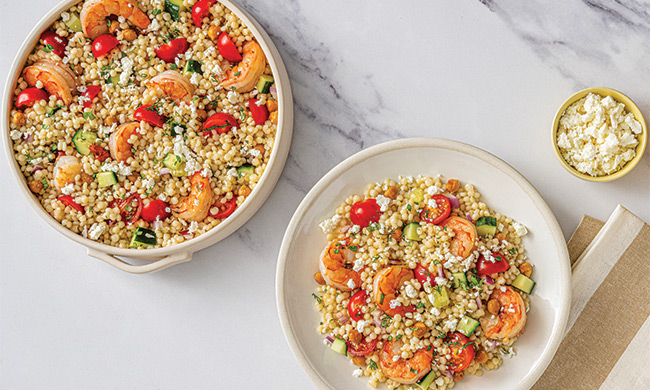
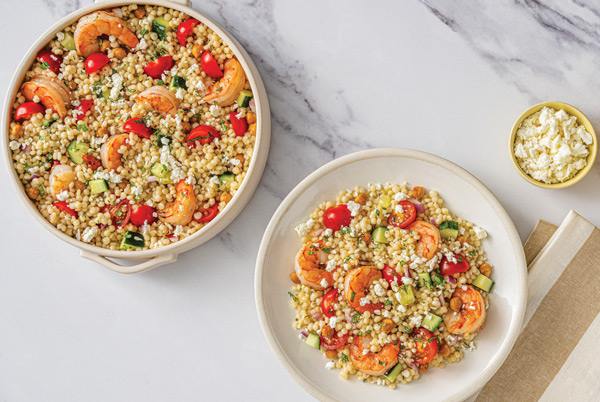
(Family Features) When cold and flu season calls for savory and satisfying meals, remember you don’t have to be sick to enjoy the best this time of year has to offer. Skip the same old soups and stews, though, and level up your comfort food cache with the flavor and versatility of pearl couscous.

Distinguished from traditional Moroccan couscous by its slightly larger and rounder shape, plus its less dense, firmer consistency, pearl couscous is thoroughly versatile and a perfect fit for cold weather classics. With Success Boil-in-Bag Pearl Couscous, you get high-quality semolina wheat pearl couscous made just right. After the water boils, it’s ready in under 7 minutes and prepared similarly to pasta.

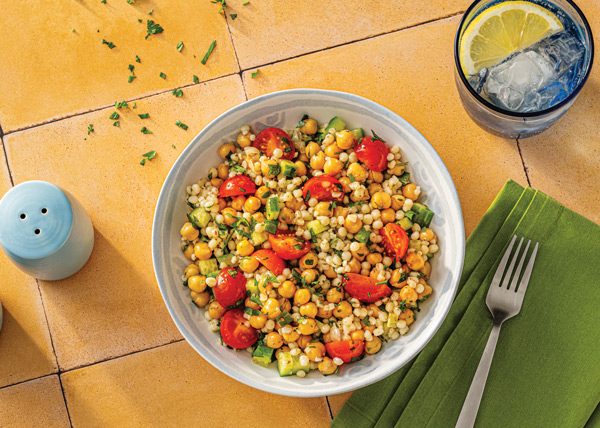
It features a slightly nutty flavor on its own but can absorb any flavors of soups and salads while retaining its density and chewy texture. You can use it in your family’s meals to complement a range of greens, veggies, fish, meats and stews, making it a pantry staple to keep on hand throughout the year.

A hearty solution, this Italian Penicillin Soup is ideal for those feeling under the weather or simply craving a filling meal after a chilly day. It’s loaded with rotisserie chicken, tender veggies and pearl couscous simmered in broth then finished with fresh lemon, Parmesan cheese and parsley for a meal that’s as satisfying as it is appetizing.

Elegant in its simplicity, this Simple Lemon Butter Pearl Couscous is a perfect partner for grilled seafood, chicken or vegetables. Easy to serve as a standalone dish or a savvy side that practically cooks itself, you can add this highly versatile grain to your family’s menu any day of the week – whether you’re cooking for a crew or just two – and enjoy steamy leftovers for a light lunch.

Don’t let the cold sap your creativity in the kitchen; turning to versatile, flavorful ingredients can make winter meals a cinch. Discover more pearl couscous-inspired dinner ideas by visiting SuccessRice.com.

17783 detail embed1

Italian Penicillin Soup

Prep time: 10 minutes

Cook time: 15 minutes

Servings: 4

  • 2          bags Success Pearl Couscous
  • 4          cups low-sodium chicken broth
  • 1          cup carrots, sliced
  • 1          cup celery, sliced
  • 2          cloves garlic, minced
  • 1          cup rotisserie chicken, shredded
  • 1          teaspoon Italian seasoning
  • 1          teaspoon salt
  • 1/2       teaspoon pepper
  • 4          lemon wedges
  • shredded Parmesan cheese, for garnish
  • chopped fresh parsley, for garnish
  1. Prepare pearl couscous according to package directions.
  2. In large pot, bring broth to boil. Add carrots, celery and garlic. Reduce heat to medium-low and cook 5 minutes until vegetables are slightly tender.
  3. Add chicken and Italian seasoning; simmer 5 minutes. Add pearl couscous and cook 5 minutes. Season with salt and pepper.
  4. Ladle soup into four bowls and squeeze fresh lemon wedge into each bowl. Garnish with Parmesan and parsley.
17783 detail embed2

Simple Lemon Butter Pearl Couscous

Prep time: 5 minutes

Cook time: 10 minutes

Servings: 4

  • 1          bag Success Pearl Couscous
  • 3          lemons, juice only, plus 1 teaspoon zest
  • 2          tablespoons butter
  • 1          small shallot, finely diced
  • 1          tablespoon fresh parsley, finely chopped
  1. Prepare pearl couscous according to package directions, adding lemon juice to water.
  2. In small pan, melt butter over medium heat. Add shallots and lemon zest. Cook 3 minutes. Stir pearl couscous into pan.
  3. Divide pearl couscous into four bowls and top with parsley.

collect?v=1&tid=UA 482330 7&cid=1955551e 1975 5e52 0cdb 8516071094cd&sc=start&t=pageview&dl=http%3A%2F%2Ftrack.familyfeatures
SOURCE:

Success Rice

https://stmdailynews.com/the-fate-of-lucky-supermarkets-in-socal/


Discover more from Daily News

Subscribe to get the latest posts sent to your email.

Continue Reading

Food and Beverage

Easy, Approachable Solutions for At-Home Lenten Meals

At-Home Lenten Meals: Lent is an opportunity for families to explore new seafood flavors, making mealtime enjoyable. Simple recipes, like One-Pot Creamy Shrimp Scampi, encourage kids to confidently try seafood, enhancing family meals.

Published

on

Easy, Approachable Solutions for At-Home Lenten Meals

Easy, Approachable Solutions for At-Home Lenten Meals

(Feature Impact) Lent has long been a season of tradition and reflection, and it can also be an opportunity to introduce your family to exciting new flavors that may become staples in your kitchen.

If preparing seafood feels intimidating, try starting with dishes that are easy, familiar and approachable. For example, One-Pot Creamy Shrimp Scampi features a velvety sauce, earthy spinach and buttery, delicious shrimp – a recognizable and approachable recipe that can be a gateway to discovery.

Made with SeaPak frozen shrimp, you can help picky eaters in your home feel more confident in saying “yes” to something new. Frozen seafood is a perfect partner for familiar favorites like pasta, making it a playful, stress-free solution for encouraging exploration at mealtime.

“For many families, Lent often brings a shift at the dinner table – and this year, parents are turning it into an opportunity to try something new,” said Diana Rice, child nutritionist and registered dietitian. “When food feels approachable, it lowers stress for everyone. Familiar flavors help kids say ‘yes’ more often, and those positive moments can make seafood a feel-good part of family meals during Lent and beyond.”

When kids see foods that look and taste familiar – like the crunch of crispy fried shrimp – they may feel more comfortable giving it a try. That’s why discovery can extend beyond the dinner table to snack time, too.

Give kiddos the energy they need for homework assignments with Butterfly Shimp Bruschetta, a quick solution for after-school or weekend snacking. As your pickier loved ones dive in for something new, those small wins can build confidence to try new things – one bite at a time.

This Lent, swap “giving up” for “try this” with more approachable frozen seafood solutions and family-friendly recipes at SeaPak.com.

//www.youtube.com/embed/006rXnSXZGY

17831 A detail embed1

One-Pot Creamy Shrimp Scampi

Prep time: 5 minutes
Cook time: 25 minutes
Servings: 4

  • 1          package (12 ounces) SeaPak Shrimp Scampi
  • 1 1/4    cups half-and-half or milk
  • 1 1/4    cups chicken stock
  • 8          ounces linguine noodles
  • 6          cups fresh spinach
  • 1/4       cup grated Parmesan cheese
  • 4          lemon wedges
  1. In large, high-sided saute pan, add shrimp and cook according to package directions. Remove shrimp to bowl and keep warm.
  2. In same pan with scampi sauce, stir in half-and-half and stock. Bring to low boil. Add pasta. Cook, stirring occasionally, until pasta is cooked al dente, 8-10 minutes.
  3. Stir in spinach and cook just until beginning to wilt. Stir reserved shrimp into pan.
  4. To serve, divide shrimp scampi between four bowls and top each with grated Parmesan. Serve with lemon wedges.
17831 B detail embed2

Butterfly Shrimp Bruschetta

Prep time: 15 minutes
Cook time: 15 minutes
Servings: 6

  • 1          package (9 ounces) SeaPak Jumbo Butterfly Shrimp
  • 1          baguette
  • 3          garlic cloves, divided
  • 6          tablespoons olive oil, divided
  • 3          cups grape or cherry tomatoes, seeded and finely diced
  • 1/3       cup chopped basil, plus additional for garnish
  • salt, to taste
  • pepper, to taste
  1. Preheat oven to 425 F. Bake shrimp according to package directions and keep warm.
  2. Slice baguette to match number of shrimp. Rub one garlic clove over one side of each slice of bread. Brush garlic-rubbed sides with 3 tablespoons olive oil. Set aside.
  3. Finely dice remaining garlic.
  4. In medium mixing bowl, stir tomatoes, remaining olive oil, diced garlic and 1/3 cup chopped basil. Season with salt and pepper, to taste, and set aside.
  5. In large, hot skillet, working in batches, add baguette slices oil sides down and cook until browned around edges. Remove from pan.
  6. Top each baguette slice with small spoonful of tomato mixture and one shrimp. Garnish with basil leaf.

collect?v=1&tid=UA 482330 7&cid=1955551e 1975 5e52 0cdb 8516071094cd&sc=start&t=pageview&dl=http%3A%2F%2Ftrack.familyfeatures
track

SOURCE:

SeaPak

Advertisement
Get More From A Face Cleanser And Spa-like Massage
track

At our core, we at STM Daily News, strive to keep you informed and inspired with the freshest content on all things food and beverage. From mouthwatering recipes to intriguing articles, we’re here to satisfy your appetite for culinary knowledge.

Visit our Food & Drink section to get the latest on Foodie News and recipes, offering a delightful blend of culinary inspiration and gastronomic trends to elevate your dining experience. https://stmdailynews.com/food-and-drink/

Author


Discover more from Daily News

Subscribe to get the latest posts sent to your email.

Continue Reading

Food and Beverage

Blue Apron Named Best Prepared Meal Delivery Service for 2026 by Consumer365

Published

on

Blue Apron just picked up a new win in the prepared-meals space.

Consumer365 names Blue Apron the Best Prepared Meal Delivery Service for 2026, citing chef-curated Dish by Blue Apron meals that arrive fully cooked, refrigerated, and ready to heat in 5–10 minutes—no subscription required.
Close up of shrimp fettuccine alfredo on blue background. Adobe Stock

Consumer365 has recognized Blue Apron as the Best Prepared Meal Delivery Service (2026), pointing to the company’s chef-curated recipes and its growing lineup of ready-to-eat meals built for busy, time-constrained households. The recognition reflects growing consumer demand for convenient food options that reduce cooking time without sacrificing quality, structure, or variety.

Why prepared meals keep winning right now

The press release frames prepared meal delivery as a practical middle ground between cooking from scratch and defaulting to fast food or repetitive takeout.

Consumer365 notes the appeal comes down to a few clear benefits:

  • Less time spent cooking (and less cleanup)
  • Predictable portions and easier meal planning
  • Reduced food waste, since you’re not buying full-size ingredients you may not use
  • Flexibility for solo diners or households with irregular schedules

Prepared meals are especially useful during the workweek, when the friction of cooking can push people toward faster—but not always better—options.

What Consumer365 highlighted about Blue Apron

Consumer365’s recognition focuses on how Blue Apron has expanded beyond meal kits while keeping a consistent culinary identity.

Chef-curated structure across product lines

A key point: prepared meals under Dish by Blue Apron are developed by the same in-house culinary team behind Blue Apron’s meal kits. Consumer365 says that continuity helps maintain consistency in flavor development, portioning, and ingredient selection across different formats.

Refrigerated (not frozen) and fast to heat

Dish by Blue Apron meals arrive fully cooked and refrigerated (not frozen). Each meal is packaged as a single serving and designed to reheat in either a microwave or conventional oven.

Most dishes are ready in five to ten minutes, making them a solid option for lunches, quick dinners, or nights when cooking time is limited.

Rotating menus and nutrition standards

Consumer365 also points to weekly rotating menus that span a range of styles, including seafood-based dishes, vegetable-forward meals,

About Blue Apron

Blue Apron launched in 2012 and says it has delivered more than 600 million meals nationwide. The company describes itself as a flexible mealtime brand with a weekly rotating menu of 100+ meals, including pre-made options and meal kits. Blue Apron is also part of Wonder.

Read more

The full review is available at Consumer365.org.

Advertisement
Get More From A Face Cleanser And Spa-like Massage

Source: https://www.prnewswire.com/news-releases/best-prepared-meal-delivery-service-2026-blue-apron-recognized-for-chef-curated-recipes-by-consumer365-302692582.html

At our core, we at STM Daily News, strive to keep you informed and inspired with the freshest content on all things food and beverage. From mouthwatering recipes to intriguing articles, we’re here to satisfy your appetite for culinary knowledge.

Visit our Food & Drink section to get the latest on Foodie News and recipes, offering a delightful blend of culinary inspiration and gastronomic trends to elevate your dining experience. https://stmdailynews.com/food-and-drink/

Authors

  • Daily News Staff
  • Rod Washington

    Rod: A creative force, blending words, images, and flavors. Blogger, writer, filmmaker, and photographer. Cooking enthusiast with a sci-fi vision. Passionate about his upcoming series and dedicated to TNC Network. Partnered with Rebecca Washington for a shared journey of love and art. View all posts


Discover more from Daily News

Subscribe to get the latest posts sent to your email.

Continue Reading

Trending