

Automotive
Slate Auto’s $20,000 Electric Truck: Redefining Affordable EVs for Everyday Americans
Slate Auto is shaking up the EV market with a $25,000 no-frills electric truck, backed by Jeff Bezos and built for everyday Americans.

Last Updated on June 7, 2025 by Daily News Staff

Image Credit: Slate Auto
A Michigan startup backed by Jeff Bezos is challenging the luxury EV market with a no-frills approach that’s capturing nationwide attention
When most people think of electric vehicles, images of Tesla’s sleek Model S or Ford’s high-tech Lightning come to mind – along with their premium price tags. But Slate Auto, a Troy, Michigan-based startup, is taking a radically different approach that’s got 100,000 Americans reaching for their wallets.
The Anti-Luxury EV
Slate’s electric pickup truck starts at just $25,000 to $27,500, making it one of the most affordable EVs ever announced. But here’s the catch – and the genius – behind their strategy: they’re stripping away everything that typically drives up EV costs.
No paint. No stereo system. No touchscreens. Not even power windows.
“We’re building the truck that America actually needs, not the one Silicon Valley thinks we want,” the company’s approach suggests, though they let their product speak for itself.
Backed by Billions, Built for the Masses
Despite its bare-bones approach, Slate Auto isn’t a garage startup. The company has secured approximately $700 million in funding from heavyweights investors including Jeff Bezos, Mark Walter, and Thomas Tull. This financial backing gives them the resources to challenge established automakers while maintaining their commitment to affordability.
The company plans to manufacture their trucks at a former Donnelly factory in Warsaw, Indiana, with production expected to begin in late 2026.
Market Response: 100,000 and Counting
Within just two weeks of opening reservations, Slate collected 100,000 orders at $50 each – generating $5 million in immediate revenue and demonstrating significant pent-up demand for affordable electric vehicles.
This response suggests that while the automotive industry has been focused on premium EVs loaded with features, there’s a massive market of consumers who simply want reliable, affordable electric transportation.
The Customization Philosophy
Slate’s minimalist approach isn’t just about cost-cutting – it’s about empowerment. By delivering a basic platform, they’re enabling customers to customize their trucks according to their specific needs and budgets. Want paint? Add it yourself or have it done locally. Need a sound system? Install exactly what you want.
This philosophy extends the vehicle’s lifecycle, as second and third owners can continue customizing and upgrading, potentially increasing long-term customer satisfaction and resale value.
What This Means for the EV Market
Slate Auto’s approach represents a fundamental shift in EV strategy. While competitors race to add more features, screens, and luxury appointments, Slate is proving that sometimes less really is more.
For communities like Phoenix, where transportation costs significantly impact family budgets, a $25,000 electric truck could be transformative. Small businesses, contractors, and everyday families who’ve been priced out of the EV market suddenly have an entry point.

Image Credit: Slate Auto
Slate Auto: Looking Ahead
As Slate moves toward their 2026 production timeline, they face the typical challenges of any automotive startup: scaling manufacturing, maintaining quality, and delivering on promises. However, their reservation numbers suggest they’ve identified a genuine market need that established automakers have overlooked.
The success or failure of Slate’s minimalist approach could reshape how the entire industry thinks about electric vehicles. Are consumers really demanding luxury features, or do they just want affordable, reliable electric transportation?
We’ll be following Slate Auto’s progress closely as they work toward production, bringing you updates on this potentially game-changing approach to electric vehicles.—STM Daily News will continue covering Slate Auto’s development and the broader evolution of affordable electric vehicles. Have thoughts on Slate’s approach? We’d love to hear from our readers about what features matter most in an electric vehicle.
Source: Slate Auto
STM Daily News is a vibrant news blog dedicated to sharing the brighter side of human experiences. Emphasizing positive, uplifting stories, the site focuses on delivering inspiring, informative, and well-researched content. With a commitment to accurate, fair, and responsible journalism, STM Daily News aims to foster a community of readers passionate about positive change and engaged in meaningful conversations. Join the movement and explore stories that celebrate the positive impacts shaping our world.


Automotive
Avoiding a Costly Lockout: 4 Reasons to Duplicate Your Car Key
Duplicate Your Car Key: Losing your keys may be frustrating, but realizing you’re locked out of your car – without a spare key – can be truly panic-inducing. Consider these four common reasons drivers make duplicate keys, and how planning ahead can help prevent a lockout from becoming a costly problem.


Avoiding a Costly Lockout: 4 Reasons to Duplicate Your Car Key
(Feature Impact) Losing your keys may be frustrating, but realizing you’re locked out of your car – without a spare key – can be truly panic-inducing. The price of getting back on the road can depend on several factors, including your vehicle make and model, the type of key that needs replacing and whether the situation calls for emergency roadside assistance.
Avoiding a potentially pricey and stressful lockout, which occurs for nearly 4 million Americans each year, starts by planning ahead. According to KeyMe Locksmiths, a service that makes it easy to duplicate car keys at up to 70% off dealership prices, creating a spare before the original is lost, addressing worn keys before they break and keeping backups in secure locations can reduce the need for emergency locksmith services.
“A good rule of thumb is to have at least two working keys for your vehicle,” said Samantha Jahnke, chief experience officer for KeyMe Locksmiths. “If you’re down to one, make a spare while you still have a working key. It can save you stress and expense if you’re ever locked out.”
Consider these four common reasons drivers make duplicate keys, and how planning ahead can help prevent a lockout from becoming a costly problem.
Have a Backup for Lost or Damaged Keys
One car key isn’t enough, because all it takes is one accident or memory lapse to disrupt your day. Maybe you already had a spare key, but it’s been a while since you’ve seen it. Or perhaps you have a habit of locking your key inside your vehicle, so you’d feel better with an extra. Having a spare – or a spare for the spare – gives you peace of mind you have another way to get back on the road without additional hassle.
Give Another Driver Convenient Access
If you share a vehicle with another member of your household, it makes life more convenient for each driver to have their own keys. Instead of passing the primary set back and forth, or arguing over who saw them last, both of you will have reliable access to the car when you need it. Plus, a spare set of keys makes a nice surprise when it’s time to give a new driver in the house access to the car.
Keep a Spare Set for Travel
When you’re far from home, it can be especially risky to only have one set of keys with you. If they happen to fall out of your pocket or get misplaced at the hotel, you could wind up stranded hundreds of miles away, facing the stress of finding a replacement service in an unfamiliar area. Bring a spare to keep in a secure location, like a purse or backpack that always stays on you, so you can focus on enjoying your vacation. If you realize before a trip you don’t have a spare, plan ahead and get a duplicate made before you hit the road.
Make an Extra for a Used Vehicle
Sometimes buying a used vehicle means the previous owner has already done the work of losing the spare key. If your car only comes with one key, make a backup as soon as possible. Having two working keys can also pay off when it’s time to sell or trade in your vehicle, as a missing spare may reduce its value or give a buyer another reason to negotiate.
Learn more about duplicating keys for more than 40,000 different vehicle makes, models and years at CopyKeys.com.

SOURCE:
🚗 Stay in the driver’s seat with the latest automotive news, vehicle reviews, industry updates, recalls, and buying tips. Share your opinions in the comments and subscribe to the STM Daily News newsletter for the latest Consumer Corner Automotive stories delivered straight to your inbox.

Automotive
Slate Truck Moves Closer to Reality as December 2026 Deliveries Come Into View
Slate Truck deliveries could begin in December 2026. Here’s the latest on its $24,950 price, 205-mile range, preorders and Indiana production.
Last Updated on September 6, 2026 by Daily News Staff
The $24,950 electric pickup is approaching production, but early availability will be limited—and many buyers may wait well into 2027.
Slate Auto’s minimalist electric pickup is moving closer to becoming something customers can actually park in their driveways.
After months of describing its launch simply as “late 2026,” the startup has reportedly begun asking some preorder holders whether they would be interested in taking delivery as early as December. The outreach provides the clearest indication yet of when the first production Slate Trucks could reach American roads.
That does not mean every early customer will receive a truck before the end of the year. According to emails reviewed by Business Insider, customers were offered the possibility of a December 2026 delivery, while other estimated windows stretched from early 2027 through July–September 2027.
Still, the news is an important milestone for one of the most closely watched—and most unconventional—new vehicles in America.
From an under-$20,000 promise to a $24,950 truck
When Slate emerged from stealth in 2025, much of the attention centered on the possibility of an electric truck costing less than $20,000 after federal incentives. The expiration of the federal consumer EV tax credit eliminated the subsidy that made that advertised figure possible.

Slate later established an official starting price of $24,950 before destination charges, taxes and accessories. With a reported $1,450 destination fee, the effective starting point is approximately $26,400 before a buyer begins personalizing the truck.
That remains unusually inexpensive in a market where the average new vehicle approaches $50,000. It also preserves Slate’s central argument: Many buyers might prefer a simple new vehicle over a feature-packed model carrying a much larger monthly payment.
The important question is how many buyers will remain satisfied with the base vehicle once they see what $24,950 does—and does not—include.
Basic by design
The Slate Truck starts as a two-seat, two-door electric pickup with manual windows, physical climate controls and gray composite exterior panels. There is no built-in infotainment screen or conventional factory stereo. Drivers can use a smartphone, portable speaker or optional accessories instead.
These omissions are not oversights. They are fundamental to Slate’s strategy of reducing manufacturing complexity and allowing customers to pay only for the equipment they want.
Owners will be able to add exterior wraps, upgraded audio equipment, storage systems, roof racks and other accessories. A more substantial SUV kit can add an enclosed rear section and second-row seating, transforming the small pickup into a five-passenger vehicle.
Slate says its marketplace will offer more than 200 accessories, with more than 80 percent priced below $500. That flexibility is appealing, but it also creates the possibility that a $24,950 truck could quickly approach or exceed $30,000 after buyers add color, audio, additional seating and everyday conveniences.
More range without a higher base price
One of the most meaningful improvements is the truck’s estimated driving range. Early versions of the Slate concept were associated with approximately 150 miles from the standard battery. Slate now advertises roughly 205 miles of estimated range at the same $24,950 base price.
The current specification uses a 52.7-kWh battery and a single rear-mounted electric motor. Slate says the battery can charge from 20 to 80 percent in under 30 minutes under suitable fast-charging conditions.
Approximately 205 miles should make the truck more practical for commuting, local deliveries and daily errands. It remains less suited to frequent long-distance travel than many larger EVs, but the additional range substantially strengthens the value proposition.
Final range, charging performance and other specifications remain subject to change because the vehicle is still in pre-production.
Production preparations continue in Indiana
Slate plans to manufacture the truck at a former printing facility in Warsaw, Indiana. The company says three design-verification prototype vehicles were completed ahead of schedule while expansion of the plant continues.
The factory project represents an investment of nearly $400 million and is expected to create more than 2,000 jobs. Slate has designed its production system around simplicity: composite body panels eliminate the need for a conventional paint shop, while a limited number of factory configurations should reduce assembly complexity.
The company has reported more than 180,000 refundable $50 reservations. When formal preorders opened in June 2026, customers were asked to place a $300 nonrefundable deposit—reduced to an additional $250 for existing reservation holders—to secure an estimated delivery window. The money is applied to the eventual purchase price.
Slate reportedly collected more than 10,000 of those preorder deposits within the opening hours. That shows genuine interest, but refundable reservations and early deposits are not the same as completed vehicle sales. The real test will begin when customers must finalize configurations, financing and purchase agreements.
December would be a beginning, not a full rollout
If Slate places its first customer trucks on the road in December, it will have met its broad late-2026 target. However, the first deliveries are expected to be low-volume, with production increasing during the first half of 2027.
That distinction matters. A handful of December deliveries would demonstrate that Slate can build a saleable vehicle, but it would not prove that the company can manufacture tens of thousands of trucks reliably, control costs, supply replacement parts or support customers across the country.
For a new automaker, scaling production and service can be more difficult than designing an appealing prototype. Slate must show that its low-cost philosophy works not only in the showroom but also in manufacturing, quality control, repairs and long-term ownership.
Ford Fathom adds pressure to the equation
Slate may enjoy an early lead, but it will not have the affordable electric-truck category to itself for long.
Ford’s forthcoming Fathom electric pickup is expected to start around $28,350 and reach customers in fall 2027. For only a few thousand dollars more than a base Slate, the Ford is expected to provide four doors and more conventional standard equipment.
The two trucks represent very different ideas of affordability. Slate removes features and lets owners add them later. Ford appears to be pursuing a more familiar, fully equipped small-truck experience while attempting to keep the price near $30,000.
Slate’s advantage is that it could arrive first and carry a lower advertised price. Ford’s advantages include manufacturing scale, an established service network and decades of experience selling trucks.
The bottom line
The Slate Truck is no longer merely an intriguing rendering or auto-show experiment. A firm price has been announced, preorders are underway, verification vehicles have been built, factory preparations are advancing and the first customer deliveries may now be only months away.
At $24,950—or approximately $26,400 after destination—the Slate remains one of the most interesting efforts to make a new electric vehicle genuinely affordable. Its improved estimated range makes the proposition considerably stronger than it was at launch.
But the original question has not disappeared: Will buyers embrace a truly basic truck, or will the cost of turning that blank Slate into a comfortable everyday vehicle erase too much of its price advantage?
December 2026 may give us the first real answer.
Sources and further reading
- Slate Auto: How to preorder
- Slate Auto: Vehicle specifications
- Slate Auto: Warsaw factory update
- Business Insider: Earliest Slate deliveries
- Axios: Indiana-built EVs target affordability
Vehicle specifications, prices and delivery estimates remain subject to change before production.
🚗 Stay in the driver’s seat with the latest automotive news, vehicle reviews, industry updates, recalls, and buying tips. Share your opinions in the comments and subscribe to the STM Daily News newsletter for the latest Consumer Corner Automotive stories delivered straight to your inbox.

Automotive
Finding the Right SUV for Your Lifestyle
Finding the Right SUV: While what’s new, popular or different can certainly play a role in car buying decisions, knowing how you actually live can help you choose the right vehicle for your lifestyle. From length of work commutes to whether you’ll be hauling sports gear, family members or other cargo on a regular basis, figuring out the right fit comes down to identifying your daily habits.
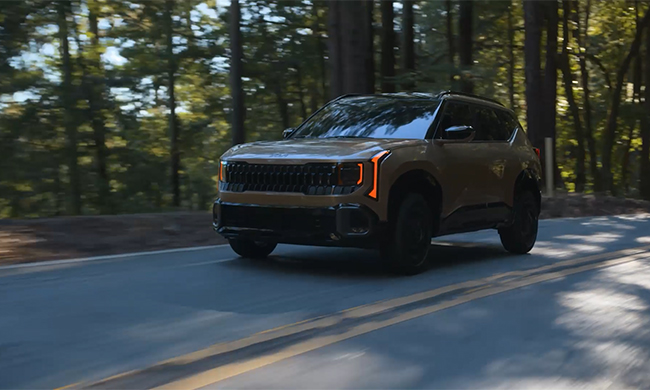
Finding the Right SUV for Your Lifestyle
(Feature Impact) You’ve likely heard the phrase “bigger is better,” but when it comes to vehicle shopping, that may not actually be the case. While what’s new, popular or different can certainly play a role in car buying decisions, knowing how you actually live can help you choose the right vehicle for your lifestyle.
Watch this video to learn more
“SUVs and crossovers dominate the market today, and it’s easy to gravitate toward the newest and biggest models,” said James Bell, head of corporate communications for Kia America, “but the right vehicle isn’t what’s trending; it’s about your daily commute, your weekend road trip and hauling kids and gear. For a lot of drivers, a smaller, more affordable SUV like the KIA Seltos is simply a better fit.”
From length of work commutes to whether you’ll be hauling sports gear, family members or other cargo on a regular basis, figuring out the right fit comes down to identifying your daily habits.
“Start by being honest about how you use your vehicle every day,” Bell said. “A lot of drivers overbuy, paying for space and features that they rarely, if ever, use. The right SUV can save money without sacrificing comfort or functionality.”
For example, the 2027 Kia Seltos is available in five trim levels and offers best-in-class interior room and max cargo room as well as a 10-year, 100,000-mile industry-leading limited powertrain warranty, making it an option for car buyers with both extended commutes and hauling capacity needs. Plus, for weekend warriors, the turbocharged X-Line model comes equipped with multi-terrain all-wheel drive.
To explore your options and find an SUV to fit your needs, visit Kia.com.

SOURCE:
🚗 Stay in the driver’s seat with the latest automotive news, vehicle reviews, industry updates, recalls, and buying tips. Share your opinions in the comments and subscribe to the STM Daily News newsletter for the latest Consumer Corner Automotive stories delivered straight to your inbox.





