

Food and Beverage
Churchill Downs Racetrack Releases Official Menu for 149th Kentucky Derby
Chef Kenneth Hardiman Brings Modern Twist to Louisville Flavors for this year’s Run for the Roses®

Last Updated on March 25, 2023 by Daily News Staff
Chef Kenneth Hardiman Brings Modern Twist to Louisville Flavors for this year’s Run for the Roses®
LOUISVILLE, Ky. /PRNewswire/ — Churchill Downs Racetrack today released the official menu of the 149th Kentucky Derby presented by Woodford Reserve, signaling the start of spring and the much-awaited countdown to one of the most storied sports traditions. For the second year in a row, Chef and Culinary Expert Kenneth Hardiman curated the official racetrack menu, which will feature an array of delectable dishes, serving guests visiting Churchill Downs for the Kentucky Oaks on Friday, May 5, and the Kentucky Derby on Saturday, May 6.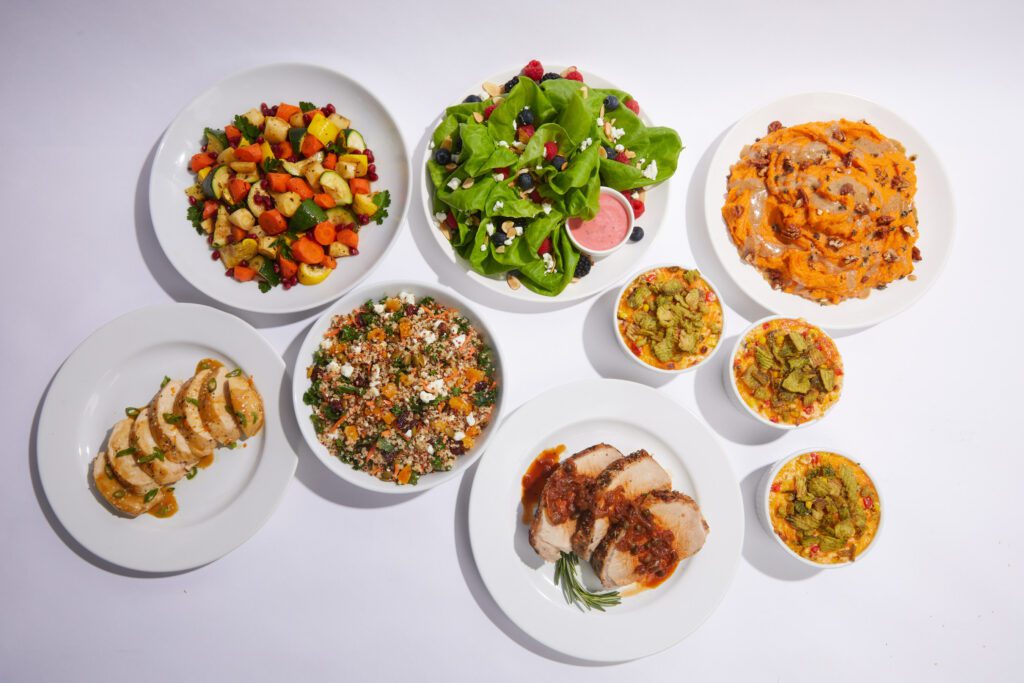
In addition to being The Most Exciting Two Minutes in Sports®, the Kentucky Derby is also an iconic cultural and culinary event rooted in southern tradition. While the races are undoubtedly the main attraction, the food and beverages served at the Kentucky Derby are equally as exciting. This year’s menu promises to elevate classic Kentucky dishes with a fresh twist, featuring locally sourced dairy and produce items that capture the essence of Louisville’s unique flavors.
“Leading the culinary team at the Kentucky Derby is one of the highest honors a chef can have, and I’m excited for the opportunity to add to the Kentucky Derby’s rich culinary legacy again this year,” said Chef Kenneth Hardiman, who will helm the culinary operation for track hospitality partner Levy. “Moments like the Kentucky Derby challenge and motivate us chefs to be at our best, to focus on all of the details, from the seasonal ingredients we source all the way down to the garnishes, in order to create amazing food and beverage experiences for our guests who enjoy the event in different ways.”
Coinciding with the array of traditional menu items, Churchill Downs will also be pouring classic Kentucky beverages and serving up signature Kentucky Derby cocktails for all attendees to enjoy at the track.
For more information, including recipes and images for the official menu, please visit kentuckyderby.com/officialderbymenu. To learn additional details about this year’s race, please visit kentuckyderby.com.
The Official Kentucky Derby 149 Food Menu
Kentucky Bibb Greens
Seasonal berry, toasted almond, poppy seed, raspberry vinaigrette
Heirloom Grain Salad
Sundried cherry and apricot, carrot, pepita, citrus vinaigrette
Mashed Sweet Potatoes
Woodford Reserve Bourbon® brown butter, herb, candied spiced pecan
Cheesy Creamed Corn
Crispy jalapeno, Kenny’s Cheddar Cheese, pimento
Glazed Spring Vegetables
Spring squash, carrot, parsnip, pomegranate seed
Seared Chicken Breast
Local honey glaze, scallion, benne seed, citrus
Roasted Sliced Pork Loin Medallions
Sweet Onion, green peppercorn demi-glace
Kentucky Derby 149 Beverage Menu
Old Forester Mint Julep
Old Forester, simple syrup, fresh mint, crushed ice
Finlandia® Oaks Lily®
Finlandia, sweet and sour, Triple Sec, cranberry juice, blackberries, lemon wedge, crushed ice
Woodford Reserve Spire
Woodford Reserve, lemonade, cranberry juice, lemon twist, ice
Herradura Horseshoe Margarita
Herradura Silver, fresh lime juice, agave nectar, lime wheel, ice
2020 Kendall-Jackson Cabernet Sauvignon Sonoma County
2021 Kendall-Jackson Chardonnay Mendocino County
Kentucky Derby Dining By The Numbers:
- More than 200,000 expected dining guests in attendance
- 24,000 meals are expected to be served on Oaks and Derby Days in premium areas
- 5,000 lbs of pork will be used
- 2,800 gallons of dairy will be used
- 400 lbs of local cheeses will be used
- More than 1,000 culinary and support staff will be on-site
Kentucky Derby Beverages By The Numbers:
- 145,000 Mint Juleps are expected to be poured
- 1,500 lbs of mint for Mint Juleps will be used
- 500 crates of blackberries will be used
- 24,000 bottles of Old Forester Mint Julep Bourbon Cocktail are expected to be used
- 20,000 bottles of Woodford Reserve are expected to be used
About Chef Kenneth Hardiman
Chef Hardiman has once again joined Churchill Downs as the Chef and Culinary Expert for the 149th Kentucky Derby following his inaugural year as Chef for last year’s Derby. A culinary leader at Levy, the hospitality partner of Churchill Downs, with more than a decade of experience, Hardiman has created award-winning food and beverage experiences at many of the most well-known venues, including Fiserv Forum, home of the Milwaukee Bucks. In addition to having won several prestigious culinary awards, Hardiman is passionate about helping the lives of others.
About the Kentucky Derby
The $3 million Kentucky Derby takes place on the first Saturday in May at historic Churchill Downs in Louisville, Kentucky. Inaugurated in 1875, the legendary 1 1/4-mile race for three-year-olds is the longest continually-held major sporting event in North America and the first leg of horse racing’s Triple Crown series. Also known as, “The Run for the Roses” and “The Most Exciting Two Minutes in Sports,” the Kentucky Derby is the most attended horserace in the nation. The 149th Kentucky Derby will take place on May 6, 2023. For more information, please visit www.KentuckyDerby.com.
SOURCE Churchill Downs Racetrack
Author


Food and Beverage
Mix Up the Everyday: New Ways to Elevate At-Home Cooking
This article explores innovative approaches to enhance at-home cooking, encouraging families to integrate new techniques and ideas into their culinary routines. Suggestions include meal prepping, joining cookbook clubs, simplifying cleanup with advanced detergents, incorporating meatless meals, and starting a garden, all aimed at refreshing family cooking traditions.
Last Updated on April 11, 2026 by Daily News Staff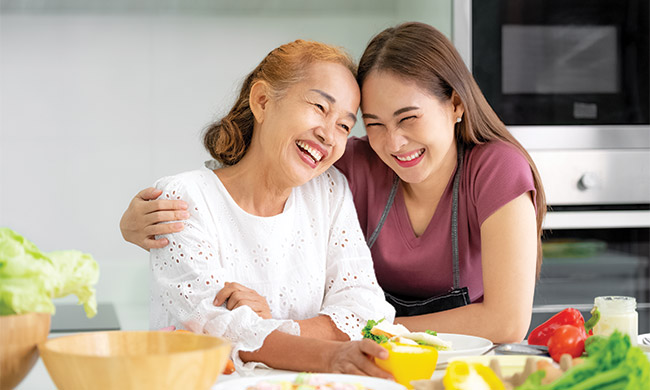
Mix Up the Everyday: New Ways to Elevate At-Home Cooking
(Feature Impact) Most families know and love their tried-and-true family traditions, especially when it comes to the secret sauces, time-tested techniques and recipes that deserve to be passed down from generation to generation. No matter how legendary the home cooks, though, there’s always room for new tricks, whether it’s a fresh spin on a classic dish or a smarter tool that makes the after-dinner cleanup effortless.
Incorporating new techniques and fresh ideas can invigorate your everyday cooking in unexpected ways. Consider these grandma-approved twists on tradition from the experts at Finish, who offer winning ways to enhance cleanup no matter what techniques you turn to in the kitchen.
Plan Ahead
If you’re used to throwing together dinner at the last minute, learning to meal prep can help with trying new recipes. Take a look at what you have on hand before scouring a few cookbooks (or cooking websites) for appetizing dishes to try then head to the store to fill in the missing ingredients. Meal planning may save you time, money and, perhaps, a little sanity – and potentially help you branch out your menu, too.
Club It Up
Joining a cookbook club allows you to flex your social muscles and sample new recipes and techniques from different cultures with fellow foodies. For example, this savory, meat-free Lubiyeh recipe just may become a new household favorite. Featuring stewed green beans simmered in a vegan broth with the added kick of Aleppo pepper and sweet red pepper paste, it’s both bright and rich, and pairs well with rice, lavash or thin pita with a smattering of raw onions for a little extra punch.
Simplify Cleanup
Once the cookbooks have been shelved and the plates have been cleared, tackle the cleaning jobs with an option like the new Finish Ultimate Quantum – their breakthrough dishwashing detergent with Finish’s most advanced formula yet – offering an unbeatable clean even on tough stains in hard water (220 PPM). This grandma-approved technique can help you conquer clean dishes, so it makes sense to switch.
Veg Out
If meat is in constant rotation at your house, consider rotating in a Meatless Monday meal like pasta primavera, or celebrate your own version of Taco Tuesday with bean- or lentil-based tacos instead of chicken, pork or beef. Opting for vegetarian or vegan meals utilizing hearty veggies like squash, eggplant and potatoes can help you save money at the grocery store and nourish your body with heart-healthy nutrients.
Grow a Garden
Starting a garden may seem like a daunting task, but it doesn’t have to be. You can begin with a few herbs growing on a windowsill before embarking on a bigger outdoor gardening project, where transforming a small patch of earth for growing vegetables, herbs or berry bushes can be just the thing to elevate eating at home.
To learn more, visit finishdishwashing.com.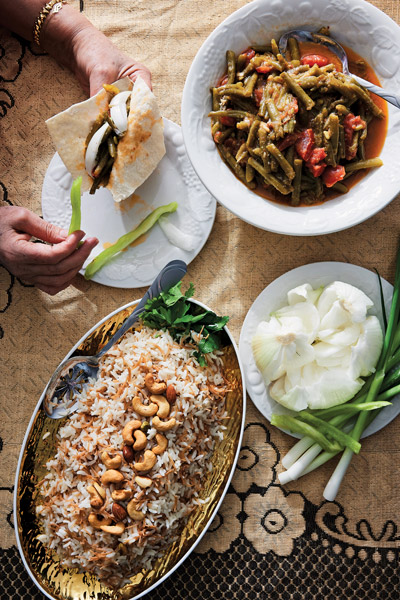
Lubiyeh
(Lebanese Green Beans Stewed with Tomatoes and Garlic)
Recipe courtesy of Jeanette Chawki and the League of Kitchens on behalf of Finish
Servings: 4-6
- 2 pounds string beans or flat green beans
- 1/8 pound garlic (about 18 medium cloves)
- 7 1/2 cups water, divided
- 1 1/4 pounds plum tomatoes (about 5)
- 1 tablespoon sweet red pepper paste
- 1 1/2 teaspoons tomato paste
- 1/2 teaspoon white sugar
- 1/2-1 teaspoon crushed Aleppo pepper flakes
- 1/2 cup extra-virgin olive oil
- 1 tablespoon kosher salt, or to taste
- 1 large white or yellow onion, for serving
- thin pita, lavash or another flatbread, for serving (optional)
- Trim ends of string beans or flat green beans. Put beans in bowl. Use hands to break beans into 2-3 pieces about 1 1/2 inches long.
- Peel garlic. Trim rough or damaged root ends and cut large cloves in half lengthwise.
- In medium saucepan, bring 6 cups water to boil. Once boiling, carefully add plum tomatoes and cook just until skins begin to break, 4-5 minutes. Turn off heat and drain. When tomatoes are cool enough to handle, remove and discard skin.
- Cut tomatoes into rough 1/2-inch chunks, removing any white or green parts near stem. Put tomato chunks in bowl. In separate small bowl, stir sweet red pepper paste, tomato paste, white sugar, crushed Aleppo pepper flakes and 1/2 cup water until paste is dissolved into liquid; set aside.
- In large wok or skillet with deep sides over high heat, heat extra-virgin olive oil.
- Add garlic and fry, shaking pot occasionally, until cloves lightly brown, about 90 seconds. Add green beans and stir with wooden spoon. Turn heat to medium-low and stir in kosher salt. Add 1 cup water and stir. Raise heat to high to bring water back to simmer then lower to medium-low. Cover and cook, stirring occasionally, just until beans are cooked through, about 20 minutes.
- Stir in tomatoes and pepper paste mixture, increase heat to high and cook until liquid boils. Cover pot, keeping lid slightly ajar, reduce heat to medium-low and cook until tomatoes are soft, sauce has thickened slightly and garlic is tender, about 20 minutes. Taste for salt and add if needed. Keep warm until ready to serve.
- Put down clean dish towel and place onion on top. Smash onion with heavy cutting board 2-5 times then peel it.
- Squeeze whole onion over sink between hands to remove some juices. Wash onion under cold running water, squeeze it between hands again then pull it apart into pieces, removing roots and any stem, and put it on small serving plate.
- If using pita, separate circles into two thin pieces. Bake or toast thin pita, lavash or other flatbread until crispy or blackened in spots. For sandwiches, warm bread.
- Serve stewed green beans and raw onion with pita, lavash or other flatbread, either open-faced or rolled into sandwich.
Photo courtesy of Shutterstock (women in kitchen)


SOURCE:
Visit the Food and Drink section on STM Daily News for the latest food news, beverage trends, restaurant stories, seasonal recipes, culinary events, and community-driven lifestyle coverage.
Food and Beverage
Manage Busy Spring Schedules with Simple, Nutritious Bowls
To manage busy spring schedules, prepare simple, nutritious bowls at home instead of relying on takeout. Recipes like Chicken and Rice Bowls with Peanut Sauce and Greek-Inspired Power Bowls are quick, customizable, and packed with flavors. Visit DudaFresh.com for more healthy recipes that fit your family’s tastes.
Last Updated on April 10, 2026 by Daily News Staff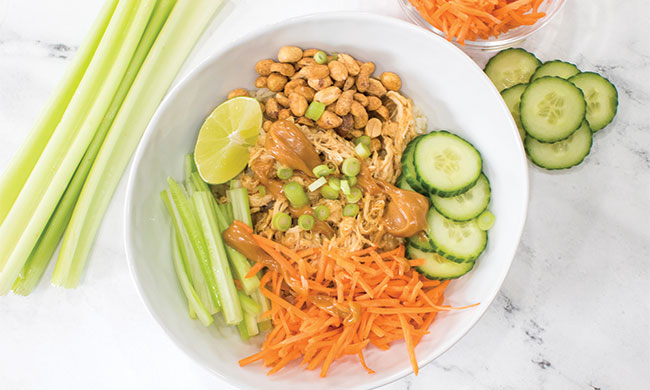
Manage Busy Spring Schedules with Simple, Nutritious Bowls
(Feature Impact) When jam-packed calendars and seemingly constant takeout orders get you down, diving into a fresh way to rethink homecooked meals can get you and your loved ones into a better-for-you routine.
Close your favorite food delivery app and instead break out the bowls for simple yet nutritious recipes that are equal parts filling and fresh. Easily prepped ahead of time, dishes like Chicken and Rice Bowls with Peanut Sauce provide powerful protein and flavor without the hassle. For added pizzazz, drizzle with extra peanut sauce and squeeze a dash of lime juice.
Or put a tangy twist on a traditional chicken bowl with these Greek-Inspired Power Bowls featuring homemade tzatziki made with Dandy Celery, a naturally sweeter, crispier and less stringy alternative to other celeries. Celebrating its 100th anniversary, it delivers the ultimate snack time (or dinner) crunch and flavor, offering a satisfying complement to sliced chicken, mixed greens, whole-grain quinoa and Kalamata olives.
An added bowl-inspired bonus: These family-friendly recipes can be personalized for taste preferences so no one goes hungry.
Rethink your family’s menu with more quick, nutritious recipes to alleviate the stress of hectic schedules by visiting DudaFresh.com.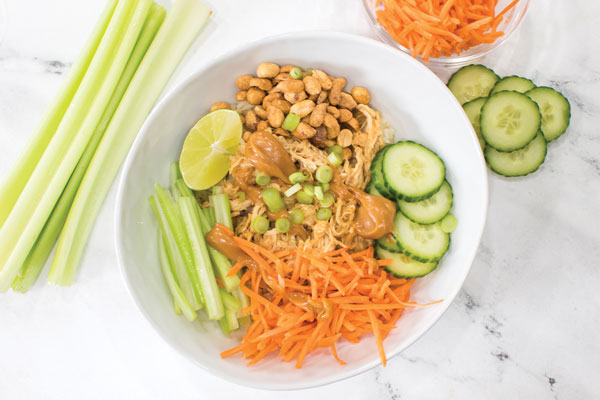
Chicken and Rice Bowls with Peanut Sauce
Recipe courtesy of The Produce Moms
Prep time: 7 minutes
Cook time: 5 minutes
Servings: 2
Creamy Peanut Sauce:
- 1 1/2 tablespoons soy sauce
- 1 tablespoon freshly squeezed lime juice
- 2 teaspoons rice vinegar
- 1 teaspoon honey
- 1/4 cup creamy peanut butter
- 1 tablespoon toasted sesame oil
Bowls:
- 1 tablespoon olive oil
- 1 cup cooked, shredded chicken
- 1 cup cooked brown or jasmine rice
- 1 cup Dandy celery, julienned
- 1 cup shredded carrot
- 1/2 medium English cucumber, thinly sliced
- 1/4 cup unsalted roasted peanuts, coarsely chopped
- lime wedges, for serving
- To prepare peanut sauce: In small bowl, whisk soy sauce, lime juice, rice vinegar and honey. Add peanut butter and sesame oil. Whisk vigorously until sauce is completely smooth and creamy. Set aside.
- To prepare bowls: In nonstick 12-inch skillet over medium-high heat, heat olive oil until simmering. Add shredded chicken and about 3 tablespoons peanut sauce. Stir constantly to coat chicken and heat through, about 3 minutes. Remove from heat and set aside.
- To assemble rice bowls: In deep serving bowls, add cooked rice. Top with warm chicken covered in peanut sauce. Arrange celery, carrot and cucumber around chicken. Top with peanuts.
- Drizzle remaining peanut sauce over bowls. Serve with lime wedges to squeeze over bowls.
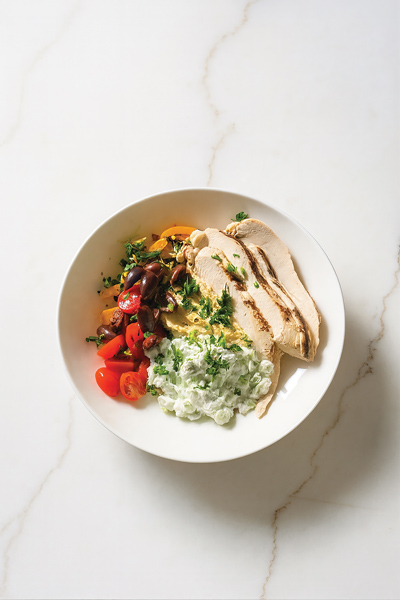
Greek-Inspired Power Bowls
Recipe courtesy of Anastasiia de la Cruz
Prep time: 20 minutes
Cook time: 15 minutes
Servings: 2
Celery Tzatziki:
- 1 cup plain, full-fat Greek yogurt
- 1/2 cup finely chopped Dandy celery
- 1 tablespoon extra-virgin olive oil
- 1 tablespoon fresh lemon juice
- 1 small garlic clove, finely grated
- 2 tablespoons chopped walnuts (optional)
- salt, to taste
- pepper, to taste
Bowls:
- 2 cups mixed greens
- 1 1/3 cups cooked, gluten-free, whole-grain quinoa
- 2 large grilled chicken breasts (about 6 ounces each), sliced
- 1/2 cup hummus
- 1/4 cup Kalamata olives, halved
- 1 tablespoon extra-virgin olive oil, for drizzling
- fresh herbs, for garnish
- To make celery tzatziki: Mix yogurt, celery, olive oil, lemon juice, garlic and walnuts, if desired. Season with salt and pepper, to taste. Stir well. Chill.
- To assemble bowls: In two bowls, layer greens and cooked quinoa evenly. Top with grilled chicken.
- Spoon 1/4 cup hummus on side of each bowl. Add olives, 2-3 tablespoons tzatziki and drizzle with olive oil.
- Sprinkle with fresh herbs.
<img src="https://ssl.google-analytics.com/collect?v=1&tid=UA-482330-7&cid=1955551e-1975-5e52-0cdb-8516071094cd&sc=start&t=pageview&dl=http%3A%2F%2Ftrack.familyfeatures.com%2F17834%2F10247&dt=MANAGE-BUSY-SPRING-SCHEDULES-WITH-SIMPLE-NUTRITIOUS-BOWLS" />
<img src="https://erp.featureimpact.com/api/v1/tracking/17834/10247/track.gif" />SOURCE:
Economy
Feeding the Economy Report Says U.S. Food, Agriculture Add $10.4 Trillion
The 2026 Feeding the Economy report says U.S. food and agriculture industries generate $10.4 trillion in economic value and support 48.7 million jobs.

New Feeding the Economy Report Highlights Food, Agriculture Industry Strength
America’s food and agriculture industries generated more than $10.4 trillion in economic value in 2026, accounting for nearly 20% of the U.S. economy, according to the 10th annual Feeding the Economy report released by 35 food and agriculture groups. The new farm-to-fork study also found the sector supports 48.7 million jobs nationwide, including 24.3 million direct jobs across farming, food manufacturing, processing, distribution, retail, and foodservice.
The report points to continued resilience despite inflation, trade uncertainty, and ongoing pressure on farmers and producers. It found food and agriculture generate more than $3 trillion in wages and $1.35 trillion in tax revenue, while U.S. exports totaled $177.3 billion. At the same time, the study flagged softer areas to watch, including flat direct employment in production agriculture and food manufacturing, along with a year-over-year decline in exports. For the food and beverage industry, the report reinforces just how deeply agriculture remains tied to jobs, supply chains, and broader economic stability.
Source:
Tenth Annual “Feeding the Economy” Report Demonstrates Strength and Resilience of the American Food and Agriculture Industries Amid Ongoing Economic Pressures — Feeding the Economy via PR Newswire
Further information:
Feeding the Economy
View the original press release on PR Newswire
STM Daily News is a vibrant news blog dedicated to sharing the brighter side of human experiences. Emphasizing positive, uplifting stories, the site focuses on delivering inspiring, informative, and well-researched content. With a commitment to accurate, fair, and responsible journalism, STM Daily News aims to foster a community of readers passionate about positive change and engaged in meaningful conversations. Join the movement and explore stories that celebrate the positive impacts shaping our world.





