

seniors
Discovering Scottsdale: The Best Place to Retire in the U.S.
Scottsdale, Arizona, has been named the best U.S. city for retirement, praised for its weather, active lifestyle, and quality of life.


As a record number of Americans prepare to enter retirement in the coming years, many are seeking the ideal location to enjoy their golden years. According to the latest annual report from Niche.com, Scottsdale, Arizona, has emerged as the top city for retirement, praised for its exceptional weather, high quality of life, and vibrant active lifestyle.
In March, Niche.com unveiled its 11th annual Best Places to Live in America list. This comprehensive evaluation included data from the U.S. Census, the Bureau of Labor Statistics, and the CDC, thoughtfully combined with millions of resident reviews. The resulting analysis considered about 230 cities and over 18,000 communities across the nation, assessing factors such as affordability, the housing market, neighborhood diversity, public schools, and walkability.
So, what makes Scottsdale stand out as the ultimate retirement destination? As Zach Chatham, the public relations manager at Niche.com, shares, “Boasting some of the best weather in the United States, Scottsdale is the perfect oasis for retirement.” With an abundance of outdoor activities and numerous health and fitness options readily available, it’s no surprise that this Arizona city is ideal for those wishing to maintain an active lifestyle focused on longevity.
Scottsdale received an A rating overall, indicating its appeal as a place to live. The area is characterized by a dense suburban feel, with a high ownership rate among residents, which enhances the community atmosphere. The median rent is just above $1,900 monthly, while the median home price hovers around $710,000, reflecting the area’s desirability. Additionally, it earned a B+ rating for ethnic and economic diversity, showcasing the welcoming and varied community.
One resident encapsulated the allure of Scottsdale by stating, “Scottsdale, Arizona, is a really cool place with a mix of modern city life and Old West charm.” From breathtaking desert landscapes to culturally rich experiences like hiking Camelback Mountain or indulging in the nightlife in Old Town, there is no shortage of activities to enjoy. Although summers can be quite warm, the winters are pleasantly mild—an attractive factor for those looking to escape harsher climates. Those interested in golf, luxury resorts, or simply a lively atmosphere will find Scottsdale to be a perfect match.
Scottsdale is joined at the top of the list by other notable locations, including Clearwater, Florida; Metairie, Louisiana; St. Petersburg, Florida; and Cape Coral, Florida, rounding out the top five best places to retire.
Moreover, Scottsdale’s reputation as a premier retirement destination is further solidified by WalletHub’s previous rankings, recognizing the city for its high quality of life and abundant recreational activities. With over a quarter of Scottsdale’s residents aged 65 and over, it is clear that this city attracts retirees looking to make the most of their leisure years.
In summary, for those considering relocation during retirement, Scottsdale, Arizona, stands out as a vibrant oasis filled with opportunities for growth, relaxation, and adventure. Whether you’re drawn by the stunning scenery, diverse community, or active lifestyle options, Scottsdale promises an enriching backdrop for living life to the fullest in retirement.
Related link:
https://www.travelandleisure.com/scottsdale-arizona-named-best-place-to-retire-in-usa-11702130
Our Lifestyle section on STM Daily News is a hub of inspiration and practical information, offering a range of articles that touch on various aspects of daily life. From tips on family finances to guides for maintaining health and wellness, we strive to empower our readers with knowledge and resources to enhance their lifestyles. Whether you’re seeking outdoor activity ideas, fashion trends, or travel recommendations, our lifestyle section has got you covered. Visit us today at https://stmdailynews.com/category/lifestyle/ and embark on a journey of discovery and self-improvement.
Author








Family
Empowering Seniors for Safer Online Experiences: 6 Practical Safety Tips for Caregivers and Families
Safety Tips for Caregivers: Empower seniors with essential online safety tips. Learn 6 practical strategies caregivers can use to help older adults navigate digital threats, scams, and security risks confidently.

Last Updated on February 14, 2026 by Daily News Staff

Empowering Seniors for Safer Online Experiences: 6 Practical Safety Tips for Caregivers and Families
(Family Features) Today’s seniors aren’t shying away from a world that has become increasingly reliant on technology. Quite the opposite, in fact, as recent survey findings suggest adults ages 65 and older are more digitally active and self-assured than ever before.
Nearly all seniors surveyed as part of the “Connecting the Digital Dots: Online Habits and Safety Concerns Across Three Generations” survey from Cox Mobile consider themselves digitally literate, using devices for shopping, banking, social media and entertainment. With older adults spending a significant amount of time connected to the digital world – 41% of those surveyed reported spending five or more hours online daily – they’re also more at-risk for scams, viruses like malware and data breaches.
Even though 61% of seniors who encountered digital threats were able to mitigate the issues themselves, showing their growing digital capability, increased online engagement brings new challenges and responsibilities for caregivers, who often play a crucial role in supporting seniors’ digital journeys.
To help support older loved ones’ safety and confidence as they navigate an evolving digital landscape, Cox Mobile, in partnership with Common Sense Media, offers educational materials on digital safety, smart device use and media literacy for all ages. In addition, these practical safety strategies can help empower seniors to make informed, safe choices online.
Encourage Strong Passwords: Simple passwords, like number sequences, keyboard patterns or personal information – such as variations of your name, birthdate, address or names of pets or loved ones – are easily guessable and may lead to issues. While the survey found 70% of seniors already create strong, unique passwords, encourage them to avoid reusing passwords across sites. Recommend a password manager app to safely store passwords and eliminate the need to write them all down, which could lead to a breach if not stored properly.
 Promote Security Software: If devices aren’t protected, even the most careful users are susceptible to viruses. Though 63% of those surveyed have security software installed, it’s important to regularly make sure it’s up to date (or that automatic updates are enabled) and covers all devices, including laptops, tablets and smartphones.
Enable Multi-Factor Authentication: A simple and effective way to stop most attempts at unauthorized account access, 60% of seniors are already using multi-factor authentication as an extra layer of protection. Some seniors, however, may need assistance setting up the safeguard, which typically sends a code to a phone number or email address as part of the login process, for online banking, email or social media accounts.
Review Apps and Channels: Over time, it can be easy to accumulate apps on smartphones and tablets. While 51% of surveyed seniors remove unsafe apps, make it a habit to regularly check loved ones’ devices for unfamiliar or suspicious applications and delete them. Also keep an eye out for unauthorized charges, data sharing or browser extensions.
Utilize Built-In Safety Features: Explore privacy controls on individual devices (and apps) and check with your loved ones’ internet service provider to ensure security features are being utilized like the 43% of those surveyed who are already taking advantage of their devices’ safety settings. Included privacy protections may include limiting data sharing, disabling location tracking, blocking pop-ups and restricting other unwanted communication.
Discuss Online Safety Regularly: Because technology is ever-changing, it’s important for caregivers to talk with senior loved ones about online safety. Open, ongoing conversations, like those one-third of seniors are already having several times a week or even daily, can help build trust and awareness of current scams, suspicious texts or emails, commonly used apps and more.
By fostering open dialogue, sharing practical safety strategies and leveraging trusted resources, caregivers can help their loved ones thrive and stay safe. Visit your local Cox Mobile store or go to CoxMobileSafety.com to find more tips, guides and full survey results.
SOURCE:
Cox Communications
Author

Lifestyle
A Legacy of Service: How family stories shape service
Legacy of Service: Discover how military service creates lasting family legacies across generations. Explore powerful veteran stories from the Veterans History Project, including Pearl Harbor survivors and Code Talkers, and learn how to preserve your family’s service history.
Last Updated on February 6, 2026 by Daily News Staff

A Legacy of Service: How family stories shape service
(Family Features) Major historical events like war or military service make a lasting impact on family identity, values and traditions, often reverberating across multiple generations.
Veterans frequently speak about their military units as if they were family, given the unbreakable bonds that develop between comrades. However, for some veterans, “brothers in arms” is more than a figurative turn of phrase.
Throughout the 20th century, entire families felt the firsthand effects of war, with multiple generations serving. Brothers enlisted together. A father’s military legacy inspired his children to join up. Sweethearts met and married while in uniform. These stories not only illustrate the experiences of individual veterans but also provide an intimate glimpse into family legacies of military service.
Consider the Veterans History Project, a program overseen by the Library of Congress, which collects and preserves the firsthand remembrances of U.S. military veterans and makes them accessible for future generations to better understand veterans’ service and sacrifice. These personal stories encompass original correspondence, memoirs, diaries, photographs and oral history interviews, all offering deeper insight into the long-term impact of military service.
Veterans’ narratives are collected by volunteers, and anyone who served from World War I to today can submit their personal story, regardless of whether or not they saw combat. The collections frequently shed light on the importance of family in military experiences. Whether expressed through heartfelt letters home, enduring family legacies of service or the experience of serving alongside loved ones, these stories reflect profound connections.
 Family Identity
During the Cold War, Jennifer McNeill rose from Army Dental Assistant to Command Sergeant Major at the Army Eisenhower Medical Center in Fort Gordon, Georgia. Her collection includes a poignant photograph of her mother sharing images of her four military daughters in uniform, underscoring how family identity and military service are closely connected.
Values
Military service makes a lasting impression on veterans, shaping the experiences and the values that guide them through life. Ray Chavez is one such example. He was the oldest known Pearl Harbor survivor before his passing in 2018. For most of his life, he remained silent about his experiences, but in 1991, his daughter, Kathleen Chavez, who served in the U.S. Navy during Desert Storm, convinced him to return to Pearl Harbor. That trip marked the first time he spoke openly about his service. Kathleen shared their family’s deep military legacy in her oral history for the Veterans History Project.
Traditions Across Generations
Serving in the military is a deeply personal journey, but for many veterans, it’s an experience that transcends generations. Bill Toledo enlisted in the Marine Corps in October 1942 at the age of 18. Along with his uncle, Frank Toledo, and cousin, Preston Toledo, he served as a Code Talker transmitting military messages through secret codes. In his oral history, Bill vividly recalled both the challenges of combat during the invasion of Iwo Jima in February 1945, and the treasured moments spent with his uncle.
These and many other family stories of military service and remembrance are available to the public at loc.gov/vets.
Photo courtesy of Shutterstock (men looking at scrapbook)
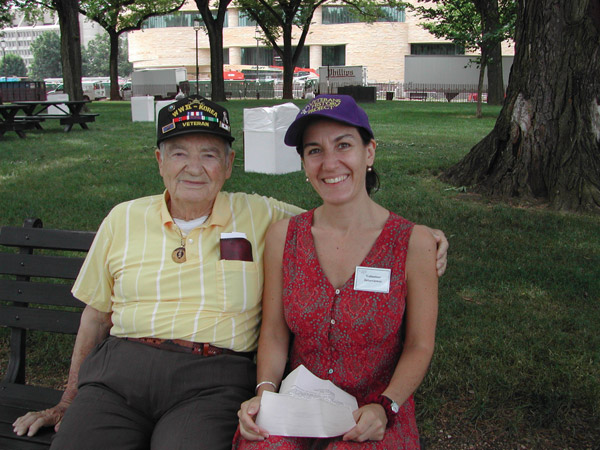
Photo courtesy of the Library of Congress (man and woman on park bench)
SOURCE:
Library of Congress
Author
Senior Pickleball Report
Top Pickleball Holiday Gifts for Pros and Beginners
Find the perfect holiday gifts for both pickleball pros and beginners, with a wide selection of gear and accessories for this popular sport.

Last Updated on November 24, 2025 by Daily News Staff

Pickleball Holiday Gifts
Looking for the perfect holiday gifts for pickleball enthusiasts? Look no further! As “America’s fastest-growing sport,” pickleball appeals to all ages and skill levels. Whether you’re shopping for a pro or a beginner, there are plenty of options to choose from. Consider gifting them a high-quality pickleball paddle tailored to their playing style, with options ranging from control paddles to power paddles. Don’t forget to consider factors like weight, grip, and shape. In addition to paddles, there’s a wide array of pickleball-related merchandise available, from apparel to accessories. This holiday season, surprise your pickleball-loving friends and family with the best gear and accessories that’ll enhance their playing experience and keep them entertained for hours on the court.
Discover an exciting range of merchandise by visiting the web stores of Sleeves SPR’s friends. From trendy clothing to stylish accessories, there’s something for everyone. Don’t miss out – start browsing today! https://sleeves-spr.store/friends-of-spr/






