

Lifestyle
Doing things alone is on the rise, and businesses should pay more attention to that – even on Valentine’s Day
Peter McGraw discusses the increasing prevalence of solo living and its implications for businesses, particularly during Valentine’s Day, which typically emphasizes couples. Despite many individuals enjoying activities alone, the marketplace often neglects this growing demographic. Recognizing and catering to solo consumers can yield significant opportunities for businesses.


Peter McGraw, University of Colorado Boulder
Doing things alone is on the rise, and businesses should pay more attention to that – even on Valentine’s Day
Every February, Valentine’s Day amplifies what single people already know – that public life is built for two. Restaurants roll out prix fixe menus for couples. Hotels promote “romantic getaway” packages designed for double occupancy. A table for one still invites the question, “Just you?”
Yet there’s irony that’s hard to miss. While Valentine’s Day doubles down on togetherness, more adults are living – and moving through the world – alone.
As a behavioral economist, I study what I call the “solo economy.” A growing share of economic life today is organized around people who live, spend and make decisions on their own.
1-person households aren’t outliers
Half of U.S. adults are unmarried, and one-person households are now the nation’s most common living arrangement. This isn’t a temporary phase confined to young adults waiting to settle down. It includes never-married professionals, divorced empty nesters, widows and widowers, and people who simply prefer to live independently.
Lifelong singlehood is also rising: 25% of millennials and 33% of Gen Z are projected to never marry.
It’s a slow-moving demographic shift away from long-term partnership as the dominant adult life path, but a consequential one – reshaping everything from housing and travel to social policy and commerce. One of its clearest expressions is the number of people doing things alone in public.
The rise of public solo life
It would be one thing if the economy were built for two and solos stayed home. But they are going to museums, traveling and, of course, dining alone in restaurants. To assess this behavior, I surveyed single and married Americans about their participation in 25 activities that occur in public – from shopping and dining to attending movies and concerts.
The pattern was striking. Overall, singles were much more likely to do things alone in public than their married counterparts – 56% versus 39%. The difference held across every activity I measured.
The biggest gaps weren’t for practical tasks like grocery shopping. They were for leisure experiences like going to the movies, dining out and attending concerts. In fact, seven of the 10 largest differences involved retail or entertainment settings – the very places most designed and marketed with couples in mind.
https://datawrapper.dwcdn.net/4DWEE/2
Bias that keeps people from having fun alone
Why hasn’t the business world paid more attention to the singles market?
The answer lies in psychology. Some reluctance stems from the belief that other customers will perceive solo diners or moviegoers as sad or lonely. These fears are amplified by what psychologists call the spotlight effect – our tendency to overestimate how much other people notice and judge us.
Findings by consumer researchers Rebecca Hamilton and Rebecca Ratner can help explain why this bias is so persistent. Across studies conducted in the U.S., China and India, people consistently predicted they would enjoy activities less if they did them alone – even though they’d be seeing the same movie or visiting the same museum.
But when people actually went alone, they enjoyed the experience just as much as those who went with others. The fear, it turns out, is largely imagined.
Another problem is that solo consumers don’t always feel welcome.
While behavior is changing, markets have been slower to adapt. Most businesses still design experiences around pairs, families or groups. Consider restaurants that seat solo diners at the bar or near the kitchen or bathrooms, or ticketing systems that require purchasing in pairs. The result is friction for solo consumers – and missed opportunities for companies.
Valentine’s Day promotions make that mismatch especially visible. In 2024, IKEA Canada offered a Valentine’s Day dining experience in its showroom priced and designed for two – and only two – people.
After backlash, the company revised the promotion the following year to be more inclusive: “Bring a loved one, a good friend, or the whole family.” It was a small change, but a revealing one.
Why solo shoppers have outsized influence
Solo consumers represent a large, growing and profitable market segment, yet they’re navigating a marketplace that still treats them as edge cases.
Another study that Ratner conducted with business school professor Yuechen Wu adds an important twist.
Analyses of more than 14,000 Tripadvisor reviews of restaurants and museums show that reviews written by solo diners and solo museumgoers are rated as more helpful – and receive more positive feedback – than reviews written by people who went with others.
Follow-up experiments showed that when otherwise identical recommendations differed only in whether the reviewer experienced the activity alone or with others, respondents were more likely to rely on the solo reviewer when deciding what to do.
Why? Observers infer that people who go alone are more genuinely interested in the experience and more focused on its quality, rather than simply going along with someone else’s preferences.
Being alone, it turns out, functions as a credibility cue. For businesses, that means solo customers aren’t just customers − they can be very influential customers.
Designing for 1 in Asia
Asian businesses are far ahead of the West in recognizing the buying power of people doing things alone.
In South Korea, for example, “honjok,” which translates as “alone tribe,” culture has fueled products and services designed explicitly for solo living. Think single-serve meals at convenience stores, one-person karaoke booths, and restaurants that promise judgment-free service.
Similarly, in Japan, the ramen chain Ichiran built its brand around the idea of “flavor concentration,” which encourages diners to eat alone in private booths.
Officially, the design is meant to eliminate distractions and heighten the dining experience. In practice, it does something more important: It legitimizes solo dining.
Progress in the US
In the U.S., Disney theme parks and some of the company’s competitors have long used single-rider lines that reward solo visitors with shorter waits, turning independence into operational efficiency – a logic ski resorts adopted decades ago to fill empty seats on chairlifts.
And solo tourism has become a major trend. Demand is growing, and tour operators are adapting offerings to meet it, including specialized tours for singles and adjustments to historically prohibitive pricing practices.
Industry analysis also shows the global solo travel market expanding rapidly, with tailored products and experiences emerging worldwide. Some companies now offer dedicated solo travel collections with no single supplement − the extra fee traditionally charged to travelers who occupy a room alone − and tours designed specifically for independent travelers.
Doing things alone is an opportunity
Valentine’s Day offers a chance to see how outdated many widespread assumptions still are.
It treats solitude as a problem to be solved, even as people’s behavior tells a different story. Yet businesses, policymakers and U.S. culture more broadly have not designed a world that fully acknowledges that about 42% of American adults are single.
In the meantime, singles aren’t waiting at home. They’re out there – at the movies, on planes, in museums and restaurants – moving through public life on their own terms.
Valentine’s Day may always be built for two. But the economy won’t be.
Peter McGraw, Professor of Marketing and Psychology, University of Colorado Boulder
This article is republished from The Conversation under a Creative Commons license. Read the original article.
Discover more from Daily News
Subscribe to get the latest posts sent to your email.


Lifestyle
Understanding Cardiovascular Disease Risk Factors: Numbers to Know in 2026
The American Heart Association’s 2026 update reveals a decrease in deaths from heart disease and stroke, despite rising rates of high blood pressure, diabetes, and obesity. Following their Life’s Essential 8 guidelines can prevent 40% of cardiovascular deaths, emphasizing the importance of healthier lifestyles for improved heart health.

Last Updated on March 4, 2026 by Daily News Staff
Understanding Cardiovascular Disease Risk Factors: Numbers to Know in 2026
(Family Features) Taking care of your heart with healthy behaviors may be at the top of your wellness priority list already, and there may be good news about the effects of adhering to expert recommendations.
New information from the American Heart Association’s 2026 Heart Disease & Stroke Statistics Update shows deaths from heart disease and stroke are on the decline. However, rates continue to climb for high blood pressure, diabetes and obesity – all of which are health risk factors that contribute to cardiovascular disease.
Following expert guidance can be your prescription for better health as 80% of heart disease and stroke is preventable.
To help maintain and improve your cardiovascular health, consider following the American Heart Association’s Life’s Essential 8, which is a set of four health behaviors (eat better, be more active, quit tobacco and get healthy sleep) and four health factors (manage weight, control cholesterol, manage blood sugar and manage blood pressure).
In the United States, optimal Life’s Essential 8 scores could prevent up to 40% of annual all-cause and cardiovascular disease deaths among adults.
Consider these highlights from the statistics update:
- Heart disease remains the leading cause of death in the U.S. and stroke is the No. 4 leading cause of death.
- Together, heart disease and stroke accounted for more than a quarter of all deaths in the U.S. in 2023.
- Cardiovascular diseases, including all types of heart disease and stroke, claim more lives in the U.S. each year than all forms of cancer and accidental deaths — the Nos. 2 and 3 causes of death – combined.
- On average, every 34 seconds, someone died of cardiovascular disease in 2023.
- On average, about two people died of heart disease every 3 minutes in the U.S. in 2023.
- On average in 2023, someone died of stroke every 3 minutes, 14 seconds in the U.S.
- Nearly half of U.S. adults now have high blood pressure.
- Nearly 29.5 million U.S. adults have diagnosed diabetes.
- About 50% of U.S. adults have obesity or severe obesity, and 28.1% of youth ages 2-19 have obesity.
- Only 1 in 4 U.S. adults meets national physical activity guidelines. Only 1 in 5 U.S. youths ages 6-17 are physically active for 60 minutes or more every day of the week.
To learn more about how to reduce your risk of cardiovascular disease, visit heart.org.
Photo courtesy of Shutterstock
SOURCE:
Discover more from Daily News
Subscribe to get the latest posts sent to your email.
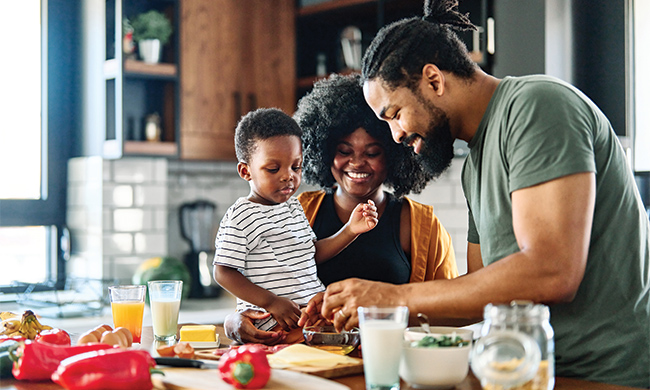
(Feature Impact) Most people don’t set out to ignore their health. It usually slips down the list somewhere between the morning alarm and the last email of the day. Breakfast gets rushed or skipped. Exercise is postponed until tomorrow. Sleep is cut short to catch up on everything else. By the end of the week, healthy intentions are still there, but the follow-through feels harder than expected.
For many, the challenge is not motivation but finding habits that fit into real life. Small, repeatable choices around sleep, exercise, nutrition, mental well-being and social connection can support how the body and mind function over time.
Sleep Well
Sleep is essential for physical recovery, mental focus and emotional balance, but it’s often the first habit to slip when schedules get busy.
Establishing a regular bedtime routine helps signal when it’s time to rest. Limiting screen exposure in the evening, keeping sleep and wake times consistent and creating a dark, quiet sleep environment can support more restorative sleep. Over time, better sleep contributes to improved mood, focus and overall heart health.
Exercise in Manageable Ways
Exercise often falls into the same trap as sleep. When schedules get full, it becomes something to get back to rather than something that fits into the day as it unfolds. A missed workout can quickly turn into a missed week, even for people who value staying active.
Regular movement supports heart health, muscle strength and overall energy, but it doesn’t need to be all-or-nothing. Short periods of activity spread throughout the day can still make a difference, especially when long stretches of sitting are the default.
Walking between meetings, stretching in the morning or adding light strength exercises at home are simple ways to stay active without blocking out extra time.
Eat Nutritiously
Food decisions often happen on autopilot as meals are squeezed into busy schedules and long days, making nutrition one of the most influential daily habits.
Meals do more than provide fuel. When built around nutrient-rich foods, they support muscle health, brain health and heart health. An overall healthy eating pattern includes a variety of whole foods like fruits, vegetables, whole grains and lean proteins, helping the body keep up with everyday demands.
Protein plays an important role in maintaining muscle and supporting daily movement, especially as people age. High-quality protein from foods, along with a balanced diet and regular exercise, can help support all the muscles in the body. Choosing protein sources that are easy to prepare and repeat supports consistency when schedules are full.
As part of a balanced approach to healthy habits, nutrition guidance from the American Heart Association’s Healthy for Good initiative, nationally sponsored by the Egg Nutrition Center, highlights how everyday food choices can support the body and brain over time. Eggs are an example of a high-quality protein and they fit easily into meals throughout the day.
Eggs also deliver choline, a nutrient many Americans don’t get enough of. Choline is a critical nutrient, among others, for supporting brain development, memory and mood. Along with protein, choline helps support brain health, making it an important consideration across life stages.
According to the American Heart Association, healthy people can include one egg daily, up to seven eggs per week, as part of a heart-healthy diet. For healthy older adults with normal cholesterol, two eggs per day can be included as part of a heart-healthy dietary pattern.
Mind Your Mental Well-Being
The way people eat, sleep and move does not just affect the body. It also shapes how the brain responds to stress and daily demands. When routines feel rushed or inconsistent, mental well-being is often one of the first areas to feel the strain.
Ongoing stress can interfere with focus, sleep and eating habits, making it harder to maintain healthy routines. Simple practices like deep breathing, mindfulness or stepping away from screens for a few minutes can help reduce tension and restore attention.
Making time for rest and reflection, and setting realistic expectations, can also support emotional balance. What supports the brain often supports the heart as well, reinforcing the value of caring for mental and physical health together.
Socialize and Stay Connected
Mental well-being is shaped by both daily routines and relationships. When life feels busy or stressful, social connection is often the first thing to get pushed aside, even though it plays an important role in emotional health.
Staying connected doesn’t require packed calendars or constant interaction. Shared meals, short conversations or a quick check-in with a friend or family member can help maintain a sense of connection.
Build Habits That Fit Real Life
Healthy routines are more likely to last when they fit into the rhythm of everyday life rather than compete with it. Big changes can feel motivating at first, but it is often the small, repeatable choices that quietly shape how people feel over time.
Choosing foods that are easy to prepare, finding enjoyable ways to exercise and protecting time for sleep can make healthy habits feel more realistic. When routines are built around what is already happening during a typical day, they are easier to return to even when schedules get busy.
For more information and educational resources on nutrition and healthy living, visit Heart.org.
Photos courtesy of Shutterstock

SOURCE:
Our Lifestyle section on STM Daily News is a hub of inspiration and practical information, offering a range of articles that touch on various aspects of daily life. From tips on family finances to guides for maintaining health and wellness, we strive to empower our readers with knowledge and resources to enhance their lifestyles. Whether you’re seeking outdoor activity ideas, fashion trends, or travel recommendations, our lifestyle section has got you covered. Visit us today at https://stmdailynews.com/category/lifestyle/ and embark on a journey of discovery and self-improvement.
Discover more from Daily News
Subscribe to get the latest posts sent to your email.
health and wellness
Seeing the Possibilities: Living with Low Vision
Millions of Americans face challenges due to low vision, a condition that is not an inevitable part of aging. February’s Low Vision Awareness Month highlights the importance of eye exams and awareness. Effective management strategies include environmental modifications, assistive devices, and vision rehabilitation services to improve daily living and maintain independence.
Last Updated on March 3, 2026 by Daily News Staff
(Family Features) Millions of Americans are living with low vision, a visual impairment that can turn everyday moments – recognizing a friend’s face across the street, reading a recipe or checking a text message – into unexpected challenges.
Low vision isn’t a natural part of getting older, though the conditions that cause it do become more common with age.
Whether low vision is affecting you or a loved one, Low Vision Awareness Month is a perfect time to have your eyes examined for signs of eye diseases and to take steps to make daily life easier if you are experiencing low vision.
Consider this information from the National Eye Institute to make the most of your vision and improve your quality of life.
Understanding low vision
You may have low vision if you can’t see well enough to read, drive, recognize faces, distinguish colors or see screens clearly.
Many different eye conditions can cause low vision, but the most common causes are age-related macular degeneration, cataracts, glaucoma and diabetic retinopathy, a condition that can cause vision loss in people with diabetes.
The most common types of low vision are:
- Central vision loss (not being able to see things in the center of your vision)
- Peripheral vision loss (not being able to see things out of the corners of your eyes)
- Night blindness (not being able to see in low light)
- Blurry or hazy vision
Diagnosing low vision
Your doctor can check for low vision as part of a simple, painless comprehensive dilated eye exam. He or she will ask you to read letters that are up close and far away and will check whether you can see things in the center and at the edges of your vision.
Then eye drops are used to widen your pupils and check for other eye problems – including conditions that could cause low vision.
Low vision is usually permanent, but glasses, medicine or surgery may help with daily activities or slow progression.
Living with low vision
If you have low vision, you aren’t alone. There are steps you can take to make life easier.
For minor vision loss, simple adjustments like using brighter lights, wearing anti-glare sunglasses and using magnifiers can help. Changing the settings on your phone and computer to increase contrast, make text larger or have the device read out loud may also help.
If your vision loss is getting in the way of everyday activities, ask your eye doctor about vision rehabilitation. These services can give you skills and resources to help manage your daily life and keep your independence. Examples include:
- Employment and job training
- Environmental modifications, like improving lighting and contrast
- Assistive devices and technologies, like magnifiers, filters and screen readers
- Adaptive strategies for daily living and independent living skills training
- Emotional support, like counseling or support groups
- Transportation and household services
Finding the right vision rehabilitation services and support may take time, but working closely with your eye doctor or care team is an important first step. Discuss your needs and goals for living with your visual impairment so they can help identify the best services for you.
For additional resources and information on vision rehabilitation, visit nei.nih.gov/VisionRehab.
Photo courtesy of Shutterstock
SOURCE:
Discover more from Daily News
Subscribe to get the latest posts sent to your email.





