

The Knowledge
How Water Towers Work: The Simple System That Keeps Water Flowing in American Cities
Learn how water towers work in the United States, why they are so tall, and how gravity helps cities maintain water pressure and emergency water supplies.


How Water Towers Work
Water towers are one of the most recognizable pieces of infrastructure across the United States. Rising above towns, suburbs, and cities, these elevated tanks quietly perform a vital function every day: maintaining water pressure and storing emergency water for local communities.
Although they may look simple, water towers are an essential part of modern municipal water systems and remain one of the most reliable ways to deliver water to homes and businesses.
The Basic Science Behind Water Towers
Water towers work using a simple principle of physics: gravity.
Water from treatment plants or underground wells is pumped into a storage tank located high above the ground—typically between 100 and 200 feet tall. Because the tank is elevated, gravity naturally pushes the water downward through the city’s pipeline network.
This gravitational force creates the water pressure needed to supply homes, businesses, irrigation systems, and fire hydrants throughout the community.
Most residential plumbing systems in the United States operate best at 40 to 60 PSI (pounds per square inch), which water towers can easily provide through elevation alone.
Why Water Towers Are Built So Tall
The height of a water tower determines how much pressure it can create. Engineers use a common rule:
For example, a water tower standing 120 feet tall can generate roughly 50 PSI of pressure—perfect for delivering water throughout a residential neighborhood.
Why Cities Still Use Water Towers
While modern pumping systems could theoretically move water through pipes continuously, water towers provide several major advantages that make them a preferred design in many municipal systems.
- Stable Water Pressure – Water towers maintain consistent pressure even during peak usage times.
- Energy Efficiency – Pumps can refill towers overnight when electricity demand is lower.
- Emergency Water Supply – If power fails, gravity can continue delivering water.
- Fire Protection – Fire hydrants depend on strong, immediate water pressure.
The Daily Fill-and-Use Cycle
Water towers typically operate on a daily cycle based on community demand.
- Night: Pumps refill the tower while water demand is low.
- Morning: Water levels drop as residents shower and prepare for the day.
- Daytime: Businesses and homes continue drawing water from the tower.
- Evening: The system begins refilling the tank for the next day.
How Much Water Can a Tower Store?
Water towers come in many sizes depending on the population they serve.
- Small towns: 50,000–300,000 gallons
- Suburban communities: 500,000–1 million gallons
- Larger urban systems: up to 2 million gallons or more
Even a single tower holding one million gallons can supply thousands of homes for several hours during peak demand or emergencies.
Modern Technology Inside Water Towers
Today’s water towers are equipped with advanced monitoring systems that help utilities maintain safe and reliable water supplies.
- Digital water level sensors
- Automated pump controls
- Water quality monitoring
- Protective interior coatings
- Regular inspections and maintenance
Landmarks in the American Skyline
Many cities turn their water towers into local landmarks by painting them with city names, mascots, or community slogans. Some towns even design towers shaped like giant objects such as fruit, coffee cups, or sports balls.
Despite their distinctive appearance, water towers remain one of the simplest and most reliable engineering solutions for delivering clean water to millions of Americans every day.
Next time you see a water tower rising above a town skyline, remember: it’s not just a landmark—it’s the gravity-powered system that keeps water flowing.
Related External Coverage
For more information about how water towers and municipal water systems work, explore the following resources:
- U.S. Environmental Protection Agency – Drinking Water Regulations
- American Water Works Association – Water Storage and Water Towers
- HowStuffWorks – How Water Distribution Systems Work
- U.S. Geological Survey – Drinking Water and Groundwater Basics
- U.S. Department of Energy – How Water Towers Work
Dive into “The Knowledge,” where curiosity meets clarity. This playlist, in collaboration with STMDailyNews.com, is designed for viewers who value historical accuracy and insightful learning. Our short videos, ranging from 30 seconds to a minute and a half, make complex subjects easy to grasp in no time. Covering everything from historical events to contemporary processes and entertainment, “The Knowledge” bridges the past with the present. In a world where information is abundant yet often misused, our series aims to guide you through the noise, preserving vital knowledge and truths that shape our lives today. Perfect for curious minds eager to discover the ‘why’ and ‘how’ of everything around us. Subscribe and join in as we explore the facts that matter. https://stmdailynews.com/the-knowledge/
Author


Last Updated on April 1, 2026 by Daily News Staff
Published: April 1, 2026 | By: STM Daily News
Source: NASA/John Kraus
Artemis II countdown is underway
CAPE CANAVERAL, Fla. — The countdown has officially begun for Artemis II, NASA’s highly anticipated return to crewed lunar missions, marking a historic step toward sending humans back to the Moon for the first time in more than 50 years.
At precisely 4:44 p.m. EDT, the countdown clock started ticking at Kennedy Space Center, targeting a 6:24 p.m. launch on Wednesday, April 1. The mission will be the first crewed flight of NASA’s powerful Space Launch System (SLS) rocket and Orion spacecraft. The Artemis II mission marks NASA’s first crewed journey toward the Moon since the Apollo era, using the powerful Space Launch System (SLS) rocket and Orion spacecraft.
The mission is part of NASA’s broader Artemis program, which aims to return humans to the Moon and establish a sustainable presence for future Mars exploration.
Launch operations are being conducted at Kennedy Space Center in Florida, the historic site of previous Apollo and Space Shuttle missions.
🚀 Final Preparations Underway
Inside the Rocco Petrone Launch Control Center, engineers and launch teams are actively powering up flight systems, verifying communications, and preparing for one of the most complex fueling operations ever attempted.
The rocket will be loaded with hundreds of thousands of gallons of super-cooled liquid hydrogen and liquid oxygen, a delicate process requiring precise timing and coordination.
Meanwhile, at Launch Complex 39B, crews are filling the sound suppression system—a massive water tank designed to release a high-volume deluge at liftoff, protecting the rocket from extreme acoustic energy generated during launch.
Source: NASA / Bill Ingalls
👨🚀 Crew in Quarantine Ahead of Launch
The four-person crew remains in quarantine at the Neil A. Armstrong Operations and Checkout Building, undergoing final medical checks and mission briefings.
- Reid Wiseman – Commander
- Victor Glover – Pilot
- Christina Koch – Mission Specialist
- Jeremy Hansen – Mission Specialist (Canadian Space Agency)
Glover, a Southern California native and Ontario High School graduate, is set to make history as the first Black astronaut to travel to lunar space—bringing a powerful local connection to this global mission.
The crew is following a controlled sleep and nutrition schedule while receiving continuous updates on launch conditions and spacecraft readiness.
🌤️ Weather Conditions 80% Favorable
NASA and U.S. Space Force weather teams are closely monitoring conditions ahead of fueling operations. Current forecasts show an 80% chance of favorable weather, with concerns focused on potential cloud cover and high winds.
Weather will continue to be evaluated as the countdown progresses.
📺 How to Watch the Launch Live
NASA will provide live coverage throughout launch day:
- 7:45 a.m. EDT – Tanking operations coverage begins (NASA YouTube)
- 12:50 p.m. EDT – Full launch coverage begins on NASA+
Viewers can also follow along via NASA’s official social media platforms for real-time updates.
🚀 Artemis II Mission Snapshot
- Mission: Artemis II
- Agency: NASA
- Launch Vehicle: Space Launch System (SLS)
- Spacecraft: Orion
- Launch Site: Kennedy Space Center (LC-39B)
- Mission Duration: ~10 days
- Objective: Crewed lunar flyby (no landing)
- Commander: Reid Wiseman
- Pilot: Victor Glover
- Mission Specialists: Christina Koch, Jeremy Hansen
🌕 A Mission Decades in the Making
Artemis II will send astronauts on a 10-day journey around the Moon and back, serving as a critical test flight for future lunar landings under NASA’s Artemis program.
The mission is designed to validate deep space navigation, life support systems, and spacecraft performance—laying the groundwork for Artemis III, which aims to return humans to the lunar surface.
As the countdown continues, all eyes are now on Florida’s Space Coast for what could become one of the most significant spaceflight milestones of the 21st century.
🧾 Sources & References
- NASA – Artemis II Mission Updates and Press Materials
- NASA Kennedy Space Center Launch Operations Briefings
- NASA Artemis Program Overview
- Official NASA Broadcast and Launch Coverage
For more details on NASA’s Artemis II mission and live launch coverage, explore the official resources below:
🔗 Related External Links & Sources
- NASA: Artemis II Mission Overview
- NASA Artemis Program Explained
- Kennedy Space Center Official Site
- Orion Spacecraft Details
- Space Launch System (SLS) Rocket Overview
- Watch Artemis II Live on NASA YouTube
❓ Frequently Asked Questions
What is Artemis II?
Artemis II is NASA’s first crewed mission in its Artemis program, sending astronauts on a flight around the Moon to test systems for future lunar landings.
When is the Artemis II launch?
The mission is targeting a launch on April 1, 2026, from Kennedy Space Center in Florida.
Will Artemis II land on the Moon?
No, Artemis II is a lunar flyby mission designed to test spacecraft systems before a future landing mission.
Who is Victor Glover?
Victor Glover is a NASA astronaut and Artemis II pilot who will become the first Black astronaut to travel to lunar space.
Stay with STM Daily News for continuing coverage of Artemis II and NASA’s return to the Moon.
Stay ahead of the curve with STM Daily News’ Tech section, featuring the latest on innovation, consumer technology, digital trends, startups, AI, and the stories shaping how we live and work.

LOS ANGELES — Century Boulevard is one of the most recognizable east–west corridors in South Los Angeles, stretching from Watts to Los Angeles International Airport (LAX). But despite its grand-sounding name, the origin of “Century” is surprisingly simple—and rooted in math.
The Meaning Behind “Century”
Century Boulevard sits roughly 100 blocks south of downtown Los Angeles, where the city’s street numbering system begins at 1st Street and Main Street. Instead of naming the road “100th Street,” city planners opted for a more distinctive and memorable name: Century Boulevard.
In this case, “Century” literally means 100.
Part of Los Angeles’ Grid System
Los Angeles was designed using a grid-based street layout, especially in its expanding southern neighborhoods during the early 20th century. Streets were often named or numbered based on their distance from downtown.
Century Boulevard aligns with what would have been the 100th Street corridor—making it a key reference point in the city’s geography.
A Street That Evolved Over Time
Before it became Century Boulevard, portions of the roadway were known by other names, including Pine Avenue and San Antonio Street. As the region developed and expanded, these segments were unified under a single name in the 1920s.
This consolidation helped streamline navigation and supported growing transportation needs.
From Local Road to Global Gateway
The importance of Century Boulevard grew significantly with the rise of Los Angeles International Airport (LAX). Today, it serves as a major gateway for millions of travelers entering the city.
The road connects diverse communities—from historic neighborhoods in South Los Angeles to the bustling airport corridor—making it both a local lifeline and an international entry point.
More Than Just a Name
Century Boulevard reflects a broader pattern in Los Angeles street naming:
- Some streets honor historical figures
- Others reflect geography or culture
- And some, like Century, are rooted in the city’s structured grid system
It’s a reminder that even the most ordinary street names can reveal deeper stories about how a city was built.
The Bottom Line
Century Boulevard isn’t named after an event—it’s named for its location. Positioned at the 100th Street line, it represents both the logic of Los Angeles’ design and the growth of the city over time.
Now you know.
Related External Links
- Century Boulevard – Overview and History
- Los Angeles International Airport (LAX) – Official Website
- Los Angeles City Planning Department
- Los Angeles Public Library: The Story Behind LA Street Names
- LA Metro – Transportation System Information
- Calisphere – Historical Images and Maps of Los Angeles
Dive into “The Knowledge,” where curiosity meets clarity. This playlist, in collaboration with STMDailyNews.com, is designed for viewers who value historical accuracy and insightful learning. Our short videos, ranging from 30 seconds to a minute and a half, make complex subjects easy to grasp in no time. Covering everything from historical events to contemporary processes and entertainment, “The Knowledge” bridges the past with the present. In a world where information is abundant yet often misused, our series aims to guide you through the noise, preserving vital knowledge and truths that shape our lives today. Perfect for curious minds eager to discover the ‘why’ and ‘how’ of everything around us. Subscribe and join in as we explore the facts that matter. https://stmdailynews.com/the-knowledge/
Forgotten Genius Fridays
Forgotten Genius Friday: The Gas Mask and the Man Who Invented It
Garrett Morgan, the inventor behind the modern gas mask and traffic signal, risked his life in 1916 to save workers trapped in a tunnel explosion beneath Cleveland. Though his invention worked and lives were saved, the media largely erased his name because he was Black. This is the story of a hero history tried to forget.
Last Updated on March 27, 2026 by Daily News Staff
🎥 The Knowledge – Episode: Garrett Morgan
“The man who gave us stoplights also saved lives underground.”
Before Garrett Morgan became known for inventing the three-position traffic signal, he was already changing the world—one breath at a time.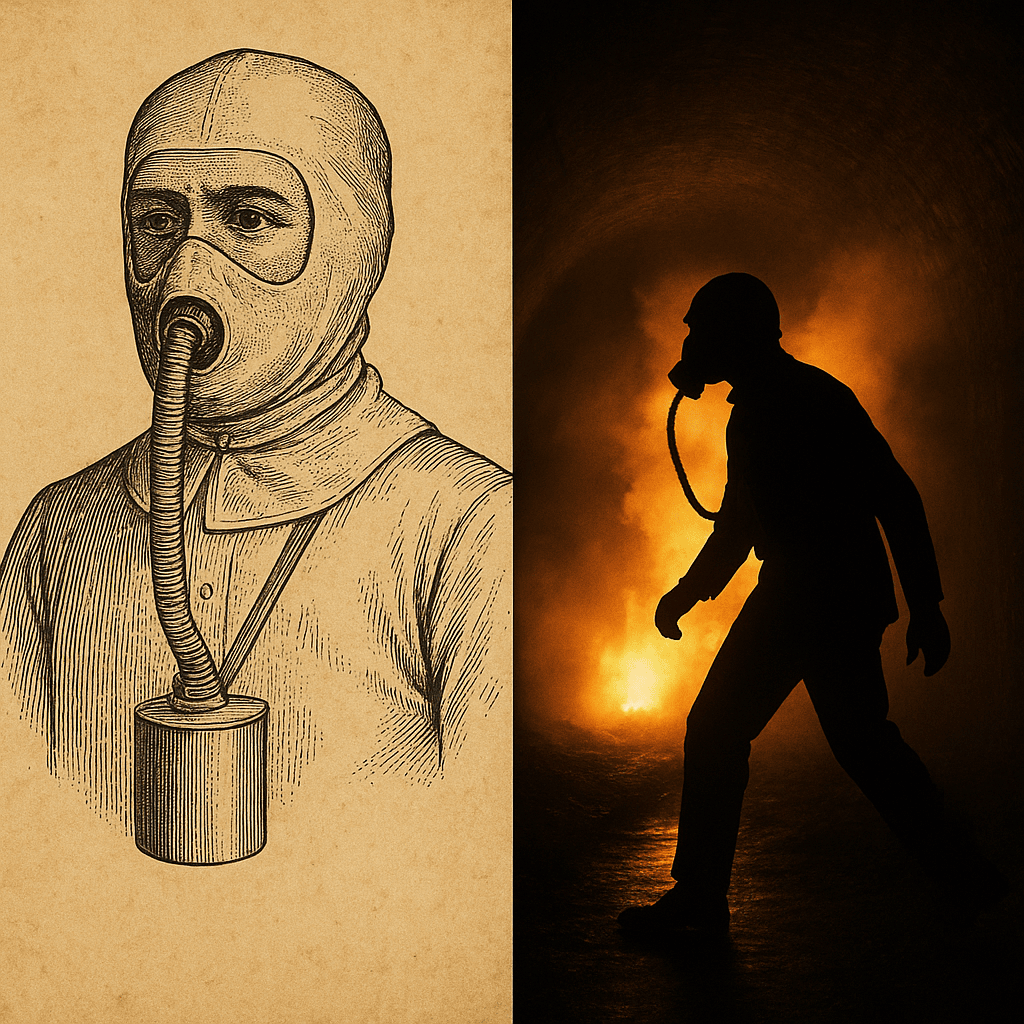
In 1912, Morgan designed a safety hood to protect firefighters and miners from the deadly smoke and toxic fumes they faced on the job. This early version of the gas mask featured breathing tubes and a wet sponge to filter air—simple, yet revolutionary.
But the true test came in 1916, when a natural gas explosion rocked a tunnel under Lake Erie in Cleveland. With little hesitation, Morgan donned his invention and entered the chaos. He saved multiple workers trapped beneath the earth—risking his own life to prove his device could do what others hadn’t even imagined.
Despite his heroism, headlines of the day often left out his name. Why? Because Garrett Morgan was Black. His contributions were buried in the shadows of racial prejudice, even as his inventions were saving lives and modernizing cities.
Today, we’re changing that narrative.
Garrett Morgan didn’t just invent the gas mask—he proved it worked. And his legacy deserves to breathe.
🧠 Now you know.
Related Links:
The Forgotten Genius Behind the Gas Mask – YouTube Short
Who Was Garrett Morgan? – Biography
More “Forgotten Genius Friday” Episodes
📢 Watch the full 60-second episode on our YouTube series, “The Knowledge,” and help us give credit where it’s due.





