Connect with us

Community

Local governments provide proof that polarization is not inevitable

Local politics help mitigate national polarization by focusing on concrete issues like infrastructure and community needs rather than divisive symbolic debates. A survey indicates that local officials experience less partisanship, as interpersonal connections foster recognition of shared interests. This suggests that reducing polarization is possible through collaboration and changes in election laws.

Published

on

Ribbon cutting ceremony with mascots present. Local officials get to participate in events such as ribbon cuttings, celebrating projects they may have helped make happen.
Local officials get to participate in events such as ribbon cuttings, celebrating projects they may have helped make happen. NHLI/Eliot J. Schechter via Getty Images

Lauren Hall, Rochester Institute of Technology

When it comes to national politics, Americans are fiercely divided across a range of issues, including gun control, election security and vaccines. It’s not new for Republicans and Democrats to be at odds over issues, but things have reached a point where even the idea of compromising appears to be anathema, making it more difficult to solve thorny problems.

But things are much less heated at the local level. A survey of more than 1,400 local officials by the Carnegie Corporation and CivicPulse found that local governments are “largely insulated from the harshest effects of polarization.” Communities with fewer than 50,000 residents proved especially resilient to partisan dysfunction.

Why this difference? As a political scientist, I believe that lessons from the local level not only open a window onto how polarization works but also the dynamics and tools that can help reduce it.

Problems are more concrete

Local governments deal with concrete issues – sometimes literally, when it comes to paving roads and fixing potholes. In general, cities and counties handle day-to-day functions, such as garbage pickup, running schools and enforcing zoning rules. Addressing tangible needs keeps local leaders’ attention fixed on specific problems that call out for specific solutions, not lengthy ideological debates.

By contrast, a lot of national political conflict in the U.S. involves symbolic issues, such as debates about identity and values on topics such as race, abortion and transgender rights. These battles are often divisive, even more so than purely ideological disagreements, because they can activate tribal differences and prove more resistant to compromise.
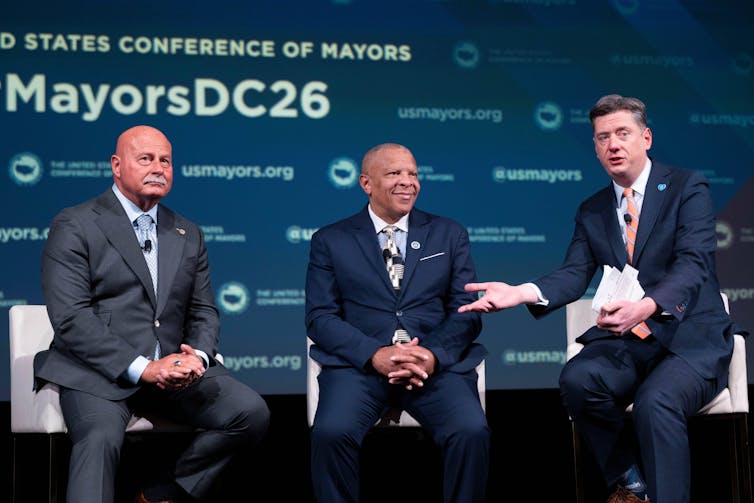
Three men site in chairs on a dais in front of a banner reading
When mayors come together, they often find they face common problems in their cities. Gathered here, from left, are Jerry Dyer of Fresno, Calif., John Ewing Jr. of Omaha, Neb., and David Holt of Oklahoma City. AP Photo/Kevin Wolf

Such arguments at the national level, or on social media, can lead to wildly inaccurate stereotypes about people with opposing views. Today’s partisans often perceive their opponents as far more extreme than they actually are, or they may stereotype them – imagining that all Republicans are wealthy, evangelical culture warriors, for instance, or conversely being convinced that all Democrats are radical urban activists. In terms of ideology, the median members of both parties, in fact, look similar.

These kinds of misperceptions can fuel hostility.

Local officials, however, live among the human beings they represent, whose complexity defies caricature. Living and interacting in the same communities leads to greater recognition of shared interests and values, according to the Carnegie/CivicPulse survey.

Meaningful interaction with others, including partisans of the opposing party, reduces prejudice about them. Local government provides a natural space where identities overlap.

People are complicated

In national U.S. politics today, large groups of individuals are divided not only by party but a variety of other factors, including race, religion, geography and social networks. When these differences align with ideology, political disagreement can feel like an existential threat.

Such differences are not always as pronounced at the local level. A neighbor who disagrees about property taxes could be the coach of your child’s soccer team. Your fellow school board member might share your concerns about curriculum but vote differently in presidential elections.
Advertisement
Get More From A Face Cleanser And Spa-like Massage
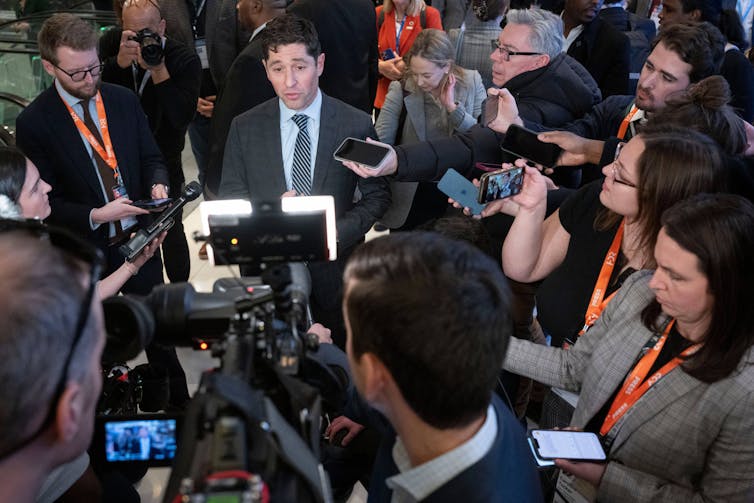
A large group of reporters surround Minneapolis Mayor Jacob Frey.
Mayors can find themselves caught up in national debates, as did Minneapolis Mayor Jacob Frey over the Trump administration’s immigration enforcement policies in his city. AP Photo/Kevin Wolf

These cross-cutting connections remind us that political opponents are not a monolithic enemy but complex individuals. When people discover they have commonalities outside of politics with others holding opposing views, polarization can decrease significantly.

Finally, most local elections are technically nonpartisan. Keeping party labels off ballots allows voters to judge candidates as individuals and not merely as Republicans or Democrats.

National implications

None of this means local politics are utopian.

Like water, polarization tends to run downhill, from the national level to local contests, particularly in major cities where candidates for mayor and other office are more likely to run as partisans. Local governments also see culture war debates, notably in the area of public school instruction.

Nevertheless, the relative partisan calm of local governance suggests that polarization is not inevitable. It emerges from specific conditions that can be altered.

Polarization might be reduced by creating more opportunities for cross-partisan collaboration around concrete problems. Philanthropists and even states might invest in local journalism that covers pragmatic governance rather than partisan conflict. More cities and counties could adopt changes in election law that would de-emphasize party labels where they add little information for voters.

Aside from structural changes, individual Americans can strive to recognize that their neighbors are not the cardboard cutouts they might imagine when thinking about “the other side.” Instead, Americans can recognize that even political opponents are navigating similar landscapes of community, personal challenges and time constraints, with often similar desires to see their roads paved and their children well educated.

The conditions shaping our interactions matter enormously. If conditions change, perhaps less partisan rancor will be the result.

Lauren Hall, Associate professor of Political Science, Rochester Institute of Technology

This article is republished from The Conversation under a Creative Commons license. Read the original article.

Advertisement
Get More From A Face Cleanser And Spa-like Massage

The Bridge is a section of the STM Daily News Blog meant for diversity, offering real news stories about bona fide community efforts to perpetuate a greater good. The purpose of The Bridge is to connect the divides that separate us, fostering understanding and empathy among different groups. By highlighting positive initiatives and inspirational actions, The Bridge aims to create a sense of unity and shared purpose. This section brings to light stories of individuals and organizations working tirelessly to promote inclusivity, equality, and mutual respect. Through these narratives, readers are encouraged to appreciate the richness of diverse perspectives and to participate actively in building stronger, more cohesive communities.

https://stmdailynews.com/the-bridge

Want more stories 👋
“Your morning jolt of Inspiring & Interesting Stories!”

Sign up to receive awesome articles directly to your inbox.

STM Coffee Newsletter 1

We don’t spam! Read our privacy policy for more info.


Discover more from Daily News

Subscribe to get the latest posts sent to your email.

Continue Reading
Advertisement Sports Research
Click to comment

Leave a Reply

Your email address will not be published. Required fields are marked *

Making a Difference

Why Christian clergy see risk as part of their moral calling

As clergy join protests against harsh immigration enforcement, a religious ethics scholar explains why many Christian Clergy view personal risk—arrest, backlash, even violence—as part of their vocation to protect vulnerable neighbors.

Published

on

As Christian clergy join protests against harsh immigration enforcement, a religious ethics scholar explains why many Christian leaders view personal risk—arrest, backlash, even violence—as part of their vocation to protect vulnerable neighbors.
A large group of protesters, including clergy, gathered outside St. Paul International Airport in St. Paul, Minn., on Jan. 23, 2026, to demonstrate against the immigration crackdown. Elizabeth Flores/The Minnesota Star Tribune via Getty Image

Laura E. Alexander, University of Nebraska Omaha

As Christian clergy across the United States participate in ongoing protests against harsh immigration enforcement actions and further funding for U.S. Immigration and Customs Enforcement, many are still pondering the words of Rob Hirschfeld. On Jan. 18, 2026, Hirschfeld, Bishop of the Episcopal Diocese of New Hampshire, encouraged clergy in his diocese to “prepare for a new era of martyrdom” and put their wills and affairs in order.

He asserted that “it may be that now is no longer the time for statements, but for us with our bodies to stand between the powers of this world and the most vulnerable.”

Hirschfeld’s words attracted a lot of attention, with clergy generally responding positively, though at least one priest argued that he “did not sign up to be a martyr” and had a family and church relying on him.

Other clergy have willingly faced arrest for their advocacy on behalf of immigrants, seeing it as a moral calling. Rev. Karen Larson was arrested while protesting at the Minneapolis airport. She stated that when people are being separated from their families and taken to unknown detention centers, “this is our call” to protest on their behalf.

As a scholar of religious ethics, I am interested in how Christian clergy and thinkers consider personal risk when they feel called to engage in social action.

Ethics of risk

There are many examples of Christian leaders who have taken on risks out of a religious and moral obligation to provide spiritual care for people in need or advocate for oppressed communities.

Most data on the risks that clergy face in their roles as religious leaders comes from studies of religious leaders in institutional settings, such as hospitals or prisons.

Scholarship on clergy and chaplains in medical settings points to a professional obligation to take on risks. Similar to medical providers who often see risking exposure to infection as part of their professional responsibility, many clergy and chaplains in medical settings understand their vocation to include such a risk.

A bespectacled Black priest reads from the Bible at a patient's bedside in a hospital.
Clergy often have to set their own fears aside. mediaphotos/iStock / Getty Images Plus

Questions about professional risks became particularly acute during the early years of the HIV/AIDS crisis, when researchers were uncertain exactly how the disease was spread and caregivers feared they might acquire HIV through their bedside work.

In her memoir about chaplaincy with HIV patients, Audrey Elisa Kerr notes that Riverside Church in New York continued to organize funerals, ministries and support groups for HIV/AIDS patients despite “terror” in the wider community about contagion.

As a chaplain herself, Kerr says this story of “radical hospitality” inspired her to set aside her own fears and embrace her professional role caring for people who were ill and dying.

Advertisement
Get More From A Face Cleanser And Spa-like Massage

Priests and nuns of the Catholic Church who cared for HIV/AIDS patients in the 1980s risked both the fear of contagion and the disapproval of their bishops and communities, since many of the people they cared for were men who had sex with men.

Some felt, however, that they must care for those at the margins as part of their role in the church or their monastic order. Sister Carol of the Hospital Sisters of Saint Francis felt that it was simply her moral duty as a sister to “go where she was needed,” despite potential risk.

Examination of the ethical obligations of chaplains and clergy ramped up during the COVID-19 pandemic when at least some priest, pastors and hospital chaplains felt an obligation to continue visiting patients for spiritual care.

In a reflection from 2020, Rev. David Hottinger, then working at Hennepin Healthcare in Minneapolis, noted that chaplains “felt privileged” to use their professional skills, even though they took on extra risk because they did not always have access to adequate protective equipment.

Risks in other institutional settings are not such a matter of life and death. Because of their professional preaching function, however, clergy in church settings do accept the risk of alienating church members when they feel religiously called to speak about social issues. Rev. Teri McDowell Ott has written about taking risks when discussing LGBTQ+ inclusion and starting a prison ministry.

Risk-taking during social protest

For many clergy, religious and ethical obligations extend beyond their work in institutions like churches and hospitals and include their witness in public life.

Many feel an obligation to preach on issues of moral importance, even topics that are considered controversial and might elicit strong disagreement. It is common for priests and pastors in conservative churches to include messages against legalized abortion in their sermons.

Tom Ascol of the Center for Baptist Leadership urged Baptist pastors to preach about abortion in the lead-up to the 2024 presidential election.

Rev. Leah Schade, a Lutheran minister and scholar, has argued that since 2017, mainline pastors have preached more often on issues like racism, environmental justice or gun violence. Schade says pastors are inspired to speak more bluntly about social issues because of their religious concern for people who are at risk of harm from injustice or government policies.

Some clergy view their moral obligations as going beyond preaching and leading them to on-the-ground advocacy and protest. Rev. Brandy Daniels of the Disciples of Christ denomination examines these obligations in an article on her participation in a group of interfaith clergy in Portland, Oregon. The group was convened by a local rabbi and supported protesters for racial justice in Portland in 2017. In Daniels’ analysis, clergy took on the risk of staying in the middle of protests and facing a violent police response in order to “bear moral witness,” something they were both empowered and obligated to do as religious leaders.

Advertisement
Get More From A Face Cleanser And Spa-like Massage

Risking their lives

There are more extreme cases in which clergy who challenged government leaders or policies were killed for their words and actions of protest.

A photo shows a priest raising his hands in blessing, with red and white flowers arranged in front of him.
The official portrait of Archbishop Oscar Romero, displayed in the Metropolitan Cathedral for a memorial service in San Salvador, El Salvador, on March 24, 2018. AP Photo/Salvador Melendez

In a well-known historical example, Bishop Oscar Romero, canonized as a martyred saint by the Roman Catholic Church in 2018, was assassinated in 1980 after speaking out against human rights violations against poor and Indigenous communities committed by the government of El Salvador. Romero viewed himself, in his priestly role, as a representative of God who was obliged to “give voice to the voiceless.”

During recent protests against ICE in Minneapolis and elsewhere, many clergy risked arrest and bodily harm. Rev. Kenny Callaghan, a Metropolitan Community Church pastor, who says that ICE agents in Minneapolis pointed a gun in his face and handcuffed him as he tried to help a woman they were questioning, said, “It’s in my DNA; I have to speak up for marginalized people.”

On Jan. 23, 2026, over 100 clergy were arrested at the Minneapolis-St. Paul airport as they protested and prayed against ICE actions. Rev. Mariah Furness Tollgaard said that she and others accepted being arrested as a way of demonstrating public support for migrants who are afraid to leave their homes.

In Chicago, ministers have been hit with projectiles and violently arrested. Presbyterian pastor David Black was shot in the head with a pepper spray projectile while protesting outside an immigration detention center in October 2025.

The clergy have told reporters that they feel a particular call to be out in public and to protect and support their vulnerable neighbors against ICE raids, at a time when families are afraid to go to school or work and U.S. citizens have been swept up in enforcement tactics as well.

As I see it, for these and many Christian clergy and ethicists, the call to ministry includes an obligation to express their values of care for vulnerable neighbors precisely through a public willingness to accept personal risk.

Laura E. Alexander, Associate Professor of Religious Studies, University of Nebraska Omaha

This article is republished from The Conversation under a Creative Commons license. Read the original article.

STM Daily News is a vibrant news blog dedicated to sharing the brighter side of human experiences. Emphasizing positive, uplifting stories, the site focuses on delivering inspiring, informative, and well-researched content. With a commitment to accurate, fair, and responsible journalism, STM Daily News aims to foster a community of readers passionate about positive change and engaged in meaningful conversations. Join the movement and explore stories that celebrate the positive impacts shaping our world. 

Advertisement
Get More From A Face Cleanser And Spa-like Massage

https://stmdailynews.com/


Discover more from Daily News

Subscribe to get the latest posts sent to your email.

Continue Reading

Community

HBCUs Do More Than Boost Opportunity — Research Suggests They Can Also Help Reduce Incarceration Risk

Historically Black colleges and universities (HBCUs) play a crucial role in supporting Black students’ educational and socioeconomic advancement. By providing affordable education and mentorship, HBCUs help reduce crime rates among graduates. Despite funding challenges, their impact includes higher graduation rates and economic mobility, which help break cycles of poverty and incarceration.

Published

on

file 20260204 56 hunzkv.jpg?ixlib=rb 4.1
Jackson State University students attend an event in Mississippi in October 2025. Aron Smith/Jackson State University via Getty Images

Historically Black colleges and universities do more than offer Black youths a pathway to opportunity and success – I teach criminology, and my research suggests another benefit

Andrea Hagan, Loyola University New Orleans

Historically Black colleges and universities, often known as HBCUs, are well known for their deep roots in U.S. higher education and proven effectiveness at graduating Black students who go on to become professionally successful.

HBCUs are colleges and universities that were established before 1964, with the mission of educating Black Americans, though now anyone can attend.

As a criminology instructor who has spent 13 years studying the relationship between educational trajectories and criminal justice – and a Black woman who grew up in the South and attended an HBCU – I believe that HBCUs offer another often overlooked benefit.

They give young people, especially Black people, a pathway in higher education that they might not otherwise receive. By opening doors to education, jobs and mentorship, HBCUs disrupt the conditions that can cause young people – especially Black people – to get lost in the criminal justice system.

The U.S. incarcerates approximately 1.6 million people. Black Americans are locked up at five times the rate of white Americans. This disparity starts young: Black teenagers are 5.6 times more likely to be placed in juvenile detention than white teenagers, and people who are incarcerated as juveniles are nearly four times more likely to be incarcerated as adults. Overall, the vast majority of Black people are not incarcerated.

Attending a HBCU, or any other university, does not guarantee a stable financial future. And not graduating from high school or college certainly does not not mean that someone will become incarcerated.

But research shows that education, especially a college degree, is closely linked to lower crime rates. College graduates who do commit crimes reoffend at rates below 6%, while people who drop out of high school return to prison at rates around 75%.

This is why I believe HBCUs in particular have an important role to play in helping young Black people avoid this path.

Three young women wear black graduation robes and black graduation hats and stand in a row.
Spelman College graduates arrive at their commencement ceremony in May 2025 in College Park, Ga. Paras Griffin/Getty Images

Understanding HBCUs

Today, there are roughly 100 HBCUs in 19 states, as well as the District of Columbia and the U.S. Virgin Islands. The schools are a mix of public schools and private, nonprofit colleges and universities.

HBCUs make up just 3% of the country’s colleges and universities. But their graduates include 40% of Black engineers, 50% of Black lawyers and 70% of Black doctors in the United States.

Most HBCUs are located in Southern and mid-Atlantic states – a legacy of when segregation barred Black students from attending most colleges and universities.

Advertisement
Get More From A Face Cleanser And Spa-like Massage

Many HBCUs are also located in rural Southern communities, in particular. Residents of these areas tend to live in poverty and have limited educational opportunities.

Attending a local HBCU is often one of the most practical ways these prospective students can get a degree – in part because HBCUs are often more affordable than other four-year college options.

The average annual tuition for an in-state student at a public HBCU is roughly US$7,700 per year – well below the national average, which ranges from $12,000 at public schools to $45,000 at private schools. Some public HBCUs charge as little as $1,000 in annual tuition for in-state students.

Schools like Coppin State University in Baltimore and the University of Maryland Eastern Shore also offer in-state rates to out-of-state students from places that do not have HBCUs nearby.

Despite their focus on Black students, HBCUs are increasingly diverse.

In 2022, non-Black students made up 24% of the student population at HBCUs. By comparison, 15% of non-Black students made up HBCU populations in 1976.

HBCUs also enroll low-income students, regardless of race, at three times the rate that predominantly white colleges do.

Upward mobility

Research shows completing high school reduces arrest rates by 11% to 12% for both property and violent crimes, regardless of race or economic background.

College takes this effect further.

Studies have found that college enrollment helps young people with histories of delinquency to stop committing crimes. Completing a four-year degree reduces the likelihood of criminal behavior by 43% to 48%, compared to those who started college but did not finish.

Advertisement
Get More From A Face Cleanser And Spa-like Massage

A few long-recognized reasons help explain this pattern. Education increases earning potential, making crime a riskier and less attractive option for people with a degree. Education also encourages long-term thinking, strengthens ties to employers and communities, and builds problem-solving skills that help people navigate challenges.

I have seen firsthand, through my own experiences growing up in the South and teaching students, how HBCUs can help move Black students out of poverty. These schools stand out among other colleges in terms of how effectively they graduate low-income Black students and move them into the middle class, outcomes that research links to reduced criminal behavior.

When researchers rank colleges by whether and how their students improve their socioeconomic status, income and wealth over time, more than half of the highest-performing schools are HBCUs.

Black students who attend HBCUs are 30% more likely to earn a degree than Black students who attend colleges that are not HBCUs. Black HBCU graduates are also likely to earn more money than Black non-HBCU college graduates.

This matters because poverty is one of the strongest predictors of whether someone will commit a crime.

When colleges and universities graduate students who earn middle-class incomes, they help break what researchers call the cycle of intergenerational poverty and incarceration. This pattern describes how children of incarcerated parents are six times more likely to end up in the justice system.

An ongoing money problem

Despite their benefits, HBCUs have chronically struggled with funding. In recent decades, state governments have not given Black land-grant universities – meaning public colleges originally created through federal legislation to serve Black students during segregation – at least $12.8 billion the federal government said they were owed.

Recent federal support for HBCUs has been mixed, as the Trump administration has made widespread cuts to many universities and colleges.

In April 2025, President Donald Trump signed an executive order renewing the White House Initiative on HBCUs, a federal effort to help support these schools. At the time, he said that Black colleges had no reason to fear cuts.

But days later, Trump’s proposed 2026 budget included $64 million in cuts to Howard University, one of the oldest HBCUs.

Advertisement
Get More From A Face Cleanser And Spa-like Massage

In September 2025, the Trump administration redirected $435 million to HBCUs by cutting funds from grant programs that had supported Hispanic-serving institutions and other colleges that have a large proportion of Hispanic or other minority students.

A large crowd is seen on a field in front of a red brick building with a tall clock tower. HBCUs
People gather on Howard University’s campus during its annual homecoming event in October 2016. Cheriss May/NurPhoto via Getty Images

The context that matters

The U.S. criminal justice system disproportionately affects Black people at every stage – from arrests to incarceration. Black Americans make up about 13% of the U.S. population but account for roughly 37% of all people in U.S. jails and prisons.

According to the National Academies of Sciences, the lifetime risk of imprisonment for Black men born between 1975 and 1979, and with less than a high school education, was about 68% – meaning nearly 7 in 10 in that group experienced incarceration at least once.

I have seen firsthand that when Black students from low-income backgrounds enroll at HBCUs, they become more likely to complete a degree and achieve the kind of financial stability that research shows helps reduce the risk of becoming caught up in the criminal justice system.

Andrea Hagan, Instructor of Criminology & Justice, Loyola University New Orleans, Loyola University New Orleans

This article is republished from The Conversation under a Creative Commons license. Read the original article.

The Bridge is a section of the STM Daily News Blog meant for diversity, offering real news stories about bona fide community efforts to perpetuate a greater good. The purpose of The Bridge is to connect the divides that separate us, fostering understanding and empathy among different groups. By highlighting positive initiatives and inspirational actions, The Bridge aims to create a sense of unity and shared purpose. This section brings to light stories of individuals and organizations working tirelessly to promote inclusivity, equality, and mutual respect. Through these narratives, readers are encouraged to appreciate the richness of diverse perspectives and to participate actively in building stronger, more cohesive communities.

https://stmdailynews.com/the-bridge

Author


Discover more from Daily News

Subscribe to get the latest posts sent to your email.

Continue Reading

Community

What if universal rental assistance were implemented to deal with the housing crisis?

A significant number of American families facing unaffordable rents are living in motels. While many believe a housing shortage causes high rents, experts suggest that expanding rental assistance is more effective. Making subsidies available to all eligible low-income households could tackle this affordability crisis significantly.

Published

on

Two people in a cluttered room.What if universal rental assistance were implemented to deal with the housing crisis?
Thousands of American families that can’t find affordable apartments are stuck living in extended-stay motels. Michael S. Williamson/The Washington Post via Getty Images

What if universal rental assistance were implemented to deal with the housing crisis?

Alex Schwartz, The New School and Kirk McClure, University of Kansas

If there’s one thing that U.S. politicians and activists from across the political spectrum can agree on, it’s that rents are far too high.

Many experts believe that this crisis is fueled by a shortage of housing, caused principally by restrictive regulations.

Rents and home prices would fall, the argument goes, if rules such as minimum lot- and house-size requirements and prohibitions against apartment complexes were relaxed. This, in turn, would make it easier to build more housing.

As experts on housing policy, we’re concerned about housing affordability. But our research shows little connection between a shortfall of housing and rental affordability problems. Even a massive infusion of new housing would not shrink housing costs enough to solve the crisis, as rents would likely remain out of reach for many households.

However, there are already subsidies in place that ensure that some renters in the U.S. pay no more than 30% of their income on housing costs. The most effective solution, in our view, is to make these subsidies much more widely available.

A financial sinkhole

Just how expensive are rents in the U.S.?

According to the U.S. Department of Housing and Urban Development, a household that spends more than 30% of its income on housing is deemed to be cost-burdened. If it spends more than 50%, it’s considered severely burdened. In 2023, 54% of all renters spent more than 30% of their pretax income on housing. That’s up from 43% of renters in 1999. And 28% of all renters spent more than half their income on housing in 2023.

Renters with low incomes are especially unlikely to afford their housing: 81% of renters making less than $30,000 spent more than 30% of their income on housing, and 60% spent more than 50%.

Estimates of the nation’s housing shortage vary widely, reaching up to 20 million units, depending on analytic approach and the time period covered. Yet our research, which compares growth in the housing stock from 2000 to the present, finds no evidence of an overall shortage of housing units. Rather, we see a gap between the number of low-income households and the number of affordable housing units available to them; more affluent renters face no such shortage. This is true in the nation as a whole and in nearly all large and small metropolitan areas.

Would lower rents help? Certainly. But they wouldn’t fix everything.

Advertisement
Get More From A Face Cleanser And Spa-like Massage

We ran a simulation to test an admittedly unlikely scenario: What if rents dropped 25% across the board? We found it would reduce the number of cost-burdened renters – but not by as much as you might think.

Even with the reduction, nearly one-third of all renters would still spend more than 30% of their income on housing. Moreover, reducing rents would help affluent renters much more than those with lower incomes – the households that face the most severe affordability challenges.

The proportion of cost-burdened renters earning more than $75,000 would fall from 16% to 4%, while the share of similarly burdened renters earning less than $15,000 would drop from 89% to just 80%. Even with a rent rollback of 25%, the majority of renters earning less than $30,000 would remain cost-burdened.

Vouchers offer more breathing room

Meanwhile, there’s a proven way of making housing more affordable: rental subsidies.

In 2024, the U.S. provided what are known as “deep” housing subsidies to about 5 million households, meaning that rent payments are capped at 30% of their income.

These subsidies take three forms: Housing Choice Vouchers that enable people to rent homes in the private market; public housing; and project-based rental assistance, in which the federal government subsidizes the rents for all or some of the units in properties under private and nonprofit ownership.

The number of households participating in these three programs has increased by less than 2% since 2014, and they constitute only 25% of all eligible households. Households earning less than 50% of their area’s median family income are eligible for rental assistance. But unlike Social Security, Medicare or food stamps, rental assistance is not an entitlement available to all who qualify. The number of recipients is limited by the amount of funding appropriated each year by Congress, and this funding has never been sufficient to meet the need.

By expanding rental assistance to all eligible low-income households, the government could make huge headway in solving the rental affordability crisis. The most obvious option would be to expand the existing Housing Choice Voucher program, also known as Section 8.

The program helps pay the rent up to a specified “payment standard” determined by each local public housing authority, which can set this standard at between 80% and 120% of the HUD-designated fair market rent. To be eligible for the program, units must also satisfy HUD’s physical quality standards.

Unfortunately, about 43% of voucher recipients are unable to use it. They are either unable to find an apartment that rents for less than the payment standard, meets the physical quality standard, or has a landlord willing to accept vouchers.

Advertisement
Get More From A Face Cleanser And Spa-like Massage

Renters are more likely to find housing using vouchers in cities and states where it’s illegal for landlords to discriminate against voucher holders. Programs that provide housing counseling and landlord outreach and support have also improved outcomes for voucher recipients.

However, it might be more effective to forgo the voucher program altogether and simply give eligible households cash to cover their housing costs. The Philadelphia Housing Authority is currently testing out this approach.

The idea is that landlords would be less likely to reject applicants receiving government support if the bureaucratic hurdles were eliminated. The downside of this approach is that it would not prevent landlords from renting out deficient units that the voucher program would normally reject.

Homeowners get subsidies – why not renters?

Expanding rental assistance to all eligible low-income households would be costly.

The Urban Institute, a nonpartisan think tank, estimates it would cost about $118 billion a year.

However, Congress has spent similar sums on housing subsidies before. But they involve tax breaks for homeowners, not low-income renters. Congress forgoes billions of dollars annually in tax revenue it would otherwise collect were it not for tax deductions, credits, exclusions and exemptions. These are known as tax expenditures. A tax not collected is equivalent to a subsidy payment.

Silhouette of older man standing at sliding glass door.
Only about 25% of eligiblge households receive rental assistance from the federal government. Luis Sinco/Los Angeles Times via Getty Images

For example, from 1998 through 2017 – prior to the tax changes enacted by the first Trump administration in 2017 – the federal government annually sacrificed $187 billion on average, after inflation, in revenue due to mortgage interest deductions, deductions for state and local taxes, and for the exemption of proceeds from the sale of one’s home from capital gains taxes. In fiscal year 2025, these tax expenditures totaled $95.4 billion.

Moreover, tax expenditures on behalf of homeowners flow mostly to higher-income households. In 2024, for example, over 70% of all mortgage-interest tax deductions went to homeowners earning at least $200,000.

Broadening the availability of rental subsidies would have other benefits. It would save federal, state and local governments billions of dollars in homeless services. Moreover, automatic provision of rental subsidies would reduce the need for additional subsidies to finance new affordable housing. Universal rental assistance, by guaranteeing sufficient rental income, would allow builders to more easily obtain loans to cover development costs.

Of course, sharply raising federal expenditures for low-income rental assistance flies in the face of the Trump administration’s priorities. Its budget proposal for the next fiscal year calls for a 44% cut of more than $27 billion in rental assistance and public housing.

On the other hand, if the government supported rental assistance in amounts commensurate with the tax benefits given to homeowners, it would go a long way toward resolving the rental housing affordability crisis.

Advertisement
Get More From A Face Cleanser And Spa-like Massage

This article is part of a series centered on envisioning ways to deal with the housing crisis.

Alex Schwartz, Professor of Urban Policy, The New School and Kirk McClure, Professor of Urban Planning, University of Kansas

This article is republished from The Conversation under a Creative Commons license. Read the original article.


Discover more from Daily News

Subscribe to get the latest posts sent to your email.

Continue Reading

Trending

