A few weeks before Justin Bieber and his wife, Hailey, announced in May 2024 that they were expecting, the pop icon posted a selfie where he appears tearful and distraught.
Yet Bieber’s social media post is notable for making his internal struggle visible.
Emotional pain is linked to serious health issues. But the public’s response to male expressions of emotion and vulnerability is often minimizing, if not dismissive. In response to Bieber’s tearful post, for example, Hailey described him as a “pretty crier.”
A year ago, the Canadian rapper Dax released the song “To Be a Man.” He said at the time: “This is a song I poured my heart into. I’m praying this reaches everyone who needs it.”
Yeah, I know this life can really beat you down, uh You wanna scream but you won’t make a sound, uh Got so much weight that you’ve been holdin’ But won’t show any emotion, as a man, that goes unspoken
As researchers who study fatherhood and the roles that men play in their families, we recognize the loneliness and pain in these lyrics. We have heard fathers describe the toll of attempting to keep a lid on their feelings.
In a recent study we conducted on 75 new and expectant Black fathers, they spoke of the need to address individual and collective trauma. This, they said, would ultimately help support their families. But they said resources to help men with their mental health are often unavailable or very limited. They said they often feel invisible to health providers.
“Being a father and a man,” one participant said, “you have to keep the peace and be strong on the outside. But on the inside, you know, you’re falling apart.”
Advertisement
Dax’s lyrics and our research reflect an enduring social health challenge – the deafening silence that typically surrounds men’s mental health.
The toll of isolation on men
In May 2023, U.S. Surgeon General Dr. Vivek Murthy released an advisory highlighting what he described as an epidemic of loneliness and isolation in the country. Our research confirms this scourge.
Since men’s social support networks – colleagues, family, close childhood friends – are often less robust than women’s, the epidemic disproportionately impacts men. The resulting solitude has very real health consequences.Studies show that loneliness is associated with negative health outcomes like elevated levels of heart disease and a higher risk of dementia. Matthias Balk/picture alliance via Getty Images
In Murthy’s report, loneliness is associated with negative health outcomes, including a “29% increased risk of heart disease, a 32% increased risk of stroke, and a 50% increased risk of developing dementia for older adults. Additionally, lacking social connection increases risk of premature death by more than 60%.”
While Murthy’s report focuses on both men and women, research shows that men are less likely than women to seek mental health services. Additionally, men hold more negative attitudes toward seeking help, and they prematurely terminate treatment more often than women.
With these consequences in mind, a caring society may ask: Why are men carrying the brunt of this health risk, and what can be done about it?
Redefining men’s value beyond breadwinning
Many factors can contribute to feelings of isolation and disconnection among men.
In “To Be A Man,” Dax points toward one prominent factor:
As a man, we gotta pave our way Our only function is to work and slave There’s no respect for you if you ain’t paid You’re disregarded as a human and you can’t complain
Traditional definitions of masculinity emphasize the importance of men’s role as breadwinners.
As partners and fathers, men are still often perceived as deficient if they can’t provide economically. And societal norms stress that they are not valued for their capacity as caregivers, even if they are more involved in raising their children than ever before.
This is out of touch with reality.
Men play an important role as caregivers in their children’s lives, according to our research, and exert a powerful influence on children’s health and well-being. Men also find meaning in their roles as fathers.
As Dax says:
As a man, our son is our horizon
The cost of suppressed vulnerability
Beyond pressures to provide, men also have to overcome enduring stereotypes that suggest they should be stoic and keep their fears and sadness to themselves.
Here, too, gender norms are in need of an update. Boys and men need to feel comfortable presenting their true, authentic selves to the world. When they suppress their vulnerability, it creates a barrier to seeking help. It also perpetuates stigma and the epidemic of loneliness.Men are less likely than women to seek mental health care. Getty Images
There is a complex interplay between society’s assumptions and beliefs about men and fatherhood.
Men, consequently, are less likely than women to seek mental health services. Health providers, as a result, are more likely to underdiagnose and misdiagnose men. Additionally, when health resources are made available, they are often not tailored to men’s needs.
Societal expectations can create unbearable pressure for men. And the most marginalized groups, like low-income Black fathers, bear a disproportionate burden, research shows. This became more evident during the COVID-19 pandemic, when Black fathers working in high-risk and essential jobs prioritized supporting their children and families over their own risk of infection and mental health.
As men continue to redefine their roles within families and communities, it’s important for society to create a space that acknowledges and embraces their vulnerabilities and full humanity in all social roles.
Advertisement
Men need outlets for their pain. They would benefit from relationships – with partners, family and friends – that support and nurture them in times of joy and through the emotional challenges. Their loneliness will continue to be disproportionate without the necessary connection to services.
No wonder most men are so depressed All the things that they can’t express It’s the circle of life, as a man, you provide They don’t know what you’re worth ‘til the day that you die
As the Biebers adjust to life as parents, Justin may find people he can talk to about his experiences and emotions, people who see and value him fully. And we hope the same for every man and father, living their life out of the spotlight and doing the best they can for themselves and for their family.
Our Lifestyle section on STM Daily News is a hub of inspiration and practical information, offering a range of articles that touch on various aspects of daily life. From tips on family finances to guides for maintaining health and wellness, we strive to empower our readers with knowledge and resources to enhance their lifestyles. Whether you’re seeking outdoor activity ideas, fashion trends, or travel recommendations, our lifestyle section has got you covered. Visit us today at https://stmdailynews.com/category/lifestyle/ and embark on a journey of discovery and self-improvement.
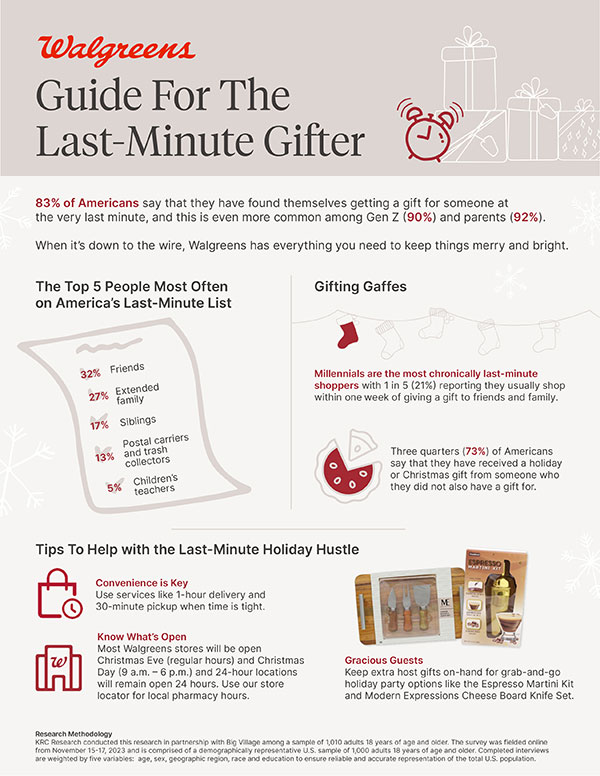
(Family Features) If you’ve ever found yourself buying a holiday gift for someone on your list at the last minute, you’re not alone. According to a Walgreens U.S. gift-giving survey, 83% of Americans found themselves getting a gift for someone at the last minute – a trend even more common among Gen Z (90%) and parents (92%). To help keep things merry and bright, consider these tips to help with the last-minute holiday hustle, and visit Walgreens.com or a store near you to find deals and gift inspiration.
FDA’s COVID-19 Vaccine Safety Claims Lack Solid Evidence—Why Overreaction Could Harm Public Health
COVID-19 vaccine safety: The FDA’s claims about COVID-19 vaccine deaths in children lack strong evidence and could restrict vaccine access. Learn why experts say VAERS reports aren’t proof, and how overreacting may harm public health and trust in vaccines.
The death of children due to an unsafe vaccine is a serious allegation. I am a pediatric cardiologist who has studied the link between COVID-19 vaccines and heart-related side effects such as myocarditis in children. To my knowledge, studies to date have shown such side effects are rare, and severe outcomes even more so. However, I am open to new evidence that could change my mind. But without sufficient justification and solid evidence, restricting access to an approved vaccine and changing well-established procedures for testing vaccines would carry serious consequences. These moves would limit access for patients, create roadblocks for companies and worsen distrust in vaccines and public health. In my view, it’s important for people reading about these FDA actions to understand how the evidence on a vaccine’s safety is generally assessed.
Determining cause of death
The FDA memo claims that the deaths of these children were directly related to receiving a COVID-19 immunization. From my perspective as a clinician, it is awful that any child should die from a routine vaccination. However, health professionals like me owe it to the public to uphold the highest possible standards in investigating why these deaths occurred. If the FDA has evidence demonstrating something that national health agencies worldwide have missed – widespread child deaths due to myocarditis caused by the COVID-19 vaccine – I don’t doubt that even the most pro-vaccine physician will listen. So far, however, no such evidence has been presented. While a death logged in VAERS is a starting point, on its own it is insufficient to conclude whether a vaccine caused the death or other medical causes were to blame. To demonstrate a causal link, FDA staff and physicians must align the VAERS report with physicians’ assessments of the patient, as well as data from other sources for monitoring vaccine safety. These include PRISM, which logs insurance claims data, and the Vaccine Safety Datalink, which tracks safety signals in electronic medical records. It’s known that most deaths logged only in VAERS of children who recently received vaccines have been incorrectly attributed to the vaccines – either by accident or in some cases on purpose by anti-vaccine activists.
Heart-related side effects of COVID-19 vaccines
In his Substack and Twitter accounts, Prasad has said that he believes the rate of severe cardiac side effects after COVID-19 vaccination is severely underestimated and that the vaccines should be restricted far more than they currently are. In a July 2025 presentation, Prasad quoted a risk of 27 cases per million of myocarditis in young men who received the COVID-19 vaccine. A 2024 review suggested that number was a bit lower – about 20 cases out of 1 million people. But that same study found that unvaccinated people had greater risk of heart problems after a COVID-19 infection than vaccinated people. In a different study, people who got myocarditis after a COVID-19 vaccination developed fewer complications than people who got myocarditis after a COVID-19 infection. Existing vaccine safety infrastructure in the U.S. successfully identifies dangers posed by vaccines – and did so during the COVID-19 pandemic. Today, most COVID-19 vaccines in the U.S. rely on mRNA technology. But as vaccines were first emerging during the COVID-19 pandemic, two pharmaceutical companies, Janssen and AstraZeneca, rolled out a vaccine that used a different technology, called a viral vector. This type of vaccine had a very rare but genuine safety problem that was detected.A report in VAERS is at most a first step to determining whether a vaccine caused harm. VAERS, the Vaccine Safety Datalink, clinical investigators in the U.S. and their European counterparts detected that these vaccines did turn out to cause blood clotting. In April 2021, the FDA formally recommended pausing their use, and they were later pulled from the market. Death due to myocarditis from COVID-19 vaccination is exceedingly rare. Demonstrating that it occurred requires proof that the person had myocarditis, evidence that no other reasonable cause of death was present, and the absence of any additional cause of myocarditis. These factors cannot be determined from VAERS data, however – and to date, the FDA has presented no other relevant data.
A problematic vision for future vaccine approvals
Currently, vaccines are tested both by seeing how well they prevent disease and by how well they generate antibodies, which are the molecules that help your body fight viruses and bacteria. Some vaccines, such as the COVID-19 vaccine and the influenza vaccine, need to be updated based on new strains. The FDA generally approves these updates based on how well the new versions generate antibodies. Since the previous generation of vaccines was already shown to prevent infection, if the new version can generate antibodies like the previous one, researchers assume its ability to prevent infection is comparable too. Later studies can then test how well the vaccines prevent severe disease and hospitalization. The FDA memo says this approach is insufficient and instead argues for replacing such studies with many more placebo-controlled trials – not just for COVID-19 vaccines but also for widely used influenza and pneumonia vaccines. That may seem reasonable theoretically. In practice, however, it is not realistic. Today’s influenza vaccines must be changed every season to reflect mutations to the virus. If the FDA were to require new placebo-controlled trials every year, the vaccine being tested would become obsolete by the time it is approved. This would be a massive waste of time and resources.Influenza vaccines must be updated for every flu season.Jacob Wackerhausen/iStock via Getty Images Plus Also, detecting vaccine-related myocarditis at the low rate at which it occurs would have required clinical trials many times larger than the ones that were done to approve COVID-19 mRNA vaccines. This would have cost at least millions of dollars more, and the delay in rolling out vaccines would have also cost lives. Placebo-controlled trials would require comparing people who receive the updated vaccine with people who remain unvaccinated. When an older version of the vaccine is already available, this means purposefully asking people to forgo that vaccine and risk infection for the sake of the trial, a practice that is widely considered unethical. Current scientific practice is that only a brand-new vaccine may be compared against placebo. While suspected vaccine deaths should absolutely be investigated, stopping a vaccine for insufficient reasons can lead to a significant drop in public confidence. That’s why it’s essential to thoroughly and transparently investigate any claims that a vaccine causes harm.
Discover how to choose the perfect live holiday tree and keep it fresh all season. Get expert tips on measuring, selecting, caring for, and disposing of your real Christmas tree for a safe and festive home.
How to Choose and Care for a Live Holiday Tree: Expert Tips for a Fresh, Festive Season
(Family Features) Though artificial Christmas trees have come a long way, few things compare to the fresh scent and natural beauty of a live tree. Whether your family picks out a real tree as an annual tradition or this is your first time considering a live tree for the holidays, this guidance can help you choose the right one and care for it throughout the season. 1. Measure Your Space Before you head to your local tree farm, measure the ceiling height where you plan to set up the tree, subtracting the amount of room your star or topper will account for. Similarly, measure the width to ensure the tree doesn’t encroach too much on furniture or traffic flow. 2. Choose the Right Tree While the options can be overwhelming once you’re among the field of available trees, consider what shape would fit best in your space: Do you want a fuller or slimmer tree to fit a tighter space? Is a uniform shape without large gaps in the needles important or do you need stronger branches better equipped for handling heavier ornaments? Don’t forget to also consider trunk size – and consider bringing your stand with you to ensure your preferred tree fits – as trees with short or crooked trunks may be unstable. 3. Inspect for Freshness and Quality To ensure a safe, long-lasting, beautiful tree throughout the holidays, look at it from all angles and inspect the needles and branches. Needles should be green, not dry or brittle, and firmly attached to the branches, which should be flexible and not snap easily. If you run your hand through the branches and they break or needles fall off, it may be wise to look at other trees. Remember, if your tree has been cut too early, it may sit too long and dry out before Christmas arrives, so try and buy your tree as close to setup time as possible. 4. Set Up with Care Before placing your tree in the stand, make a fresh cut about 1 inch from the base of the trunk to open the pores for water absorption. Place it away from heat sources – vents, fireplaces, direct sunlight – as they will dry it out faster. Remember to water daily (or at least check it daily), keeping the water level above the base of the trunk. 5. Plan for Disposal Once your tree has dried out – branches may be brittle and lots of needles may have fallen off – it’s time to remove it. Remove all decorations then check to see if your city offers tree recycling or chipping service. Many offer these services for free for a limited time after the holidays but may require you to drop the tree off or cut it into smaller pieces for pick up. Find more seasonal advice to make the holidays safe and festive at eLivingtoday.com. Photo courtesy of Shutterstock SOURCE:eLivingtoday.com
Welcome to the Consumer Corner section of STM Daily News, your ultimate destination for savvy shopping and informed decision-making! Dive into a treasure trove of insights and reviews covering everything from the hottest toys that spark joy in your little ones to the latest electronic gadgets that simplify your life. Explore our comprehensive guides on stylish home furnishings, discover smart tips for buying a home or enhancing your living space with creative improvement ideas, and get the lowdown on the best cars through our detailed auto reviews. Whether you’re making a major purchase or simply seeking inspiration, the Consumer Corner is here to empower you every step of the way—unlock the keys to becoming a smarter consumer today!