

Sports
Monumental Sports & Entertainment Rebrands its Media Platform
Monumental acquired former NBC Sports Washington from Comcast/NBC Universal in 2022; network will be available on the same broadcast channels across all cable and satellite providers

Last Updated on July 3, 2024 by Daily News Staff
Monumental Sports Network and Announces New Content and Programming for D.C. Sports Fans starting in the 2023-24 Season
WASHINGTON /PRNewswire/ — Today, Monumental Sports & Entertainment (MSE) announced the official rebrand of its sports network, NBC Sports Washington, as Monumental Sports Network. The rebranding will take effect this September and will replace all instances of the NBC Sports Washington brand and logo. The rebranding will also extend to new on-air graphics, digital aesthetics, and more. Monumental will launch a brand awareness campaign this summer to inform fans of this transition, ahead of the 2023-24 NBA and NHL regular seasons.
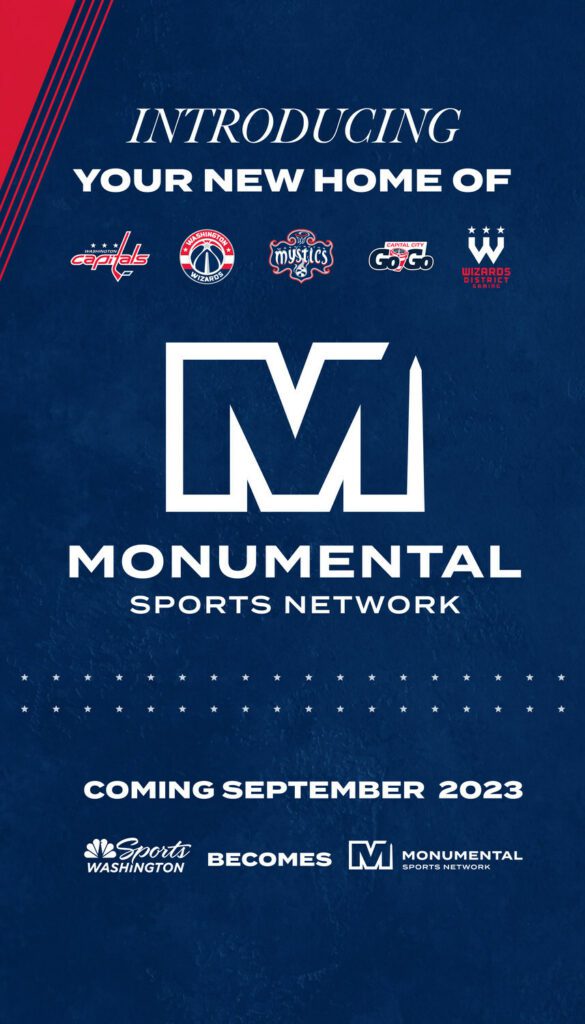
When the new Monumental Sports Network brand goes live this fall, the network will launch a variety of new original and studio programs that overhaul the network’s 24-hour programming experience. This investment in programming will complement the hundreds of live games and pre- and post-game programs that the network already produces for the NHL’s Washington Capitals, the NBA’s Washington Wizards, the WNBA’s Washington Mystics, the G League’s Capital City Go-Go, the NBA 2K League’s Wizards District Gaming – all franchises owned and operated by Monumental. Monumental Sports Network holds exclusive local TV media rights to the NHL’s Washington Capitals, NBA’s Washington Wizards and WNBA’s Washington Mystics games. Additionally, the network will carry hundreds of hours of programming for local collegiate and high-school level games across D.C., Virginia and Maryland.
The programming additions include two new studio shows, behind-the-scenes team magazine shows, and coverage from D.C. native Rachel Nichols, the nationally recognized sportswriter, reporter and broadcaster.
“When we acquired NBC Sports Washington, we committed to building the best local sports network for our fans. Today’s announcement is the first of many which reflect significant investments that we are making back into our media platform that will greatly upgrade the everyday experience for D.C. sports fans and our various partners,” shared Zach Leonsis, President of Media & New Enterprises, Monumental Sports & Entertainment. “We’re incredibly excited to debut the many enhancements that we’ve developed over the course of this past year and believe that fans will genuinely appreciate the thoughtful approach that we’re taking to bring them closer to the teams and athletes that they love and admire.”
About the Rebrand:
The rebrand will replace all instances of the NBC Sports Washington brand and logo, and will extend to new on-air graphics, digital aesthetics, and more. Monumental, in partnership with renowned brand agency, HZ, developed the brand’s logo, upcoming campaign and extensions.
To build a brand that truly represents D.C. sports, the concept started with a focus on the heart of the organization: the fans. The naming and brand development process included deep market research, analysis, and multiple rounds of testing with focus groups and participants across the DMV. And while Monumental Sports Network is the existing namesake of the digital network which MSE launched in 2016, after several thoughtful rounds of examination, it rose to be the most suitable brand for the new station.
The testing included thousands of current season ticket holders for the Capitals, Wizards, and Mystics – the most loyal and enthusiastic fans who consume the brand most consistently. Participant groups were expanded to also include casual sports fans, community members, and those who live outside the DMV but still identify as D.C. sports fans. Of the six names tested, the one that resonated the most and felt the most authentic was Monumental Sports Network. Almost half of participants picked this as their front-runner over the other options presented.
With the name locked in, attention turned to the logo and brand development. With several unique logo options and multiple brand-looks, testing began with the various participant groups and they provided quantitative and qualitative feedback. The logo — “Monumental M”— was the clear winner, with favorability double that of other logo concepts. The subtle nods to the Washington Monument in the composition of the logo is unique and authentic to D.C. HZ also used the power of each team’s colors and identities in crafting the new Monumental Sports Network brand. D.C.’s architecture, textures, and symbols were also used as inspirations throughout the brand iconography. Participants overwhelmingly gravitated to that brand option over all others.
“The team at HZ that helped develop the brand is a unique combination of brand experts, DMV natives, and huge D.C. sports fans,” shared Katie Hooper, President, HZ. “It gave us a unique opportunity to craft a brand that we knew would truly resonate with the community. Leaning into the strengths of how iconic D.C. is and collaborating with fans, we found so much inspiration to push the brand forward and create something that only a D.C. sports network could own.”
About the New Content & Programming:
Monumental Sports Network is pursuing a significant overhaul of the network’s programming for the upcoming season including multiple new in-game enhancements, new original programming, alternate feeds of live games, and additional on-air talent including national media personality, Rachel Nichols.
Live game enhancements:
- Sideline reporters will travel and report on-the-ground for all games.
- Players and coaches will be mic’d up in-game, bringing fans closer to the action during broadcasts 40 Wizards and 40 Caps games per season.
- Point-of-view cameras will be positioned for announcers, capturing the most dramatic calls for all games.
- Unparalleled access and views for fans watching Alex Ovechkin’s chase of history to beat Wayne Gretzky’s all time goal scoring record.
- Unique crash box camera angles will be positioned during Washington Capitals games for ice-level game action and new access to behind-the-scenes and point-of-view cameras outside the Capitals’ locker-room for home games.
- Wireless cameras will be positioned for game production, capturing more in-arena excitement/reactions.
- There will be more opportunities to get to know players with longer-form, personality driven postgame interviews.
- The pregame and postgame shows will start the season being produced from Capital One Arena until the network’s new studios are delivered at the end of 2023/early 2024.
- Fans will also see more advanced analytics during broadcasts.
New original programming:
- Rachel Nichols Project: A new interview format series will feature award-winning journalist and sportscaster Rachel Nichols. Rachel will be telling the stories of her hometown’s top sports talent and celebrities.
- By the Book: In conjunction with Caesars Sportsbook, Monumental will re-launch the network’s marquee sports betting series for a third season. Highlights will include a new studio and cutting-edge graphics.
- Untitled Capitals Magazine: A new weekly series will highlight the best behind-the-scenes, off-ice stories with players, staff, and other Capitals fanatics stories, hosted by network presenter Alexa Landestoy.
- Untitled Wizards Magazine: A new weekly series will feature the best behind-the-scenes, off-court stories with players, staff and other Wizards fanatics stories, hosted by network presenter Wes Hall.
- Untitled Top 10 Series: Program will count down the greatest moments in Capitals and Wizards history in this new format series; episodes may include greatest goals, buzzer beaters, dunks, and comebacks.
- Classic Capitals and Wizards games: Fans will be able to relive classic Capitals and Wizards games and anniversaries tied to major rivalries and marquee matchups during the 2023-24 seasons.
- Other specials and limited series in development: Fans will gain behind-the-scenes access to Monumental’s sports teams’ players and coaches, there will be new studio specials celebrating important moments throughout the season, podcasts diving deeper into stories both on and off the court/ice, and new limited series focusing on fashion and the NBA.
Alternate Feeds:
- Fans can anticipate at least 100 games where there will be alternate feeds across both the Wizards and Capitals’ regular season games each year.
- Alternate feeds will be available on the network’s soon-to-be launched digital platform during game times when the Capitals and Wizards aren’t playing at the same time.
- Alternate feeds will feature rotating on-air talent including former players, team personnel, local media personalities, and more – but in a more casual, conversational setting while analyzing the game.
- Alternate feeds will also feature advanced data analytics and other data visualizations to enhance the on-screen experience.
- The network will pursue the production of alternate feeds upon opening its new state-of-the-art studio experience later in the 2023-24 NBA and NHL regular seasons.
All of Monumental Sports Network’s new programming enhancements will improve the game day experience for fans, creating a longer programming grid that builds up to the game itself, upgrade the current broadcast, and gives viewers more choices to enjoy their broadcast.
Additional Assets
In addition to the brand and programming notes, Monumental Sports Network will launch a new digital experience and newsletter.
The new digital experience will be home to live games for pay TV customers, exclusive digital content, and the latest news, schedules and stats from our teams.
The newsletter will keep fans up to date on all things Monumental Sports Network each week, presented in a quick and easy to consume format. Fans will get the latest schedule and programming updates, the best broadcast moments and the most interesting stories and news about the teams.
To see more, visit: https://www.monumentalsportsnetwork.com/coming-soon
“This brand personality conveys key pillars for our network: confidence, authenticity, iconicity, inclusiveness, and innovation” said Friday Abernethy, General Manager of Monumental Sports Network. “And we expect that the way we are programing the network, making investments in technology and the new production studio, and designing a seamless fan/user experience will set the trend for the entire industry.”
Today’s announcement of the network’s rebranding as well as new content and programming for the 2023-24 season and beyond will be followed by additional announcements about the network in the coming months. The full technical and operational change-over from former NBC Sports Washington to Monumental Sports Network will come this fall, ahead of the start to the NHL and NBA seasons. At that time, fans will see new logos and a new brand identity when they tune into the familiar station.
Audiences tuning into Monumental Sports Network will still see some legacy programming from NBC Sports Washington’s existing contracts. An announcement will be made later this summer on the launch date and schedule for the new broadcast line-up. Channel guides will continue listing the station as NBC Sports Washington until the full technical and operational changeover in the Fall.
The rebrand and programming line-up announcement is just the first phase in bringing Monumental Sports Network to fans, with exciting plans for an upgraded fan experience to be announced throughout the Summer and Fall of 2023.
About Monumental Sports Network
Monumental Sports Network is wholly owned and operated by Monumental Sports & Entertainment (MSE). The network holds exclusive local television media rights for the NHL’s Washington Capitals, NBA’s Washington Wizards and WNBA’s Washington Mystics games. Monumental Sports Network is also the TV and digital home to the NBA G League’s Capital City Go-Go and the NBA 2K League’s Wizards District Gaming as well as exclusive behind-the-scenes content and original sports and entertainment programming. The network also boasts the most comprehensive regional high-school and regional collegiate Division II-and-under sports programming in the greater Washington D.C. metro area. For more visit: https://www.monumentalsportsnetwork.com/coming-soon
SOURCE Monumental Sports & Entertainment
Author


Sports
Sports Facilities Companies Acquires RCI Sports Management
The Sports Facilities Companies has acquired RCI Sports Management, enhancing its national presence and services in sports tourism and venue operations. This acquisition adds properties in Texas and Kansas, focusing on improving facility performance and revenue generation through integrated marketing and standardized systems, reflecting a trend in consolidating sports facility services.

The Sports Facilities Companies has acquired Texas-based RCI Sports Management, a move that expands its national footprint while strengthening its position in sports tourism, venue operations, and economic impact services for municipalities and private owners.

The deal adds RCI-managed properties in Texas and Kansas to the SF Network, including The Refinery Fieldhouse in Garden City, Amarillo Netplex in Amarillo, and Travis Fields at Midtown Park in Bryan. Together, the facilities broaden SFC’s reach in mid-market communities where youth sports, tournaments, and event programming are increasingly tied to hotel stays, visitor spending, and local business activity.
SFC said the acquisition will help accelerate facility performance through integrated marketing, sponsorship sales, standardized operating systems, and expanded event and tourism pipelines. That makes this more than a management deal — it reflects the continued consolidation of sports facility services as operators look to scale revenue generation, improve efficiency, and deliver stronger returns for public and private partners.
Related Links
Source
Source: The Sports Facilities Companies via PR Newswire
The Sports section of STM Daily News is your ultimate destination for all things sports, catering to everyday fans and dedicated enthusiasts alike. We cover a wide range of topics, from the thrill of amateur competitions to the excitement of semi-professional and professional leagues. Our content delves into physical and mental fitness, providing insights and tips that help individuals elevate their performance, whether on the field or in their personal wellness journeys. Stay informed and inspired as we explore the dynamic world of sports, celebrating both the passion of the players and the joy of the fans.
Sports
The U.S. Army Names Soldier-Athletes Headed to the 2026 Winter Games in Italy
The U.S. Army says nine WCAP Soldier-athletes and coaches will compete at the 2026 Winter Games in Italy in bobsled, biathlon, Nordic combined and figure skating—showcasing elite fitness, discipline and performance.
The U.S. Army is sending a new group of Soldier-athletes to one of the biggest stages in international sports.
In a Jan. 29, 2026 announcement, the Army said nine Soldier-athletes and coaches will represent the United States at the 2026 Winter Games in Italy, with two additional Soldiers traveling as alternates. The group will compete across bobsled, biathlon, Nordic combined, and pairs figure skating—sports that demand equal parts endurance, precision, and mental toughness.
Who’s representing the Army at the 2026 Winter Games
According to the release, the Army’s lineup of Soldier-athletes and coaches includes:
Competing and coaching in Italy
- Lt. Col. Chris Fogt (Bobsled Head Coach)
- Lt. Col. Garrett Hines (Bobsled Coach)
- Sgt. 1st Class Shauna Rohbock (Bobsled Coach)
- Sgt. Frank Del Duca (Bobsled)
- Spc. Azaria Hill (Bobsled)
- Staff Sgt. Deedra Irwin (Biathlon)
- Spc. Sean Doherty (Biathlon)
- Sgt. Ben Loomis (Nordic Combined)
- Pvt. Spencer Howe (Pairs Figure Skating)
Alternates
- Cpl. Hakeem Abdul-Saboor (Bobsled Alternate)
- Spc. Dana Kellogg (Luge Doubles Alternate)
Soldier first, athlete always
The Army emphasized that WCAP athletes remain full-time Soldiers while training and competing at the elite level. Brig. Gen. Matthew Braman, the Army’s Chief Marketing Officer, said the same traits built through military service—discipline, mental agility, teamwork, and readiness—translate directly into high-level athletic performance.
“Even when competing at the highest level, these athletes are U.S. Army Soldiers first,” Braman said in the release, adding that they’re trained to be “tactically and technically proficient” and prepared to perform in any environment.
What is the World Class Athlete Program (WCAP)?
The Soldier-athletes train and serve through the U.S. Army World Class Athlete Program (WCAP), which supports top-ranked Soldiers competing at the international level. WCAP provides coaching, facilities, and training resources while ensuring Soldiers maintain their readiness and complete mandatory Army requirements.
While WCAP was officially established in 1997, the Army says it has been training Soldier-athletes for more than 75 years. Over that span, the Army has sent more than 600 Soldier-athletes to compete on the world stage, earning more than 120 medals across summer and winter sports.
Italy adds a layer of Army history
This year’s Winter Games location also carries historical meaning for the Army. The release points to World War II, when the 10th Mountain Division—an elite unit trained for mountain warfare—climbed Riva Ridge in northern Italy in a mission that helped shift momentum in the war.
After returning home, many Soldiers from the 10th Mountain Division helped build the foundation of the American ski industry by establishing ski resorts and ski schools across the U.S.—a legacy that still shows up in winter sports culture today.
Braman called the upcoming Games “a unique moment” to honor both the Army’s history in alpine terrain and its long-standing presence in elite athletics.
What to Watch For
- Biathlon conditioning: How Soldier-athletes balance endurance output with shooting precision under fatigue.
- Bobsled power and speed: Starts win races—watch for explosive sprint mechanics and teamwork on push phases.
- Nordic combined workload: One of the toughest mixes in sport; look for training insights on strength-to-weight and aerobic capacity.
- Recovery and readiness: How WCAP athletes manage sleep, mobility, and injury prevention while staying Soldier-ready.
- Italy’s alpine backdrop: The region’s mountain history adds context—and pressure—for performance in cold, high-demand environments.
Learn more
For more information about the U.S. Army and opportunities like WCAP, the release directs readers to GoArmy.com, including GoArmy.com/world-class-athlete-program.
Source: U.S. Army (PRNewswire), Jan. 29, 2026
Related External Links
- U.S. Army World Class Athlete Program (WCAP) – Overview of how Soldier-athletes train and compete at the elite level.
- GoArmy.com – Learn more about U.S. Army opportunities and careers.
- Team USA – Athlete news, sport profiles, and updates across Olympic and Paralympic disciplines.
- Olympics.com – Official Winter Games coverage, schedules, and sport explainers.
- International Ski and Snowboard Federation (FIS) – Rules, rankings, and event info for Nordic disciplines, including Nordic combined.
- International Bobsleigh & Skeleton Federation (IBSF) – Bobsled and skeleton sport info, events, and athlete resources.
- International Biathlon Union (IBU) – Biathlon news, event calendars, and performance insights.
Stay Updated with STM Daily News Sports
Want more sports and fitness coverage that’s worth your time—athlete training, performance trends, major events, and the stories behind the grind? Keep up with our latest at STM Daily News – Sports .
Author
Sports
CourtsApp Launches as “The Healthiest App in the World,” Turning Screen Time Into Play Time
CourtsApp, branded as “the healthiest app in the world,” aims to reduce screen time by encouraging users to engage in racquet sports like tennis and pickleball. The platform facilitates easy court bookings without membership fees, promoting movement and social interaction. Expansion plans cover various U.S. regions, maximizing accessibility for players.

If your New Year’s reset includes less scrolling and more moving, CourtsApp is trying to make that switch ridiculously easy.
CourtsApp has officially launched with a bold claim—calling itself “the healthiest app in the world”—and the positioning is clear: it’s not another wellness app asking for more screen time. It’s a tool designed to get you off your phone and onto a court.
What CourtsApp is (and why it’s different)
CourtsApp is an AI-powered marketing and booking platform that helps players instantly find and book open courts for tennis, pickleball, padel, and other racquet sports—often at discounted prices. The key point: no membership fees are required.
That matters because “friction” is one of the biggest reasons people don’t play as often as they want to. If booking a court means juggling memberships, phone calls, limited availability, or confusing club policies, most people default to the easier option: staying home.
CourtsApp’s pitch is simple: open the app, find a court, book it, and go play.
Turning screen time into play time
Most apps compete for attention. CourtsApp is leaning into the opposite idea—convert screen time into movement.
The average adult now spends more than seven hours a day looking at screens, a trend that’s often linked with rising rates of obesity, heart disease, anxiety, and social isolation. CourtsApp is positioning itself as a healthier relationship with your phone: use it briefly, then put it away and get outside.
Instead of tracking steps or pushing workouts through a screen, the app is built around real-world activity—full-body movement, outdoor play, and social connection.
Why racquet sports are having a moment
CourtsApp’s launch also taps into a bigger trend: racquet sports are booming, and not just because they’re fun.
Founder and CEO Daren Hornig argues that sports like tennis and pickleball can be a stronger path to fitness and longevity than the typical “10,000 steps” mindset.
“CourtsApp turns your phone into a gateway to real-world health,” Hornig said. “For years, we’ve been told that you can stay fit and lose weight by walking 10,000 steps a day, taking a Peloton class online or going to a gym. However, sports like tennis and pickleball give you a greater chance to achieve your health and fitness goals and live a longer and healthier life. And there’s no better time to start than the New Year.”
The company also points to research published in the British Journal of Sports Medicine, citing long-term data following more than 80,000 adults over nearly a decade. According to the release, participants in racquet sports saw a 47% lower risk of death from any cause and up to a 56% lower risk of cardiovascular-related death compared to non-participants.
Where CourtsApp is live now—and what’s next
CourtsApp is currently live for players across:
- New York
- New Jersey
- Connecticut
The platform already lists more than 1,500 courts across 150+ facilities in those markets.
Next up: expansion from Maine to Florida by Q1 2026, followed by market-by-market growth as club density increases. The release also calls out additional play-in markets including:
- Southern California
- Texas
- Pacific Northwest
Flexible pricing, more access, fewer barriers
One of the most practical angles here is affordability and access.
CourtsApp highlights discounted pricing during quieter hours—helping players turn a random free afternoon into court time without committing to a membership or paying peak-hour rates.
For clubs, the platform doubles as a marketing and booking engine. For players, it’s a shortcut to the thing they actually want: a court that’s open right now.
The bigger takeaway
CourtsApp is betting on a simple truth: people don’t need more motivation apps—they need fewer obstacles.
If the app delivers on its promise (fast booking, real inventory, and meaningful discounts), it could become a go-to tool for anyone trying to make movement a habit—especially in sports like pickleball and tennis where access and scheduling can make or break consistency.
Players and clubs can learn more or join the platform at CourtsApp.com.
Here’s a clean Related Links block you can paste into WordPress (HTML view). Swap in your actual URLs/titles where needed:
Related Links
- CourtsApp (Official Site)
- More Sports + Wellness Coverage on STM Daily News
- Pickleball News & Updates
- Tennis News & Court Culture
“`
Get the latest updates and information on the rapidly growing sport of pickleball, specifically designed for the senior community aged 50+. Check out Sleeve’s Senior Pickleball Report on YouTube to stay informed and up-to-date with the ever-changing world of pickleball. Join the community and stay ahead of the game. https://stmdailynews.com/sleeves-senior-pickleball-report/







