

Space and Tech
NASA Awards Expand Research Capabilities at Institutions Nationwide
NASA is allocating around $45 million to 21 higher education institutions to enhance research capacity.

NASA is awarding approximately $45 million to 21 higher-education institutions to help build capacity for research. The awards were made possible through the Minority University Research and Education Project Institutional Research Opportunity (MIRO) and Established Program to Stimulate Competitive Research (EPSCoR) grants, which are funded by the agency’s Office of Science, Technology, Engineering, and Mathematics (STEM) Engagement.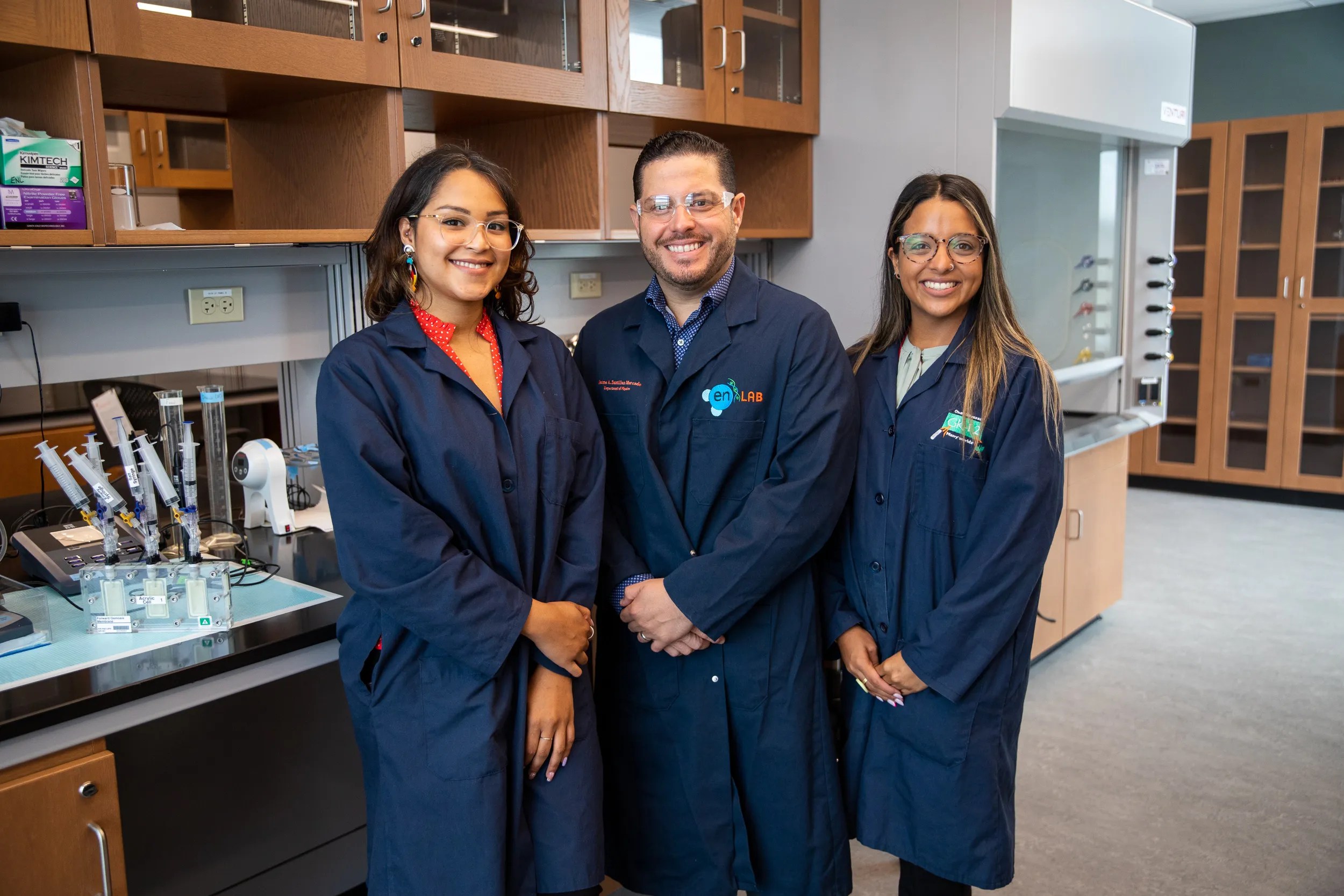
Credits: NASA
“NASA’s Minority University Research and Education Project Institutional Research Opportunity and Established Program to Stimulate Competitive Research awards help institutions raise their technological bar,” said Torry Johnson, deputy associate administrator of STEM Engagement Programs at NASA Headquarters in Washington. “When institutions enhance their capabilities and infrastructure, they become more competitive in their research, which opens doors to valuable experience and opportunities.”
Minority University Research and Education Project Institutional Research Opportunity (MIRO) Awards
Seven minority-serving institutions will receive approximately $5 million each over a five-year period of performance for projects that span a variety of research topics. The institutions and their proposed projects are:
- Alaska Pacific University in Anchorage – Alaska Pacific University Microplastics Research and Education Center
- California State University in Fullerton – SpaceIgnite Center for Advanced Research-Education in Combustion
- City University of New York, Hunter College in New York – NASA-Hunter College Center for Advanced Energy Storage for Space
- Florida Agricultural and Mechanical University in Tallahassee – Integrative Space Additive Manufacturing: Opportunities for Workforce-Development in NASA Related Materials Research and Education
- New Jersey Institute of Technology in Newark – AI Powered Solar Eruption Center of Excellence in Research and Education
- University of Houston in Houston – NASA MIRO Inflatable Deployable Environment and Adaptive Space Systems Center
- University of Illinois in Chicago – Center for In-Space Manufacturing: Recycling and Regolith Processing
NASA’s MIRO award was established to strengthen and develop research capacity and infrastructure of minority serving institutions in areas of strategic importance and value to NASA missions and national priorities.
Established Program to Stimulate Competitive Research (EPSCoR) Award
NASA establishes partnerships with government, higher education, and industry to create lasting improvements in research infrastructure and capacity for specific states or regions, while enhancing its national research and development competitiveness. The program is directed at those jurisdictions that have traditionally not participated in competitive aerospace and aerospace-related research activities.
NASA will award 14 institutions up to $750,000 each over the course of a three-year period of performance. The awarded institutions and their projects are:
- University of Mississippi in University – Development of a Lagrangian Stability Analysis Framework for High-Speed Boundary Layers
- University of Alabama in Huntsville – Testing the functionality and performance of a large area detector for STROBE-X
- Louisiana State University in Baton Rouge – Colloidal Assembly: Understanding the Electric Field Driven Assembly of Colloids and its Applications (Science Mission Directorate)
- West Virginia University in Morgantown – Science Mission Directorate: Bringing Gravitational-Wave Astronomy into the Space Age: Next-Generation Waveform Modeling of Black-Hole Binary Coalescences for Laser Intererometer Space Antenna Data Analysis
- University of Puerto Rico in San Juan – NASA EPSCoR: Space Technology Mission Directorate/Jet Propulsion Laboratory: Advancing High-Energy, Cycle-Stable Sulfur-Based Batteries for NASA Space Missions: An Integrated Framework of Density Functional Theory, Machine Learning, and Materials Innovation
- Desert Research Institute, Reno, Nevada – NASA’s Ames Research Center in Silicon Valley, California: Prospecting and Pre-Colonization of the Moon and Mars using Autonomous Robots with Human-In-The-Loop
- Oklahoma State University in Stillwater – A.7.4.2 Biosignature Detection of Solar System Ocean Worlds using Science-Guided Machine Learning
- Iowa State University in Ames – Johnson Space Center, Ames Research Center: Non-GPS Navigation System Using Dual Star/Planetary Cameras for Lunar and Deep-Space CubeSat Missions
- University of Alaska Fairbanks in Fairbanks – NASA’s Glenn Research Center in Cleveland: The Alaska – Venus analog: synthesizing seismic ground motion and wind noise in extreme environments
- University of the Virgin Islands in Charlotte Amalie – University of the Virgin Islands Etelman Observatory in the Era of Time Domain and MultiMessenger Astronomy: Preparing for a New Era of Science Productivity
- University of Hawaii at Manoa in Honolulu – Cubesats for Climate Change Detection of Transient Greenhouse Gas Emissions
- University of Idaho in Moscow – Science Mission Directorate and Goddard Space Flight Center: Improving Global Dryland Streamflow Modeling by Better Characterizing Vegetation Use of Deep-Water Resources Using NASA’s Gravity Recovery and Climate Experiment/Gravity Recovery and Climate Experiment Follow-On, SWOT, and Land Information System
- University of Arkansas in Little Rock – AR- III-Nitride Ultraviolet Laser Diodes for Harsh Environments, Space Based Communications, and Remote Sensing (Space Technology Mission Directorate)
- South Dakota School of Mines and Technology in Rapid City – Science Mission Directorate: High Spatial-Temporal Resolution Soil Moisture Retrieval using Deep Learning Fusion of Multimodal Satellite Datastreams
Both awards were made through NASA’s Office of STEM engagement solicitations. They promote STEM literacy to enhance and sustain the capability of institutions to perform NASA-related research and education, which directly supports the agency’s mission directorates.
For more information about NASA STEM, visit:
Source: NASA


News
FAA Certifies Boeing 737-7: What It Means for Airlines and the 737 MAX Program
The FAA has certified Boeing’s new 737-7, clearing the smallest 737 MAX variant for service as Boeing and Southwest prepare for first deliveries.


The U.S. Federal Aviation Administration has certified Boeing’s new 737-7, granting the company an amended type certificate that clears the smallest member of the 737 MAX family for commercial service. The milestone closes a multi-year certification effort and puts the focus on execution: Boeing and launch customer Southwest Airlines say preparations are underway to support first deliveries.
For STM Daily News readers, the headline isn’t just “another plane gets approved.” It’s a signal that Boeing has now cleared a key MAX variant designed for long-range flexibility in a smaller footprint—an aircraft type airlines can use to open or defend routes where demand is strong, but not strong enough to justify a larger narrowbody.
What FAA certification means
An amended type certificate means the FAA has approved the 737-7’s design as compliant with commercial aviation regulations. In practical terms, certification allows airlines to place the aircraft into revenue service once deliveries begin and operator-specific steps—training, manuals, maintenance programs, and entry-into-service planning—are completed.
Boeing also said the FAA updated Boeing Production Certificate No. 700 (PC 700) to include the 737-7, supporting production and delivery activities.
Why the 737-7 matters in the MAX lineup
Boeing positions the 737-7 as the smallest and longest-range member of the 737 MAX family. The company says it typically seats 135 to 160 passengers in a two-class configuration and offers a range of up to 3,800 nautical miles (7,040 km). That combination matters because it gives airlines more options to fly longer “thin” routes—markets where frequency and reach matter more than packing in additional seats.
Boeing also highlights performance for operations out of high-altitude airports and in hot climates, where takeoff performance and payload-range tradeoffs can shape fleet decisions.
Efficiency claims: fuel, emissions, and noise
Boeing says the 737-7, like other 737 MAX jets, reduces fuel use and CO2 emissions by 20% and cuts the noise footprint by 50% compared to the airplanes it typically replaces. For airlines, those improvements typically show up in two ways:
- Route economics: lower fuel burn can improve margins on longer sectors and reduce exposure to fuel-price swings.
- Operational constraints: quieter aircraft can help with airport noise requirements and community pressure, while lower emissions support sustainability targets.
Inside the certification effort
Boeing said the certification program began in 2018 and included more than 1,000 hours of flight and ground testing, extensive system safety analysis, and human factors reviews. The company also noted an updated engine anti-ice system to address a potential condition discovered during flight testing.
Boeing Commercial Airplanes President and CEO Stephanie Pope called the certification “important” validation of the airplane’s design and the work of the MAX development team. Mike Sinnett, senior vice president of Product Strategy, Product Development and Development Programs, said Boeing held regular discussions with the FAA and that the process has sharpened the company’s understanding of current regulatory requirements—knowledge Boeing expects will accelerate future development with a renewed emphasis on human factors, safety, and quality.
What to watch next
With certification complete, the next phase is about delivery timing and real-world deployment.
- First deliveries to Southwest: Boeing and Southwest are preparing for delivery of the first airplane, including updates to final configuration.
- Production stability: certification removes a major hurdle, but supply chain health and production cadence will determine how quickly the 737-7 shows up in airline schedules.
- The 737-10 timeline: Boeing reiterated it is working to certify the 737-10 this year, keeping attention on how quickly the final MAX variant clears regulatory review.
The bigger MAX picture
Boeing said the 737 MAX family order book stands at more than 7,200 airplanes, with more than 2,300 delivered through the end of June 2026. The 737-7’s certification adds another deliverable product to that portfolio—one aimed at airlines that want long range without stepping up to a larger gauge.
Bottom line
FAA certification of the 737-7 is a meaningful milestone for Boeing and for airlines looking for a smaller narrowbody with long-range capability. The real test now is operational: turning certification into on-time deliveries and reliable entry into service—while the industry watches Boeing’s push to certify the 737-10.
Related Links
- Boeing 737 MAX family overview (manufacturer background/specs): https://www.boeing.com/commercial/737max/
- FAA Aircraft Certification (how type certification works): https://www.faa.gov/aircraft/air_cert/
- FAA Airworthiness Directives (regulatory actions database): https://www.faa.gov/regulations_policies/airworthiness_directives
- Southwest Airlines newsroom (launch customer context / fleet updates): https://www.swamedia.com/
- Boeing Commercial Airplanes newsroom (for follow-ups and official updates): https://boeing.mediaroom.com/news-releases?item=130821
📰 Enjoying STM Daily News? Join the conversation!
💬 Leave a comment, share your thoughts, and subscribe to our newsletter for the latest stories, updates, and “News You Can Use This Moment!” delivered to your inbox.
Stay connected with STM Daily News!
Source:
Boeing (PRNewswire), Aug. 3, 2026 — “U.S. FAA certifies new Boeing 737-7 airplane.”
News
Joby Aviation and Toyota kick off manufacturing alliance to scale electric air taxi production
Joby Aviation and Toyota launch a joint venture to improve productivity, quality, and cost as they prepare to scale electric air taxi production.

Joby Aviation and Toyota Motor Corporation have launched the initial phase of a strategic manufacturing alliance aimed at accelerating commercial production of electric air taxis—an early step the companies say is designed to make “air mobility for all” a practical, everyday reality.
Announced June 30, 2026, the partnership formalizes a new joint venture that will combine Joby’s electric aviation development with Toyota’s production systems and operational expertise. The near-term focus: building the groundwork for commercial production while pushing improvements in productivity, quality, and cost—key factors as the industry moves from prototypes to scaled manufacturing.

What the joint venture is designed to do
According to the companies, the alliance will initially concentrate on:
- Establishing the foundation for commercial production capability
- Advancing manufacturing excellence with an emphasis on productivity, quality, and cost
- Supporting expansion of Joby’s production capacity as it works toward aircraft certification and prepares for anticipated demand
The announcement positions Toyota’s manufacturing playbook—known globally for lean production and continuous improvement—as a lever to help Joby move from development into repeatable, high-quality output at scale.
Why it matters: eVTOLs need scale, not just flight tests
Electric vertical take-off and landing (eVTOL) aircraft have become one of the most closely watched bets in next-generation transportation, but the path to viable air taxi services depends on more than successful test flights. Certification timelines, supply chain readiness, and the ability to produce aircraft consistently (and affordably) are often what separates promising technology from commercial reality.
By forming a joint venture focused on manufacturing readiness, Joby and Toyota are signaling that the next competitive frontier is industrialization—how quickly and reliably eVTOL aircraft can be built to meet safety standards and market demand.
Related Links for Further reading
- Joby Aviation (official): https://www.jobyaviation.com
- Joby Investor Relations / News (official updates & filings): https://ir.jobyaviation.com
- Toyota Newsroom (official): https://www.toyotanewsroom.com
- Toyota Global (corporate overview): https://global.toyota/en
- FAA Advanced Air Mobility / Air Taxis (context): https://www.faa.gov/air-taxis
What executives are saying
Joby founder and CEO JoeBen Bevirt emphasized the long-running relationship between the companies, calling the joint venture a reflection of shared confidence in the opportunity ahead.
“Toyota has been by Joby’s side for nearly a decade, providing invaluable guidance and support as we built the foundation for manufacturing our aircraft,” Bevirt said. “Together, we share a vision of making aerial mobility an everyday reality.”
Toyota Motor Corporation Chairman Akio Toyoda framed air mobility as an extension of the company’s broader mission.
“Since our founding, we’ve been guided by the philosophy of providing mobility for all,” Toyoda said, adding that Toyota views air mobility as “a natural extension of that philosophy—from the ground into the sky.”
About the companies
Joby Aviation (NYSE: JOBY) is a California-based transportation company developing an all-electric eVTOL air taxi. The company intends to operate its own air taxi service in cities worldwide and sell aircraft to other operators and partners.
Toyota (NYSE: TM) has operated in North America for nearly 70 years and says it is focused on sustainable, next-generation mobility through Toyota and Lexus brands. Toyota reports nearly 64,000 employees in North America, 14 manufacturing plants, and more than 1,800 dealerships. The company also noted that its North Carolina plant began assembling automotive batteries for electrified vehicles in 2025.
What to watch for next
For readers tracking the air taxi sector, the next milestones will likely center on:
- Details on how the joint venture will be structured operationally
- Updates on Joby’s certification progress and production ramp timelines
- Signs of how manufacturing improvements translate into cost reductions and throughput
- Additional agreements or expanded collaboration as the alliance progresses
While the companies highlighted expected benefits, they also noted the usual forward-looking risks—such as regulatory certification timelines, market conditions, and the ability to finalize additional agreements.
Source: Toyota Motor North America / PRNewswire (June 30, 2026)
📰 Enjoying STM Daily News? Join the conversation!
💬 Leave a comment, share your thoughts, and subscribe to our newsletter for the latest stories, updates, and “News You Can Use This Moment!” delivered to your inbox.
Stay connected with STM Daily News!
STM Blog
From Hand Signals to Smart Crosswalks: The Evolution of the Modern Pedestrian Signal
Discover the history of the modern pedestrian signal, from Garrett A. Morgan’s groundbreaking traffic signal to today’s smart, accessible crosswalks.
Last Updated on July 12, 2026 by Daily News Staff
Every day, millions of people rely on pedestrian signals to cross busy street safely. A glowing white walking figure, an orange-red hand, and a countdown timer have become familiar sights around the world. While these signals may seem like simple pieces of infrastructure, they are the result of more than a century of innovation, engineering, and public safety improvements.
The modern pedestrian signal did not appear overnight. Instead, it evolved through the contributions of inventors, engineers, city planners, and transportation officials who continually refined traffic control systems as cities grew and automobiles became more common.
The Early Days of Traffic Control
Before electric traffic signals, intersections were controlled by police officers, railway-style semaphores, or even hand signals. As horse-drawn wagons gave way to automobiles in the early 1900s, traffic congestion and accidents increased dramatically, creating an urgent need for better traffic management.
One of the earliest electric traffic lights was installed in Cleveland, Ohio, in 1914. It used red and green lights and was manually operated. While it improved vehicle movement, pedestrians still had to judge for themselves when it was safe to cross.
Garrett A. Morgan’s Breakthrough
One of the most important milestones came in 1923 when inventor and entrepreneur Garrett Augustus Morgan received U.S. Patent No. 1,475,024 for an improved traffic signal.
Morgan’s design introduced a third position in addition to “Stop” and “Go.” This intermediate phase temporarily stopped traffic in every direction before allowing vehicles to proceed. The brief pause reduced confusion at intersections and provided additional time for pedestrians to cross safely.
Morgan reportedly developed his design after witnessing a serious traffic accident. His invention demonstrated how thoughtful engineering could improve public safety while making increasingly busy streets more efficient.
Although Morgan did not invent the illuminated “WALK” and “DON’T WALK” pedestrian signal used today, his three-position signal became a foundational step in the evolution of modern traffic control.
The Birth of Dedicated Pedestrian Signals
As cities expanded after World War II, pedestrian safety became an even greater concern. More people were walking in increasingly crowded downtown districts, and separating pedestrian movements from vehicle traffic became a priority.
During the early 1950s, several American cities began experimenting with dedicated pedestrian signals. New York City became one of the first major municipalities to install illuminated “WALK” and “DON’T WALK” signs at busy intersections.
These early systems gave pedestrians their own designated crossing phase, reducing conflicts with turning vehicles and improving safety at some of the nation’s busiest intersections.
Standardization Across America
By the 1960s and 1970s, traffic engineers recognized the importance of creating consistent traffic control devices nationwide.
The Manual on Uniform Traffic Control Devices (MUTCD) established national standards for traffic signs, pavement markings, and pedestrian signals. Standardized designs helped ensure that pedestrians could understand crossing signals regardless of where they traveled in the United States.
Eventually, words gave way to internationally recognized symbols—a walking person to indicate it was safe to cross and an upraised hand to indicate pedestrians should wait. These symbols transcended language barriers and improved accessibility for visitors and non-English speakers.
The Countdown Era
One of the most significant modern improvements arrived with pedestrian countdown timers.
Rather than simply flashing a warning, countdown displays show exactly how many seconds remain before the crossing phase ends. Research has shown that countdown timers help pedestrians make better crossing decisions and improve compliance with traffic signals.
Today, countdown timers have become standard equipment at intersections across much of the United States.
Accessibility Takes Center Stage
Modern pedestrian signals are designed to serve everyone.
Accessible Pedestrian Signals (APS) now provide audible tones, spoken messages, vibrating push buttons, and locator sounds that assist pedestrians who are blind or have low vision. These features allow more people to navigate intersections independently and safely.
The continued development of accessible technology reflects a broader commitment to making transportation systems inclusive for all users.
The Future of Pedestrian Safety
Pedestrian signals continue to evolve.
Many cities now use smart traffic systems that detect pedestrians waiting to cross, automatically adjust signal timing based on traffic conditions, and prioritize people walking during busy periods.
Researchers are exploring artificial intelligence, connected vehicle technology, and sensor-based systems capable of communicating directly with autonomous vehicles. Future pedestrian crossings may adapt in real time to weather conditions, crowd sizes, emergency vehicles, and even the needs of older adults or individuals with disabilities.
A Legacy Built by Many Innovators
The pedestrian signal we know today is the product of more than a century of collaboration and innovation.
Early traffic engineers created the first electric traffic lights. Garrett A. Morgan improved intersection safety with his groundbreaking three-position traffic signal. Transportation agencies standardized traffic control devices, while engineers continued refining pedestrian technology through countdown timers, accessible features, and intelligent traffic systems.
Every safe crossing today reflects the work of countless inventors, planners, researchers, and public officials dedicated to protecting lives.
As cities continue to grow and transportation technology advances, the humble pedestrian signal remains one of the most effective—and often overlooked—public safety innovations ever developed.
At STM Daily News, we celebrate the inventors, engineers, and visionaries whose everyday innovations quietly improve life for millions of people. Sometimes the most important inventions aren’t the ones that grab headlines—they’re the ones we depend on every single day without giving them a second thought.
Related Reading
- Federal Highway Administration – Manual on Uniform Traffic Control Devices (MUTCD)
- National Museum of African American History and Culture – Garrett Augustus Morgan
- United States Patent and Trademark Office
- Federal Highway Administration – Accessible Pedestrian Signals
- National Highway Traffic Safety Administration (NHTSA)
🧠 Discover the remarkable innovators, inventors, and trailblazers who helped shape our world but rarely receive the recognition they deserve. Share your thoughts in the comments and subscribe to the STM Daily News newsletter to catch every new Forgotten Genius Friday feature and more inspiring stories delivered to your inbox.






