

actors & performers
Remembering Matthew Perry: A Tribute to the Legacy of a Talented Actor
Remembering Matthew Perry, the talented actor from Friends, whose legacy in Los Angeles and beyond will forever be cherished.

Last Updated on September 13, 2025 by Rod Washington
Hollywood has lost one of its beloved talents with the passing of Matthew Perry, best known for his iconic role as Chandler Bing on the hit TV series “Friends.” The Emmy-nominated actor, aged 54, was found dead at his Los Angeles home, leaving fans and the entertainment industry in shock.

Perry’s portrayal of Chandler Bing, the sarcastic yet lovable character, made him a household name. His quick wit and impeccable comedic timing brought laughter to millions around the world. Alongside his talented co-stars, Perry’s presence on the show was instrumental in its success over ten seasons.
Beyond the glitz and glamour of Hollywood, Perry was open about his personal struggles with addiction, which he candidly shared in his memoir. Despite his challenges, he continued to captivate audiences with his talent and dedication to his craft.
The loss of Matthew Perry is a tragic reminder of the fragility of life. His comedic genius and contributions to the entertainment industry will forever be remembered. Our hearts go out to his family, loved ones, and devoted fans during this difficult time.
Rest in peace, Matthew Perry. Your legacy will live on in the hearts of those who cherished your work and the laughter you brought into our lives.


STM Blog
Dolly Parton was more than a musical idol – for some fans, she was a spiritual icon
Dolly Parton’s faith, philanthropy and message of love and acceptance made her more than a country music legend—many admirers viewed her as a spiritual icon.

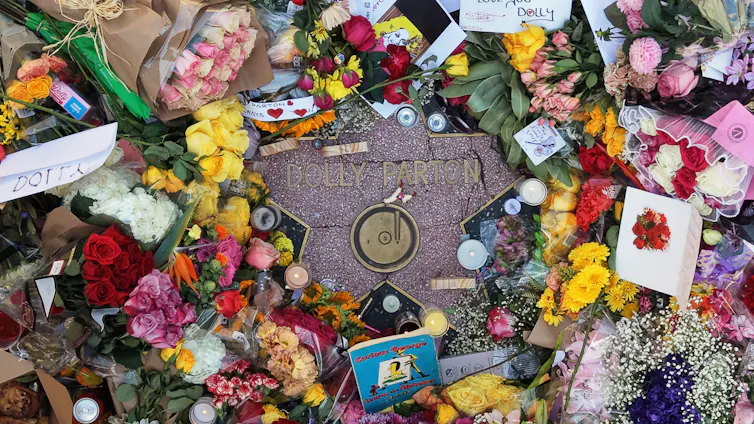
Sarah Dees, Iowa State University
As soon as news broke about the death of beloved songwriter Dolly Parton, I began receiving condolence messages from across the country, and around the world.
They came from friends, family and colleagues who knew I’d been working on a biography of the country legend – everyone from a conservative Catholic monk to advocates for queer and trans rights. The list reflects the even more diverse array of fans, people from countless backgrounds, who are mourning her loss.
The main focus of my project is Parton’s own spirituality, starting with her Appalachian upbringing. But it also examines her fandoms, including some people who elevate the singer to an almost sacred status. This was the case before her death – and even more so now.
As a scholar of American religions, I teach my students about practices, texts and beliefs that many of them immediately consider “religious” – for example, a worship service led by a pastor. However, religion is also found far beyond these official times and spaces, including in popular culture. According to scholar America Wolff, fandoms resemble religious groups in the way they focus on a single popular figure who inspires systems of belief, ritual and law.
Singer’s journey
Looking at Parton’s life reveals how a celebrity can incorporate religion into their public persona, without ostracizing admirers from other traditions. She discussed religion in interviews throughout her career, as well as in her 1994 memoir, where she recounted her maternal grandfather, a fundamentalist pastor, preaching hellfire and brimstone.
In 1971, for example, she told journalist Gene Guerrero how religion inspired some of her songs: “My mama used to read us all the Bible stories. I know the Bible pretty well, and I especially loved the stories.” That same year, she released “The Golden Streets of Glory,” the first of her several gospel albums.
Six years later, talking with Rolling Stone interviewer Chet Flippo, Parton claimed that she wasn’t a Christian. But “I do believe, I know there is a God and He is still the best friend I got in the world,” she explained. “I talk to Him often, but I’m one of the world’s sinners.”
Later in her life, though, Parton embraced the label “Christian” – albeit in a way that was very much her own. In the memoir “My Life and Other Unfinished Business,” she explained that “Christianity and its symbols are powerful parts of my life.” However, she diverged from socially conservative elements of her grandfather’s faith by embracing makeup and flashy fashion, celebrating her own sexuality, and speaking up for LGBTQ+ rights.
She was never interested in proselytizing. People do not have to embrace Christianity “to be a decent and worthwhile human being,” she wrote. “Spirituality is the most intimate part of a person’s makeup, and it’s strictly up to the individual to choose how to express it.”
‘Gospel of Dolly’
This openness explains part of Parton’s widespread appeal. The popular podcast “Dolly Parton’s America,” produced by journalists Jad Abumrad and Shima Oliaee, was based on the premise that Parton is one of the few public figures to have fans across the political spectrum.
After her death, President Donald Trump posted a tribute on his social media site, TruthSocial, and ordered that flags be flown at half-staff for a week. At the same time, in the Castro neighborhood of San Francisco – a haven for the queer community – a Pride flag was also flying at half-staff in her honor.
Mourners include Jesuit priest and author James J. Martin, who thanked Parton for “teaching me about the Christian life,” and numerous Christian musicians who looked up to her. “She was the epitome of faith, grace, talent, beauty and humour,” country artist Carrie Underwood wrote. “She had a humble heart for Jesus and made everyone around her feel special.”
But even non-Christians discussed Parton in sacred terms: a “secular American saint,” as Vox writer Constance Grady designated her in 2021.
Beyond her music, these fans admired her philanthropy, from the Imagination Library program that distributes books to children around the world to her US$1 million donation that helped fund COVID-19 vaccine research. They also highlighted her support for the Black Lives Matter movement and LGBTQ+ rights. “Dolly Parton is beloved because she has devoted her career to standing for love,” Grady wrote.
Even before her death, though, some people idolized her in a saint-like way. In 2011, for example, photographer Alice Hawkins produced a project titled “Dolly Parton is my religon.” Rev. Lindy Vogado, a Presbyterian pastor,likened her to a prophet. “Dolly Parton, through her life and work, inspires us to be better versions of ourselves,” Vogado wrote in 2025. “Just like any good prophet would do.”
In recent years, churches in Illinois, Oklahoma and New York have held services based on “the gospel of Dolly.” I attended the service in New York, which interspersed Parton’s songs with readings from scripture and homilies. Like the other services, the one I attended emphasized Parton’s “teachings”: love, care and acceptance.
Angels and atheists
Since her death, the religious language has only intensified. Musician Roseanne Cash referred to the singer as a “goddess” on Instagram, and cartoonist Marshall Ramsey portrayed her as an angel. “Listen, I’m fairly well atheist and have been for decades,” Threads user @cartergoesplaces proclaimed, “but Dolly Parton is in heaven with Jesus now. That’s simply a fact, and I’ll hear no arguments, no matter how vast the cosmos…”
Parton had her own personal brand of Christian religiosity, but she encouraged others to find and follow their own paths. I believe this helps to explain the huge outpouring of admiration – from followers of many religious traditions, followers of none, and followers of Dolly herself.
Sarah Dees, Associate Professor of American Religions, Iowa State University
This article is republished from The Conversation under a Creative Commons license. Read the original article.
📰 Enjoying STM Daily News? Join the conversation!
💬 Leave a comment, share your thoughts, and subscribe to our newsletter for the latest stories, updates, and “News You Can Use This Moment!” delivered to your inbox.
Stay connected with STM Daily News!

Breaking News
Dolly Parton Dies at 80, Leaving Behind an Extraordinary American Legacy
Dolly Parton, the legendary singer, songwriter, actress, entrepreneur and philanthropist, has died at 80. We look back at the remarkable journey that took her from rural Tennessee to becoming one of America’s most beloved cultural icons.
Last Updated on August 29, 2026 by Daily News Staff
Country music legend, songwriter, actress and philanthropist Dolly Parton has died at the age of 80, bringing to a close one of the most remarkable careers in American entertainment.
Dolly Parton Dies at 80
Dolly Parton, whose unmistakable voice, songwriting talent, humor and generosity made her an American cultural icon far beyond the world of country music, died Tuesday, August 25, 2026, in Nashville.
Parton died at Vanderbilt-Ingram Cancer Center following a brief battle with cancer, according to her publicist. She was surrounded by loved ones. The specific type of cancer has not been publicly disclosed.
For millions of fans around the world, the news marks the loss of an entertainer who seemed almost timeless.
From the Tennessee Mountains to Stardom
Born Dolly Rebecca Parton on January 19, 1946, in Sevier County, Tennessee, Parton grew up as one of 12 children in a family with little money.
Those beginnings would become an important part of both her identity and her music.
Rather than distancing herself from her Appalachian upbringing after becoming famous, Parton repeatedly returned to those experiences in her songwriting. Songs such as “Coat of Many Colors” transformed childhood memories into stories about poverty, family, dignity and love.
After moving to Nashville, Parton eventually became a nationally known performer, including through her partnership with Porter Wagoner.
But it was her ability to write songs that helped establish her as one of the defining artists of her generation.
Her catalog would eventually include classics such as “Jolene,” “I Will Always Love You,” “Coat of Many Colors,” “Here You Come Again” and “9 to 5.”
“I Will Always Love You,” originally written and recorded by Parton in the 1970s, would find an entirely new audience when Whitney Houston recorded a soaring version for the 1992 film The Bodyguard.
More Than a Country Singer
Calling Dolly Parton simply a country music star never quite captured the full scope of her career.
She crossed into pop music, television and Hollywood while maintaining her country roots.
Her starring role alongside Jane Fonda and Lily Tomlin in the 1980 comedy 9 to 5 helped turn her into a major movie star. The film’s title song became another Parton classic and an enduring anthem about the frustrations of working life.
Parton later appeared in films including The Best Little Whorehouse in Texas, Steel Magnolias and Straight Talk.
She also became an extraordinarily successful businesswoman.
Her association with Dollywood, the Tennessee theme park bearing her name, helped transform the attraction into one of the state’s best-known tourist destinations while bringing jobs and investment to the region where she grew up.
A Legacy Built Around Giving
Parton’s impact may ultimately be measured by more than records sold, awards won or movies made.
Through the Dolly Parton Imagination Library, founded in 1995, free books have been provided to children from birth to age five.
What began as a literacy program serving children in Parton’s home county in Tennessee grew into an international effort distributing books to children in the United States and several other countries.
Parton also contributed to disaster relief, education and medical research. During the COVID-19 pandemic, she donated $1 million to Vanderbilt University Medical Center research that helped support development of the Moderna COVID-19 vaccine.
Her philanthropy became almost as recognizable as her music.
An Artist Who Crossed Generations
Perhaps one of Parton’s most unusual achievements was her ability to remain relevant without abandoning the personality that made her famous.
Parents who grew up hearing Dolly Parton records introduced her music to their children and grandchildren. Country fans embraced her, but so did rock musicians, pop artists, actors and audiences who might rarely listen to country music.
Her enormous blonde hair, rhinestones and colorful outfits became instantly recognizable, and Parton frequently made herself the punchline of jokes about her appearance before anyone else had the opportunity.
Behind that carefully cultivated public image was a songwriter responsible for thousands of compositions and a businesswoman who maintained considerable control over her work.
Even late in her career, Parton continued exploring new musical territory. Her 2023 album Rockstar featured collaborations with major figures from rock and pop music and demonstrated yet again her ability to move between genres.
Tributes Pour In
News of Parton’s death quickly prompted tributes from across entertainment and public life.
Musicians, actors, friends and admirers remembered not only her extraordinary career but also the kindness and generosity for which she had become known.
The reaction reflects something that made Parton unusual among celebrities of her stature: she became a figure whose appeal extended across generations, regions and many of the cultural divisions of American life.
Her husband, Carl Dean, died in March 2025 at the age of 82. The famously private Dean and Parton had been married for nearly 60 years.
The Music Remains
Dolly Parton’s career is difficult to summarize because it was never confined to one thing.
She was a country singer who became a pop star.
A songwriter who became a movie star.
A girl who grew up poor in the mountains of Tennessee and became a highly successful entrepreneur.
And a celebrity who turned much of her wealth and fame toward helping children she would never meet.
Dolly Parton died at 80, but the songs, stories and institutions she created will continue long after her passing.
For generations of listeners, hearing the opening guitar of “Jolene,” the tenderness of “Coat of Many Colors,” or the unmistakable opening of “9 to 5” will immediately bring her back.
And perhaps that is one of the greatest legacies a songwriter can leave behind.
STM Daily News will publish a more comprehensive look at Dolly Parton’s extraordinary life, career and lasting cultural impact in the coming days.
Sources:
Associated Press — Dolly Parton dies at 80
Reuters — Dolly Parton dies at 80
Related Links:
Official Dolly Parton Website
Dolly Parton’s Imagination Library
Entertainment
BronzeLens Film Festival Returns to Atlanta for Two Weekends of Global, Diverse Storytelling

Last Updated on August 26, 2026 by Daily News Staff
BronzeLens Film Festival Brings International Lineup to Atlanta Across Two Weekends
Atlanta becomes a hub for filmmakers and film lovers this month as the BronzeLens Film Festival marks its 17th annual celebration of cinema. Running August 21–23 and August 27–30, 2026, the festival brings together industry leaders, emerging creators, and audiences for two weekends centered on one idea: diverse storytelling deserves the biggest possible stage.
Founded to elevate underrepresented voices in film, BronzeLens says its 2026 lineup continues that mission with more than 150 Official Selections. The slate spans projects connected to creators and stories from across the globe, including Australia, Canada, France, Germany, Ghana, Guadeloupe, Peru, Saint Kitts and Nevis, South Africa, The Netherlands, the United Kingdom, and the United States. Festival organizers note that every film in the program is either produced by creators of color or focuses on stories about people of color.
Opening Night spotlight: “Love Patrick: Nothing is Impossible”
This year’s Opening Night feature is Love Patrick: Nothing is Impossible, directed by the Horne Brothers. The documentary chronicles the life and legacy of fashion designer Patrick Kelly, whose work and vision helped reshape how Black creativity and style were seen on a global stage.
For audiences, it’s a fitting kickoff: a story about artistry, identity, and ambition—exactly the kind of conversation-starter BronzeLens aims to put in front of the public.
A festival built for films—and the conversations after
BronzeLens founder and executive producer Kathleen Bertrand says the festival’s purpose goes beyond screenings.
“We believe the true magic of film happens both on the screen and in the conversations it inspires,” Bertrand said. “Our mission is to champion outstanding filmmaking while creating dynamic opportunities for filmmakers, creators, talent, and audiences to connect, collaborate, and help shape the future of storytelling.”
That emphasis on community and connection has helped BronzeLens become a key cultural event in Atlanta’s film ecosystem—one that continues to grow in reach as the industry increasingly looks for authentic, globally resonant stories.
Notable names tied to the 2026 Official Selections
This year’s Official Selections are associated with a wide range of acclaimed artists, including:
- Academy Award® winner Viola Davis, narrator of The Ebony Canal: A Story of Black Maternal & Infant Health
- Academy Award® winner Jordan Peele, producer of Spilled Milk
- Emmy Award winner Loretta Devine, co-star in Black Seeds Continue to Grow
- Golden Globe nominee Blair Underwood, producer and co-star in The Listeners
- Grammy Award-winning artist T.I., featured in The Birth of Trap Music and director of Da’Partments 2
- Ambyr Michelle, co-star in Escape Room
- The late Erica Ash, starring in The Making of a Classic
- Lauren E. Banks in Channels
Where it’s happening
Festival headquarters will be located at The Tara Atlanta, 2345 Cheshire Bridge Road NE.
For the full schedule, the complete list of Official Selections, and ticket information, visit www.BronzeLens.com. The official hashtag is #BronzeLens2026.
If you’re looking for a late-summer event that blends culture, craft, and community—BronzeLens is positioning itself as one of the film festivals where the industry (and the audience) will be paying attention.
Source
- PRNewswire press release: “The World Will Be Watching as BronzeLens Celebrates Its 17th Annual Film Festival”(BronzeLens Film Festival), published Aug. 7, 2026
Related links
- BronzeLens Film Festival (schedule, Official Selections, tickets): www.BronzeLens.com
- Official hashtag: #BronzeLens2026
- Festival HQ venue info: The Tara Atlanta, 2345 Cheshire Bridge Road NE, Atlanta
📰 Enjoying STM Daily News? Join the conversation!
💬 Leave a comment, share your thoughts, and subscribe to our newsletter for the latest stories, updates, and “News You Can Use This Moment!” delivered to your inbox.
Stay connected with STM Daily News!





