

City
Santa Ana Community Raises $10,000 for Robbed Street Vendor
Santa Ana community rallies to support street vendor robbed of flowers, raises over $10k in 3 days.

The news of a street vendor being robbed in Santa Ana, California, has shaken the community. The incident occurred on May 10, in broad daylight, when a man ran up to the street vendor Israel Parra Ruiz and grabbed a bucket filled with bouquets of flowers. The thief quickly hopped into a getaway SUV and sped off, with Ruiz in foot pursuit. This incident left the hardworking vendor in shock and despair.
However, the response from the Santa Ana community has been heartwarming. Hundreds of people have come together to show their support for Ruiz, who has been selling flowers on the streets of Santa Ana for more than a decade. A GoFundMe campaign was launched with a goal of raising $5,000 to help Ruiz recover from the robbery, but the response was overwhelming. Within just three days, more than $10,000 had been donated by locals and people from around the world, all wanting to show their support for the hardworking vendor.
The incident has sparked a conversation about the safety of street vendors in Santa Ana. Many vendors work long hours in precarious conditions and have reported being harassed or robbed by thieves looking to make a quick profit. In response, local officials are considering new safety measures, including increased police patrols and better lighting in vendor areas.
The generosity of those who donated to the GoFundMe campaign is a testament to the strength and resilience of the community. It serves as a reminder that kindness and compassion can go a long way in the face of adversity. The incident was undoubtedly traumatic for Ruiz, but the outpouring of support from the community has shown him that he is not alone.
Read the story here: https://www.cbsnews.com/amp/losangeles/news/santa-ana-street-vendor-robbed-community-raises-10000-to-help-him/ The Santa Ana community’s response to the street vendor’s robbery is a testament to the power of compassion and kindness. In times of need, people come together to support one another, regardless of their background or circumstances. It is important to remember that there is more good than bad in the world, and stories like this remind us to look for the good and report it. We can all make a difference by showing empathy and compassion towards those in need, no matter how small our actions may seem.R Washington
https://stmdailynews.com/category/the-bridge/
Author










Downtown Phoenix experienced the thunder of Formula 1 engines once again on Saturday, March 14, 2026, when the Red Bull Showrun transformed East Jefferson Street into a temporary motorsports stage. The free public event drew large crowds eager to see a real Formula 1 car perform high-speed demonstrations through the heart of the city.
The star of the event was the legendary Red Bull RB7, one of the most dominant machines in modern Formula 1 history. Fans watched as the car blasted down the temporary street course performing burnouts, donuts, and acceleration runs that echoed between downtown buildings.
A Championship Machine on City Streets
Originally driven to the 2011 Formula 1 World Championship by Sebastian Vettel, the RB7 represents a golden era for Red Bull Racing. The car is known for its aerodynamic design and remarkable performance during the 2011 season.
During the Phoenix showrun, the car was piloted by Scott Speed, a former Formula 1 competitor and experienced motorsports driver. He was joined by Nikola Tsolov, a rising talent in Red Bull’s junior driver development program.
Together, the drivers delivered a high-energy demonstration that gave spectators a rare opportunity to witness the power and precision of Formula 1 machinery up close.
A Tribute to Phoenix’s Formula 1 Legacy
The event also served as a reminder of Phoenix’s unique place in Formula 1 history. The city previously hosted the United States Grand Prix (Phoenix street circuit), which ran through downtown streets from 1989 through 1991.
During those races, fans watched legendary drivers such as Ayrton Senna compete on the challenging desert street circuit.
Although the Grand Prix eventually moved to other locations, the Red Bull Showrun brought the spirit of Formula 1 back to Phoenix for a new generation of motorsports fans.
Formula 1’s Growing U.S. Momentum
The Phoenix showrun comes at a time when Formula One is experiencing unprecedented growth in the United States. The sport now hosts three annual races in Austin, Miami, and Las Vegas.
Promotional events like the Red Bull Showrun help introduce the sport to new audiences and reconnect cities with their racing heritage.
For longtime Phoenix residents, the sound of a Formula 1 engine echoing through downtown streets was more than just a spectacle—it was a powerful reminder of the city’s motorsports past and the growing popularity of Formula 1 across America. 🏎️🔥
Related External Coverage
- Official Red Bull Showrun Phoenix Event Page
- Arizona’s Family (3TV / CBS 5): Coverage of the Red Bull Showrun in Downtown Phoenix
- Formula 1 Official Website – Learn More About the Sport
- City of Phoenix – Downtown Events and Street Closures
- History of the Phoenix Street Circuit and the U.S. Grand Prix (1989–1991)
Stay updated with the latest automotive news, vehicle technology, industry trends, and transportation innovations. The STM Daily News Automotive section explores how cars, electric vehicles, and mobility solutions are shaping the future of the road.
News
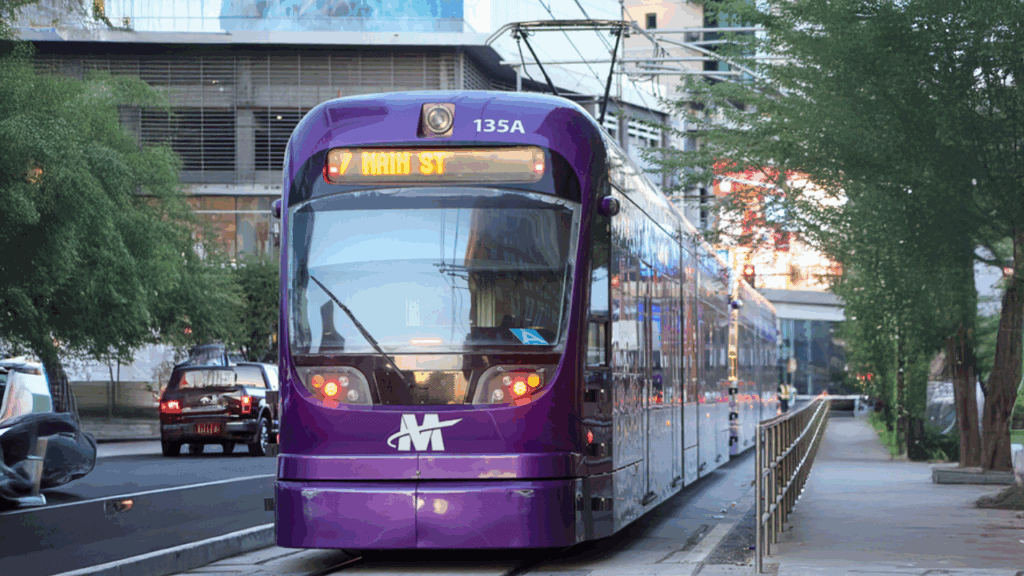
Valley Metro to Exit CAPEX Capitol Extension After Phoenix Council Shifts Focus to Indian School Road Corridor
Valley Metro is shifting its focus on high-capacity transit planning in west Phoenix following a City Council vote, prioritizing a new corridor along Indian School Road while exiting the Capitol Extension project, CAPEX, and seeking community engagement.

Last Updated on March 6, 2026 by Daily News Staff
Valley Metro is officially shifting gears on high-capacity transit planning in west Phoenix following a Phoenix City Council vote earlier this year.
In a message to the public, Valley Metro said that after the Jan. 27, 2026 City Council decision to re-evaluate high-capacity transit options and prioritize a proposed West Phoenix corridor along Indian School Road, the agency will exit project development and the Federal Transit Administration Capital Investment Grant (CIG) process for the Capitol Extension (CAPEX) project.
What the City Council voted to do
According to Valley Metro, the Phoenix City Council voted to take another look at high-capacity transit options for west Phoenix and to prioritize studying a new corridor alignment along Indian School Road.
What Valley Metro is doing next
Valley Metro emphasized it still supports expanding high-capacity transit in west Phoenix, citing demand and mobility needs in the corridor. But the agency says it will now pivot away from CAPEX and toward the new study effort.
Key next steps Valley Metro outlined include:
- Exiting the CAPEX project development process and the federal CIG pipeline
- Advancing planning for the West Phoenix study along Indian School Road
- Centering comprehensive community engagement, including outreach to residents, business owners, and stakeholders along the corridor
- Working closely with the City of Phoenix on project development
- Coordinating with the Federal Transit Administration to explore funding opportunities
How to stay engaged
Valley Metro is encouraging residents to sign up for updates as the next phase moves forward at valleymetro.org/notices.
Dive into “The Knowledge,” where curiosity meets clarity. This playlist, in collaboration with STMDailyNews.com, is designed for viewers who value historical accuracy and insightful learning. Our short videos, ranging from 30 seconds to a minute and a half, make complex subjects easy to grasp in no time. Covering everything from historical events to contemporary processes and entertainment, “The Knowledge” bridges the past with the present. In a world where information is abundant yet often misused, our series aims to guide you through the noise, preserving vital knowledge and truths that shape our lives today. Perfect for curious minds eager to discover the ‘why’ and ‘how’ of everything around us. Subscribe and join in as we explore the facts that matter. https://stmdailynews.com/the-knowledge/
Author

The Knowledge
Brightline West Nears Final Environmental Clearance Milestone
Brightline West’s final environmental assessment is 99% complete, clearing a major hurdle for the high-speed rail line connecting Southern California and Las Vegas.
Last Updated on March 1, 2026 by Daily News Staff
The long-awaited high-speed rail connection between Southern California and Las Vegas just hit a major milestone.
According to recent reports, the final environmental assessment for Brightline West is now 99% complete — signaling that one of the most critical regulatory hurdles for the project is nearly finished.
For a project that has been discussed for over a decade, this is significant progress.
What “99% Complete” Really Means
Before major infrastructure projects like high-speed rail can move into full construction, they must go through extensive federal environmental review under the National Environmental Policy Act (NEPA).
For Brightline West, this includes:
- Environmental impact evaluations
- Wildlife and habitat assessments
- Air quality studies
- Noise and vibration analysis
- Cultural and tribal consultations
- Traffic and community impact reviews
Reaching 99% completion means the overwhelming majority of those studies, revisions, and agency approvals are essentially done. In practical terms, the project is nearly clear of its final federal environmental review requirements.
That’s a huge step toward full-scale construction.
The Route: Southern California to Las Vegas
Brightline West will run approximately 218 miles largely within the median of Interstate 15, connecting:
- Las Vegas
- Apple Valley
- Hesperia
- Rancho Cucamonga (with connections to Metrolink toward Los Angeles)
Trains are designed to reach speeds up to 200 mph, cutting travel time between Southern California and Las Vegas to roughly 2 hours.
Instead of battling I-15 weekend traffic, travelers could board a train in Rancho Cucamonga and arrive on the Las Vegas Strip in about the time it currently takes just to get through the Cajon Pass on a busy Friday.
Construction Status
The project officially broke ground in 2024, and early work has included:
- Geotechnical testing
- Land surveying
- Utility relocation
- Pre-construction corridor preparation
While heavy civil construction has not yet fully ramped up across the entire route, completing environmental clearance removes one of the last major barriers before large-scale building accelerates.
Timeline Update
The original goal was to open before the 2028 Los Angeles Olympics. That timeline has shifted.
Current projections place passenger service around late 2029, depending on construction pace and financing milestones.
Why This Milestone Matters
High-speed rail projects in the United States often stall due to environmental review delays, funding gaps, or regulatory challenges.
Getting to 99% completion on final environmental assessment means:
- Federal review is nearly wrapped
- Legal vulnerability is reduced
- Major construction can proceed with more certainty
- Investor confidence improves
For Southern California and Nevada, it represents real forward momentum.
The Bigger Picture
Brightline West is privately developed, separate from California’s state high-speed rail system. If completed as planned, it would become one of the first true high-speed rail lines operating in the western United States.
The I-15 corridor between Los Angeles and Las Vegas is one of the most heavily traveled leisure routes in the country. A successful rail alternative could significantly reshape travel patterns between the two regions.
Final Take
The headline may sound small — “99% complete” — but in infrastructure terms, it’s a major breakthrough.
With environmental review nearly finished, Brightline West is closer than ever to turning renderings into reality.
Now the question shifts from if the train gets built… to how fast construction can move from here.
Further Reading & Outside Coverage
- Brightline West Official Project Website
- Federal Railroad Administration (FRA)
- Las Vegas Review-Journal – Brightline West Coverage
- Los Angeles Times – Transportation & Infrastructure
- Progressive Railroading – Industry Updates
- Trains Magazine – Rail Industry News
- U.S. Department of Transportation
Dive into “The Knowledge,” where curiosity meets clarity. This playlist, in collaboration with STMDailyNews.com, is designed for viewers who value historical accuracy and insightful learning. Our short videos, ranging from 30 seconds to a minute and a half, make complex subjects easy to grasp in no time. Covering everything from historical events to contemporary processes and entertainment, “The Knowledge” bridges the past with the present. In a world where information is abundant yet often misused, our series aims to guide you through the noise, preserving vital knowledge and truths that shape our lives today. Perfect for curious minds eager to discover the ‘why’ and ‘how’ of everything around us. Subscribe and join in as we explore the facts that matter. https://stmdailynews.com/the-knowledge/



