

Lifestyle
5 Tips to Upgrade Your Home Office
Consider these ideas to blend function, comfort and style, and create a home office that inspires creativity and makes you want to sit down and get things done.

Last Updated on January 26, 2026 by Daily News Staff

5 Tips to Upgrade Your Home Office
(Family Features) Hybrid schedules and remote work have become the norm for many people, which means a functional and inspiring workspace is more necessity than luxury. With the right setup – be it a dedicated room or a cozy corner – your space can boost productivity, spark creativity and make your workday more enjoyable.
Consider these ideas to blend function, comfort and style, and create a home office that inspires creativity and makes you want to sit down and get things done.
Focus on Comfort
The desk and chair are the foundation of any home office. Be sure to build a setup that matches your work style by picking the right height desk (with the proper amount of storage and workspace to complete your tasks) and an adjustable chair with good lumbar support. If you’re at your computer most of the time during the day, an ergonomic keyboard and monitor stand can also make a comfortable difference.
Create a Clutter-Free Work Zone
Incorporating smart storage solutions like shelves, filing cabinets or baskets can help keep your workspace tidy and free of distracting clutter. Desk trays can keep small office supplies organized and within easy reach while maintaining a clean aesthetic.
Add Personality with Decor
Much like the rest of your home, your workspace should reflect your personality and style. Add artwork, decorative accents, plants or a photo wall to bring inspiration and freshness to your office and choose a color palette that promotes positivity and focus, such as soft blues, greens or neutrals.
Layer Functional Lighting
For optimal productivity, combine natural light with task and ambient lighting. If possible, position your desk near a window to capture natural light then supplement your space with a desk lamp for focused illumination and floor lamps, under-shelf lighting or wall sconces to add warmth and depth.
Don’t Forget Acoustics
Distracting noises can negatively impact focus. To absorb sound, use soft furnishings like rugs, upholstered chairs or curtains and consider a white noise machine if you need a more soothing work environment.
Find more ideas to update every room in your house at eLivingtoday.com.
Photo courtesy of Shutterstock
SOURCE:
eLivingtoday.com


Child Health
Your Child’s Oral Health: A Foundation for Better Overall Health
Good oral health is essential for children, and Medicaid and CHIP provide accessible dental coverage to eligible families, covering services like cleanings and fillings. Regular dental visits starting at age one can prevent cavities and build healthy habits. Families can check eligibility and find dentists through InsureKidsNow.gov.
Last Updated on April 13, 2026 by Daily News Staff
(Feature Impact) Good oral health sets the stage for a lifetime of healthy smiles and better overall health. Medicaid and the Children’s Health Insurance Program (CHIP) help eligible families access affordable and comprehensive care for their children and teens, including regular cleanings, fillings, X-rays, and more to help ensure that eligible kids have access to essential dental services. By practicing good dental habits and seeing a dentist regularly, children can avoid dental problems and maintain healthy smiles as they grow.
Dental Coverage Available Through Medicaid and CHIP
If you’re looking for affordable dental coverage, your child may qualify for free or low-cost health insurance through Medicaid and CHIP. Together these programs cover more than 36 million children nationwide.
Enrollment is open year-round, and many families qualify even if they don’t realize it. Beyond dental care, Medicaid and CHIP also cover preventive health services, emergency care, vision care, prescriptions, and mental and behavioral health services for eligible children.
To see if your family is eligible and to find dentists in your area who accept Medicaid and CHIP, visit InsureKidsNow.gov and explore the “Find a Dentist” tool.
Start Good Dental Habits Early

Regular dental visits are an important part of your child’s oral health routine. Children should see a dentist by the age of 1 and continue with visits twice a year (every six months) as they get older. Going to checkups on a regular schedule can help catch problems early or before they even start. Cavities (also known as tooth decay) are the most common preventable chronic disease among children in the United States, and more than half of all children have cavities by the time they’re 6 to 8 years old. When left untreated, cavities can cause pain and infections that may affect eating, speaking, playing, learning – and even mental health.
The dental visit will vary depending on your child’s age and milestones, but it can include cleanings, full teeth and gum exams, treatments, and guidance on caring for your child’s teeth. Dental visits also help children become comfortable with the dentist, reducing anxiety, and building a positive relationship with oral health care that will benefit them throughout their lives.
Enrolling in CHIP and Medicaid
Medicaid and CHIP provide free or low-cost health coverage to eligible families and children. You can apply online, by phone, by mail, or in person directly at your state’s Medicaid agency. Learn more at InsureKidsNow.gov.
Provided by the U.S. Department of Health and Human Services at U.S. taxpayer expense.
Photos courtesy of Shutterstock

SOURCE:
Centers for Medicare and Medicaid Services
Our Lifestyle section on STM Daily News is a hub of inspiration and practical information, offering a range of articles that touch on various aspects of daily life. From tips on family finances to guides for maintaining health and wellness, we strive to empower our readers with knowledge and resources to enhance their lifestyles. Whether you’re seeking outdoor activity ideas, fashion trends, or travel recommendations, our lifestyle section has got you covered. Visit us today at https://stmdailynews.com/category/lifestyle/ and embark on a journey of discovery and self-improvement.
Author


Last Updated on April 12, 2026 by Daily News Staff
6 ways to keep your pets happy and healthy
(Family Features) Warmer weather means it’s time to spring clean, get grooming and prepare your pets’ diets to support them through the season.
Keep your furry friends happy and healthy this spring with these six tips from the experts at Zesty Paws, an award-winning pet supplement brand:
Give Skin and Coats a Little TLC: Many pets form winter coats during the colder months to help them stay warm and comfortable then shed the coats in the spring to prepare for warmer temperatures. Some pets may need extra help maintaining their shiny, healthy coats, especially if mats have formed in their fur or if they are breeds that develop a thick undercoat. Professional grooming, at-home brushing and regular bathing can all be helpful ways to speed up the process to remove some of the extra fur and decrease the prevalence of dander, dust and pollen that can attach to fur and skin through the season.
Add Seasonal Allergy Support with Supplements: Just like humans, furry friends can develop and experience seasonal allergies, too. Giving your pets’ immune systems some extra support can help ease some common allergy symptoms. Supplements like Zesty Paws Aller-Immune Bites for Cats and Aller-Immune Bites for Dogs are chewables that provide seasonal allergy support by aiding normal immune functions, skin health and gut flora, and may also help maintain normal histamine levels.
Ease Back into Exercise: The change in weather means more time for outdoor adventures with your pets, but don’t forget to cool down and warm up as you and your pets ease back into the season. Planning for short, leashed walks and timed play sessions can help your pets gradually prepare their hips and joints for fun, warm weather activities.
Watch Out for Pet Pests: Once temperatures start to rise, the tiny, creepy critters start crawling. Fleas, ticks and other pests can cause serious health concerns for pets. This spring, make sure your pest control programs are primed and ready for added protection. Talk to your veterinarian about the best routine and products for your pets.
Freshen Up Bedding and Bowls: It’s important to keep a clean environment by scrubbing, sweeping and vacuuming regularly to decrease allergens in the home. When you’re tackling this year’s spring cleaning, remember to put your pets’ bedding and bowls on the list, too. Updating or disinfecting your pets’ blankets, litter boxes, toys and other supplies is a good way to keep them feeling safe and comfortable in the home.
Schedule an Annual Vet Visit: Spring is a good time to schedule your pets’ annual vet visits. Make sure they’re up to date on all vaccinations, get their dental health checkups and re-evaluate nutrition plans.
Find more advice for keeping your pet healthy and happy at zestypaws.com.
SOURCE:
Zesty Paws
Our Lifestyle section on STM Daily News is a hub of inspiration and practical information, offering a range of articles that touch on various aspects of daily life. From tips on family finances to guides for maintaining health and wellness, we strive to empower our readers with knowledge and resources to enhance their lifestyles. Whether you’re seeking outdoor activity ideas, fashion trends, or travel recommendations, our lifestyle section has got you covered. Visit us today at https://stmdailynews.com/category/lifestyle/ and embark on a journey of discovery and self-improvement.
STM Daily News is a vibrant news blog dedicated to sharing the brighter side of human experiences. Emphasizing positive, uplifting stories, the site focuses on delivering inspiring, informative, and well-researched content. With a commitment to accurate, fair, and responsible journalism, STM Daily News aims to foster a community of readers passionate about positive change and engaged in meaningful conversations. Join the movement and explore stories that celebrate the positive impacts shaping our world.
Travel
Tighter Budgets Haven’t Stopped Travel. They’ve Changed How Americans Plan
Tighter Budgets Haven’t Stopped Travel:Tighter budgets are altering American travel plans, but most still prioritize vacations despite financial concerns.
Last Updated on April 12, 2026 by Daily News Staff
Tighter Budgets Haven’t Stopped Travel. They’ve Changed How Americans Plan
(Tiffany Miller for ALG Vacations) The flight search is open, but many travelers are pausing before they book. Prices feel higher than last year, headlines are heavy and budgets are tighter. Still, the question isn’t whether to take a vacation, but how to make it work.
A November 2025 survey from ALG Vacations of U.S. adults planning to travel in 2026 shows that financial pressure is reshaping how people approach vacations, not whether they take them. While 81% say they have at least some concern about their household finances in the months ahead, 92% say they would still travel even if tighter finances required scaling back.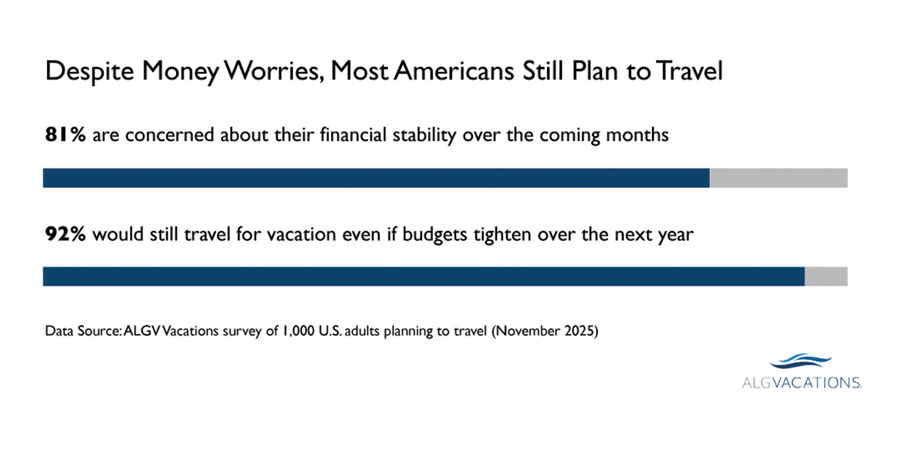
Financial pressure shapes decisions, not demand
That shift shows up in the small moments of planning. Travelers are taking longer to compare prices, reconsidering timing and adjusting expectations before they book.
Inflation and rising prices top the list of concerns, cited by 61% of respondents, reinforcing why travelers are rethinking destinations, trip length and overall costs.
Concerns about global events and safety follow at 39%, with broader political and economic instability close behind at 38%.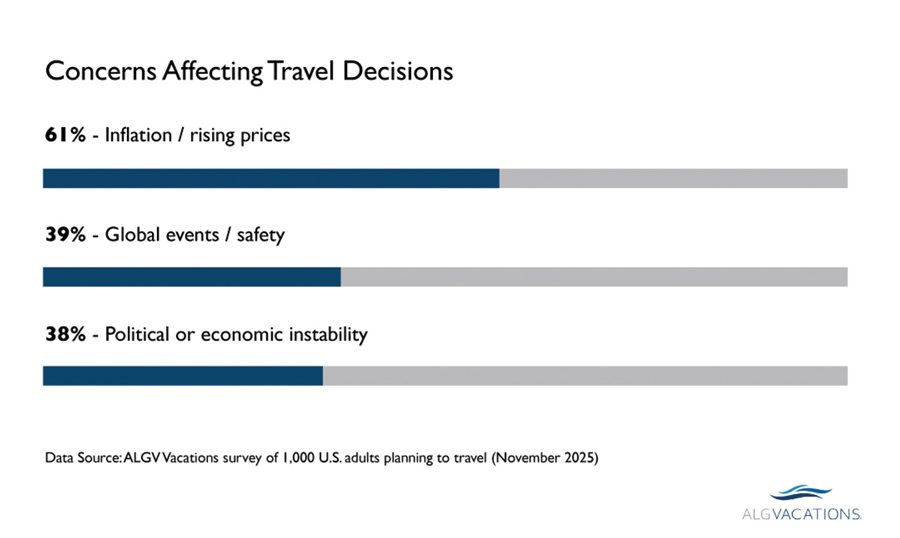
Still, those worries rarely lead travelers to walk away from travel altogether. Instead, many describe pulling back in measured ways, scaling down plans, rethinking details and making trade-offs that keep a trip possible, even if it looks different than originally imagined.
Experience changes how travelers move from planning to booking
Not all travelers navigate those trade-offs the same way. For some, uncertainty slows the process. For others, familiarity helps clear the final hurdle.
Among respondents who have previously booked a packaged vacation through a major vacation brand, 80% say they plan to take an international trip in the next year, compared with 46% of those without that experience.
That confidence carries into spending decisions as well. Sixty-seven percent of packaged-vacation travelers expect to spend more than $2,500 on their next trip, compared with 47% of those who have never booked a packaged vacation.
Taken together, the findings point to a confidence gap, with prior experience linked to greater comfort committing to international travel and higher spending.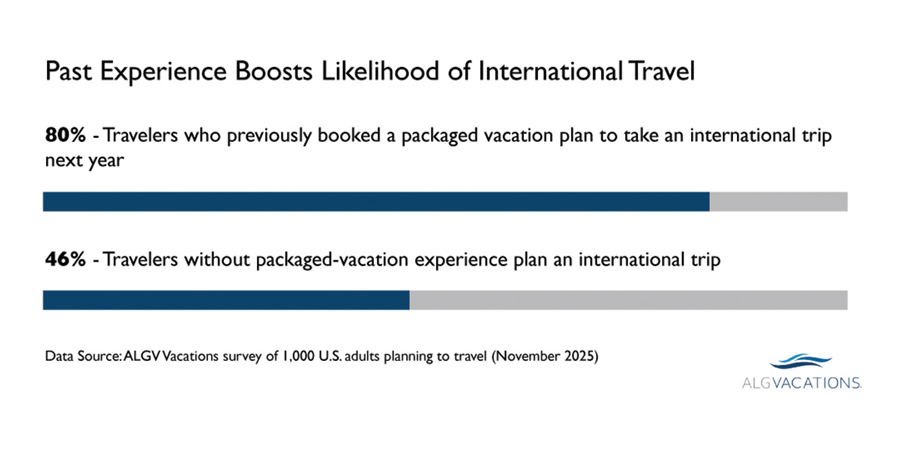
Professional guidance plays a larger role when planning gets complex
For many travelers, planning no longer stops at picking dates and destinations. Rising prices, shifting availability and higher expectations have turned vacation planning into a series of decisions that feel harder to navigate alone.
That complexity shows up most clearly among travelers with prior packaged-vacation experience. Ninety-four percent say they plan to use a travel advisor, compared with 81% of those without prior packaged-vacation experience.
The gap suggests that familiarity with structured travel planning often leads travelers to seek expert guidance. As trips become more layered, getting the details right matters as much as the destination itself.
Travel remains a priority, even as decisions slow
The findings suggest that travel is still very much on the table, even as decisions take longer to make. Travelers are weighing trade-offs, seeking guidance and leaning on experience as they plan, rather than walking away altogether.
The flight search may stay open a little longer this year. But for many Americans, the trip is still happening.
Methodology
ALG Vacations commissioned Atomik Research to conduct an online survey of U.S. adults planning to travel and travelers with prior packaged-vacation experience in the United States.
The survey included 1,000 adults planning to travel and a subsample of 502 respondents who had previously booked a packaged vacation through a major vacation brand.
The margin of error is plus or minus 3 percentage points for the full sample and 4 percentage points for the packaged vacation subsample at a 95 percent confidence level.
Fieldwork was conducted in November 2025. Atomik Research, part of 4media group, is a creative market research agency.
Photo courtesy of Shutterstock

SOURCE:





