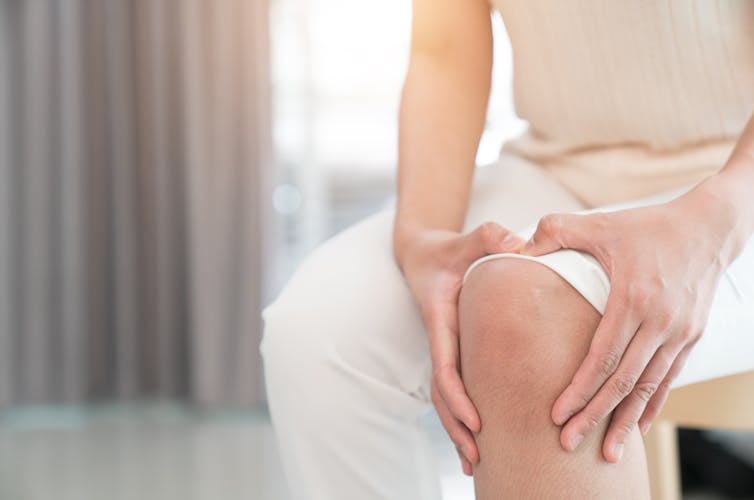
Knee injuries are common in athletes, accounting for 41% of all athletic injuries. But knee injuries aren’t limited to competitive athletes. In our everyday lives, an accident or a quick movement in the wrong direction can injure the knee and require medical treatment. A quarter of the adult population worldwide experiences knee pain each year
Your knees have a huge impact on your mobility and overall quality of life, so it’s important to prevent knee problems whenever possible and address pain in these joints with appropriate treatments.
Healthy knees
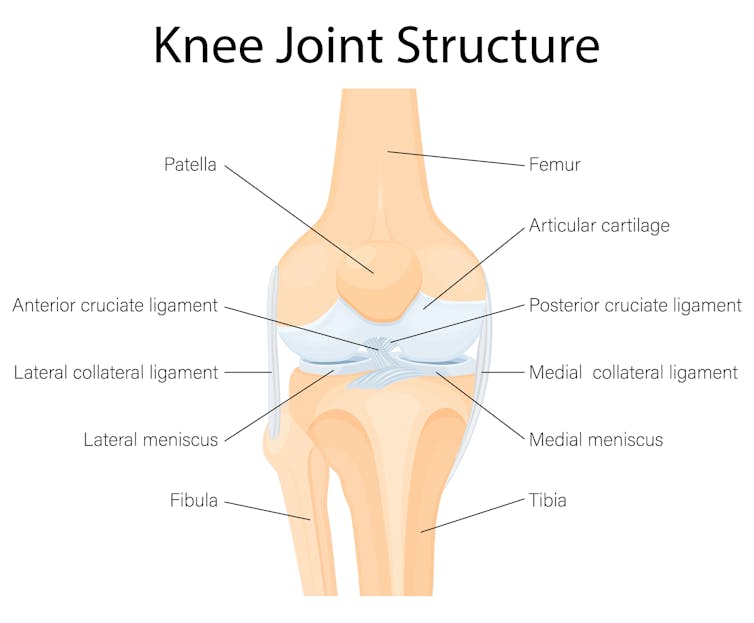
The knee joint bones consist of the femur, tibia and patella. As in all healthy joints, smooth cartilage covers the surfaces of the bones, forming the joints and allowing for controlled movement.A healthy knee. Inna Kharlamova/iStock/Getty Images Plus via Getty Images
Muscles, ligaments and tendons further support the knee joint. The anterior cruciate ligament, commonly known as the ACL, and posterior cruciate ligament, or PCL, provide internal stability to the knee. In addition, two tough pieces of fibrocartilage, called menisci, lie inside the joint, providing further stability and shock absorption.
All these structures work together to enable the knee to move smoothly and painlessly throughout everyday movement, whether bending to pick up the family cat or going for a run.
Causes of knee pain
Two major causes of knee pain are acute injury and osteoarthritis.
Ligaments such as the ACL and PCL can be stressed and torn when a shear force occurs between the femur and tibia. ACL injuries often occur when athletes land awkwardly on the knee or quickly pivot on a planted foot. Depending on the severity of the injury, these patients may undergo physical therapy, or they may require surgery for repair or replacement.
PCL injuries are less common. They occur when the tibia experiences a posterior or backward force. This type of injury is common in car accidents when the knee hits the dashboard, or when patients fall forward when walking up stairs.
The menisci can also experience degeneration and tearing from shear and rotary forces, especially during weight-bearing activities. These types of injuries often require rehabilitation through physical therapy or surgery.
Knee pain can also result from injury or overuse of the muscles and tendons surrounding the knee, including the quadriceps, hamstrings and patella tendon.
Advertisement
Both injuries to and overuse of the knee can lead to degenerative changes in the joint surfaces, known as osteoarthritis. Osteoarthritis is a progressive disease that can lead to pain, swelling and stiffness. This disease affects the knees of over 300 million people worldwide, most often those 50 years of age and up. American adults have a 40% chance of developing osteoarthritis that affects their daily lives, with the knee being the most commonly affected joint.
Age is also a factor in knee pain. The structure and function of your joints change as you age. Cartilage starts to break down, your body produces less synovial fluid to lubricate your joints, and muscle strength and flexibility decrease. This can lead to painful, restricted movement in the joint.
Fortunately, there are several risk factors you can control that can predispose you to knee pain and osteoarthritis specifically. The first is excessive weight. Based on studies between 2017 and 2020, nearly 42% of all adult Americans are obese. This obesity is a significant risk factor for diabetes and osteoarthritis and can also play a role in other knee injuries.
A lack of physical activity is another risk, with 1 in 5 U.S. adults reporting that they’re inactive outside of work duties. This can result in less muscular support for the knee and more pressure on the joint itself.
Increasing physical activity is one of the key elements to preventing knee pain. Often physical therapy intervention for patients with knee osteoarthritis focuses on strengthening the knee to decrease pain and support the joint during movement.
The U.S. Department of Health and Human Services recommends that adults spend at least 150 to 300 minutes per week on moderate-intensity, or 75 to 150 minutes per week on vigorous-intensity aerobic physical activity. These guidelines do not change for adults who already have osteoarthritis, although their exercise may require less weight-bearing activities, such as swimming, biking or walking.
The agency also recommends that all adults do some form of resistance training at least two or more days a week. Adults with knee osteoarthritis particularly benefit from quadriceps-strengthening exercises, such as straight leg raises.
Treatments for knee pain
Conservative treatment of knee pain includes anti-inflammatory and pain medications and physical therapy.
Advertisement
Medical treatment for knee osteoarthritis may include cortisone injections to decrease inflammation or hyaluronic acid injections, which help lubricate the joint. The relief from these interventions is often temporary, as they do not stop the progression of the disease. But they can delay the need for surgery by one to three years on average, depending on the number of injections.
Physical therapy is generally a longer-lasting treatment option for knee pain. Physical therapy treatment leads to more sustained pain reduction and functional improvements when compared with cortisone injections treatment and some meniscal repairs.
Patients with osteoarthritis often benefit from total knee replacement, a surgery with a high success rate and lasting results.
Surgical interventions for knee pain include the repair, replacement or removal of the ACL, PCL, menisci or cartilage. When more conservative approaches fail, patients with osteoarthritis may benefit from a partial or total knee replacement to allow more pain-free movement. In these procedures, one or both sides of the knee joint are replaced by either plastic or metal components. Afterward, patients attend physical therapy to aid in the return of range of motion.
Although there are risks with any surgery, most patients who undergo knee replacement benefit from decreased pain and increased function, with 90% of all replacements lasting more than 15 years. But not all patients are candidates for such surgeries, as a successful outcome depends on the patient’s overall health and well-being.
New treatments on the horizon
New developments for knee osteoarthritis are focused on less invasive therapies. Recently, the U.S. Food and Drug Administration approved a new implant that acts as a shock absorber. This requires a much simpler procedure than a total knee replacement.
Other promising interventions include knee embolization, a procedure in which tiny particles are injected into the arteries near the knee to decrease blood flow to the area and reduce inflammation near the joint. Researchers are also looking into injectable solutions derived from human bodies, such as plasma-rich protein and fat cells, to decrease inflammation and pain from osteoarthritis. Human stem cells and their growth factors also show potential in treating knee osteoarthritis by potentially improving muscle atrophy and repairing cartilage.
Further research is needed on these novel interventions. However, any intervention that holds promise to stop or delay osteoarthritis is certainly encouraging for the millions of people afflicted with this disease.
Our Lifestyle section on STM Daily News is a hub of inspiration and practical information, offering a range of articles that touch on various aspects of daily life. From tips on family finances to guides for maintaining health and wellness, we strive to empower our readers with knowledge and resources to enhance their lifestyles. Whether you’re seeking outdoor activity ideas, fashion trends, or travel recommendations, our lifestyle section has got you covered. Visit us today at https://stmdailynews.com/category/lifestyle/ and embark on a journey of discovery and self-improvement.
Swisse Launches Glam Bites: Zero-Sugar Beauty Gummies Designed for Busy Routines
Swisse launches Glam Bites: delicious beauty gummies with zero sugar, no sugar alcohols, and no artificial flavors, colors, or sweeteners—designed to support beauty from within.
Swisse Launches Glam Bites: Zero-Sugar Beauty Gummies Designed for Busy Routines
Swisse, the premium supplement brand under Health & Happiness (H&H) Group and a Certified B Corp, is kicking off 2026 with a new way to support “beauty from within.” The company just introduced Swisse Beauty Glam Bites, a line of zero-sugar beauty gummies made with science-backed ingredients—without the usual “junk” found in many gummy supplements. Positioned for today’s always-on lifestyle, Glam Bites aims to make daily self-care feel less like another task and more like a quick, enjoyable habit: bite, nourish, and glow.
What makes Glam Bites different?
Gummy supplements are popular, but they often come with tradeoffs—added sugars, sugar alcohols, artificial flavors, or ingredients that don’t align with cleaner-label preferences. Swisse is leaning into the opposite approach. According to the company, Glam Bites are crafted with:
Zero sugar
No sugar alcohols
No artificial flavors, colors, or sweeteners
Gluten-free
Free from major allergens (milk, eggs, fish, crustacean shellfish, peanuts, wheat, soybeans, sesame)
That “clean but still tasty” promise is a big part of the launch—especially as more shoppers look for supplements that fit into wellness routines without feeling like a compromise.
A beauty routine that starts from the inside
Swisse is framing Glam Bites as a simple daily add-on that supports skin, hair, and nails through targeted micronutrients. Leading dietitian Dana A. White highlighted the brand’s approach in the announcement, noting that Glam Bites deliver “powerful, science-driven beauty benefits” through a precisely balanced blend of nutrients—while keeping the formula free from artificial colors, flavors, and sweeteners.
The Glam Bites lineup (available now)
Swisse launched Glam Bites in three formulas, each with its own ingredient blend and naturally flavored profile.
1) Hair Skin Nails Glam Bites
Price/Count: $19.99 (60 count)
Key ingredients: Biotin, Zinc, Bamboo Extract
What it supports: Stronger hair and nails, plus skin firmness and elasticity*
Flavor: Blood orange (naturally flavored)
2) Glow Skin Glam Bites
Price/Count: $24.99 (60 count)
Key ingredients: Hyaluronic Acid, Vitamins C & E, Sea Moss, Hydrolyzed Marine Collagen Peptides
What it supports: Collagen production, improved elasticity, and a stronger skin barrier*
Flavor: Blueberry lavender (naturally flavored)
3) Skin Defense Glam Bites
Price/Count: $24.99 (60 count)
Key ingredients: Astaxanthin, L-Glutathione, Green Tea Extract
What it supports: Healthy aging, even skin tone, and antioxidant protection against environmental stressors*
Flavor: Raspberry green tea (naturally flavored)
Why gummies—and why now?
Swisse is launching Glam Bites at a time when gummies are increasingly becoming the preferred supplement format for younger consumers. The company cited research showing:
45% of Gen Z and 31% of millennials favor gummy supplements.
74% of U.S. personal care buyers agree that skin health reflects overall health.
In other words: the market is shifting toward convenience, better taste, and wellness products that connect beauty with whole-body health.
A global wellness brand expanding its portfolio
Swisse was founded in Australia in 1969 and has grown into a global wellness name known for premium supplements made with ingredients backed by scientific research and produced under world-class manufacturing standards. With Glam Bites, the brand is clearly betting on a “cleaner gummy” future—one that fits modern routines and modern label expectations.
*These statements have not been evaluated by the Food and Drug Administration. These products are not intended to diagnose, treat, cure, or prevent any disease.
Our Lifestyle section on STM Daily News is a hub of inspiration and practical information, offering a range of articles that touch on various aspects of daily life. From tips on family finances to guides for maintaining health and wellness, we strive to empower our readers with knowledge and resources to enhance their lifestyles. Whether you’re seeking outdoor activity ideas, fashion trends, or travel recommendations, our lifestyle section has got you covered. Visit us today at https://stmdailynews.com/category/lifestyle/ and embark on a journey of discovery and self-improvement.
How C-reactive protein outpaced ‘bad’ cholesterol as leading heart disease risk marker
C-reactive protein (CRP) is a key inflammation marker that can predict heart attack and stroke risk—often better than LDL cholesterol. Here’s why it matters.
C-reactive protein is created by the liver in response to infections, tissue damage, chronic inflammatory states from conditions like autoimmune diseases, and metabolic disturbances like obesity and diabetes. Essentially, it is a marker of inflammation – meaning immune system activation – in the body. C-reactive protein can be easily measured with blood work at the doctor’s office. A low C-reactive protein level – under 1 milligram per deciliter – signifies minimal inflammation in the body, which is protective against heart disease. An elevated C-reactive protein level of greater than 3 milligrams per deciliter, signifies increased levels of inflammation and thus increased risk for heart disease. About 52% of Americans have an elevated level of C-reactive protein in their blood. Research shows that C-reactive protein is a better predictive marker for heart attacks and strokes than “bad,” or LDL cholesterol, short for low-density lipoprotein, as well as another commonly measured genetically inherited biomarker called lipoprotein(a). One study found that C-reactive protein can predict heart disease just as well as blood pressure can.
Why does inflammation matter in heart disease?
Inflammation plays a crucial role at every stage in the development and buildup of fatty plaque in the arteries, which causes a condition called atherosclerosis that can lead to heart attacks and strokes. From the moment a blood vessel is damaged, be it from high blood sugar or cigarette smoke, immune cells immediately infiltrate the area. Those immune cells subsequently engulf cholesterol particles that are typically floating around in the blood stream to form a fatty plaque that resides in the wall of the vessel. This process continues for decades until eventually, one day, immune mediators rupture the cap that encloses the plaque. This triggers the formation of a blood clot that obstructs blood flow, starves the surrounding tissues of oxygen and ultimately causes a heart attack or stroke. Hence, cholesterol is only part of the story; it is, in fact, the immune system that facilitates each step in the processes that drive heart disease.Fatty plaque buildup in the arteries causes a blockage that starves tissues of oxygen and can lead to a heart attack or stroke.wildpixel/iStock via Getty Images Plus
Does cholesterol still matter for heart disease risk?
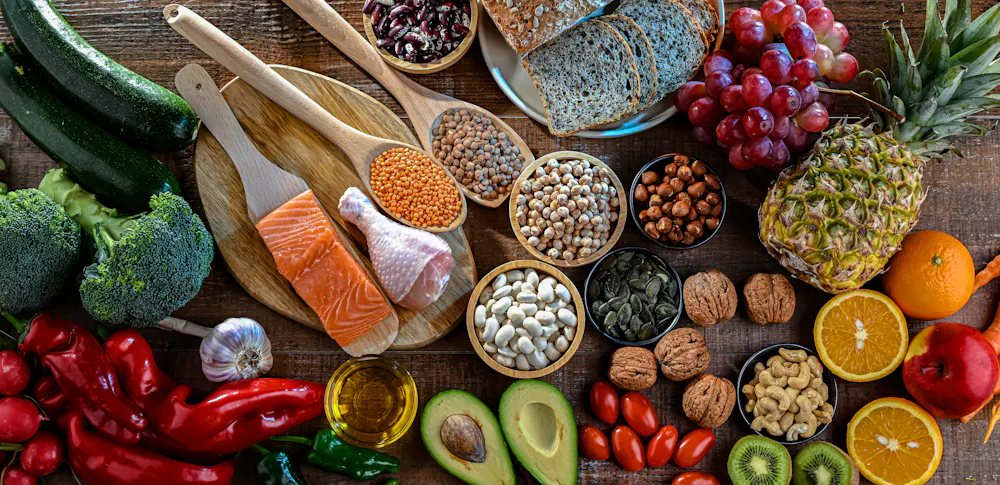
Though cholesterol may not be the most important predictor of risk for heart disease, it does remain highly relevant. However, it’s not just the amount of cholesterol – or more specifically the amount of bad, or LDL, cholesterol – that matters. Two people with the same cholesterol level don’t necessarily have the same risk for heart disease. This is because risk is determined more so by the number of particles that the bad cholesterol is packaged into, as opposed to the total mass of bad cholesterol that’s floating around. More particles means higher risk. That is why a blood test known as apolipoprotein B, which measures the number of cholesterol particles, is a better predictor of risk for heart disease than measurements of total amounts of bad cholesterol. Like cholesterol and C-reactive protein, apolipoprotein B is also influenced by lifestyle factors like exercise, weight loss and diet. Nutrients like fiber, nuts and omega-3 fatty acids are associated with a decreased number of cholesterol particles, while increased sugar intake is associated with a larger number of cholesterol particles. Furthermore, lipoprotein(a), a protein that lives in the wall surrounding cholesterol particles, is another marker that can predict heart disease more accurately than cholesterol levels. This is because the presence of lipoprotein(a) makes cholesterol particles sticky, so to speak, and thus more likely to get trapped in an atherosclerotic plaque. However, unlike other risk factors, lipoprotein(a) levels are purely genetic, thus not influenced by lifestyle, and need only be measured once in a lifetime.
What’s the best way to prevent heart disease?
Ultimately, heart disease is the product of many risk factors and their interactions over a lifetime. Therefore, preventing heart disease is way more complicated than simply eating a cholesterol-free diet, as once thought. Knowing your LDL cholesterol level alongside your C-reactive protein, apolipoprotein B and lipoprotein (a) levels paints a comprehensive picture of risk that can hopefully help motivate long-term commitment to the fundamentals of heart disease prevention. These include eating well, exercising consistently, getting adequate sleep, managing stress productively, maintaining healthy weight and, if applicable, quitting smoking.Mary J. Scourboutakos, Adjunct Assistant Professor in Family and Community Medicine, Macon & Joan Brock Virginia Health Sciences at Old Dominion University This article is republished from The Conversation under a Creative Commons license. Read the original article.
Easy Pet Wellness Routine: 5 Healthy Habits for Dogs and Cats Without the Fuss
Build a simple, effective pet wellness routine with 5 easy habits. Learn how to support your dog or cat’s health through tailored nutrition, functional supplements, exercise, mental enrichment, and stress-reducing environments—without overwhelming your schedule.
Easy Pet Wellness Routine: 5 Healthy Habits for Dogs and Cats Without the Fuss
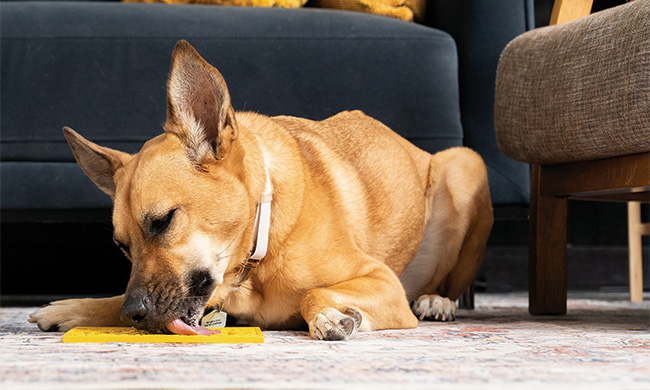
(Family Features) Pets are more than companions – they’re family – and keeping them healthy can be simple, enjoyable and rewarding. Today’s pet parents may be busier than ever, yet they’re also more committed to wellness than previous generations. That means approaching their furry friends’ unique needs with the same balance, care and attention to overall well-being as they do their own. In fact, according to the 2021 Human Animal Bond Research Institute Benchmark Survey of Pet Owners, increased knowledge about the health benefits of the human-animal bond led 91% of pet owners to say they would be more likely to take better care of their pets. Pet health isn’t just about food, however. A holistic approach to wellness combines daily supplements, dental care, exercise, mental enrichment and proactive health, with many owners looking for ways to simplify routines to support their pets every day. These practical ideas can help support a pet’s overall wellness routine. Tailor Flexible Nutrition Plans to Pets’ Needs Every pet is unique, but balanced nutrition forms the foundation of wellness. Dog and cat parents are increasingly seeking customizable food and supplement solutions designed around their furry friend’s age, needs and lifestyle. Age-specific formulations and products featuring natural, minimally processed ingredients and eco-friendly sourcing allow owners to support their pets’ overall health, from mealtime to daily wellness routines. Support Healthy Skin and Coat A pet’s coat often reflects its overall health. Along with a balanced diet and plenty of water, adding a daily supplement can help support a natural shine. While professional grooming keeps dogs and cats looking their best, incorporating regular at-home brushing and bathing with a gentle shampoo strengthens the bond you share and provides an opportunity to spot any changes, like lumps or bumps. Enhance Pet Wellness with Functional Support Even with a balanced diet, many pets may benefit from extra support to maintain their overall well-being. Functional supplements can help target specific needs, including joint mobility, immunity and stress relief. For example, NaturVet’s easy-to-use Lickable supplements – available in Hip & Joint, Calming and Multi-Vitamin formulas for dogs and cats – offer a simple way to make wellness an effortless part of everyday life. Promote Exercise and Mental Enrichment Movement is essential to any wellness routine. Regular walks, agility activities and games help keep pets fit and happy. Physical exercise is only part of the puzzle, though. Interactive toys, puzzle feeders, scent games and agility training help dogs and cats stay mentally sharp, even on days when outdoor activity is limited. Create a Calming Home Environment Dogs and cats can experience stress when routines aren’t followed, just like people. Maintaining a consistent daily schedule and providing a quiet, comfortable space – such as a bed in a low-traffic area – can help promote calm, comfort and security. By taking a few simple, consistent steps each day, pet parents can create a balanced, enjoyable wellness routine that keeps their furry family members healthy, happy and thriving. From functional supplements and daily care habits to exercise, mental enrichment and a calming environment, small efforts can make a big difference, turning everyday care into a rewarding part of life with your pet. To find more practical health and wellness solutions for your pet, visit naturvet.com. 5 Easy Steps to Help Pet Owners Build Healthy Habits Creating a consistent health and wellness routine doesn’t have to be complicated. Consider these simple steps:
Start slow. Introduce new supplements or activities gradually to avoid overwhelming pets.
Be aware. Review product labels and ingredient certifications to ensure they are safe and appropriate for your pet.
Incorporate naturally. Mix functional supplements into meals or use them as a reward for good behavior.
Stay consistent. Small daily actions can add up to long-term health and wellness.
Monitor and adjust. Work with a veterinarian to create a tailored plan and observe your pet’s energy, mobility and mood, adjusting as needed.
Our Lifestyle section on STM Daily News is a hub of inspiration and practical information, offering a range of articles that touch on various aspects of daily life. From tips on family finances to guides for maintaining health and wellness, we strive to empower our readers with knowledge and resources to enhance their lifestyles. Whether you’re seeking outdoor activity ideas, fashion trends, or travel recommendations, our lifestyle section has got you covered. Visit us today at https://stmdailynews.com/category/lifestyle/ and embark on a journey of discovery and self-improvement.















 Mary J. Scourboutakos, Adjunct Assistant Professor in Family and Community Medicine, Macon & Joan Brock Virginia Health Sciences at Old Dominion University This article is republished from The Conversation under a Creative Commons license. Read the original article.
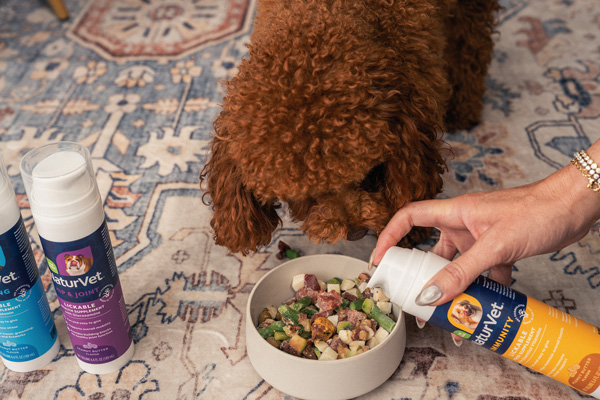 Tailor Flexible Nutrition Plans to Pets’ Needs Every pet is unique, but balanced nutrition forms the foundation of wellness. Dog and cat parents are increasingly seeking customizable food and supplement solutions designed around their furry friend’s age, needs and lifestyle. Age-specific formulations and products featuring natural, minimally processed ingredients and eco-friendly sourcing allow owners to support their pets’ overall health, from mealtime to daily wellness routines. Support Healthy Skin and Coat A pet’s coat often reflects its overall health. Along with a balanced diet and plenty of water, adding a daily supplement can help support a natural shine. While professional grooming keeps dogs and cats looking their best, incorporating regular at-home brushing and bathing with a gentle shampoo strengthens the bond you share and provides an opportunity to spot any changes, like lumps or bumps. Enhance Pet Wellness with Functional Support Even with a balanced diet, many pets may benefit from extra support to maintain their overall well-being. Functional supplements can help target specific needs, including joint mobility, immunity and stress relief. For example, NaturVet’s easy-to-use Lickable supplements – available in Hip & Joint, Calming and Multi-Vitamin formulas for dogs and cats – offer a simple way to make wellness an effortless part of everyday life. Promote Exercise and Mental Enrichment Movement is essential to any wellness routine. Regular walks, agility activities and games help keep pets fit and happy. Physical exercise is only part of the puzzle, though. Interactive toys, puzzle feeders, scent games and agility training help dogs and cats stay mentally sharp, even on days when outdoor activity is limited. Create a Calming Home Environment Dogs and cats can experience stress when routines aren’t followed, just like people. Maintaining a consistent daily schedule and providing a quiet, comfortable space – such as a bed in a low-traffic area – can help promote calm, comfort and security. By taking a few simple, consistent steps each day, pet parents can create a balanced, enjoyable wellness routine that keeps their furry family members healthy, happy and thriving. From functional supplements and daily care habits to exercise, mental enrichment and a calming environment, small efforts can make a big difference, turning everyday care into a rewarding part of life with your pet. To find more practical health and wellness solutions for your pet, visit




