


Race Relations
“Driving while Black”: CDPDJ scores another victory against racial profiling in Repentigny

Last Updated on May 15, 2024 by Daily News Staff
MONTRÉAL /CNW Telbec/ – A black man represented by the CDPDJ has just won a case for racial profiling in a police intervention in Repentigny. According to the reported facts, two police officers did a U-turn after spotting the complainant driving his BMW. They followed him for a long distance before intercepting him and asking him if the vehicle belonged to him, asking for his papers and identification. Feeling that he was a victim of discriminatory profiling and having no explanations as to why he was intercepted, the complainant refused to identify himself, which led to his arrest, handcuffing, search and the issuing of a statement of offence.
The victim, Mr. Ducas, filed a complaint with the Commission, which brought the case before the Tribunal des droits de la personne. In its decision, the Tribunal concluded that the complainant had suffered a discriminatory attack on his right to preserve his dignity and that he had been the victim of racial profiling by the police officers of the City of Repentigny. The judge awarded moral damages of $8,000 to the complainant, who remains extremely upset by the events to this day.
“This is an important victory in the fight against racial profiling and the stigmatization of Black communities. Systematically intercepting black people while driving and for no reason is unfortunately a phenomenon that continues to be widespread and must be eradicated. We continue to work closely with all stakeholders to bring about a fundamental change in policing practices,” said Myrlande Pierre, Vice President responsible for the Charter mandate.
Based on the expertise filed by the Commission, the judge in the case believes that the police intervention constitutes differential treatment resulting from unconscious prejudice and bias against a black man driving a luxury car. “The Tribunal is convinced that the policewomen would not have turned back if the person driving the car was white”.
“It is a start, a step in the right direction to recognize racial profiling in Repentigny. My case is not unique and unfortunately there is still a lot of work to be done. Profiling, with its perverse effects, greatly undermines the confidence of racialized communities in the police,” commented Mr. Ducas following the ruling.
The judgment underlines that thanks to “the vigilance and meticulous work done by the Commission over the past few years in this type of case”, the Repentigny Police Service, as well as police services in major cities in Quebec, have become aware of the phenomenon of racial profiling and are now working to modify their practices.
“The Commission welcomes the Tribunal’s recognition of its more than 20 years of expertise in racial profiling. While we welcome the fact that police services are taking action to change certain discriminatory practices, we wish to emphasize the importance that these steps take into consideration human rights and the principles set out in the Charter. We would also like to reiterate the importance of documenting the phenomenon of racial profiling to address it more effectively,” said Philippe-André Tessier, President of the Commission.
In this regard, the Commission is disappointed that the judgment does not follow up on its request to the City of Repentigny to adopt an anti-profiling policy and to collect data on the perceived or presumed racial affiliation of persons who are intercepted. The Commission’s latest recommendation to all Quebec police forces is to document the phenomenon of racial profiling through an independent database.
The Commission des droits de la personne et des droits de la jeunesse (Human Rights and Youth Commission) ensures the promotion and respect of the principles set out in the Québec Charter of Human Rights and Freedoms. It also ensures that the interests of children are protected and that their rights recognized in the Youth Protection Act are respected and promoted. In addition, the Commission oversees compliance with the Act respecting Equal Access to Employment in Public Bodies.
Suivez-nous sur : Facebook | Twitter | Youtube | LinkedIn | Instagram
SOURCE Commission des droits de la personne et des droits de la jeunesse
Authors
Discover more from Daily News
Subscribe to get the latest posts sent to your email.
Continue Reading

STM Blog
Vaccine mandates misinformation: 2 experts explain the true role of slavery and racism in the history of public health policy – and the growing threat ignorance poses today
Vaccine mandates misinformation: Florida’s vaccination rates decline as the state plans to eliminate mandates. Experts warn this could deepen health disparities, undermine public trust, and threaten community health, especially given the history of racism in vaccination practices.


Vaccine mandates misinformation:
Lauren MacIvor Thompson, Kennesaw State University and Stacie Kershner, Georgia State University
On Sept. 3, 2025, Florida announced its plans to be the first state to eliminate vaccine mandates for its citizens, including those for children to attend school.
Current Florida law and the state’s Department of Health require that children who attend day care or public school be immunized for polio, diphtheria, rubeola, rubella, pertussis and other communicable diseases. Dr. Joseph Ladapo, Florida’s surgeon general and a professor of medicine at the University of Florida, has stated that “every last one” of these decades-old vaccine requirements “is wrong and drips with disdain and slavery.”
As experts on the history of American medicine and vaccine law and policy, we took immediate note of Ladapo’s use of the word “slavery.”
There is certainly a complicated history of race and vaccines in the United States. But, in our view, invoking slavery as a way to justify the elimination of vaccines and vaccine mandates will accelerate mistrust and present a major threat to public health, especially given existing racial health disparities. It also erases Black Americans’ key work in centuries of American public health initiatives, including vaccination campaigns.
What’s clear: Vaccines and mandates save human lives
Evidence and data show that vaccines work, as do mandates, in keeping Americans healthy. The World Health Organization reported in a landmark 2024 study that vaccines have saved more than 154 million lives globally in just the past 50 years.
In the United States, vaccines for children are one of the top public health achievements of the 20th century. Rates of eight of the most common vaccine-preventable diseases in school-age children dropped by 97% or more from pre-vaccine levels, preventing an estimated 1,129,000 deaths and resulting in direct savings of US$540 billion and societal savings of $2.7 trillion.
History of vaccine mandates in the United States
Vaccine mandates in the United States date to the Colonial period and have a complex history. George Washington required his troops be inoculated, the predecessor of vaccination, against smallpox during the American Revolution.
To prevent outbreaks of this debilitating, disfiguring and deadly disease, state and local governments implemented smallpox inoculation and vaccination campaigns into the early 1900s. They targeted various groups, including enslaved people, immigrants, people living in tenement and other crowded housing conditions, manual laborers and others, forcibly vaccinating those who could not provide proof of prior vaccination.
Although religious exemptions were not recognized by law until the 1960s, some resisted these vaccination campaigns from the beginning, and 19th-century anti-vaccination societies urged the rollback of state laws requiring vaccination.
By the turn of the 20th century, however, the U.S. Supreme Court also began to intervene in matters of public health and vaccination. The court ultimately upheld vaccine mandates in Jacobson v. Massachusetts in 1905, in an effort to strike a balance between individual rights with the need to protect the public’s health. In Zucht v. King in 1922, the court also ruled in favor of vaccine mandates, this time for school attendance.
Vaccine mandates expanded by the middle of the 20th century to include vaccines for many dangerous childhood diseases, such as polio, measles, rubella and pertussis. When Jonas Salk’s polio vaccine became available, families waited in long lines for hours to receive it, hoping to prevent their children from having to experience paralysis or life in an iron lung.
Scientific studies in the 1970s demonstrated that state declines in measles cases were correlated with enforcement of school vaccine mandates. The federal Childhood Immunization Initiative launched in the late 1970s helped educate the public on the importance of vaccines and encouraged enforcement. All states had mandatory vaccine requirements for public school entry by 1980, and data over the past several decades continues to demonstrate the importance of these laws for public health.
Most parents also continue to support school mandates. A survey conducted in July and August 2025 by The Washington Post and the Kaiser Family Foundation finds that 81% of parents support laws requiring vaccines for school.
Black Americans’ long fight for public health equity
Despite the proven success of vaccines and the importance of vaccine mandates in maintaining high vaccination rates, there is a vocal anti-vaccine minority in the U.S. that has gained traction since the COVID-19 pandemic.
Misinformation proliferates both online and off. Some of the misinformation originates in the historical realities of vaccines and social policy in the United States.
When Ladapo, the Florida surgeon general, invoked the term “slavery” to refer to vaccine mandates, he may have been referring to the history of racism in the medical field, such as the U.S. Public Health Service Untreated Syphilis Study at Tuskegee. The study, which started in 1932 and spanned four decades, involved hundreds of Black men who were recruited without their knowledge or consent so that researchers could study the effects of untreated syphilis. Investigators misled the participants about the nature of the study and actively withheld treatment – including penicillin, which became the standard therapy in the late 1940s – in order to study the effects of untreated syphilis on the men’s bodies.
Today, the study is remembered as one of the most egregious instances of racism and unethical experimentation in American medicine. Its participants had enrolled in the study because it was advertised as a chance to receive expert medical care but, instead, were subjected to lies and painful “treatments.”
Despite these experiences in the medical system, Black Americans have long advocated for better health care, connecting it to the larger struggle for racial equality.
Vaccination is no exception. Despite the fact that they were often the subject of forced innoculation, enslaved people helped to lead the first American public health initiatives around epidemic disease. Historians’ research on smallpox and slavery, for example, has found that inoculation was widely accepted and practiced by West Africans by the early 1700s, and that enslaved people brought the practice to the Colonies.
Although his role is often downplayed, an African man known as Onesimus introduced his enslaver Cotton Mather to inoculation.
Throughout the next century, enslaved people often continued to inoculate each other to prevent smallpox outbreaks, and enslaved and free people of African descent played critical roles in keeping their own communities as healthy as possible in the face of violence, racism and brutality. The modern Civil Rights Movement explicitly drew on this history and centered health equity for Black Americans as one of its key tenets, including working to provide access to vaccines for preventable diseases.
In our view, Ladapo’s reference to vaccines as “slavery” ignores this important and nuanced history, especially Black Americans’ role in the history of preventing communicable disease with vaccines.
Lessons to learn from Tuskegee
Ladapo’s word choice also runs the risk of perpetuating the rightful mistrust that continues to exist in communities of color about vaccines and the American health system more broadly. Studies show that lingering effects of Tuskegee and other instances of medical racism have had real consequences for the health and vaccination rates of Black Americans.
A large body of evidence shows the existence of persistent health disparities for Black people in the United States compared with their white counterparts, leading to shorter lifespans, higher rates of maternal and infant mortality and higher rates of communicable and chronic diseases, with worse outcomes.
Eliminating vaccine mandates in Florida and expanding exemptions in other states will continue to widen these already existing disparities that stem from past public health wrongs.
There is an opportunity here, however, for health officials, not just in Florida but across the nation, to work together to learn from the past in making American public health better for everyone.
Rather than weakening vaccine mandates, national, state and local public health guidance can focus on expanding access and communicating trustworthy information about vaccines for all Americans. Policymakers can acknowledge the complicated history of vaccines, public health and race, while also recognizing how advancements in science and medicine have given us the opportunity to eradicate many of these diseases in the United States today.
Lauren MacIvor Thompson, Assistant Professor of History and Interdisciplinary Studies, Kennesaw State University and Stacie Kershner, Deputy Director of the Center for Law, Health & Society, Georgia State University
This article is republished from The Conversation under a Creative Commons license. Read the original article.
The Bridge is a section of the STM Daily News Blog meant for diversity, offering real news stories about bona fide community efforts to perpetuate a greater good. The purpose of The Bridge is to connect the divides that separate us, fostering understanding and empathy among different groups. By highlighting positive initiatives and inspirational actions, The Bridge aims to create a sense of unity and shared purpose. This section brings to light stories of individuals and organizations working tirelessly to promote inclusivity, equality, and mutual respect. Through these narratives, readers are encouraged to appreciate the richness of diverse perspectives and to participate actively in building stronger, more cohesive communities.
https://stmdailynews.com/the-bridge
Author
Discover more from Daily News
Subscribe to get the latest posts sent to your email.
The Bridge
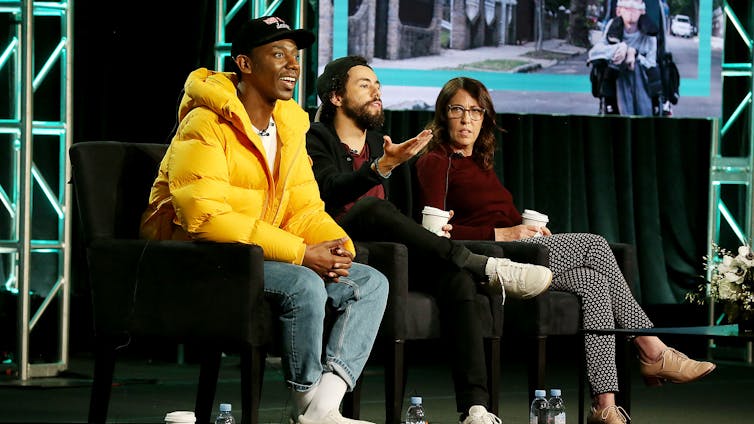
Muslim men have often been portrayed as ‘terrorists’ or ‘fanatics’ on TV shows, but Muslim-led storytelling is trying to change that narrative

Discover more from Daily News
Subscribe to get the latest posts sent to your email.
Blog
The Other Side of LA’s Sprawl: Race, Real Estate, and Division
Race and Real Estate: Discover how redlining, white flight, and racial segregation shaped Los Angeles’ sprawling growth. From housing discrimination to the Watts and 1992 uprisings, explore how history still impacts LA’s neighborhoods and future.
Last Updated on September 6, 2025 by Daily News Staff

The Other Side of LA’s Sprawl: Race, Real Estate, and Division
When people think about Los Angeles sprawl, the first images that come to mind are freeways, cars, and endless suburbs. But beneath the surface lies another story—one shaped by real estate practices, racial discrimination, and policies that shaped where people could and couldn’t live. The sprawling Los Angeles of today was built not just by developers and freeways, but also by a long history of racial divides that left a lasting imprint on the city.
🏘️ Redlining and Housing Discrimination
Beginning in the 1930s, federal housing agencies and banks used maps to classify neighborhoods by their investment risk. Areas with large Black, Latino, Asian, or immigrant populations were outlined in red—this practice became known as redlining.

Families in redlined areas were routinely denied mortgages and loans. White neighborhoods and new suburban developments received FHA-backed loans and investment, fueling growth. The result: homeownership, the single most important tool for building generational wealth in America, was largely out of reach for minority families.
This meant that even as Los Angeles boomed, many Black and Latino residents were effectively locked out of suburban growth.
🚙 White Flight and Suburban Growth
After World War II, the automobile and freeway expansion opened vast new areas for development—the San Fernando Valley, Orange County, and beyond. Coupled with federal housing subsidies, suburban homes were affordable for many white families.
But this migration was also driven by white flight—the movement of white residents out of central Los Angeles into segregated suburbs. Realtors often stoked racial fears, using tactics like blockbusting (warning white families that Black families moving in would lower property values).
The sprawl of LA was therefore not simply a neutral process of growth, but one deeply tied to racial exclusion.
🔥 Racial Divide and Civil Unrest
The legacy of segregation and economic exclusion left lasting scars. By the mid-20th century, many minority communities in South Los Angeles and East LA faced poor schools, limited job access, and heavy policing.

Police arrest a man during the riots on August 12. New York World Telegram
Two major uprisings highlighted this divide:
Watts Uprising (1965): Sparked by police brutality, but fueled by frustration over unemployment, poor housing, and systemic racism. LA Uprising (1992): Following the Rodney King verdict, long-standing inequalities exploded into violence, exposing the city’s deep racial and economic divides.

Aerial view of two buildings on fire on Avalon Blvd. between 107th and 108th Streets during Watts Riots, Los Angeles. Image: George R. Fry, Los Angeles Times
These events weren’t isolated—they were directly tied to decades of disinvestment and exclusion from the prosperity of Los Angeles’ sprawl.
🌆 What’s Different Today?
Los Angeles today is one of the most diverse metropolitan areas in the world, and many once-segregated neighborhoods are now multicultural. Federal laws have ended official redlining, and some efforts have been made to encourage fair housing and reinvestment.
But challenges remain:
The racial wealth gap persists, as the legacy of denied homeownership still echoes. Zoning laws continue to favor single-family housing, limiting affordability and reinforcing old divides. Gentrification in areas like Boyle Heights, Echo Park, and Leimert Park raises fears of displacement for longtime residents. Meanwhile, the homelessness crisis reflects structural inequities in housing access across communities.
Instead of white flight, today’s trend is wealth flight—higher-income residents moving outward or even leaving California, while working-class and immigrant communities remain central to LA’s cultural identity.
✨ The Real Story of LA’s Sprawl
Cars and freeways shaped Los Angeles, yes—but so did policies and prejudices that determined who could live where. The city’s fragmented geography isn’t just about mobility—it’s about power, opportunity, and exclusion.
Los Angeles is still working to overcome these divisions. Understanding this history is essential to building a more connected and equitable city for the future.
📚 Related Links & Resources
Dive into “The Knowledge,” where curiosity meets clarity. This playlist, in collaboration with STMDailyNews.com, is designed for viewers who value historical accuracy and insightful learning. Our short videos, ranging from 30 seconds to a minute and a half, make complex subjects easy to grasp in no time. Covering everything from historical events to contemporary processes and entertainment, “The Knowledge” bridges the past with the present. In a world where information is abundant yet often misused, our series aims to guide you through the noise, preserving vital knowledge and truths that shape our lives today. Perfect for curious minds eager to discover the ‘why’ and ‘how’ of everything around us. Subscribe and join in as we explore the facts that matter. https://stmdailynews.com/the-knowledge/
Author
Discover more from Daily News
Subscribe to get the latest posts sent to your email.





