

Lifestyle
NASA Funds 200+ Small Businesses for Innovative Tech Development
NASA invests in 200+ small businesses for developing technologies to protect astronauts’ health and reduce space collision risks. #SBIR #STTR


Credits: NASA
NASA has chosen more than 200 small business teams to receive funding for the development of technologies that will safeguard astronauts’ health, reduce spacecraft collision risks, and more. NASA’s Small Business Innovation Research (SBIR) and Small Business Technology Transfer (STTR) programs have awarded new funding to a diverse range of American small businesses and research institutions, in addition to eight Minority Serving Institutions (MSIs), to support NASA’s future missions.
Each team will receive $150,000 to demonstrate the feasibility and value of their innovations, for a total investment of $45 million. Small businesses are awarded Phase I SBIR contracts, which last six months, while small businesses partnered with research institutions are awarded Phase I STTR contracts, which last 13 months.
The full lists of this year’s SBIR and STTR awardees are available online. About 30% of the companies selected are first-time NASA SBIR/STTR recipients, including nou Systems Inc., a women-owned small business based in Huntsville, Alabama. Nou Systems has proposed a novel approach to automate DNA monitoring of microbes to help quickly identify those that may pose a threat to astronauts.
This technology could first find use as part of the International Space Station’s biological testing equipment. NASA’s SBIR and STTR programs support pioneering ideas from a range of innovators across the country that may not attract the initial private industry funding needed to thrive.
The program enables NASA to collaborate with small businesses and research institutions in need of government investment. Jenn Gustetic, director of early stage innovation and partnerships for Space Technology Mission Directorate (STMD) at the agency’s headquarters in Washington, said, “Through these early-stage small business awards, we are inviting more innovators into this growing arena and helping them mature their technologies for not only NASA’s use but for commercial impact.”
To learn more about NASA’s SBIR/STTR program and apply to future opportunities, visit:
https://stmdailynews.com/category/science/
Author

Discover more from Daily News
Subscribe to get the latest posts sent to your email.







Travel Advisory
Traveling to Mexico this spring? Here’s what to know about current advisories
Traveling to Mexico this spring? Visitors should be aware of state-specific travel advisories, as safety concerns in one region do not affect major resort areas like Cancun and Los Cabos, currently rated Level 2, which encourages increased caution. Monitoring official updates is essential for informed travel decisions amidst evolving conditions.
Last Updated on March 30, 2026 by Daily News Staff
Traveling to Mexico this spring? Here’s what to know about current advisories
(Tiffany Miller for ALG Vacations) For some travelers counting down to spring break, recent headlines about violence in parts of Mexico have sparked a new question: Should I cancel my trip? Travel advisors say they are seeing a surge in calls and emails from clients trying to determine whether developments in one region affect major resort areas elsewhere.
The questions follow several days of unrest in parts of Mexico after security operations targeting organized crime leaders prompted temporary flight disruptions and shelter-in-place guidance for U.S. government personnel in areas including Puerto Vallarta and Guadalajara. In this article, ALG Vacations explains what current travel advisories mean for spring break travelers heading to Mexico.
The U.S. State Department evaluates Mexico state by state, not as a single destination, and advisory levels vary by region. Many major beach destinations, including Cancun, Riviera Maya, Tulum and Los Cabos, are currently under a Level 2 advisory, which encourages travelers to exercise increased caution. It does not discourage travel.
Part of the confusion stems from geography. Puerto Vallarta, on the Pacific coast, is roughly 1,300 miles from Cancun and the Riviera Maya on the Caribbean side, about the distance between New York and Miami. Because advisories are assigned state by state, developments in one region do not automatically alter another.
In recent days, that uncertainty has translated into additional inquiries about whether specific resort areas are experiencing disruptions. U.S. Embassy security alerts issued this week indicate that temporary shelter-in-place guidance affecting Puerto Vallarta was lifted and that flight operations resumed. The advisory level for the Mexican state of Quintana Roo remains unchanged.
Some clients are asking about alternatives, advisors say, but many are continuing with their plans after reviewing official updates. Travel patterns often shift in response to breaking headlines, they add, before stabilizing as clearer information becomes available.
The State Department assigns travel advisories on a four-tier scale ranging from Level 1, exercise normal precautions, to Level 4, do not travel. While Level 2 encourages increased awareness, Level 3 and Level 4 carry stronger language discouraging or restricting travel.
Advisories are reviewed regularly and can be updated as conditions evolve. The State Department’s Mexico advisory page breaks down conditions by state, reflecting the country’s federal structure rather than issuing a single national designation. Travelers can also enroll in the State Department’s Smart Traveler Enrollment Program, which provides real-time security updates and allows U.S. officials to contact citizens in an emergency.
Embassy notices state that airports, hotels and tourism services in Quintana Roo are operating normally. Security conditions across Mexico vary widely by state, with some regions carrying higher advisories and others designated Level 1. Most destinations popular with U.S. travelers are currently classified as Level 2.
As spring break approaches, advisors say informed decision-making depends on reviewing the advisories assigned to a specific destination and monitoring official updates, rather than reacting to national headlines alone. Travel decisions ultimately depend on individual comfort levels, they add, but advisory levels are assigned regionally and should be evaluated accordingly.
Photo courtesy of Shutterstock

SOURCE:
Welcome to the Consumer Corner section of STM Daily News, your ultimate destination for savvy shopping and informed decision-making! Dive into a treasure trove of insights and reviews covering everything from the hottest toys that spark joy in your little ones to the latest electronic gadgets that simplify your life. Explore our comprehensive guides on stylish home furnishings, discover smart tips for buying a home or enhancing your living space with creative improvement ideas, and get the lowdown on the best cars through our detailed auto reviews. Whether you’re making a major purchase or simply seeking inspiration, the Consumer Corner is here to empower you every step of the way—unlock the keys to becoming a smarter consumer today!
https://stmdailynews.com/category/consumer-corner
Discover more from Daily News
Subscribe to get the latest posts sent to your email.
home gardening
Grow Healthier Plants (and Use Less Water) by Improving Your Soil
Biochar enhances soil health by improving water retention and nutrient availability, supporting stronger plant growth. It offers a sustainable solution by sequestering carbon and can also be used for composting and livestock bedding.
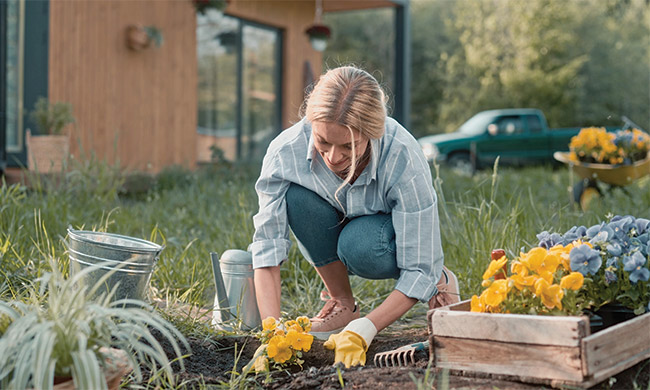
(Feature Impact) Almost every gardener knows the frustration: One corner of the garden bursts with life while another struggles to hang on. Flowers are slow to open, vegetables disappoint and the soil seems to drink up water and ask for more.
However, seasoned gardeners know the difference between a struggling garden and a thriving one almost always comes down to what’s beneath the surface.
Success Runs Soil Deep
The change in seasons can leave soil compacted and depleted, so spending some time giving it a boost can set the stage for strong, healthy plants. It may also be easier than many gardeners think to give soil the help it needs. Blending in amendments like biochar improves soil health, helps retain water and locks in nutrients.
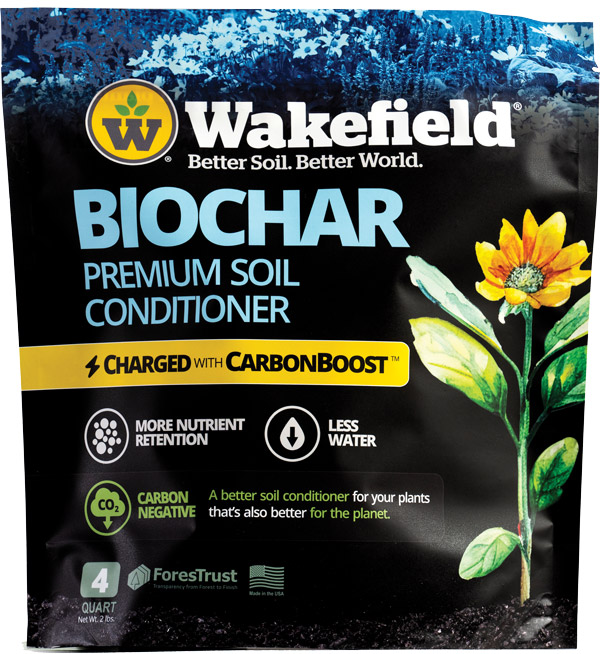
An easy-to-use yet powerful conditioner that helps balance soil pH, Wakefield BioChar boosts soil fertility and supports stronger, healthier plant growth. Once it’s mixed into soil, biochar becomes a powerhouse worker. It holds onto water like a sponge, slowly releasing and making the water accessible, so plants continually receive moisture and gardeners need to water less. It also makes nutrients more available to plants, resulting in healthier gardens and greener lawns.
 An Easy-to-Use Boost
When planting in the garden or pots, biochar should make up approximately 10% of the soil mix. If you’re setting up a garden bed, mix it into the soil to a depth of 4-6 inches (1 cubic foot is plenty for a 4-by-8-foot garden bed). For trees and shrubs, adding biochar directly to the roots helps them get off to a strong start and supports healthy growth.
It’s also a natural way to improve a lawn’s look and performance. To add biochar to your lawn to prepare for warm weather, spread it evenly across the grass, either by hand or with a broadcast spreader for larger areas. Aim for a thin, even layer to ensure all parts of your lawn benefit from its properties, improving long-term soil health. For newly planted lawns, mix 1 cubic foot of biochar into every 100 square feet of soil, making sure it penetrates 2-4 inches deep.
No matter where you use biochar, water regularly for the first week to activate its benefits. Watering helps biochar settle into the soil and start working, as its porous structure holds moisture, helping keep gardens and lawns hydrated.
Sustainable from the Ground Up
Not only does biochar deeply nourish your garden or lawn, it also helps create a more sustainable environment for years to come. It’s made by heating natural materials, such as organic wood waste, in a way that stores carbon rather than releasing it into the atmosphere as greenhouse gases.
The process – called pyrolysis – locks carbon into a stable form that doesn’t break down as quickly as mulch or compost and transforms into a light, porous material that stays active, season after season, to ensure nutrient-rich soil for years to come.
Beyond the Lawn
It isn’t just for providing plants with healthier soil. Bring biochar along on camping trips, as it also works wellfor composting toilets and has the added benefit of controlling odors and absorbing waste, making it a sustainable option that can be composted afterward.
It can also be used as livestock bedding as it absorbs liquids, neutralizes odors and can be mixed with manure to create a more nutrient-rich compost for plants and crops.
Learn more about planting healthy gardens and green spaces at WakefieldBiochar.com/grow.
Photo courtesy of Shutterstock (woman gardening)


SOURCE:
Wakefield BioChar
Discover more from Daily News
Subscribe to get the latest posts sent to your email.
home gardening
A Guide to Growing Thriving Plants Indoors
This guide provides essential tips for successfully growing indoor plants. Key points include selecting plants suited to light conditions, ensuring proper watering and soil quality, using adequate pots, and nurturing plants with appropriate fertilizers during their active growth season. Following these steps can create a thriving indoor garden.
Last Updated on March 28, 2026 by Daily News Staff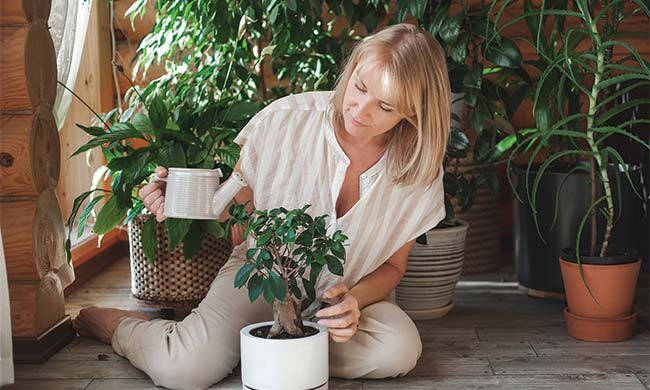
A Guide to Growing Thriving Plants Indoors
(Feature Impact) Lush greenery can add a sense of calm to many homes and bringing it indoors can help transform nearly any room into a relaxing oasis.
Whether you’re a seasoned plant parent or just beginning your indoor gardening journey, this guide can help you get started – and succeed in – growing healthy plants indoors.
Choose the Right Plants
Not all houseplants are created equal, and the first step toward a flourishing indoor garden is picking plants that align with your home’s conditions. If your home has several bright and sunny rooms, light-loving varieties will likely thrive. For shadier spots, look for low-light tolerant plants, which are often easier to care for and more forgiving.
Provide Adequate Light
Most houseplants prefer bright, indirect light – that soft glow when positioned just inside a window (and turned regularly for even light). However, some can tolerate lower light levels. If natural sunlight is limited where you live, consider grow lights that mimic the sun’s spectrum and help plants keep their color and strong growth without plenty of daylight.
Avoid Overwatering
Too much water can lead to root rot and is one of the most common mistakes even the most experienced gardeners make. Rather than watering on a strict schedule, check the soil first. If the top inch is dry, it’s usually time to give your plant a drink. Add warm or room-temperature water until you see moisture come out of the pot’s drainage holes then let the soil dry before watering again.
Consider the Soil, Pot and Growth Space
Use a high-quality potting mix designed for indoor plants along with pots featuring proper drainage. If you prefer decorative planters without holes, consider placing your plant in a smaller pot inside the decorative one to ensure proper drainage. As plants grow, they may need repotted to give their roots room to spread and continue healthy growth.
Nourish During the Growing Season
Plants use more nutrients in spring and summer, so feed them with a balanced, diluted fertilizer every 4-6 weeks during active months. In fall and winter, most indoor plants grow more slowly and need less feeding. Also remember to regularly prune dead or yellowing leaves to help plants focus on new growth.
Find more tips and guidance to help your indoor plants thrive at eLivingtoday.com.
Photo courtesy of Shutterstock
https://erp.featureimpact.com/api/v1/tracking/17789/10231/track.js (function () {
var image = new Image(1, 1);
image.src = ‘https://erp.featureimpact.com/api/v1/tracking/17789/10231/track.gif?referrer=’ + window.location.href;
image.id = ‘feature-impact-content-tracking-pixel’;
image.style.position = ‘absolute’;
image.style.top = 0;
image.style.left = 0;
document.body.appendChild(image);
})();
SOURCE:
Discover more from Daily News
Subscribe to get the latest posts sent to your email.





