

News
Putting Jobs First: California High-Speed Rail Crosses 13,000 Construction Jobs Milestone

Last Updated on April 13, 2024 by Daily News Staff
In a significant milestone for the nation’s first high-speed rail project, the California High-Speed Rail Authority (Authority) announced that it has successfully created over 13,000 construction jobs since 2015. This accomplishment not only signifies progress for the ambitious high-speed rail system but also highlights the positive impact it has had on the local Californian workforce.
Central Valley Takes the Lead:
With over 70 percent of these jobs going to residents of California’s Central Valley, the project has played a vital role in providing employment opportunities for individuals in the region. It is worth acknowledging the efforts of nearly 1,400 workers dispatched each day to various high-speed rail construction sites. These jobs have injected economic vitality and growth into communities across the Central Valley.
Regional Breakdown:
- Fresno County: 4,222 jobs
- Kern County: 2,538 jobs
- Tulare County: 1,282 jobs
- Madera County: 580 jobs
- Kings County: 462 jobs
- Merced County: 189 jobs
- Remaining California Counties: 3,387 jobs
- Out-of-State: 369 jobs
A Decade of Strong Partnerships:
The Authority has had a longstanding partnership with the California State Building Trades, which has facilitated the creation of thousands of good-paying union jobs. Notably, during the past five years alone, over 10,000 construction positions have been generated through these collaborative efforts. Moreover, a significant focus has been placed on directing employment opportunities towards individuals from disadvantaged communities, further promoting inclusivity and economic upliftment.
California Jobs First Council:
To bolster job creation even further and ensure economic prosperity for all Californians, the California Jobs First Council was established. This council aims to align economic resources, expedite job creation, and enhance opportunities throughout the state. With particular focus on the Central San Joaquin Valley, this initiative serves as an impetus for creating more jobs, rapidly, in every community.
Future Expansion and Construction Progress:
Looking ahead, the Authority is resolute in extending the current 119-mile high-speed rail network to span 171 miles, reaching from Merced to Bakersfield. The construction has already commenced on this expansion project. Presently, more than 25 dynamic construction sites are active within the Central Valley. As a testament to its commitment to environmental stewardship, the Authority has obtained full environmental clearance for 422 miles of the high-speed rail program, stretching from the Bay Area to Los Angeles County.
Stay Updated:
For the latest developments and information about the high-speed rail construction, interested individuals are encouraged to visit the official website: www.buildhsr.com. On the website, visitors can access recent videos, animations, photographs, press center resources, and the latest renderings of the project. All files are available for free use, courtesy of the California High-Speed Rail Authority.
The California High-Speed Rail Authority’s achievement of surpassing 13,000 construction jobs is undoubtedly a cause for celebration. By focusing on job creation and prioritizing the local workforce, this landmark project is making a positive difference in the lives of Californians, particularly those in the Central Valley. With continued progress and future expansions, the California High-Speed Rail project not only brings efficient transportation but also provides a substantial economic boost that benefits communities and individuals alike.
Source: California High-Speed Rail Authority
What is California High-Speed Rail?
The California High-Speed Rail (CAHSR) is a state-funded project led by the California High-Speed Rail Authority. Currently under construction, Phase 1 is planned to cover 494 miles from San Francisco to Los Angeles, passing through the Central Valley. There are plans for Phase 2, which would extend the system to Sacramento and San Diego, totaling 776 miles. Authorized by a 2008 ballot, this ambitious project aims to connect major urban areas, significantly reducing travel times. The goal for Phase 1 is to achieve a travel time of 2 hours and 40 minutes between San Francisco and Los Angeles, a vast improvement from the existing Amtrak service, which takes around nine hours.
Construction of Phase 1 began in the Central Valley back in 2015. The project is being built in sections due to limited funding. The state aims to complete a 171-mile (275 km) long Initial Operating Segment (IOS) connecting Merced and Bakersfield by 2024. The IOS is expected to begin its revenue service as a self-contained high-speed rail system between 2030-2033, at an estimated cost of $28–35 billion. CAHSR trains running along this section would be the fastest in the Americas, with a top speed of 220 mph (350 km/h).
Between January 2015 and December 2023, a whopping amount of $11.2 billion was spent on the IOS project, which includes 119 miles (192 km) currently under construction, alongside upgrades to the existing rail lines in the San Francisco Bay Area and Greater Los Angeles. The plan is that Phase 1 will share tracks with conventional passenger trains. However, the Authority has not yet secured funding to connect the Central Valley section with either the Bay Area or Los Angeles, which involves crossing several major mountain passes. As of 2024, it is estimated that Phase 1 will cost a total of $106.2 billion.n.
Supporters of the California High-Speed Rail project emphasize the potential benefits it offers, including the reduction of air traffic and highway congestion, decreased pollution and greenhouse gas emissions, and the promotion of economic growth by connecting inland regions to coastal cities. However, opponents argue that the project is too expensive and advocate for directing funds to other transportation or infrastructure initiatives. The choice of route and the decision to initiate construction in the Central Valley, rather than more densely populated areas, have been points of contention. The project has encountered notable challenges such as delays and cost overruns due to management issues, legal disputes, and a lack of complete funding commitment.
https://en.wikipedia.org/wiki/California_High-Speed_Rail#
https://stmdailynews.com/category/the-bridge/urbanism/
Author

Discover more from Daily News
Subscribe to get the latest posts sent to your email.


actors & performers
T.K. Carter, The Thing and Punky Brewster Actor, Dies at 69
Actor T.K. Carter, known for The Thing and Punky Brewster, has died at age 69. A look at his career and lasting legacy in film and television.

T.K. Carter in Punky Brewster (1984) Image: IMDB
Veteran actor T.K. Carter, best known for his roles in The Thing and the popular 1980s television series Punky Brewster, has died at the age of 69.
Authorities confirmed Carter was found unresponsive at his home in Duarte, California. No foul play is suspected, and an official cause of death has not yet been released.
A Career Spanning Decades
Born Thomas Kent Carter, T.K. Carter built a career in film and television that spanned more than four decades. He became a cult favorite portraying Nauls in John Carpenter’s 1982 horror classic The Thing, a film that continues to influence the genre today.
Television audiences widely remember Carter for his role as Mike Fulton on Punky Brewster, where his comedic timing and grounded performances helped make the show a lasting favorite of the era.
Film and Television Legacy
In addition to his best-known roles, Carter appeared in films such as Runaway Train, Ski Patrol, and Space Jam. His television work included guest appearances on a wide range of series throughout the 1980s, 1990s, and beyond.
Known within the industry as a reliable and versatile performer, Carter often brought authenticity and warmth to supporting roles that left a lasting impression, even in brief appearances.
Remembering T.K. Carter
As news of his passing spreads, fans and colleagues alike are reflecting on T.K. Carter’s contributions to film and television. While he may not have always been the leading name on the marquee, his work helped shape stories that continue to be watched and appreciated by new generations.
T.K. Carter is remembered for his enduring performances, professional dedication, and the quiet but meaningful legacy he leaves behind.
Related Coverage
- Los Angeles Times: Actor T.K. Carter Dies at 69
- People Magazine: T.K. Carter, ‘The Thing’ and ‘Punky Brewster’ Actor, Dead at 69
- Entertainment Weekly: T.K. Carter, ‘Punky Brewster’ and ‘The Thing’ Actor, Dies
- ABC News: Veteran Actor T.K. Carter Dies at 69
Stay with STM Daily News for updates to this developing story and more independent coverage of entertainment, history, and culture. Visit www.stmdailynews.com for the latest.
Discover more from Daily News
Subscribe to get the latest posts sent to your email.
News
Gregory Outreach Services Expands Food Access with Addition of Third Refrigerated Van
Gregory Outreach Services expands its mission to fight food insecurity with the addition of a third refrigerated van, doubling food access for low-income seniors and veterans in Phoenix.
Last Updated on January 8, 2026 by Daily News Staff
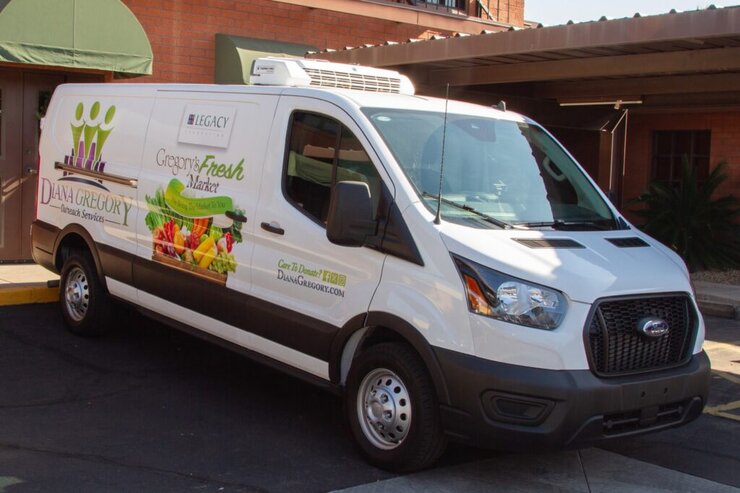
Gregory Outreach Services’ newest refrigerated delivery van expands food access for low-income seniors and veterans across Phoenix.
Phoenix, AZ — Gregory Outreach Services has taken a major step forward in its mission to fight food insecurity with the addition of a third refrigerated delivery van, significantly expanding its capacity to serve low-income seniors and veterans across the Phoenix area.
The new refrigerated van was made possible through the support of a generous anonymous donor. The expansion is further strengthened by the continued generosity of the BHHS Legacy Foundation, who donated fresh produce to support the organization’s growing distribution efforts.
As rising food costs and inflation continue to place pressure on individuals living on fixed incomes, the need for reliable access to nutritious food has never been greater. This latest addition to the organization’s mobile fleet allows Gregory Outreach Services to double the number of individuals served, while maintaining strict food safety and quality standards.
“As the cost of living continues to rise, more seniors and veterans are struggling to afford nutritious food,” said Diana Gregory, Founder and CEO of Gregory Outreach Services. “This van allows us to bridge a widening gap for individuals living on fixed incomes, many of whom face mobility challenges and limited access to fresh food options.”
Meeting a Growing Community Need
Gregory Outreach Services works directly with seniors and veterans who are disproportionately affected by inflation, medical expenses, and transportation barriers. For many, simply reaching a grocery store can be a challenge. Refrigerated vehicles are essential to ensuring that fresh fruits and vegetables arrive safely and consistently at senior housing communities, veteran shelters, and community distribution sites.
“This third van complements the two already in operation and represents a critical milestone in our growth,” Gregory added. “We are deeply grateful to our anonymous donor for investing in our mission, and to BHHS Legacy Foundation’s Board of Directors and its CEO, Jerry Wissink for Legacy’s generosity in donating fresh produce. Together, this support allows us to scale our impact and respond to the increasing needs of our community.”
Expanding Impact While Preserving Dignity
With an expanded fleet and increased food supply, Gregory Outreach Services is better positioned to address food insecurity, promote healthier outcomes, and serve seniors and veterans with dignity, respect, and care. The organization’s mobile delivery model ensures help reaches those who need it most — directly and reliably.
About Gregory Outreach Services
Gregory Outreach Services is a nonprofit organization dedicated to improving health outcomes for low-income seniors and veterans through mobile produce delivery, nutrition education, and community-based wellness programs. By bringing fresh food directly to those most in need, the organization works to reduce food insecurity and strengthen community wellness.
For more information, visit dianagregory.com.
Stories of Change: People Making a Difference
Discover inspiring stories of changemakers making a positive impact. Explore videos and articles of people tackling today’s biggest challenges with action and hope. Visit: https://stmdailynews.com/stories-of-change/
Dive into “The Knowledge,” where curiosity meets clarity. This playlist, in collaboration with STMDailyNews.com, is designed for viewers who value historical accuracy and insightful learning. Our short videos, ranging from 30 seconds to a minute and a half, make complex subjects easy to grasp in no time. Covering everything from historical events to contemporary processes and entertainment, “The Knowledge” bridges the past with the present. In a world where information is abundant yet often misused, our series aims to guide you through the noise, preserving vital knowledge and truths that shape our lives today. Perfect for curious minds eager to discover the ‘why’ and ‘how’ of everything around us. Subscribe and join in as we explore the facts that matter. https://stmdailynews.com/the-knowledge/ Get The Knowledge. Read more community news and local stories at STM Daily News.
Discover more from Daily News
Subscribe to get the latest posts sent to your email.
Economy
How Bird Flu Upended the U.S. Egg Market — and Why Prices Are Finally Beginning to Stabilize
Egg Market: Egg prices surged during the U.S. bird flu outbreak as laying hen inventories collapsed. Here’s how flock recovery is helping stabilize egg prices today.

How Bird Flu Upended the U.S. Egg Market — and Why Prices Are Finally Beginning to Stabilize
Few grocery items frustrated American consumers over the past two years quite like eggs. Once an inexpensive staple, egg prices surged to historic highs following a prolonged outbreak of highly pathogenic avian influenza (HPAI), commonly known as bird flu. Today, however, prices appear to be stabilizing. Here’s how the crisis unfolded — and why relief is finally showing up at the checkout line.The Bird Flu Crisis and Its Impact on Egg Supply
Beginning in 2022, the United States experienced one of the most severe bird flu outbreaks in modern history. The virus spread rapidly through poultry farms, forcing producers to cull millions of birds to prevent further transmission. Egg-laying hens were hit especially hard, leading to a sharp drop in egg production nationwide. By 2024 and into early 2025, the cumulative losses totaled well over one hundred million birds. With fewer hens producing eggs, supply tightened dramatically, and prices soared. At the peak of the crisis, consumers in some regions saw egg prices climb above six dollars per dozen.Why Egg Prices Stayed High for So Long
Unlike other agricultural products, egg production cannot rebound quickly after a disruption. When laying hens are lost, they must be replaced with young birds known as pullets. These pullets require approximately four to six months to mature before they begin producing eggs. Even after farms were cleared to restock, producers faced additional challenges. Strict biosecurity measures, concerns about reinfection, and the logistical complexity of rebuilding flocks slowed the recovery process. As a result, egg supplies remained tight long after the initial outbreaks subsided.Laying Hen Inventory Recovery Takes Shape
By mid to late 2025, signs of recovery became more apparent. Producers gradually increased pullet placements, and national laying hen inventories began to grow. While the total number of hens had not yet returned to pre-outbreak levels, the upward trend marked an important turning point. This steady rebuilding of flocks meant more eggs entering the supply chain. Wholesale markets responded first, with prices easing as inventories improved. Retail prices soon followed, signaling that the worst of the supply shock was beginning to fade.Egg Prices Begin to Stabilize
As laying hen inventories recovered, egg prices moved away from their record highs. By late 2025 and into early 2026, prices at many grocery stores had fallen noticeably compared to peak levels. While costs remain somewhat higher than pre-pandemic norms, the extreme volatility seen during the height of the bird flu crisis has largely subsided. Additional factors also helped stabilize the market. Federal and state efforts to strengthen biosecurity, limited egg imports to supplement domestic supply, and improved disease monitoring all contributed to a more balanced egg market.What This Means for Consumers
For consumers, the stabilization of egg prices offers a welcome sense of normalcy. Shoppers are less likely to encounter sudden price spikes, and eggs are once again becoming a predictable part of grocery budgets. While prices may not return to the ultra-low levels seen years ago, the recovery of laying hen inventories suggests that the egg market is on firmer footing. Continued vigilance against future outbreaks will be critical, but for now, the outlook is far more stable than it was during the height of the bird flu crisis.Looking Ahead
The bird flu outbreak served as a reminder of how vulnerable food systems can be to disease disruptions. Thanks to gradual flock rebuilding and improved supply conditions, egg prices are stabilizing — a sign that recovery, while slow, is real. If current trends continue, consumers and producers alike may finally be moving past one of the most turbulent chapters in the modern egg market.Further Reading & Sources
- USDA – Avian Influenza Updates and Poultry Industry Impact
- USDA Economic Research Service – Egg Prices and Food Inflation Data
- U.S. Bureau of Labor Statistics – Consumer Price Index (Egg Prices)
- Associated Press – Coverage of the U.S. Bird Flu Outbreak
- USDA Agricultural Marketing Service – Egg Market and Wholesale Reports
- CDC – Avian Influenza Information and Monitorin
Dive into “The Knowledge,” where curiosity meets clarity. This playlist, in collaboration with STMDailyNews.com, is designed for viewers who value historical accuracy and insightful learning. Our short videos, ranging from 30 seconds to a minute and a half, make complex subjects easy to grasp in no time. Covering everything from historical events to contemporary processes and entertainment, “The Knowledge” bridges the past with the present. In a world where information is abundant yet often misused, our series aims to guide you through the noise, preserving vital knowledge and truths that shape our lives today. Perfect for curious minds eager to discover the ‘why’ and ‘how’ of everything around us. Subscribe and join in as we explore the facts that matter. https://stmdailynews.com/the-knowledge/
Author
Discover more from Daily News
Subscribe to get the latest posts sent to your email.





