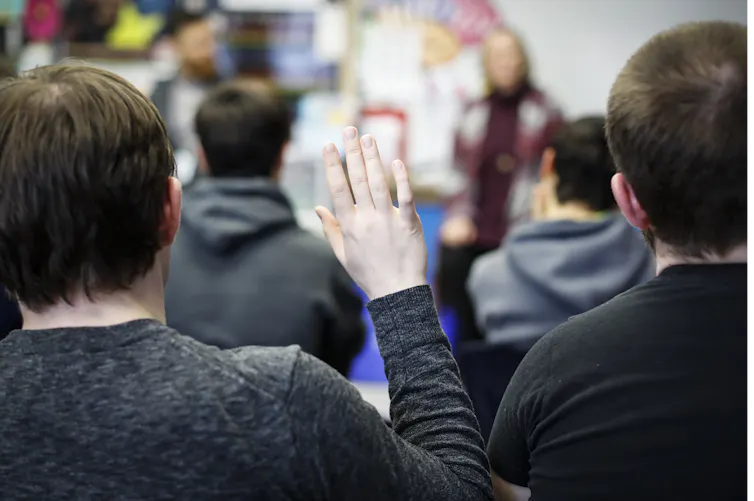
Students ask questions during a social studies class on American politics. AP Photo/John MinchilloLightning Jay, Binghamton University, State University of New York Can you tell fact from fiction online? In a digital world, few questions are more important or more challenging. For years, some commentators have called for K-12 teachers to take on fake news, media literacy, or online misinformation by doubling downon critical thinking. This push for schools to do a better job preparing young people to differentiate between low- and high-quality information often focuses on social studies classes. As an education researcher and former high school history teacher, I know that there’s both good and bad news about combating misinformation in the classroom. History class can cultivate critical thinking – but only if teachers and schools understand what critical thinking really means.
Not just a ‘skill’
First, the bad news. When people demand that schools teach critical thinking, it’s not always clear what they mean. Some might consider critical thinking a trait or capacity that teachers can encourage, like creativity or grit. They could believe that critical thinking is a mindset: a habit of being curious, skeptical and reflective. Or they might be referring to specific skills – for instance, that students should learn a set of steps to take to assess information online. Unfortunately, cognitive science research has shown that critical thinking is not an abstract quality or practice that can be developed on its own. Cognitive scientists see critical thinking as a specific kind of reasoning that involves problem-solving and making sound judgments. It can be learned, but it relies on specific content knowledge and does not necessarily transfer between fields. Early studies on chess playersand physicists in the 1970s and ’80s helped show how the kind of flexible and reflective cognition often called critical thinking is really a product of expertise. Chess masters, for instance, do not start out with innate talent. In most cases, they gain expertise by hours of thoughtfully playing the game. This deliberate practice helps them recognize patterns and think in novel ways about chess. Chess masters’ critical thinking is a product of learning, not a precursor.Nurman Alua of Kazakhstan, left, and Lee Alice of the U.S. during the 45th Chess Olympiad in Budapest, Hungary, on Sept. 22, 2024.AP Photo/Denes Erdos Because critical thinking develops in specific contexts, it does not necessarily transfer to other types of problem-solving. For example, chess advocates might hope the game improves players’ intelligence, and studies do suggest learning chess may help elementary students with the kind of pattern recognition they need for early math lessons. However, research has found that being a great chess player does not make people better at other kinds of complex critical thinking.
Historical thinking
Since context is key to critical thinking, learning to analyze information about current events likely requires knowledge about politics and history, as well as practice at scrutinizing sources. Fortunately, that is what social studies classes are for. Social studies researchers often describe this kind of critical thinking as “historical thinking”: a way to evaluate evidence about the past and assess its reliability. My own research has shown that high school students can make relatively quick progress on some of the surface features of historical thinking, such as learning to check a text’s date and author. But the deep questioning involved in true historical thinking is much harder to learn. Social studies classrooms can also build what researchers call “civic online reasoning.” Fact-checking is complex work. It is not enough to tell young people that they should be wary online, or to trust sites that end in “.org” instead of “.com.” Rather than learning general principles about online media, civic online reasoning teaches students specific skills for evaluating information about politics and social issues. Still, learning to think like a historian does not necessarily prepare someone to be a skeptical news consumer. Indeed, a recent study found that professional historians performed worse than professional fact-checkers at identifying online misinformation. The misinformation tasks the historians struggled with focused on issues such as bullying or the minimum wage – areas where they possessed little expertise.
Powerful knowledge
That’s where background knowledge comes in – and the good news is that social studies can build it. All literacy relies on what readers already know. For people wading through political information and news, knowledge about history and civics is like a key in the ignition for their analytical skills. Readers without much historical knowledge may miss clues that something isn’t right – signs that they need to scrutinize the source more closely. Political misinformation often weaponizes historical falsehoods, such as the debunked and recalled Christian nationalist book claiming that Thomas Jefferson did not believe in a separation of church and state, or claims that the nadir of African American life came during Reconstruction, not slavery. Those claims are extreme, but politicians and policymakers repeat them. For someone who knows basic facts about American history, those claims won’t sit right. Background knowledge will trigger their skepticism and kick critical thinking into gear.A teacher in North Carolina conducts a lesson about the D-Day invasion of Normandy in an Advanced Placement class.AP Photo/Gerry Broome
Past, present, future
For this reason, the best approach to media literacy will come through teaching that fosters concrete skills alongside historical knowledge. In short, the new knowledge crisis points to the importance of the traditional social studies classroom. But it’s a tenuous moment for history education. The Bush- and Obama-era emphasis on math and English testing resulted in decreased instructional time in history classes, particularly in elementary and middle schools. In one 2005 study, 27% of schools reported reducing social studies time in favor of subjects on state exams. Now, history teachers are feeling heat from politically motivated culture wars over education that target teaching about racism and LGBTQ+ issues and that ban books from libraries and classrooms. Two-thirds of instructors say that they’ve limited classroom discussions about social and political topics. Attempts to limit students’ knowledge about the past imperil their chances of being able to think critically about new information. These attacks are not just assaults on the history of the country; they are attempts to control its future. Lightning Jay, Assistant Professor of Teaching, Learning and Educational Leadership, Binghamton University, State University of New York This article is republished from The Conversation under a Creative Commons license. Read the original article.
The Substitute Teacher Who Wanted Blueprints of Our House
A fifth-grade assignment took a strange turn when a substitute teacher asked students to draw schematics of their homes. What followed — a wildly fictional floor plan and a priceless reaction from my mom — turned into one of my funniest childhood memories.
The Substitute Teacher Who Wanted Blueprints of Our House
Elementary school memories tend to blend together — cafeteria pizza, playground arguments, the eternal struggle of times tables — but every once in a while, something happens that sticks with you for life. For me, that moment came in the fifth grade during a week when our regular teacher was out, and we cycled through substitute teachers like we were testing models for durability. By midweek, in walked a substitute with a mysterious, slightly intense energy — the kind of vibe that suggested he either meditated at dawn or worked a graveyard shift doing something he couldn’t talk about. We settled into our seats, expecting worksheets or quiet reading time. But nope. He had other plans. “Today,” he announced, “we’re going to draw schematics of our houses.” Schematics. Not drawings. Not little houses with smoke coming out of the chimney. Actual blueprint-style schematics. He wanted the layout of our bedrooms, our parents’ rooms, and where the pets slept. Every detail. Now, to be fair, Highlights Magazine did have a feature that month teaching kids how to draw floor plans. So maybe he was just a bit overenthusiastic about cross-curricular learning. Or maybe — and this is my completely rhetorical adult theory — he worked the graveyard shift as a cat burglar gathering intel between heists. Just moonlighting between blueprints. While the rest of the class tried their best to recreate their actual homes, my imagination sprinted in a totally different direction. The house I drew had:
A massive master bedroom with an oversized bathroom for my parents
Separate bedrooms for us kids on the opposite side of the house
A kitchen placed right in the center like a command center
And the dog — the true VIP — had a luxurious two-story doghouse
I had basically created a dream home designed by a 10-year-old watching too much Fantasy Homes by the Yard. Later that day, my mom asked the usual question: “So, what did you guys do today?” “We drew schematics of our house,” I said casually. The look on her face was instant and intense. She wasn’t panicked, but there was definitely a “Why does a substitute teacher need to know the exact layout of my home?” expression happening. Parental instincts activated. But then I showed her my diagram. She stared at it. Blinked. Then sighed with massive relief. “This isn’t our house,” she said. “Nope! I made it up,” I replied proudly. Her shoulders relaxed so much she probably lost five pounds of tension in one instant. If the substitute was secretly planning a heist, my masterpiece of misinformation would have sent him to the wrong house entirely. Looking back, the whole moment feels like a sitcom setup — a mysterious substitute collecting “house schematics,” me creating a completely fictional piece of architecture, and my mom going on a full emotional journey in under 30 seconds. Maybe he was just excited about the Highlights Magazine floor-plan activity. Or maybe — just maybe — he moonlighted in cat burglary. We’ll never know. But if he was, I like to think I threw him completely off the scent.
Enjoy this story?
Check out more nostalgic and humorous stories on STM Daily News and be sure to sign up for our newsletter!
Our Lifestyle section on STM Daily News is a hub of inspiration and practical information, offering a range of articles that touch on various aspects of daily life. From tips on family finances to guides for maintaining health and wellness, we strive to empower our readers with knowledge and resources to enhance their lifestyles. Whether you’re seeking outdoor activity ideas, fashion trends, or travel recommendations, our lifestyle section has got you covered. Visit us today at https://stmdailynews.com/category/lifestyle/ and embark on a journey of discovery and self-improvement.
Preparing for the Future of Work: Tips to help teens choose a career path
Preparing for the Future of Work: American teens are optimistic about their careers despite concerns over AI’s impact. Many value internships and real-world experience over degrees, and are weighing passion against pay, seeking balance in their future career choices.
Preparing for the Future of Work: Tips to help teens choose a career path
(Family Features) American teens are preparing for a workforce shaped by AI, new approaches to education and economic uncertainty. While challenges are real, optimism remains high.
In fact, 94% of teens said they are optimistic about their future careers, reflecting a strong sense of hope and ambition, according to research from Junior Achievement and Citizens. The two organizations have partnered for more than 18 years to advance financial empowerment nationwide, with the bank allocating funding and volunteer support, including more than $630,000 in 2025 to support financial empowerment programs that give people the confidence and tools they need to budget, save, invest and pursue their goals.
However, 57% of teens surveyed believe AI has negatively impacted their career outlook, raising concerns about job replacement and the need for new skills.
“Today’s teens face a rapidly changing world, from the rise of AI to shifts in education and careers,” said Susan LaMonica, chief human resources officer at Citizens. “The survey shows they know the importance of adaptability and continuous learning.”
To help teens build skills for emerging roles and navigate their futures, consider these tips from the experts at Junior Achievement, the world’s largest organization dedicated to giving young people the knowledge and skills they need to own their economic success, plan for their futures and make smart academic and economic choices.
Explore Internships Success depends on more than credentials alone. Survey respondents believe networking (50%) and internships (41%) are keys to future success. What’s more, 56% believe real-world experience is more valuable than a four-year degree. Internships can provide that experience and allow students to test their interest in a field while building their professional networks, developing skills that can be applied to a range of career paths, identifying strengths and weaknesses and clarifying future goals.
Consider Post-High School Education Teens’ perspectives on education reflect their uneasiness. Only 40% of teens surveyed believe a four-year degree is always a good investment. At the same time, about 6 in 10 believe a bachelor’s or graduate degree is still necessary for their chosen profession, which shows how complicated these decisions can be. While many careers require a college diploma, that isn’t the only path to career success. In addition to traditional four-year universities, consider alternate education paths such as trade schools or technical programs, apprenticeships, two-year degree programs or professional certifications if applicable to your career path.
Weigh Passion Against Pay While most teens surveyed (63%) said they would prefer a good-paying job even if it comes with stress, many are weighing passion against pay as they explore career opportunities. In fact, some top industries in which teens plan to pursue a job include health care and life sciences (30%), arts and music (27%) and content creation and digital media (25%), further showcasing that willingness. Many students are also exploring less traditional routes to build security and opportunity, with 87% expecting to earn extra income through side hustles, gig work or social media content creation.
“The data illustrates how the stressors on young people are compounding year after year,” said Tim Greinert, president of Junior Achievement USA. “It also shows how resilient and savvy students are these days in terms of understanding the world around them and deciphering the best path to the future that’s best for them.”
Advertisement
To learn more about preparing for future success and find full survey results, visit JA.org/FutureOfWork.
STM Daily News is a vibrant news blog dedicated to sharing the brighter side of human experiences. Emphasizing positive, uplifting stories, the site focuses on delivering inspiring, informative, and well-researched content. With a commitment to accurate, fair, and responsible journalism, STM Daily News aims to foster a community of readers passionate about positive change and engaged in meaningful conversations. Join the movement and explore stories that celebrate the positive impacts shaping our world.
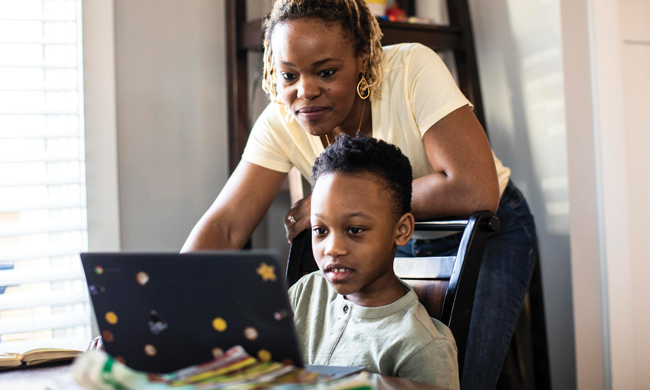
(Family Features) Encouraging a successful education for your kids while promoting fun after-school learning may never be easier than right now. From wearables to virtual reality headsets and beyond, the latest tech-enabled devices let families enhance classroom experiences while engaging in downtime together after the final school bell rings.
Find more gadgets to help families balance learning and pleasure this school year at qualcomm.com.
First Work Then Play
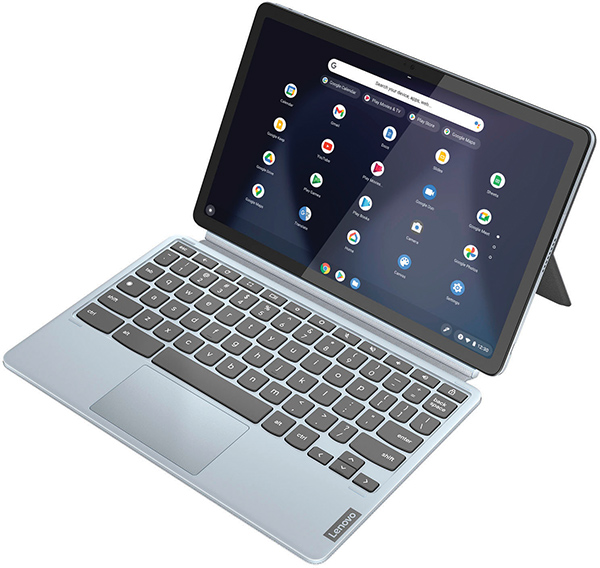
A practical choice, the Lenovo Duet 3 Chromebook is an ideal work and play device for a hyper-mobile student, delivering superior experiences with an 11-inch 2K near-borderless display. Faster connectivity options, all-day battery life and the powerful, fanless and efficient performance of the Snapdragon 7c Gen 2 Compute Platform ensure things get done. Thanks to the speedy, secure and simple-to-use Chrome OS, you can tackle tasks on this 2-in-1’s detachable keyboard with anti-pry, water-resistant keys then seamlessly switch to pleasure pursuits by folding into tablet mode.
Lightweight, Powerful Computing
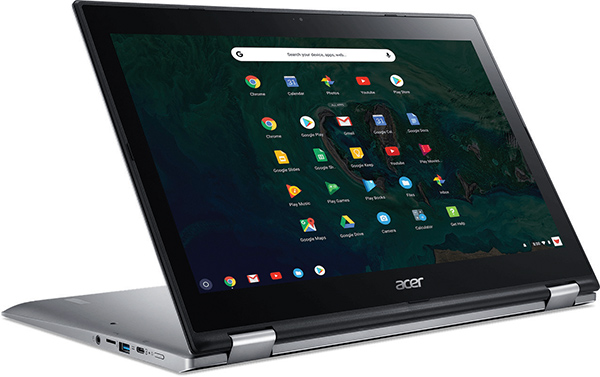
Weighing in at less than 1.2kg, the convertible Acer Chromebook Spin 513 is not only light but also barely larger than a sheet of paper so it slips easily into any compact bag or backpack. Powered by the Snapdragon 7c Compute Platform, it delivers more than enough processing power, battery life and reliable connectivity to get you or your student through the day. A quick flip between laptop and tablet modes means it can be used to doodle, watch classroom instruction and learn on the go. Built-in cellular connectivity means the device seamlessly converts between 4G LTE and trusted Wi-Fi networks.
Wearable Connectivity
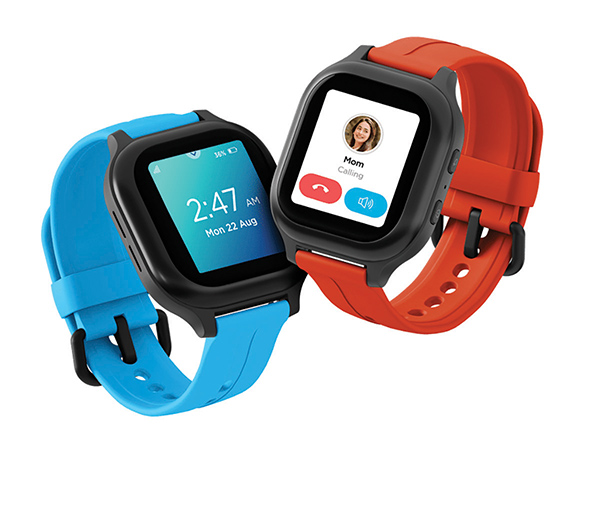
Powered by the Snapdragon Wear 2500 Platform, the Gabb Watch is a safe wearable phone for kids that does extra duty as a GPS tracker, phone and interactive smartwatch. The watch offers kid-friendly sweat and dirt resistance and enables GPS tracking, calling, voice and text messaging to help parents and kids stay connected. With a lock mode, safe zone location management and emergency notifications, it’s a smart first step toward independence for junior users.
Headset Hero
Designed from the ground up to drive advanced features, Snapdragon XR2 is the force behind the Meta Quest 2 headset’s freedom of movement and high-resolution display. This headset allows families to become completely immersed in the virtual reality applications and games played for maximum adventure experiences. Even better, hundreds of hit games, one-of-a-kind experiences and a growing community await users of this next-level hardware that’s both easy to set up and safe to use.
A Phone to Keep Everyone Connected
Choosing a phone means looking for the fastest speeds, highest resolution camera, loudest audio and boldest display.Powered by the latest Snapdragon 8 Gen 1 Mobile Platform processor, the motorola edge+ (2022) delivers. This industry-leading smartphone is a high-performance choice that brings unparalleled processing power on the industry’s fastest mobile platform, fueling cutting-edge 5G, AI, gaming, camera and Wi-Fi and Bluetooth technologies. What’s more, features like extended battery life and 512 GB of storage mean your phone is ready whenever you are.
Our Lifestyle section on STM Daily News is a hub of inspiration and practical information, offering a range of articles that touch on various aspects of daily life. From tips on family finances to guides for maintaining health and wellness, we strive to empower our readers with knowledge and resources to enhance their lifestyles. Whether you’re seeking outdoor activity ideas, fashion trends, or travel recommendations, our lifestyle section has got you covered. Visit us today at https://stmdailynews.com/category/lifestyle/ and embark on a journey of discovery and self-improvement.
Our Lifestyle section on STM Daily News is a hub of inspiration and practical information, offering a range of articles that touch on various aspects of daily life. From tips on family finances to guides for maintaining health and wellness, we strive to empower our readers with knowledge and resources to enhance their lifestyles. Whether you’re seeking outdoor activity ideas, fashion trends, or travel recommendations, our lifestyle section has got you covered. Visit us today at https://stmdailynews.com/category/lifestyle/ and embark on a journey of discovery and self-improvement.
Rebecca Jo is a mother of four and is a creative soul from Phoenix, Arizona, who also enjoys new adventures. Rebecca Jo has a passion for the outdoors and indulges in activities like camping, fishing, hunting and riding roller coasters. She is married to Rod Washington View all posts







 Later that day, my mom asked the usual question: “So, what did you guys do today?” “We drew schematics of our house,” I said casually. The look on her face was instant and intense. She wasn’t panicked, but there was definitely a “Why does a substitute teacher need to know the exact layout of my home?” expression happening. Parental instincts activated. But then I showed her my diagram. She stared at it. Blinked. Then sighed with massive relief. “This isn’t our house,” she said. “Nope! I made it up,” I replied proudly. Her shoulders relaxed so much she probably lost five pounds of tension in one instant. If the substitute was secretly planning a heist, my masterpiece of misinformation would have sent him to the wrong house entirely. Looking back, the whole moment feels like a sitcom setup — a mysterious substitute collecting “house schematics,” me creating a completely fictional piece of architecture, and my mom going on a full emotional journey in under 30 seconds. Maybe he was just excited about the Highlights Magazine floor-plan activity. Or maybe — just maybe — he moonlighted in cat burglary. We’ll never know. But if he was, I like to think I threw him completely off the scent.