Connect with us

Food and Beverage

Would you eat a grasshopper? In Oaxaca, it’s been a tasty tradition for thousands of years

Published

on

Would you eat a grasshopper?

Thai traditional street food grasshoppers,larvae ,market counter ,the concept of the traditional exotic food

Would you eat a grasshopper? In Oaxaca, it’s been a tasty tradition for thousands of years

Jeffrey H. Cohen, The Ohio State University Billions of people regularly eat insects. In the southern Mexican state of Oaxaca, chapulines – toasted grasshoppers – stand out as a beloved seasonal treat that follows the start of the rainy season, a period that runs from late May through September. My new book, “Eating Grasshoppers: Chapulines and the Women who Sell Them,” dives into the history and cultural significance of entomophagy (eating insects) and this unique snack. Chapulineras – the women who sell chapulines – often learn their craft from their mothers and grandmothers. Most will use nets or mesh bags to capture grasshoppers in their “milpa” – alfalfa and maize fields – during the cool, early morning hours. Teresa Silva, whom I spoke with at her home in Zimatlán, Oaxaca, shared some of her experience:
“I began with my husband’s family, following their traditions after we married. My husband would bring me chapulines in large quantities, and with him and my in-laws’ support, I started to cook and sell [them]. It wasn’t easy at first … but I liked the money I made. Now, I have been selling chapulines for 23 years.”
Prepping chapulines isn’t hard. A dip in boiling water turns the grasshoppers a rich, deep red. Then you toss them on the “comal” – a ceramic or metal cooking surface – with a little garlic, lemon, chile and “sal de gusano,” a mixture of ground agave worms, salt and other seasonings. In a few minutes, the grasshoppers are ready to eat.

Culture and cuisine in Oaxaca

Chapulines have been a staple food for thousands of years. Like other insects and their by-products – including honey – grasshoppers are easily digestible, high in protein and an excellent source of vitamins and minerals. They are also plentiful. Archaeologist Jeffrey Parsons estimates that harvests before the arrival of European settlers might have included 3,900 metric tons of insects and their eggs, if not more, annually. One of the earliest references to chapulines appears in Franciscan Friar Bernardino de Sahagún’s 1577 “General History of the Things of New Spain.” Sometimes called the “first anthropologist,” Sahagún describes their importance as a beloved seasonal food in the local diet.

A drawing of seven grasshoppers of various colors and sizes. Would you eat a grasshopper?
An illustration of grasshoppers from Bernardino de Sahagún’s ‘General History of the Things of New Spain.’ Mexicolore
High praise. But perhaps it isn’t surprising that Spanish colonists largely ignored grasshoppers and other Indigenous foods while introducing new crops, animals and unique ways of eating. The Spanish also reorganized life according to the casta system – a racially based hierarchy that restricted the rights and opportunities of Indigenous people. While chapulines and other insects remained critical to the local diet, the Spanish preferred eating dishes made from the animals and crops they’d brought with them, including wheat and cattle. Nor were these new foods readily adopted by locals. Indigenous cuisine lacked Spanish parallels. Grains and livestock were not suited to local dishes; furthermore, even as the Spanish colonists had locals grow these new crops, they usually prohibited them from keeping any of the harvest.

An old reliable

Of course, with time, the introduced crops and livestock took hold, and local cuisine incorporated these foods into many of the dishes the world knows today as Mexican. However, whenever there’s not enough to eat – whether due to discrimination, a natural disaster or a human-made crisis – Mexicans often fall back on edible insects. They were critical following floods and famines in the 18th and 19th centuries. And when Oaxacans fled their homes and farmland during the Mexican Revolution, they turned to chapulines as a replacement for more typical proteins like chicken, turkey, beef tripe and pork.
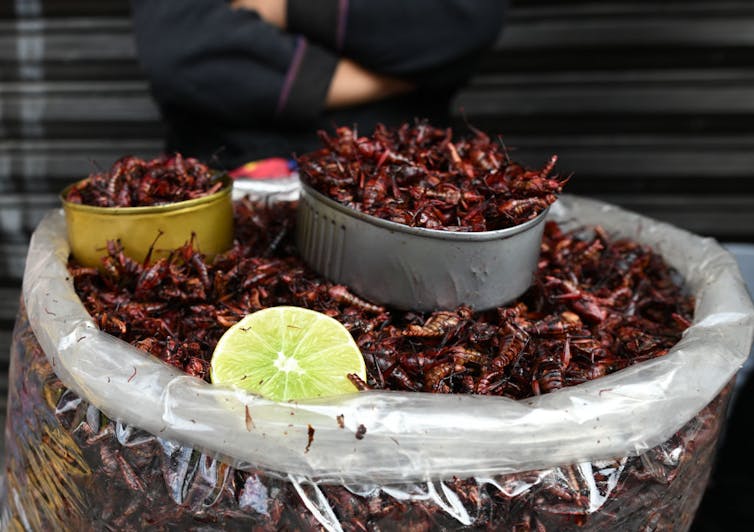
A basket of toasted bugs with half of a lime sitting atop the pile.
Boiling chapulines gives them their rich, red color. Artur Widak/NurPhoto via Getty Images
Most recently, when the COVID-19 lockdowns made it nearly impossible to shop for foods, chapulineras created a touchless economy that connected vendors and customers through messaging services like WhatsApp. Some chapulineras also provided no-interest loans to people who could not cover the costs of their orders. Carmen Mendoza, whom I interviewed at Mercado Benito Juárez in Oaxaca City, described her experience of the lockdown:
“When the pandemic hit, I said to myself, ‘Look, you need to keep selling, but from home.’ I know where I am, and I know my clients. I also know how much people want, how many kilos of chapulines they will buy. So people came to my house. Sometimes they would bring me their harvest, other times they would call and ask for two or three kilos. I could do that.”
The meaning, use and value of chapulines are changing, as Oaxaca has become a popular tourist destination and has been commemorated as a UNESCO heritage site. For foodies and tourists, tasting chapulines is a way to consume and experience the past. Chapulineras will happily sell to foodies who want to “eat bugs.” But they also know tourists cannot support their market. Visitors usually swoop in for a few days, buy a small handful of chapulines and leave. Most will never return. And so chapulineras continue to depend on locals whose families have been eating the insects for generations. Many chapulineras have achieved financial security through their efforts, earning incomes that exceed that of most rural women in Oaxaca. In Oaxaca, just as it was 3,000 years ago, chapulines are “what’s for dinner.” Jeffrey H. Cohen, Professor of Anthropology, The Ohio State University This article is republished from The Conversation under a Creative Commons license. Read the original article.

At our core, we at STM Daily News, strive to keep you informed and inspired with the freshest content on all things food and beverage. From mouthwatering recipes to intriguing articles, we’re here to satisfy your appetite for culinary knowledge.

Visit our Food & Drink section to get the latest on Foodie News and recipes, offering a delightful blend of culinary inspiration and gastronomic trends to elevate your dining experience.

https://stmdailynews.com/food-and-drink/


Discover more from Daily News

Subscribe to get the latest posts sent to your email.

Continue Reading
Advertisement Tool Tickets
Click to comment
0 0 votes
Article Rating
Subscribe
Notify of
guest

0 Comments
Oldest
Newest Most Voted
Inline Feedbacks
View all comments

Food and Beverage

Quick Teriyaki Chicken Bowl Recipe Using Foster Farms Precooked Strips

Quick 10-minute teriyaki chicken bowl using Foster Farms precooked chicken strips, store-bought teriyaki sauce, and rice. Fast, easy, and customizable weeknight meal.

Published

on

Last Updated on December 13, 2025 by Daily News Staff

Quick 10-minute teriyaki chicken bowl using Foster Farms precooked chicken strips, store-bought teriyaki sauce, and rice. Fast, easy, and customizable weeknight meal.

Grilled Chicken teriyaki rice (Adobe Sock)

When you need a fast, flavorful meal without the fuss, a teriyaki chicken bowl is one of the easiest dishes you can throw together. Using Foster Farms precooked chicken breast strips, store-bought teriyaki sauce, and ready-to-heat rice, you can have dinner on the table in about ten minutes — no chopping, marinating, or complicated prep required.

A Weeknight Staple

This recipe is ideal for busy weeknights, work-from-home lunches, or those moments when you want something warm and satisfying without relying on takeout. With precooked chicken, most of the work is already done for you. All you’re really doing is heating, mixing, and assembling.

A complete teriyaki bowl in ten minutes — no takeout required.

Ingredients

1–2 cups cooked rice (microwaveable rice packets work great) 1 cup Foster Farms precooked chicken breast strips ¼–½ cup teriyaki sauce, depending on how saucy you like it 1 cup of vegetables (fresh, steamed, or frozen) Optional toppings: sesame seeds, green onion, pineapple chunks, spicy mayo, red pepper flakes

9ca1466c 6bbb 4cba 9b8d f282675906f3

Instructions

1. Prep the Base

Start with your rice. If you’re using microwave rice, it heats up in about 60–90 seconds. Leftover rice works just as well — just warm it in a bowl before assembling the dish.

2. Heat the Chicken

Foster Farms precooked chicken strips make this step incredibly simple. Just heat them in a skillet for a couple of minutes or microwave them for under a minute. Add a few tablespoons of teriyaki sauce and stir to coat the chicken evenly.

3. Add the Vegetables

This bowl works with almost any vegetable you enjoy. Frozen stir-fry mixes are quick and convenient, while steamed broccoli or carrots add color and crunch. Toss the veggies into the pan with the chicken so they absorb the teriyaki flavor.

Advertisement
Get More From A Face Cleanser And Spa-like Massage

4. Build Your Bowl

Add your rice to a serving bowl and top it with the teriyaki chicken and vegetables. If you want a richer flavor, drizzle on a little extra teriyaki sauce.

5. Customize With Toppings

Finish with sesame seeds, sliced green onions, or a drizzle of spicy mayo. Pineapple adds a sweet touch that pairs perfectly with teriyaki, giving your bowl a subtle Hawaiian twist.

👉 Download the Teriyaki Chicken Bowl Recipe PDF

Why This Recipe Works

What makes this meal so appealing is its flexibility. Use whatever rice you have on hand, swap in your favorite veggies, and adjust the sauce level to your own taste. It’s fast, affordable, and customizable — ideal for anyone looking to simplify their cooking without sacrificing flavor.

Do you have your own fast weeknight recipes or kitchen shortcuts? Share them with us in the comments or tag @STM Daily News on social media. We love spotlighting great ideas from our readers!

The fate of Lucky Supermarkets in SoCal

Discover more from Daily News

Subscribe to get the latest posts sent to your email.

Continue Reading

Beverages

Grazing and Gifting: Sweet Solutions for the Holiday Rush

Grazing and Gifting: hMake holiday entertaining and gifting easy with Florida Citrus. Discover delightful recipes—like Scallops with Grapefruit Butter and Citrus Salad with Burrata—and send sweet, healthy citrus gift baskets to loved ones for a memorable, stress-free season.

Published

on

Grazing and Gifting: A festive display of Florida Citrus gift baskets filled with fresh tangerines, grapefruits, oranges, and mandarins, surrounded by holiday-themed recipes and drinks.

Grazing and Gifting: Sweet Solutions for the Holiday Rush

(Family Features) If you feel yourself slipping into the last-minute rush of the holiday season, still searching for dazzling recipes and abundant gifts, rest assured – you’re not alone. Light, refreshing ingredients for spectacular meals are just a click away, and they can make for the perfect presents, too. 17755 detail embed 4Abundantly sweet and simple, Florida Citrus Gifts are a simple way to share holiday cheer with family, friends and loved ones. From cheerful boxes to beautiful baskets and more, they offer options in all shapes and sizes, loaded with freshly picked tangerines, grapefruits, oranges and mandarins. They’re easy to send and even easier to enjoy, providing a one-of-a-kind (and healthy) way to share holiday cheer in memorable meals like Scallops with Florida Grapefruit Butter, sure to become a household favorite for years to come. Pair it with a light and refreshing Florida Citrus Salad with Burrata featuring fresh grapefruit and oranges mingling with peppery arugula and creamy burrata to bring a bit of balance to holiday dining. No festivity is complete without libations, and this Florida Grapefruit Brandy Sour can be a staple at your beverage station. Just mix freshly squeezed Florida Grapefruit juice with brandy, simple syrup, bitters and egg white (for froth) then finish with sparkling water. Find deliciously thoughtful ways to share the sweetness of the season with loved ones by visiting PickFLA.com, which features an interactive map to find a range of gift options that fit your holiday needs.   17755 detail embed 1

Florida Grapefruit Brandy Sour

Recipe courtesy of the Florida Department of Citrus Prep time: 5 minutes Servings: 1
  • 1 3/4    ounces brandy
  • 2 1/2    ounces freshly squeezed Florida Grapefruit Juice
  • 1/3       ounce simple syrup, or to taste
  • 2          dashes bitters
  • 1          egg white
  • ice cubes
  • 1          ounce sparkling water
  • Florida Grapefruit twist, for garnish
  1. In cocktail shaker, add brandy, Florida Grapefruit juice, simple syrup, bitters and egg white. Shake vigorously 15-20 seconds to create frothy texture.
  2. Add ice cubes to shaker and shake 15 seconds to chill drink.
  3. Strain into chilled coupe or rocks glass filled with fresh ice.
  4. Pour light splash of sparkling water over top to enhance effervescence.
  5. Garnish with grapefruit twist.
  17755 detail embed 2

Scallops with Florida Grapefruit Butter

Recipe courtesy of the Florida Department of Citrus Prep time: 30 minutes Cook time: 3 minutes Servings: 4
  • 2          Florida Grapefruit
  • 1          fennel bulb
  • 3          tablespoons olive oil, plus additional for searing, divided
  • 1          tablespoon sherry vinegar
  • 1/8       teaspoon, plus 1 pinch, salt, divided, to taste
  • 1/8       teaspoon, plus 1 pinch, pepper, divided, to taste
  • 1          small bunch fresh cilantro
  • 12        scallops with empty shells
  • 1          tablespoon butter
  1. Peel and cut one Florida Grapefruit into segments. Squeeze remaining grapefruit and reserve juice.
  2. Wash and finely chop fennel. In bowl, mix fennel with olive oil, sherry vinegar and 1 pinch salt and pepper.
  3. Mix and add fresh cilantro. Keep a few leaves for garnish.
  4. In hot frying pan, drizzle with olive oil then sear scallops 1 minute on each side.
  5. Remove scallops from pan then deglaze with reserved Florida Grapefruit juice. Let it simmer slightly and add butter to make sauce. Add 1/8 teaspoon salt and pepper.
  6. Place 1 tablespoon fennel salad in washed shell, top with three scallops and coat with grapefruit butter.
  7. Finish with reserved cilantro leaves and fresh grapefruit segments.
  17755 detail embed 3

Florida Citrus Salad with Burrata

Recipe courtesy of the Florida Department of Citrus Florida Citrus Vinaigrette:
  • 1/3       cup Florida Grapefruit Juice
  • 1/3       cup Florida Orange Juice
  • 2          teaspoons orange zest
  • 2          tablespoons cider vinegar
  • 2          teaspoons honey
  • 1          tablespoon Dijon mustard
  • 1/3       cup olive oil
  • 2          tablespoons shallots
  • sea salt, to taste
  • fresh pepper, to taste
Pickled Onion:
  • 1          red onion, thinly sliced
  • 1/2       cup white vinegar or cider vinegar
  • 1/2       cup water
  • 1          tablespoon sugar
  • 1          teaspoon salt
Burrata Salad:
  • 4          Florida Grapefruit, peeled and cut into segments
  • 3          oranges, peeled and cut into segments
  • 1          bunch radishes, sliced thin and cut into sticks
  • 1/3       cup pistachios, grilled and coarsely chopped
  • 1          cup arugula
  • 2          tablespoons dill, chopped
  • sea salt, to taste
  • pepper, to taste
  • 8          ounces burrata
  1. To make vinaigrette: In small bowl, mix Florida Grapefruit Juice, Florida Orange Juice, orange zest, cider vinegar, honey, Dijon, olive oil and shallots until dressing is emulsified. Season with salt and pepper, to taste. Set aside. Vinaigrette will keep 7 days in refrigerator.
  2. To make pickled onion: Place sliced onion in airtight canning jar.
  3. In small saucepan, combine vinegar, water, sugar and salt. Bring to boil and pour over sliced onion in jar. Add small amount of water to completely cover onion. Refrigerate at least 2 hours before serving. Pickled onions will keep 15 days in refrigerator.
  4. To make burrata salad: In bowl, combine Florida Grapefruit and Orange segments; add radish sticks, toasted pistachios, arugula and dill. Season with salt and pepper, to taste.
  5. Place salad on large plate, top with coarsely chopped burrata and drizzle generously with citrus vinaigrette and pickled onion.
collect?v=1&tid=UA 482330 7&cid=1955551e 1975 5e52 0cdb 8516071094cd&sc=start&t=pageview&dl=http%3A%2F%2Ftrack.familyfeatures SOURCE: Florida Department of Citrus

At our core, we at STM Daily News, strive to keep you informed and inspired with the freshest content on all things food and beverage. From mouthwatering recipes to intriguing articles, we’re here to satisfy your appetite for culinary knowledge.

Visit our Food & Drink section to get the latest on Foodie News and recipes, offering a delightful blend of culinary inspiration and gastronomic trends to elevate your dining experience. https://stmdailynews.com/food-and-drink/

Author


Discover more from Daily News

Subscribe to get the latest posts sent to your email.

Continue Reading

Food and Beverage

Balance Fall Comfort Foods with a Lighter Bite

Published

on

Last Updated on December 12, 2025 by Daily News Staff

Balance Fall Comfort Foods with a Lighter Bite

Balance Fall Comfort Foods with a Lighter Bite

(Family Features) Before turning your attention to the comfort of filling soups and slow-cooked meals, give warmer weather one last hurrah. If you have any garden veggies leftover, this Cucumber and Tomato Salad offers a light, tasty dish that’s perfect for packing to the office. Discover more recipe ideas for any season at Culinary.net. 17701 detail embed  

Cucumber and Tomato Salad

Recipe courtesy of “Cookin’ Savvy” Servings: 4-6
  • 3          medium or large cucumbers
  • 2-3       vine tomatoes
  • 1/2       cup chopped red onion (optional)
Dressing:
  • 1/3       cup apple cider vinegar
  • 1/2       cup olive oil
  • 1/4       cup sugar
  • 1          tablespoon onion powder
  • 1          tablespoon garlic powder
  • 1          tablespoon fresh minced dill
  • 1          tablespoon mayo
  • salt, to taste
  • pepper, to taste
  • 1/4       cup shredded Parmesan cheese
  1. Peel and slice cucumbers. Deseed, if desired. Coarsely chop into bite-size pieces. Slice and chop tomatoes. Place cucumbers and tomatoes in large bowl with chopped onions, if desired.
  2. To make dressing: In separate bowl, mix apple cider vinegar, olive oil, sugar, onion powder, garlic powder, dill and mayo. Season with salt and pepper, to taste. Pour over cucumber mixture and mix well.
  3. Top with shredded Parmesan cheese and serve.
collect?v=1&tid=UA 482330 7&cid=1955551e 1975 5e52 0cdb 8516071094cd&sc=start&t=pageview&dl=http%3A%2F%2Ftrack.familyfeatures SOURCE: Culinary.net

At our core, we at STM Daily News, strive to keep you informed and inspired with the freshest content on all things food and beverage. From mouthwatering recipes to intriguing articles, we’re here to satisfy your appetite for culinary knowledge.

Visit our Food & Drink section to get the latest on Foodie News and recipes, offering a delightful blend of culinary inspiration and gastronomic trends to elevate your dining experience. https://stmdailynews.com/food-and-drink/


Discover more from Daily News

Subscribe to get the latest posts sent to your email.

Continue Reading

Trending

0
Would love your thoughts, please comment.x
()
x