

Foodie News
How beef became a marker of American identity
Beef is central to American identity, history, and culture, leading to significant consumption and environmental impacts, while efforts to promote sustainable practices and alternative diets are emerging.

Last Updated on April 24, 2026 by Daily News Staff
Hannah Cutting-Jones, University of Oregon
Beef is one of America’s most beloved foods. In fact, today’s average American eats three hamburgers per week.
American diets have long revolved around beef. On an 1861 trip to the United States, the English novelist Anthony Trollope marveled that Americans consumed twice as much beef as Englishmen. Through war, industry, development and settlement, America’s love of beef continued. In 2022, the U.S. as a whole consumed almost 30 billion pounds (13.6 billion kilograms) of it, or 21% of the world’s beef supply.
Beef has also reached iconic status in American culture. As “Slaughterhouse-Five” author Kurt Vonnegut once penned, “Being American is to eat a lot of beef, and boy, we’ve got a lot more beef steak than any other country, and that’s why you ought to be glad you’re an American.”
In part, the dominance of beef in American cuisine can be traced to settler colonialism, a form of colonization in which settlers claim – and then transform – lands inhabited by Indigenous people. In America, this process centered on the systemic and often violent displacement of Native Americans. Settlers brought with them new cultural norms, including beef-heavy diets that required massive swaths of land for grazing cattle.
As a food historian, I am interested in how, in the 19th century, the beef industry both propelled and benefited from colonialism, and how these intertwined forces continue to affect our diets, culture and environment today.
Cattle and cowboys
Beginning in the 16th century, the first Europeans to settle across the Americas – and later, Australia and New Zealand – brought their livestock with them. A global economy built on appropriated Indigenous territories allowed these nations to become among the highest consumers and producers of meat in the world.
The United States in particular tied its burgeoning national identity and westward expansion to the settlement and acquisition of cattle-ranching lands. Until 1848, Arizona, California, Texas, Nevada, Utah, western Colorado and New Mexico were part of Mexico and inhabited by numerous tribes, Indigenous cowboys and Mexican ranchers.
The Mexican-American War, which lasted from 1846-48, led to 525,000 square miles being ceded to the United States – land that became central to American beef production. Gold, discovered in the northern Sierra by 1849, drew hundreds of thousands more settlers to the region.
The desire for cattle-supporting land played an integral role in the systematic decimation of bison populations, as well. For thousands of years, Native Americans relied on bison for physical and cultural survival. At least 30 million roamed the western United States in 1800; by 1890, 60 million head of cattle had taken their place.
Beef replaces bison
It is no coincidence that the rise of an extensive and powerful American beef industry coincided with the near-elimination of bison across the United States.
Bison populations were already in steep decline by the mid-1800s, but after the Civil War, as industrialization transformed transportation, communication and mass production, the U.S. Army actively encouraged the wholesale slaughter of bison herds.
In 1875, Philip Sheridan, a general in the U.S. Army, applauded the impact bison hunters could have on the beef industry. Hunters “have done more in the last two years, and will do more in the next year, to settle the vexed Indian question, than the entire regular army has done in the last forty years,” Sheridan said. “They are destroying the Indians’ commissary … (and so) for a lasting peace, let them kill, skin and sell until the buffaloes are exterminated. Then your prairies can be covered with speckled cattle.”
In 1884, with no hint of irony, the U.S. Department of Indian Affairs constructed a slaughterhouse on the Blackfeet Reservation in Montana and required tribal members to provide the factory’s labor in exchange for its beef.
By 1888, New York politician and sometimes rancher Theodore Roosevelt described Western stockmen as “the pioneers of civilization,” who with “their daring and adventurousness make the after settlement of the region possible.” Later, during Roosevelt’s presidency – from 1900 to 1908 – the U.S. claimed another 230 million acres of Indigenous lands for public use, further opening the West to ranching and settlement.
The Union Stock Yards in Chicago, the most modern slaughterhouse of the era, opened on Christmas Day in 1865 and marked a turning point for industrial beef production. No longer delivered “on the hoof” to cities, cattle were now slaughtered in Chicago and sent East as tinned meat or, after the 1870s, in refrigerated railcars.
Processing over 1 million head of cattle annually at its height, the Union Stock Yards, a global technological marvel and international tourist attraction, symbolized industrial progress and inspired national pride.
Where’s the beef?
By the turn of the 20th century, beef was solidly linked to American identity both at home and globally. In 1900, the average American consumed over 100 pounds of beef per year, almost twice the amount eaten by Americans today.
Canadian food writer Marta Zaraska argues in her 2021 book “Meathooked” that beef became a key part of the American origin myth of rugged individualism that was emerging at this time. And cowboys, working the grueling cattle drives, came to embody values linked to the frontier: self-reliance, strength and independence.
Popular for decades as a street food, America’s proudest culinary invention – the hamburger – debuted at the St. Louis World’s Fair in 1904 alongside other novelties such as Dr. Pepper and ice cream.
After World War II, suburban markets and fast-food chains dominated the American foodscape, where beef burgers reigned supreme. By the end of the century, more people around the globe recognized the golden arches of McDonald’s than the Christian cross.
At the same time, national programs reinforced food insecurity for Native Americans. In efforts to eventually dissolve reservations and open these lands to private development, for example, in 1952 the U.S. government launched the Voluntary Relocation Program, in which the Bureau of Indian Affairs persuaded many living on reservations to move to cities. The promised well-paying jobs did not materialize, and most of those who relocated traded rural for urban poverty.
The true cost of a burger
Policies encouraging settler colonialism ultimately led to more sedentary lifestyles and a dependence on fast, convenient and processed foods – such as hamburgers – regardless of the individual or environmental costs.
In recent decades, scientists have warned that industrial meat production, and beef in particular, fuels climate change and leads to deforestation, soil erosion, species extinction, ocean dead zones and high levels of methane emissions. It is also a threat to biodiversity. Nutritionist Diego Rose believes the best way “to reduce your carbon footprint (is to) eat less beef,” a view shared by other sustainability experts.
As of January 2022, about 10% of Americans over the age of 18 considered themselves vegetarian or vegan. Another recent study found that 47% of American adults are “flexitarians” who eat primarily, but not wholly, plant-based diets.
At the same time, small-scale farmers and cooperatives are working to restore soil health by reintegrating cows and other grazing animals into sustainable farming practices to produce more high-quality, environmentally friendly meat.
More encouraging still, tribes in Montana – Blackfeet Nation, Fort Belknap Indian Community, Fort Peck Assiniboine and Sioux Tribes, and South Dakota’s Rosebud Sioux – have reintroduced bison to the northern Great Plains to revive the prairie ecosystem, tackle food insecurity and lessen the impacts of climate change.
Even so, in the summer of 2024, Americans consumed 375 million hamburgers in celebration of Independence Day – more than any other food.
Hannah Cutting-Jones, Assistant Professor, Department of Global Studies; Director of Food Studies, University of Oregon
This article is republished from The Conversation under a Creative Commons license. Read the original article.
At our core, we at STM Daily News, strive to keep you informed and inspired with the freshest content on all things food and beverage. From mouthwatering recipes to intriguing articles, we’re here to satisfy your appetite for culinary knowledge.
Visit our Food & Drink section to get the latest on Foodie News and recipes, offering a delightful blend of culinary inspiration and gastronomic trends to elevate your dining experience.


(Feature Impact) Game day is about more than the big plays, touchdown-saving tackles and final score. Whether you’re gathering in the stadium parking lot or hosting friends for an at-home watch party, a memorable experience begins long before kickoff.
Start your pregame festivities with an MVP-worthy spread that’s simple to serve, easy to eat and keeps fans full through the final whistle. For example, the flavor of Buffalo is a game-day staple, but wings aren’t the only way to enjoy it.
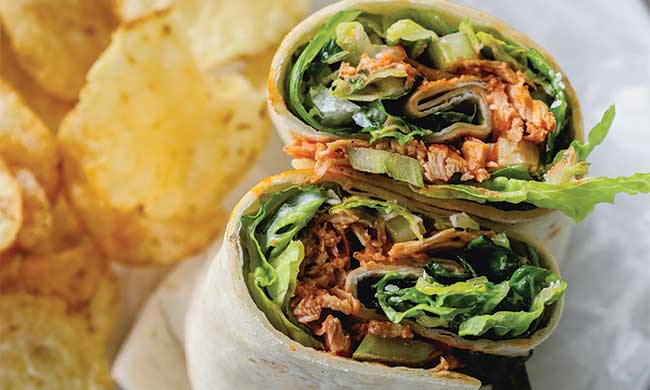
For less mess, Buffalo Chicken Caesar and Celery Wraps pair convenience with the cool crunch of Dandy Celery, a year-round superstar ingredient for many of your favorite football-inspired dishes. It’s packed with flavor and low in calories, making it a smart choice for snacking.
The contrasting tastes and textures offer a satisfying bite, whether you slice the wraps into smaller portions for appetizer-style serving or leave them whole for fans with hearty appetites.
Nervous nibblers during the game’s most tense moments may prefer a lighter bite, and that’s where a dependable dip can come through in the clutch. This Buffalo Hummus recipe puts a tailgate-spin on the familiar favorite, combining creamy texture with a little heat.
Serve it alongside crackers, chips or crisp vegetables like Dandy celery dippers, fresh-cut celery sticks that are pre-washed and ready to eat at your convenience – a true time-saver when the clock is ticking.
Design your own winning game plan by finding more tailgating recipes at DudaFresh.com.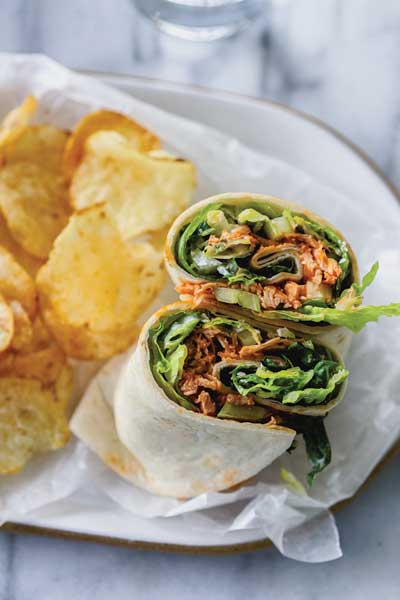
Buffalo Chicken Caesar and Celery Wraps
Servings: 4
- 2 cups shredded rotisserie chicken
- 1/4 cup Buffalo sauce
- 2 cups Dandy romaine hearts, chopped
- 1 cup Dandy celery, chopped (about 4 ribs)
- 1/3 cup Caesar dressing
- 1/4 cup grated Parmesan cheese
- 1/2 teaspoon black pepper
- 4 large flour tortillas (10 inches)
- In bowl, toss shredded chicken with Buffalo sauce. Set aside.
- To make salad: In separate bowl, combine romaine, celery, Caesar dressing, Parmesan cheese and black pepper. Mix well.
- To assemble wraps: Spoon about 1/4 cup Buffalo chicken along center of each tortilla, leaving small border at each end; top with Caesar salad. Fold up bottom of tortilla over filling then fold in sides and roll up tightly. Slice in half diagonally.
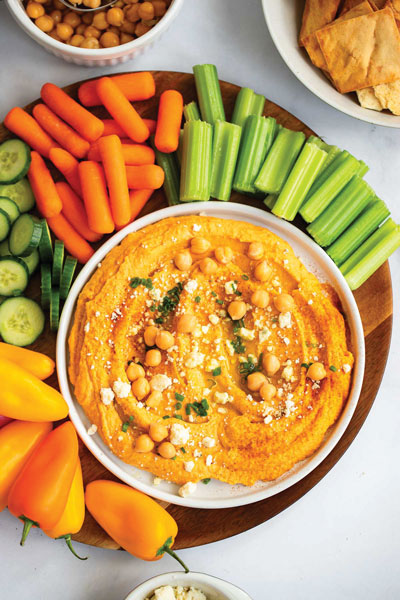
Buffalo Hummus
Prep time: 5 minutes
Servings: 8
- 1 can (15 ounces) chickpeas, drained and rinsed
- 1/4 cup tahini
- 1/4 cup Buffalo sauce
- 2 tablespoons olive oil
- 1/2 lemon, juice only
- 2 cloves garlic
- 2-3 tablespoons ice water
- dairy-free blue cheese, for garnish (optional)
- chopped chives, for garnish (optional)
- paprika, for garnish (optional)
- olive oil, for garnish (optional)
- Dandy Celery Dippers
- pita chips
- In food processor, puree drained chickpeas, tahini, Buffalo sauce, olive oil, lemon juice and garlic until smooth, stopping to scrape down sides as needed. Add water through lid until desired consistency is achieved.
- Spread hummus onto serving plate or bowl. Garnish, if desired, with dairy-free blue cheese, chopped chives, paprika and drizzle of olive oil. Serve with celery dippers and pita chips.

SOURCE:

Food and Beverage
ALDI Rolls Out Its First-Ever Line of Ready-Made Meals
ALDI is entering the ready-made meal market with seven fresh, refrigerated dishes priced under $15. The rollout begins in October, with nationwide availability expected by January 2027.

Busy shoppers looking for a quick dinner option will soon have something new waiting in the refrigerated section at ALDI.
ALDI is launching its first-ever collection of fresh, ready-made meals, introducing seven single-serve and family-size dishes designed to combine convenience, affordability and familiar comfort-food flavors.
The new meals begin rolling out at select ALDI stores in early October, with additional markets receiving them throughout the fall. ALDI expects the entire collection to be available nationwide by January 2027.
Seven New Meals — Ready to Heat and Eat
Unlike frozen dinners, ALDI says its new meals are delivered fresh and sold refrigerated in easy-to-heat trays.
The initial lineup includes five single-serve meals priced under $8:
- Beef Bolognese Spaghetti
- Beef Brisket with White Mac & Cheese
- Butter Chicken & Rice
- Chicken Burrito Bowl
- Chicken Fettuccine Alfredo
Two larger family-size meals will be available for under $15:
- Chicken and Bacon Mac n’ Cheese
- Meat Lovers Pizza Bake
ALDI says the recipes were developed around ingredients including chicken breast, smoked beef brisket, real cheeses and made-from-scratch sauces.
The single-serve meals contain between 30 and 46 grams of protein per serving, according to the company. Family-size offerings provide between 16 and 22 grams per serving.
Convenience Without the Restaurant Bill
The move puts ALDI more directly into the growing market for prepared refrigerated meals — an increasingly attractive option for consumers who want something more substantial than a frozen dinner but don’t necessarily have the time or desire to cook from scratch.
ALDI cited the 2026 International Food Information Council Food & Health Survey, which found that 61% of Americans consider convenience an important factor when purchasing food.
“Our shoppers are looking for meals that fit into busy lives without sacrificing quality or stretching their budgets,” Joan Kavanaugh, Vice President of National Buying for ALDI U.S., said in the company’s announcement.
ALDI supplier Kitchen Food Company said hundreds of recipes were tested while developing the new collection.
Dinner in Just a Few Minutes
Convenience is a major part of the concept.
Depending on the variety, ALDI’s single-serve meals require roughly 3½ to 4½ minutes in the microwave. The company instructs consumers to heat the meals until they reach an internal temperature of 165 degrees Fahrenheit.
The larger family meals can be prepared in a conventional oven at 350 degrees, with approximately 40 minutes of total cooking time.
Shoppers will find the meals in the refrigerated meals section near the front of participating ALDI stores.
More Meals Are Coming
The seven dishes are only the beginning.
ALDI says it plans to introduce additional ready-made meals through its rotating ALDI Finds selection every month during the next year. That could allow the retailer to experiment with additional recipes, flavors and seasonal offerings while expanding its presence in prepared foods.
The timing also makes the rollout noteworthy. With restaurant meals and takeout competing for household food dollars, prepared grocery-store meals occupy a middle ground: more convenient than cooking from scratch while potentially costing considerably less than feeding a family through restaurant delivery or takeout.
For ALDI shoppers, that means the familiar question of “What’s for dinner?” may soon have a few more answers — and they could be waiting just inside the front door.
Source: ALDI, September 22, 2026
Sources & Related Links
- ALDI — Official Announcement: ALDI Launches First-Ever Collection of Ready-Made Meals
- Original Press Release: ALDI Ready-Made Meals — PR Newswire
- Consumer Research: 2026 IFIC Food & Health Survey — Convenience Outranks Healthfulness
- More ALDI News: ALDI U.S. Newsroom
- More Food & Drink Coverage: STM Daily News Food & Drink
Hungry for More?
Looking for more easy dinner ideas, meal-planning inspiration, and affordable meals? Explore STM Daily News Food & Drink for the latest recipes, food news, restaurant stories, culinary trends and more.
Food and Beverage
Enjoy Tangy, Spicy Buffalo Chicken with a Superfood Swap
Enjoy Tangy, Spicy Buffalo Chicken: When you’re craving a specific comfort food, other flavors just aren’t going to hit the spot the same way. The good news: It only takes one or two simple ingredient changes to satisfy your taste buds while leveling up the nutrition of a meal like these Buffalo Chicken Stuffed Sweetpotatoes.
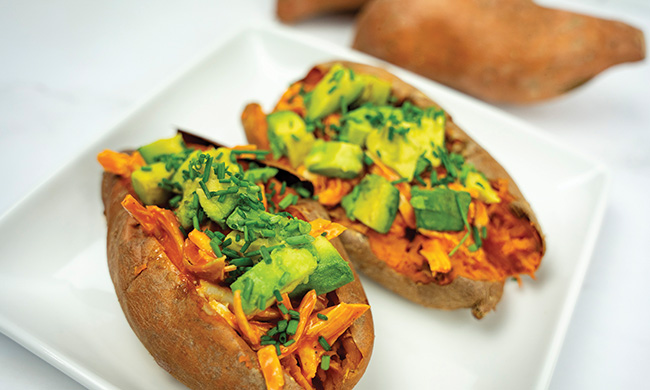
Enjoy Tangy, Spicy Buffalo Chicken with a Superfood Swap
(Feature Impact) When you’re craving a specific comfort food, other flavors just aren’t going to hit the spot the same way. The good news: It only takes one or two simple ingredient changes to satisfy your taste buds while leveling up the nutrition of a meal.
Watch video to see how to make this recipe!
For instance, if you’re jonesing for the zesty kick of buffalo sauce, your mind might initially go to pizza and wings. This Buffalo Chicken Stuffed Sweetpotatoes recipe featuring North Carolina Sweetpotatoes invites you to rethink that takeout order and enjoy the same bold, satisfying flavors in a more nutritious way. They’re a little sweet and a little spicy with savory chicken and creamy avocado stuffed jacket-style inside a nutrient-dense baked sweetpotato.
Sweetpotatoes – deliberately spelled as one word to better differentiate this unique root vegetable from traditional potatoes – are an excellent source of vitamins, minerals, antioxidants and fiber. The American Diabetes Association even calls them a “diabetes superfood,” as they raise blood sugar more slowly than other starchy foods while allowing you to savor some natural sweetness. They’re also a great choice for athletes, thanks to complex carbohydrates that boost energy and nutrients that support endurance and recovery.
Find more ways to level up your favorite flavors at ncsweetpotatoes.com.
Buffalo Chicken Stuffed Sweetpotatoes
Recipe courtesy of the North Carolina Sweetpotato Commission
Prep time: 10 minutes
Cook time: 45 minutes
Servings: 4
- 4 sweetpotatoes
- 1 rotisserie chicken, shredded
- 1 1/2 cups buffalo sauce
- 1 avocado, diced
- 2 tablespoons diced chives
- Preheat oven to 400 F. Place sweetpotatoes on lined baking sheet and use fork to pierce each one for venting. Bake 45 minutes, or until tender.
- Let sweetpotatoes cool slightly then use knife to gently cut each open lengthwise and crosswise. Use fork to lightly mash inside sweetpotatoes.
- In large bowl, combine shredded rotisserie chicken with buffalo sauce until evenly coated.
- Spoon buffalo chicken mixture into each sweetpotato. Top with diced avocado and chives.

SOURCE:
North Carolina Sweetpotato Commission





