

Food and Beverage
People can have food sensitivities without noticeable symptoms – long-term consumption of food allergens may lead to behavior and mood changes
Food Sensitivities: Food allergies affect about 10% of the U.S. population, leading to various symptoms. Recent research indicates asymptomatic individuals may still experience neurological effects from food allergens, resulting in behavioral changes like anxiety and depression. Chronic inflammation from allergens may contribute to long-term brain issues, highlighting the need for further study on food hypersensitivity’s impact on mental health.

Last Updated on October 16, 2025 by Daily News Staff
People can have food sensitivities without noticeable symptoms – long-term consumption of food allergens may lead to behavior and mood changes
Kumi Nagamoto-Combs, University of North Dakota
The prevalence of food allergies is increasing worldwide, approaching an epidemic level in some regions. In the U.S. alone, approximately 10% of children and adults suffer from food allergies, with allergies to cow’s milk, eggs, peanuts and tree nuts being the most common. Some patients have mild symptoms that might not need medical attention, leaving these cases unreported.
Food allergies, or food hypersensitivities, result from the overreaction of the immune system to typically harmless proteins in food. They can manifest as a spectrum of symptoms, ranging from itching, redness and swelling for milder reactions, to vomiting, diarrhea, difficulty breathing and other potentially life-threatening symptoms for severe reactions.
Besides self-reporting, food allergies can be diagnosed by exposing patients to trace amounts of offending proteins, or allergens, via their mouth or skin and observing their immediate reactions. More commonly, doctors use blood tests to measure the levels of immunoglobulin E, or IgE, a specialized antibody that the immune system uses to identify allergens and trigger a response. Although healthy individuals may have low levels of IgE in the blood, patients with food allergies have much higher levels that increase their risk of having severe allergic reactions.
But some people who test positive on skin-prick allergy tests with moderate increases in IgE don’t notice any allergy-related symptoms when they eat the allergen. This condition is sometimes referred to as asymptomatic sensitization. In many cases, people with this condition may not even be aware that they have a food hypersensitivity.
Are they truly asymptomatic, though? Or are there effects within their body that they aren’t aware of?
I am a neuroscientist studying how the brain is affected by food allergies. I became interested in this topic when I found that some of my family members had a hypersensitivity to cow’s milk. Some totally avoid dairy products because they have experienced severe, life-threatening symptoms. Those who don’t have typical allergic reactions occasionally eat dairy, but appear to develop seemingly unrelated illnesses a day or two later.
What I and other researchers have found is that food allergens can affect your brain and behavior if you’re hypersensitized, even if you don’t have typical food allergy symptoms.
Food allergies linked to behavioral disorders
Researchers have suspected food hypersensitivities to be a potential cause for behavioral disorders for decades.
A 1949 case report described behavioral and mood disturbances in patients after they ate certain foods, such as milk and eggs. Their symptoms improved after removing the suspected foods from their diet, suggesting that a food hypersensitivity was the likely culprit. However, I was intrigued that the patients had been able to eat the offending foods up until they chose to avoid them. In other words, they were asymptomatically sensitized, or tolerant, to the allergens.
Several recent studies in people have supported the association between food allergies and various neuropsychiatric disorders, including depression, anxiety, attention-deficit/hyperactivity disorder and autism. They strengthen the possibility that some reactions to food allergens could involve the nervous system and manifest as behavioral disorders. https://www.youtube.com/embed/xyQY8a-ng6g?wmode=transparent&start=0 The food you eat can affect your brain in many ways.
However, the idea of food hypersensitivity causing neuropsychiatric disorders is still controversial because of inconsistencies across studies. Differences in the types of allergies, ethnic backgrounds, dietary habits and other factors among the study participants can produce conflicting results. More importantly, some studies included those with self-reported food allergies, while others included only those with lab-confirmed food allergies. This limited investigations to only symptomatic individuals.
Food hypersensitivity, brain and behavior
My laboratory tested whether food allergens could manifest as behavioral symptoms, particularly in asymptomatically sensitized individuals. We wanted to find out whether eating offending foods could lead to brain inflammation and behavioral changes after sensitization, even in the absence of other obvious severe reactions.
To minimize the individual differences found in human studies, we decided to work with mice. We sensitized mice of the same age and genetic background to the common milk allergen β-lactoglobulin, or BLG, and fed them the same diet in the same room. We found that while BLG-sensitized mice produced moderately but significantly elevated levels of IgE, they did not show immediate allergic reactions. They could even eat food containing the milk allergen for two weeks without showing any obvious symptoms, despite maintaining elevated levels of IgE. This indicated that they were asymptomatically sensitized.
We then observed whether they showed any changes in emotionally driven behavior. Because we could not ask mice how they felt, we deduced their “feelings” by noting changes from their normal, survival-oriented behavior. Mice instinctively explore their environment to search for food and shelter while avoiding potential danger. However, “anxious” mice tend to spend more time hiding to play it safe. We identified “depressed” mice by briefly holding them by the tail. Most mice will keep fighting to get out of the uncomfortable predicament, while depressed mice quickly give up.
Our experiments were designed to simulate situations where asymptomatically sensitized individuals would eat either a large amount of an offending food in one day or small amounts every day for a few weeks. We mimicked these situations by placing a large amount of the milk allergen directly into the stomach of sensitized mice with a feeding tube, or giving them an allergen-containing mouse chow to eat the allergen a little at a time.
Interestingly, BLG-sensitized mice showed anxiety-like behavior one day after receiving a large amount of the allergen. Another group of sensitized mice developed depression-like behavior after eating small amounts of allergen for two weeks. In addition, BLG-sensitized mice showed signs of brain inflammation and neuronal damage, suggesting that changes in the brain may be responsible for their behavioral symptoms.
We also investigated the long-term effect of allergen consumption by keeping BLG-sensitized mice on the allergen-containing diet for one month. We found that IgE levels declined in sensitized mice by the end of the month, indicating that continually eating small amounts of the allergen led to decreased immune responses, or “desensitization.” In contrast, signs of brain inflammation remained, suggesting that the harmful effect of allergens persisted in the brain.
Chronic brain inflammation
Researchers have yet to study prolonged brain inflammation, or neuroinflammation, in people who are asymptomatically sensitized. In general, though, chronic neuroinflammation is a known contributor to neurodegenerative diseases, such as multiple sclerosis and Alzheimer’s disease, although the exact causes of these diseases are unknown. A better understanding of the role allergens play in neuroinflammation can help researchers clarify whether food allergens trigger chronic inflammation that can lead to these diseases.
This knowledge could be especially important for patients undergoing oral immunotherapy, an approach to allergy treatment that involves incrementally ingesting small amounts of allergens over time. The goal is to desensitize the immune system and reduce the incidence of anaphylaxis, or life-threatening allergic reactions. In 2020, the U.S. Food and Drug Administration approved a standardized form of peanut allergens to prevent anaphylaxis in eligible pediatric patients. However, its possible long-term effect on the nervous system is unknown.
Food allergens can affect the brain and behavior of seemingly asymptomatic people, making them not so asymptomatic neurologically. Considering how your brain responds to the food you eat puts a whole new meaning to the phrase “you are what you eat.”
Kumi Nagamoto-Combs, Assistant Professor of Biomedical Sciences, University of North Dakota
This article is republished from The Conversation under a Creative Commons license. Read the original article.
Our Lifestyle section on STM Daily News is a hub of inspiration and practical information, offering a range of articles that touch on various aspects of daily life. From tips on family finances to guides for maintaining health and wellness, we strive to empower our readers with knowledge and resources to enhance their lifestyles. Whether you’re seeking outdoor activity ideas, fashion trends, or travel recommendations, our lifestyle section has got you covered. Visit us today at https://stmdailynews.com/category/lifestyle/ and embark on a journey of discovery and self-improvement.


recipes
Lighten Up: Fresh Spring Meals That Won’t Weigh You Down
Prepare your fresh spring menu with light, flavorful dishes like shrimp pearl couscous salad and chickpea couscous—perfect for easy, satisfying meals without the heaviness.

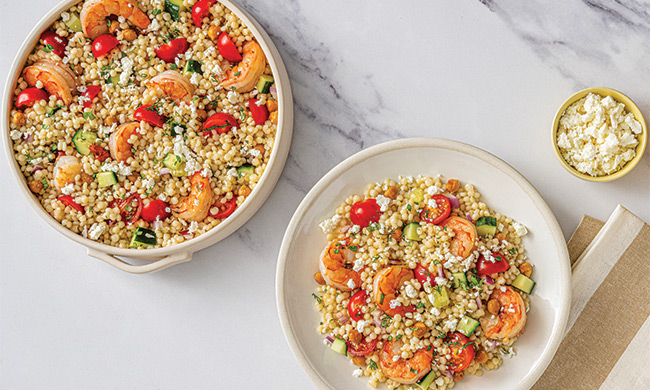
Lighten Up: Fresh Spring Meals That Won’t Weigh You Down
(Feature Impact) Put away the heavy coats and break out the rain jackets and rubber boots – spring is here, and with it comes more than just pop-up showers and sunshine. After months of comfort foods and curling up indoors, you may be ready for lighter meals that won’t weigh you down before splashing in the puddles.
Fresh produce may first come to mind, but spring bites can also mean swapping out ingredients like regular pasta for a solution such as pearl couscous. If you’re looking to complement greens, veggies, fish or meats with light yet filling flavor, consider Success Boil-in-Bag Pearl Couscous, a small, mediterranean-style pasta that always cooks right and is ready to eat in under 7 minutes once the water boils. The BPA-free boil-in-bag simplicity makes cooking easy and foolproof: no measure, no mess, no stress.
Made with high-quality semolina wheat, it features a slightly nutty flavor on its own while absorbing the flavors of salads while retaining its density and chewy texture. It’s distinguished from traditional Moroccan couscous by its slightly larger, rounder shape and less dense, firmer consistency.
Try it with your next meal in this protein-forward Shrimp Pearl Couscous Salad, made using fresh herbs, citrus, seasoned shrimp and chickpeas for a jam-packed salad that screams spring. Never boring, the tender, seasoned couscous and shrimp, veggies and aromatic herbs can bring your family running to the kitchen after a day of play.
Or, for an even simpler dish that requires just 15 minutes in the kitchen, this Pearl Couscous and Chickpea Salad is light, bright and bursting with flavor. It brings together tender pearl couscous, crisp veggies and za’atar in every bite.
To find more light spring recipe ideas, visit SuccessRice.com.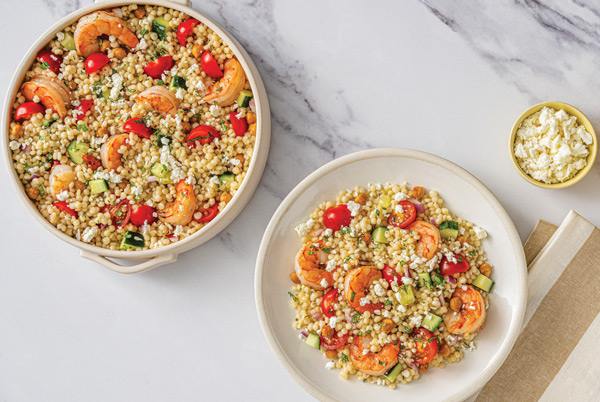
Shrimp Pearl Couscous Salad
Prep time: 10 minutes
Cook time: 15 minutes
Servings: 4
- 1 bag Success Pearl Couscous
- 1 pound large shrimp, peeled and deveined
- 1 tablespoon seasoned salt
- 4 tablespoons olive oil, divided
- 1 can (14 ounces) chickpeas, drained and rinsed
- 1/2 teaspoon garlic powder
- 1/2 teaspoon onion powder
- 1/2 teaspoon smoked paprika
- 1/4 teaspoon salt
- 1/2 English cucumber, diced
- 1 cup cherry tomatoes, halved
- 1/4 cup fresh basil, chopped
- 1/4 cup red onions, finely chopped
- 2 tablespoons fresh dill, chopped
- 1 tablespoon lemon juice
- 1/2 cup feta, crumbled
- Prepare pearl couscous according to package directions.
- In medium bowl, toss shrimp with seasoned salt.
- In large saucepan over medium-high heat, heat 1 tablespoon oil. Add shrimp and cook 5 minutes. If necessary, cook in batches to avoid overcrowding pan.
- In another large pan, heat 1 tablespoon oil over medium heat. Add chickpeas and cook 8 minutes until crispy and golden, tossing often. Add garlic powder, onion powder, paprika and salt. Toss to fully coat and cook 2 minutes.
- In large bowl, combine pearl couscous, shrimp, chickpeas, cucumbers, tomatoes, basil, red onion, dill, lemon juice and remaining olive oil. Toss to combine. Garnish with feta.
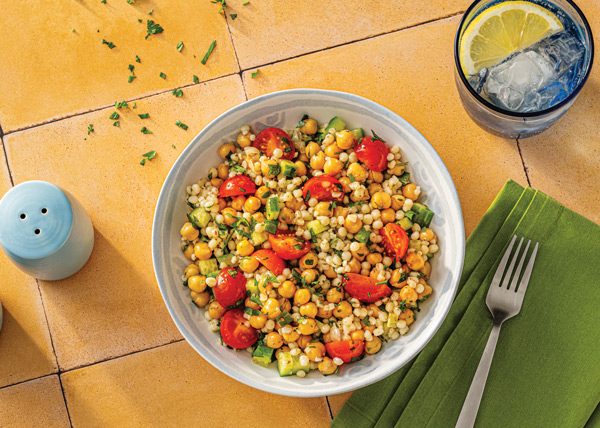
Pearl Couscous and Chickpea Salad
Prep time: 5 minutes
Cook time: 10 minutes
Servings: 4
- 1 bag Success Pearl Couscous
- 1 can (15 ounces) chickpeas, drained and rinsed
- 1 cup cherry tomatoes, halved
- 1/2 cup cucumber, diced
- 1/4 cup fresh parsley, chopped
- 1 tablespoon za’atar
- 2 tablespoons olive oil
- 1 tablespoon lemon juice, freshly squeezed
- 1/2 teaspoon salt
- 1/4 teaspoon pepper
- Prepare pearl couscous according to package directions.
- In large bowl, combine couscous, chickpeas, cherry tomatoes, cucumber, parsley and za’atar.
- Drizzle with olive oil and lemon juice. Season with salt and pepper. Toss until well combined.
- Serve warm or at room temperature.


SOURCE:
Hungry for what’s next? STM Daily News’ Food and Drink section dishes up the latest in restaurant news, beverage trends, seasonal recipes, culinary events, and food culture stories readers love to share.
Food and Beverage
Survey Finds Cooking Oil Now Influences Where Many Americans Choose to Eat
A new survey suggests cooking oil is no longer just a kitchen detail. Coast Packing found that 43% of Americans say a restaurant’s cooking oil influences where they choose to eat.

Last Updated on April 2, 2026 by Daily News Staff

New national survey data suggests cooking oil is becoming a visible factor in restaurant selection, with younger diners showing the strongest preferences.
A new national survey suggests that cooking oil is no longer just a back-of-house decision for restaurants. It is increasingly becoming part of how consumers decide where to eat.
According to new data released by Coast Packing Company, 43% of Americans say a restaurant’s cooking oil influences their dining choice. The survey, based on responses from 1,005 U.S. consumers, points to a clear shift in how ingredient decisions are perceived by the public.
The strongest signal comes from younger diners. Among adults ages 18 to 34, 52% say knowing whether a restaurant uses Beef Tallow or seed oils affects where they choose to eat. Among consumers 55 and older, that number falls to 33%.
The preference gap also shows up when diners are asked to choose between two otherwise identical restaurants. In that scenario, 31% of adults ages 18 to 34 say they would choose the restaurant using Beef Tallow, compared with 19% of adults 55 and older.
The survey also found that 24.7% of diners prefer restaurants to use traditional animal fats such as butter or Beef Tallow, while 15.6% prefer seed or vegetable oils. That suggests ingredient choices once treated mainly as operational decisions may now be influencing brand perception, menu appeal, and customer loyalty.
For restaurant operators, the findings point to a broader change in consumer behavior. Diners, especially younger ones, appear increasingly interested in how food is prepared and what ingredients are used behind the scenes. That shift aligns with wider food industry trends that emphasize transparency, flavor, and traditional preparation methods.
Coast Packing says the data builds on years of tracking consumer attitudes toward animal fats. Earlier research showed growing openness to ingredients such as Lard and Beef Tallow, particularly among younger consumers who associate them with flavor and old-school cooking. This latest survey goes a step further by suggesting those views are now influencing actual dining behavior.
The findings also match broader market signals. Whole Foods Market’s 2026 food trend forecast identified Beef Tallow as an emerging ingredient gaining visibility, while analysts continue to project growth in the global tallow sector through 2030.
Restaurants are unlikely to overhaul kitchen practices overnight. Still, the survey suggests cooking oil is becoming more than a technical ingredient choice. For a growing share of consumers, it is part of the dining experience itself.
For more information, visit Coast Packing Company.
External Links
- Back to Flavor, Back to Tallow white paper
- Email to request the full survey results
- Coast Packing Company official website
- Coast Packing TasteMap
- Healthy Fats Coalition
Visit the Food and Drink section on STM Daily News for the latest food news, beverage trends, restaurant stories, seasonal recipes, culinary events, and community-driven lifestyle coverage.
Food and Beverage
Purely Elizabeth Launches Purely Glow Granola, Its First Beauty-Inspired Limited Edition
Purely Elizabeth debuts Purely Glow Salted Vanilla Pistachio Granola, a limited-edition, beauty-inspired blend with collagen peptides and biotin, timed to New York Fashion Week.
Last Updated on April 1, 2026 by Daily News Staff
Purely Elizabeth is stepping beyond the breakfast bowl and into the “glow-from-within” conversation.
The Boulder-based natural foods brand announced the launch of Purely Glow Salted Vanilla Pistachio Granola, a limited-edition flavor that blends its signature crunchy clusters with beauty-inspired functional ingredients—including collagen peptides and biotin. The drop is timed to New York Fashion Week, signaling how quickly wellness brands are borrowing cues from beauty culture: trend-driven, ritual-focused, and built for social.
Why a “beauty granola” now?
If you’ve spent any time on TikTok lately, you’ve seen the shift: wellness content is increasingly framed like skincare—daily routines, “non-negotiables,” and ingredients people swear by.
Purely Elizabeth points to that momentum in the announcement, noting that TikTok posts featuring collagen increased by 70% over the past year compared to the previous two years. At the same time, pistachio has had its own breakout moment, with 55,000 pistachio-related TikTok posts in the most recent year—a 104% increase over the prior 24 months.
Translation: consumers aren’t just shopping for flavor anymore. They’re shopping for function, aesthetic, and ritual.
What’s inside Purely Glow Salted Vanilla Pistachio Granola
On the flavor side, Purely Glow is positioned as an elevated, dessert-leaning blend built around a salty-sweet profile:
- Organic oats
- Roasted pistachios
- Real vanilla bean
- A hint of sea salt
From a nutrition and formulation standpoint, the granola is:
- Gluten-free
- Sweetened with coconut sugar
- Baked with coconut oil
- A good source of fiber
- Enriched with collagen peptides, coconut water powder, and biotin
Founder and CEO Elizabeth Stein says the concept comes from a personal place—bringing together “nourishing food and daily beauty rituals,” and leaning into the idea that what you eat can be part of how you care for yourself.
A collab that takes it beyond the grocery aisle
To push the launch into lifestyle territory, Purely Elizabeth is partnering with Cha Cha Matcha for a limited-time “Purely Glow” menu at all locations.
The menu includes:
- Pistachio Matcha Lattes (hot or iced)
- A Purely Glow Yogurt Parfait layered with coconut yogurt, matcha chia pudding, and topped with Purely Glow Granola
The brand is also hosting “Glow Up” pop-up events to bring the product to life:
- Cha Cha Matcha Flatiron (NYC): February 12, 1:00 p.m. to 5:00 p.m., plus the weekend
- Cha Cha Matcha Beverly Hills: February 20–22
Availability and price
Purely Glow Granola launches February 12 for $7.99 and will be sold until it sells out. It’s available exclusively via:
- PurelyElizabeth.com
- TikTok Shop
- Cha Cha Matcha locations
A brand move that fits the moment
Purely Elizabeth has been around for 16 years and says it has remained the #1 granola brand in the natural channel for more than eight consecutive years—so this isn’t a reinvention as much as a strategic expansion.
The bigger takeaway: food brands are increasingly marketing like beauty brands. Limited editions. Ingredient storytelling. Collabs. Pop-ups. Social-first launches.
Purely Glow is a clean example of that playbook—built around a trending flavor (pistachio), a trending function (collagen/biotin), and a cultural moment (NYFW) that makes the product feel like more than breakfast.
For more details, visit purelyelizabeth.com.





