

unknown
Unveiling the Mystery: The Holloman Air Force Base UFO Incident
Uncover the truth behind the Holloman Air Force Base UFO incident: unidentified flying objects, alien entities, government secrecy, and more.

Last Updated on October 19, 2024 by Daily News Staff
The enigmatic world of UFO sightings has captivated the imaginations of people around the globe for decades. Among the notable cases, the Holloman Air Force Base incident of May 1965(?) stands out as one of the most intriguing and controversial. Recently, filmmaker James Fox shed light on this incident, revealing the existence of full video footage that allegedly captured the landing of UFOs and the presence of alien entities. However, the government’s failure to release the complete footage has only added to the enigma surrounding this historic event.
The Holloman Incident: A Significant UFO Sighting:
Holloman Air Force Base, established in 1942 and located in New Mexico, became the epicenter of an extraordinary alleged event in May 1965. According to James Fox, the filmmaker behind the revelation, three unidentified flying objects landed at the base, leaving witnesses in awe. This encounter quickly gained attention due to the potential evidence it provided regarding extraterrestrial life.
The Promise of Authentic Footage:
Albert “Al” Emenegger, a filmmaker working on a documentary about UFOs, was promised access to the authentic footage of the Holloman incident by United States Air Force officials. Emenegger claimed that the footage depicted alien visitors emerging from the craft and interacting with the US military. Although initially skeptical, Emenegger was assured by the Air Force that the footage was genuine. However, he was only allowed to retain a mere eight seconds of the footage.
Government Secrecy and Controversy:
Despite the promises made, the US government failed to release the full footage of the Holloman incident. Speculation suggests that the Nixon Administration, eager to appear strong in the scientific field for the upcoming 1972 re-election campaign, initially allowed the footage to be used in Emenegger’s documentary. However, as the Watergate controversy deepened, the government pulled back, keeping the complete footage hidden from public view.
https://stmdailynews.com/us-space-forces-quest-tracking-unknown-origins-in-earths-orbit
The Intriguing Documentary and the Mysterious Eight Seconds:
The resulting documentary, “UFOs Past Present Future,” released in 1974, captivated audiences with its exploration of unidentified flying objects. After subsequent updates and edits, the film was re-released as “UFOS: It has Begun” in 1976 and 1979, featuring Rod Serling as the host. The documentary showcased reenactments and illustrations, aiming to tell the story of the Holloman incident. However, it is the elusive eight seconds of footage that have fueled much speculation. Some claim that the object seen in these seconds is one of the UFOs, capturing the moment of its descent towards the base.
Continued Enigma and Independent Investigations: Around the same time I posted my original article about the footage, a YouTube channel named “Here Suddenly” released a video. The video showcased impressive research and analysis of details such as the mountain ranges, runway, and the object itself. I highly suggest watching the video to see for yourself. The creator of the video did an exceptional job and approached the subject with fascination and a desire to uncover the truth, rather than skepticism.
To this day, the full video footage of the Holloman incident, including the alleged sighting of alien entities, remains unreleased. The government’s decision to withhold this evidence only amplifies the mystery and controversy surrounding the event. However, independent researchers and UFO enthusiasts continue their quest for the truth. Notably, the YouTube channel “Here Suddenly” has conducted impressive research and analysis of the available details, shedding new light on the Holloman incident.
The Holloman Air Force Base UFO incident of the mid-60s continues to fascinate and perplex both believers and skeptics alike. The promise of authentic footage, the subsequent government secrecy, and the ongoing search for answers have turned this event into an enduring enigma. While the complete truth may still elude us, the Holloman incident remains a significant chapter in UFO history, reminding us of the enduring allure and mystery surrounding unidentified flying objects.
Author










Unlikely Collaborators is bringing astrophysicist Dr. Lisa Kaltenegger to Santa Monica for a conversation centered on one of science’s most enduring questions: Are we alone in the universe? The event, part of the organization’s Spark Salon series, took place on March 17 at 7:00 p.m. PT and was offered both in person and via livestream.
Kaltenegger, founding director of the Carl Sagan Institute at Cornell University and a professor of astronomy, is widely recognized for her work on habitable exoplanets and the search for detectable signs of life beyond Earth. Her talk focused not only on the science of planet hunting, but also on the assumptions people bring to questions about life, habitability, and reality itself.

According to the event announcement, the discussion examined how scientists interpret data from distant worlds and asked broader questions about what counts as life, what makes a planet habitable, and how human perspective can shape discovery. The program also highlighted how the search for life beyond Earth can challenge long-held ideas about what is normal, possible, and even alive.
The evening included a reception, the main program, and a book signing. In-person guests also received a complimentary copy of Kaltenegger’s book, Alien Earths: The New Science for Planet Hunting in the Cosmos.
Unlikely Collaborators, founded by Elizabeth R. Koch, describes itself as a nonprofit focused on helping people better understand themselves and the world through its Perception Box framework. The Spark Salon series regularly brings together researchers, artists, and thought leaders for conversations designed to challenge perspective and encourage reflection.
Related Links
- Unlikely Collaborators official website
- Event details: Are We Alone in the Universe?
- Dr. Lisa Kaltenegger’s book: Alien Earths: The New Science for Planet Hunting in the Cosmos
- Cornell profile: Dr. Lisa Kaltenegger
Source
Dive into “The Knowledge,” where curiosity meets clarity. This playlist, in collaboration with STMDailyNews.com, is designed for viewers who value historical accuracy and insightful learning. Our short videos, ranging from 30 seconds to a minute and a half, make complex subjects easy to grasp in no time. Covering everything from historical events to contemporary processes and entertainment, “The Knowledge” bridges the past with the present. In a world where information is abundant yet often misused, our series aims to guide you through the noise, preserving vital knowledge and truths that shape our lives today. Perfect for curious minds eager to discover the ‘why’ and ‘how’ of everything around us. Subscribe and join in as we explore the facts that matter. https://stmdailynews.com/the-knowledge/
unknown
How extraterrestrial tales of aliens gain traction
The narrative explores humanity’s intrigue with extraterrestrial entities, juxtaposing evolutionary processes with claims of alien interventions, ultimately emphasizing the need for scientific evidence over fantastical stories. Aliens!

Last Updated on March 18, 2026 by Daily News Staff
Ester Lázaro Lázaro, Centro de Astrobiología (INTA-CSIC)
One night, upon returning to the cave that his tribe calls home, the monkey-humanoid Moon-Watcher finds a strange crystal object, a kind of monolith that fascinates him at first, but then quickly loses his interest when he discovers that it is not edible. Soon after, the true purpose of the monolith is revealed to be none other than penetrating the minds of our ancestors to induce new abilities that, over time, will cause the development of an intelligence capable of creating new technology.
Many readers will recognise this scene from the novel 2001, A Space Odyssey, by Arthur C. Clarke, and the film of the same name, directed by Stanley Kubrick. It almost goes without saying that the crystal monolith in question is the work of an extraterrestrial civilisation that observes life on other planets and “experiments” on them to encourage the development of intelligence in as many parts of the cosmos as possible.
Seeking simple answers to complex questions
Understanding how we, as a species, came to be intelligent is one of the great enigmas of evolutionary study. Small mutations, followed by a process of natural selection to choose the most advantageous, seems too slow a process for structures as complex as the human nervous system or brain to emerge. It is this very complexity that allows millions of neurons to communicate with each other, resulting in the emergence of qualities such as the ability to respond voluntarily to environmental stimuli, or to ask questions about the very nature of humankind and the universe.
Nowadays, we know that there are evolutionary mechanisms that have lead to great leaps in terms of complexity, but that does not stop people from turning to non-human forces – Gods, extraterrestrials, spiritual energies – to explain things that are difficult to comprehend.
This has always been the case, in all human cultures. A classic example would be attributing atmospheric events – thunder, lightning, floods – to the wrath of God. These ideas came about before humans had ever left the ground, so it is no surprise that we turned our eyes even higher – to extraterrestrials – to explain other phenomena that we could only observe once travelling at high altitudes became part of our daily lives.
The allure of the unknown
The possibility that we might have been visited by beings from other worlds has always fascinated us. The element of mystery, of the unknown, only makes it more interesting.
Any phenomenon is made all the more enticing when it seems it is being covered up or hidden for secretive reasons. The attractiveness of conspiracies often leads people towards ideas which have no scientific basis, such as the belief that the Earth is flat, that humans never set foot on the Moon, or that vaccines can control our behaviour.
Even though these ideas have repeatedly been shown to be untrue, their rapid dissemination through social media, using simple, blunt language that appeals to emotion over logic, makes them very powerful weapons.
The supposed “proof” of alien visits to our planet ranges from specific Bible passages to ancient stone carvings portraying creatures or objects that may appear to be aliens or spacecraft. The latter often take the form of flying saucers.
However, we cannot forget that humans have always created imaginary creatures that resemble them and attributed them with magical powers. When imagining Gods, humans have given them a human appearance, and almost always imagined them as living in the sky.
When we look at these representations through modern eyes, we associate them with extraterrestrial beings or structures, when in fact they could be referring to a range of different things.
When unproven stories become larger than life
Recently, in the United States Congress, UFOs (currently known as UAPs: “Unidentified Anomalous Phenomena”) are back in the limelight. This is because a former air force intelligence official has made claims that the Pentagon is in possession of remains of extraterrestrial craft and “non-human biological matter”. The claims have been backed up by the testimony of a retired navy commander and a former navy pilot.
What we can be certain of is that the more we explore our skies, the more likely it is that we will encounter phenomena that we cannot explain. However, this does not mean that they are extraterrestrial. Past experience has shown us that most of these events can be attributed to optical illusions, spy or weather balloons, space junk, or even satellites that we ourselves have made.
In Spain, UFOs were a hot topic between the 1960s and the 1980s. In this era, everyone knew someone who was convinced that they had seen a UFO. This even reached the point where an exoplanet, called Ummo, was made up. It was populated by a more advanced civilisation than ours who made contact with people on Earth. In the letters these aliens supposedly sent, the ‘Ummites’ explained concepts such as genetics and cell structure.
The truth is that nowadays, reading some of these letters can be quite amusing. The story of the planet of Ummo was ultimately proved to be a monumental hoax, a fact later admitted by its own creator.
The Ummo hoax was even linked to the creation of a paedophile ring, which should make us reflect on the harmful consequences that the spread of fabricated news stories can have.
Can we deny the possibility that intelligent alien civilisations exist?
The answer, of course, is no. The universe is immense, and it is more than likely that circumstances similar to those which led to the appearance of life on Earth have been repeated on other planets. But there is a huge distance (literally and figuratively) between acknowledging the existence of these creatures and considering the possibility that they might have visited us.
Exoplanets, also known as extrasolar planets, are extremely far away, and we are limited by the speed of light which, as proven by Einstein, is the maximum possible speed at which anything can travel. Therefore, the journey to even a “nearby” exoplanet would take thousands of years. Maybe a civilisation more advanced than ours could find a way to do it faster, but not to the point of it being something easy or commonplace.
In any case, if the remains of alien life or spacecraft are stored away somewhere, why are they not being shown to us? Scientists would jump at the chance to analyse this organic matter to find out how it is structured, how it metabolises energy, or what molecules it uses to store genetic information.
Until there is proof, this is not a question of science, but rather, of stories. Stories can be very entertaining, but these kinds of stories do not help us to build a more accurate or helpful view of the world.
Ester Lázaro Lázaro, Investigadora Científica de los Organismos Públicos de Investigación. Especializada en evolución de virus, Centro de Astrobiología (INTA-CSIC)
This article is republished from The Conversation under a Creative Commons license. Read the original article.
The science section of our news blog STM Daily News provides readers with captivating and up-to-date information on the latest scientific discoveries, breakthroughs, and innovations across various fields. We offer engaging and accessible content, ensuring that readers with different levels of scientific knowledge can stay informed. Whether it’s exploring advancements in medicine, astronomy, technology, or environmental sciences, our science section strives to shed light on the intriguing world of scientific exploration and its profound impact on our daily lives. From thought-provoking articles to informative interviews with experts in the field, STM Daily News Science offers a harmonious blend of factual reporting, analysis, and exploration, making it a go-to source for science enthusiasts and curious minds alike. https://stmdailynews.com/category/science/
Science
First contact with aliens could end in colonization and genocide if we don’t learn from history
Last Updated on March 15, 2026 by Daily News Staff
First contact with aliens could end in colonization and genocide if we don’t learn from history
David Delgado Shorter, University of California, Los Angeles; Kim TallBear, University of Alberta, and William Lempert, Bowdoin College
We’re only halfway through 2023, and it feels already like the year of alien contact.
In February, President Joe Biden gave orders to shoot down three unidentified aerial phenomena – NASA’s title for UFOs. Then, the alleged leaked footage from a Navy pilot of a UFO, and then news of a whistleblower’s report on a possible U.S. government cover-up about UFO research. Most recently, an independent analysis published in June suggests that UFOs might have been collected by a clandestine agency of the U.S. government.
If any actual evidence of extraterrestrial life emerges, whether from whistleblower testimony or an admission of a cover-up, humans would face a historic paradigm shift.
As members of an Indigenous studies working group who were asked to lend our disciplinary expertise to a workshop affiliated with the Berkeley SETI Research Center, we have studied centuries of culture contacts and their outcomes from around the globe. Our collaborative preparations for the workshop drew from transdisciplinary research in Australia, New Zealand, Africa and across the Americas.
In its final form, our group statement illustrated the need for diverse perspectives on the ethics of listening for alien life and a broadening of what defines “intelligence” and “life.” Based on our findings, we consider first contact less as an event and more as a long process that has already begun.
Who’s in charge of first contact
The question of who is “in charge” of preparing for contact with alien life immediately comes to mind. The communities – and their interpretive lenses – most likely to engage in any contact scenario would be military, corporate and scientific.
By giving Americans the legal right to profit from space tourism and planetary resource extraction, the Commercial Space Launch Competitiveness Act of 2015 could mean that corporations will be the first to find signs of extraterrestrial societies. Otherwise, while detecting unidentified aerial phenomena is usually a military matter, and NASA takes the lead on sending messages from Earth, most activities around extraterrestrial communications and evidence fall to a program called SETI, or the search for extraterrestrial intelligence.
SETI is a collection of scientists with a variety of research endeavors, including Breakthrough Listen, which listens for “technosignatures,” or markers, like pollutants, of a designed technology.
SETI investigators are virtually always STEM – science, technology, engineering and math – scholars. Few in the social science and humanities fields have been afforded opportunities to contribute to concepts of and preparations for contact.
In a promising act of disciplinary inclusion, the Berkeley SETI Research Center in 2018 invited working groups – including our Indigenous studies working group – from outside STEM fields to craft perspective papers for SETI scientists to consider.
Ethics of listening
Neither Breakthough Listen nor SETI’s site features a current statement of ethics beyond a commitment to transparency. Our working group was not the first to raise this issue. And while the SETI Institute and certain research centers have included ethics in their event programming, it seems relevant to ask who NASA and SETI answer to, and what ethical guidelines they’re following for a potential first contact scenario.
SETI’s Post-Detection Hub – another rare exception to SETI’s STEM-centrism – seems the most likely to develop a range of contact scenarios. The possible circumstances imagined include finding ET artifacts, detecting signals from thousands of light years away, dealing with linguistic incompatibility, finding microbial organisms in space or on other planets, and biological contamination of either their or our species. Whether the U.S. government or heads of military would heed these scenarios is another matter.
SETI-affiliated scholars tend to reassure critics that the intentions of those listening for technosignatures are benevolent, since “what harm could come from simply listening?” The chair emeritus of SETI Research, Jill Tarter, defended listening because any ET civilization would perceive our listening techniques as immature or elementary.
But our working group drew upon the history of colonial contacts to show the dangers of thinking that whole civilizations are comparatively advanced or intelligent. For example, when Christopher Columbus and other European explorers came to the Americas, those relationships were shaped by the preconceived notion that the “Indians” were less advanced due to their lack of writing. This led to decades of Indigenous servitude in the Americas.
The working group statement also suggested that the act of listening is itself already within a “phase of contact.” Like colonialism itself, contact might best be thought of as a series of events that starts with planning, rather than a singular event. Seen this way, isn’t listening potentially without permission just another form of surveillance? To listen intently but indiscriminately seemed to our working group like a type of eavesdropping.
It seems contradictory that we begin our relations with aliens by listening in without their permission while actively working to stop other countries from listening to certain U.S. communications. If humans are initially perceived as disrespectful or careless, ET contact could more likely lead to their colonization of us.
Histories of contact
Throughout histories of Western colonization, even in those few cases when contactees were intended to be protected, contact has led to brutal violence, pandemics, enslavement and genocide.
James Cook’s 1768 voyage on the HMS Endeavor was initiated by the Royal Society. This prestigious British academic society charged him with calculating the solar distance between the Earth and the Sun by measuring the visible movement of Venus across the Sun from Tahiti. The society strictly forbade him from any colonial engagements.
Though he achieved his scientific goals, Cook also received orders from the Crown to map and claim as much territory as possible on the return voyage. Cook’s actions put into motion wide-scale colonization and Indigenous dispossession across Oceania, including the violent conquests of Australia and New Zealand.
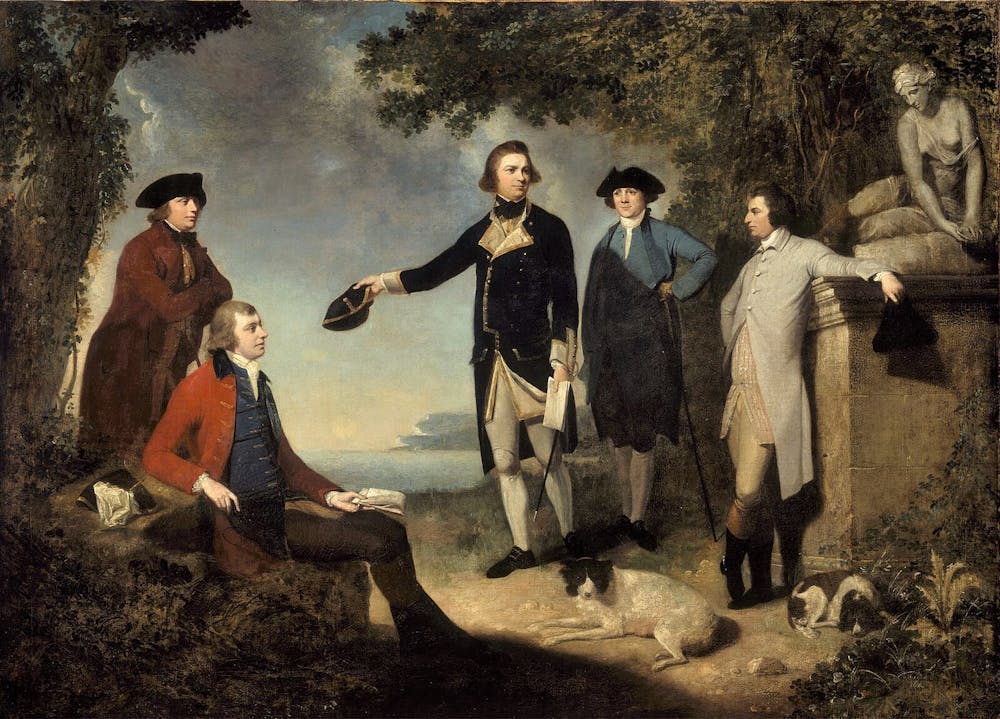
The Royal Society gave Cook a “prime directive” of doing no harm and to only conduct research that would broadly benefit humanity. However, explorers are rarely independent from their funders, and their explorations reflect the political contexts of their time.
As scholars attuned to both research ethics and histories of colonialism, we wrote about Cook in our working group statement to showcase why SETI might want to explicitly disentangle their intentions from those of corporations, the military and the government.
Although separated by vast time and space, both Cook’s voyage and SETI share key qualities, including their appeal to celestial science in the service of all humanity. They also share a mismatch between their ethical protocols and the likely long-term impacts of their success. https://www.youtube.com/embed/5gZwLGrJQrM?wmode=transparent&start=0 This BBC video describes the modern ramifications of Captain James Cook’s colonial legacy in New Zealand.
The initial domino of a public ET message, or recovered bodies or ships, could initiate cascading events, including military actions, corporate resource mining and perhaps even geopolitical reorganizing. The history of imperialism and colonialism on Earth illustrates that not everyone benefits from colonization. No one can know for sure how engagement with extraterrestrials would go, though it’s better to consider cautionary tales from Earth’s own history sooner rather than later.
This article has been updated to correct the date of James Cook’s voyage.
David Delgado Shorter, Professor of World Arts and Cultures/Dance, University of California, Los Angeles; Kim TallBear, Professor of Native Studies, University of Alberta, and William Lempert, Assistant Professor of Anthropology, Bowdoin College
This article is republished from The Conversation under a Creative Commons license. Read the original article.
The science section of our news blog STM Daily News provides readers with captivating and up-to-date information on the latest scientific discoveries, breakthroughs, and innovations across various fields. We offer engaging and accessible content, ensuring that readers with different levels of scientific knowledge can stay informed. Whether it’s exploring advancements in medicine, astronomy, technology, or environmental sciences, our science section strives to shed light on the intriguing world of scientific exploration and its profound impact on our daily lives. From thought-provoking articles to informative interviews with experts in the field, STM Daily News Science offers a harmonious blend of factual reporting, analysis, and exploration, making it a go-to source for science enthusiasts and curious minds alike. https://stmdailynews.com/category/science/





