

Local News
Why Arizona Republicans Are Pushing Back on Light Rail to the State Capitol — and What It Means for the West Valley
Arizona’s debate over a proposed light rail extension to the State Capitol has intensified. Supporters argue it promotes connectivity and equity, while Republicans oppose it due to cost concerns and a preference for car-centric infrastructure. The outcome will impact future west-side transit expansions and shape regional transportation priorities.

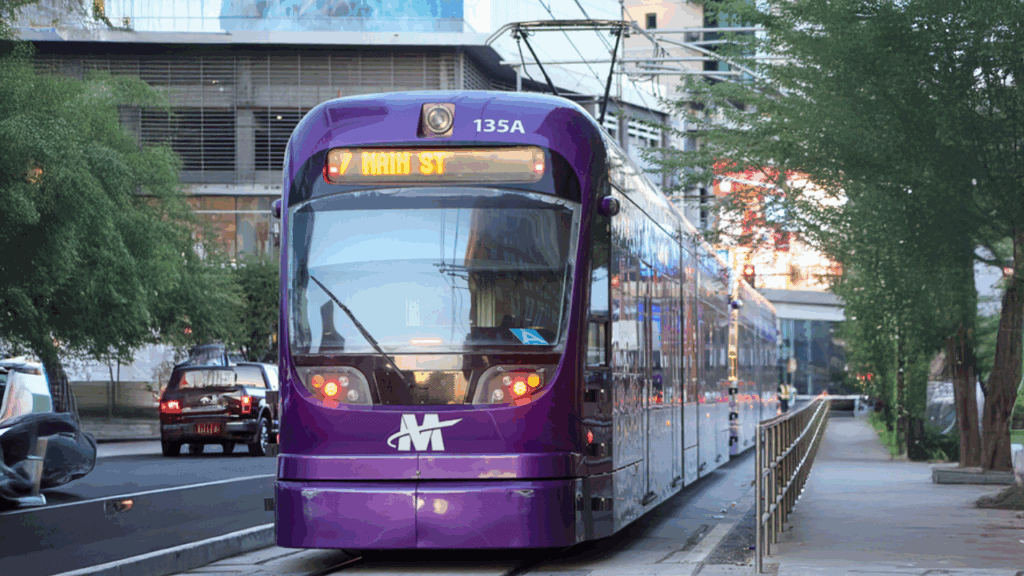
Arizona’s long-running debate over public transit has flared up again, this time over a proposed Valley Metro light rail extension that would bring rail service closer to the Arizona State Capitol complex. While Phoenix and Valley Metro leaders argue the project is a logical next step in regional mobility, Republican leaders at the state Capitol have mounted strong opposition — creating uncertainty not just for this segment, but for future west-side expansions.
The Case for the Capitol Light Rail Extension
Supporters of the project, including Valley Metro officials, Phoenix city leaders, transit advocates, and many west Phoenix residents, argue that extending light rail toward the Capitol area is both practical and symbolic.
From a planning standpoint, the Capitol is a major employment center that draws thousands of workers, visitors, and students. Transit planners say rail access would reduce congestion, improve air quality, and provide reliable transportation for residents who already depend heavily on public transit.
Proponents also emphasize equity. West Phoenix has historically received fewer infrastructure investments than other parts of the metro area, despite strong transit ridership. For supporters, extending rail service westward is about connecting communities to jobs, education, and government services — not politics.
There is also a broader regional argument: light rail lines function best as part of a connected network. Leaving a gap near a central civic destination, supporters say, undermines long-term system efficiency.
Why Republican Lawmakers Are Opposed
Republican leaders in the Arizona Legislature see the project very differently.
One major issue is cost. GOP lawmakers frequently point to the rising price of light rail construction, which has increased significantly over the past decade. They argue that rail projects deliver limited benefit compared to their expense and that bus service or roadway improvements could move more people at lower cost.
Usage is another concern. Critics note that light rail serves a relatively small percentage of total commuters in the Phoenix metro area and requires ongoing public subsidies to operate. From this perspective, expanding rail further — especially into politically sensitive areas like the Capitol — is viewed as fiscally irresponsible.
There is also a political and legal dimension. In recent years, Republican lawmakers passed legislation restricting light rail construction near the Capitol complex. While framed as a land-use and security issue, critics argue it reflects deeper ideological opposition to rail transit and urban-oriented infrastructure.
Finally, some GOP leaders simply prefer different transportation priorities. Arizona remains a car-centric state, and many Republican officials believe future investments should focus on highways, autonomous vehicle technology, or flexible transit options rather than fixed rail.
A Political Standoff with Real Transit Consequences
The dispute has become a high-stakes standoff between the Republican-controlled Legislature and Democratic leaders at the city and regional level. While lawmakers may not be able to directly cancel the project, they have significant leverage through funding approvals, oversight committees, and future legislation.
This uncertainty creates challenges for Valley Metro, which relies on long-term planning, federal funding commitments, and voter-approved local taxes. Transit systems work best with predictability — and political volatility can drive up costs or delay construction.
What This Means for West Valley Light Rail Expansion
The biggest question is what happens next for west Phoenix and the broader West Valley.
If the Capitol-area extension is altered or blocked, Valley Metro may be forced to redesign routes that avoid the restricted area, potentially making service less direct or less useful. That could weaken the case for future westward expansions toward areas like Maryvale or even farther west.
On the other hand, the controversy has also drawn renewed attention to west-side transit needs. Some advocates believe the political fight could energize local support, leading to stronger community backing and clearer messaging about why rail matters in west Phoenix.
Long term, the outcome may set a precedent. If state lawmakers successfully limit rail construction through legislative action, it could signal tighter constraints on future expansions. If cities push forward despite opposition, it may reaffirm local control over transportation planning.
The Bigger Picture
At its core, the debate over light rail to the Arizona State Capitol reflects a broader clash of visions for the region’s future: one focused on dense, transit-oriented growth, and another centered on fiscal restraint and automobile mobility.
For residents of the West Valley, the stakes are tangible. The decision will shape access to jobs, education, and public services for decades. Whether the project moves forward as planned, is rerouted, or delayed entirely, it will leave a lasting imprint on how — and for whom — the Valley’s transit system grows.
As Phoenix continues to expand westward, the question remains unresolved: will light rail be allowed to follow?
Further Reading & Context
- KJZZ Phoenix – State Politics & Transportation Coverage
In-depth reporting on Arizona legislative actions, Valley Metro planning, and Capitol-area transit disputes. - Valley Metro – Capitol / West Extension Project Page
Official project updates, maps, timelines, and explanations from the regional transit authority. - City of Phoenix Public Transit Department
City-level planning documents and policy perspectives on light rail expansion and transit equity. - Arizona State Legislature – Transportation & Infrastructure Bills
Primary source for legislation affecting light rail construction near the Capitol and statewide transit policy. - Cronkite News (Arizona PBS)
Nonpartisan reporting on Arizona infrastructure, urban growth, and political power dynamics. - Axios Phoenix
Concise breakdowns of Phoenix City Council decisions and regional transportation debates. - Federal Highway Administration – Public Transportation Planning
Federal perspective on transit funding, cost comparisons, and long-term mobility planning.

Authors


Entertainment
Little Woodrow’s Launches 2026 Turtle Racing Season With ‘TurtleVerse’ Theme
Little Woodrow’s has launched its 2026 turtle racing season with a new TurtleVerse theme, bringing weekly Thursday night races, themed turtle competitors and a new loyalty program to locations across Texas.


Little Woodrow’s Opens 2026 Turtle Racing Season Across Texas
Little Woodrow’s is bringing back one of its most recognizable Thursday night traditions with the launch of its 2026 turtle racing season, this year under a new retro sci-fi-inspired theme called TurtleVerse. The season officially began March 5 and runs weekly through Nov. 19 at participating locations in Houston, San Antonio, Lubbock, Austin and, later this spring, Frisco.
The long-running event, which started in Midtown Houston nearly two decades ago, has grown into a signature piece of the Texas neighborhood bar chain’s identity. This year’s TurtleVerse concept adds a comic-book-style multiverse angle to the races, pairing the usual crowd energy with themed branding and a lineup of turtles carrying names like Turtle Swift, Shellvester Stallone and Timothée Shellamet.

Woody’s Brands President Ray Risley said the company wanted to build on one of Little Woodrow’s most popular traditions by leaning into both nostalgia and humor. In addition to the themed races, the company is also introducing a new Turtle Journey loyalty program, allowing guests to check in, earn points and redeem rewards throughout the season.
Little Woodrow’s said races begin at 7 or 8 p.m., depending on location. Fans can find schedules, turtle bios and loyalty program details at Little Woodrow’s website.
Related Links
Source
Source: Woody’s Brands via PRNewswire
Looking for an entertainment experience that transcends the ordinary? Look no further than STM Daily News Blog’s vibrant Entertainment section. Immerse yourself in the captivating world of indie films, streaming and podcasts, movie reviews, music, expos, venues, and theme and amusement parks. Discover hidden cinematic gems, binge-worthy series and addictive podcasts, gain insights into the latest releases with our movie reviews, explore the latest trends in music, dive into the vibrant atmosphere of expos, and embark on thrilling adventures in breathtaking venues and theme parks. Join us at STM Entertainment and let your entertainment journey begin! https://stmdailynews.com/category/entertainment/
and let your entertainment journey begin!
Downtown Phoenix experienced the thunder of Formula 1 engines once again on Saturday, March 14, 2026, when the Red Bull Showrun transformed East Jefferson Street into a temporary motorsports stage. The free public event drew large crowds eager to see a real Formula 1 car perform high-speed demonstrations through the heart of the city.
The star of the event was the legendary Red Bull RB7, one of the most dominant machines in modern Formula 1 history. Fans watched as the car blasted down the temporary street course performing burnouts, donuts, and acceleration runs that echoed between downtown buildings.
A Championship Machine on City Streets
Originally driven to the 2011 Formula 1 World Championship by Sebastian Vettel, the RB7 represents a golden era for Red Bull Racing. The car is known for its aerodynamic design and remarkable performance during the 2011 season.
During the Phoenix showrun, the car was piloted by Scott Speed, a former Formula 1 competitor and experienced motorsports driver. He was joined by Nikola Tsolov, a rising talent in Red Bull’s junior driver development program.
Together, the drivers delivered a high-energy demonstration that gave spectators a rare opportunity to witness the power and precision of Formula 1 machinery up close.
A Tribute to Phoenix’s Formula 1 Legacy
The event also served as a reminder of Phoenix’s unique place in Formula 1 history. The city previously hosted the United States Grand Prix (Phoenix street circuit), which ran through downtown streets from 1989 through 1991.
During those races, fans watched legendary drivers such as Ayrton Senna compete on the challenging desert street circuit.
Although the Grand Prix eventually moved to other locations, the Red Bull Showrun brought the spirit of Formula 1 back to Phoenix for a new generation of motorsports fans.
Formula 1’s Growing U.S. Momentum
The Phoenix showrun comes at a time when Formula One is experiencing unprecedented growth in the United States. The sport now hosts three annual races in Austin, Miami, and Las Vegas.
Promotional events like the Red Bull Showrun help introduce the sport to new audiences and reconnect cities with their racing heritage.
For longtime Phoenix residents, the sound of a Formula 1 engine echoing through downtown streets was more than just a spectacle—it was a powerful reminder of the city’s motorsports past and the growing popularity of Formula 1 across America. 🏎️🔥
Related External Coverage
- Official Red Bull Showrun Phoenix Event Page
- Arizona’s Family (3TV / CBS 5): Coverage of the Red Bull Showrun in Downtown Phoenix
- Formula 1 Official Website – Learn More About the Sport
- City of Phoenix – Downtown Events and Street Closures
- History of the Phoenix Street Circuit and the U.S. Grand Prix (1989–1991)
Stay updated with the latest automotive news, vehicle technology, industry trends, and transportation innovations. The STM Daily News Automotive section explores how cars, electric vehicles, and mobility solutions are shaping the future of the road.
News
Valley Metro to Exit CAPEX Capitol Extension After Phoenix Council Shifts Focus to Indian School Road Corridor
Valley Metro is shifting its focus on high-capacity transit planning in west Phoenix following a City Council vote, prioritizing a new corridor along Indian School Road while exiting the Capitol Extension project, CAPEX, and seeking community engagement.

Last Updated on March 6, 2026 by Daily News Staff
Valley Metro is officially shifting gears on high-capacity transit planning in west Phoenix following a Phoenix City Council vote earlier this year.
In a message to the public, Valley Metro said that after the Jan. 27, 2026 City Council decision to re-evaluate high-capacity transit options and prioritize a proposed West Phoenix corridor along Indian School Road, the agency will exit project development and the Federal Transit Administration Capital Investment Grant (CIG) process for the Capitol Extension (CAPEX) project.
What the City Council voted to do
According to Valley Metro, the Phoenix City Council voted to take another look at high-capacity transit options for west Phoenix and to prioritize studying a new corridor alignment along Indian School Road.
What Valley Metro is doing next
Valley Metro emphasized it still supports expanding high-capacity transit in west Phoenix, citing demand and mobility needs in the corridor. But the agency says it will now pivot away from CAPEX and toward the new study effort.
Key next steps Valley Metro outlined include:
- Exiting the CAPEX project development process and the federal CIG pipeline
- Advancing planning for the West Phoenix study along Indian School Road
- Centering comprehensive community engagement, including outreach to residents, business owners, and stakeholders along the corridor
- Working closely with the City of Phoenix on project development
- Coordinating with the Federal Transit Administration to explore funding opportunities
How to stay engaged
Valley Metro is encouraging residents to sign up for updates as the next phase moves forward at valleymetro.org/notices.
Dive into “The Knowledge,” where curiosity meets clarity. This playlist, in collaboration with STMDailyNews.com, is designed for viewers who value historical accuracy and insightful learning. Our short videos, ranging from 30 seconds to a minute and a half, make complex subjects easy to grasp in no time. Covering everything from historical events to contemporary processes and entertainment, “The Knowledge” bridges the past with the present. In a world where information is abundant yet often misused, our series aims to guide you through the noise, preserving vital knowledge and truths that shape our lives today. Perfect for curious minds eager to discover the ‘why’ and ‘how’ of everything around us. Subscribe and join in as we explore the facts that matter. https://stmdailynews.com/the-knowledge/





