Civil Defense first-responders carry a man who was wounded after his handheld pager exploded, in the southern port city of Sidon, Lebanon, Tuesday, Sept. 17, 2024.(AP Photo)
The alleged Israeli attack on members of Hezbollah via their pagers is another ominous development propelling the Middle East towards a full-scale regional war. It leaves Hezbollah with little option but to retaliate with the full support of the Iran-led “axis of resistance”.
The sophistication and impact of targeting the pagers is unprecedented. The attack resulted in at least 11 deaths, including some of Hezbollah’s fighters, and up to 3,000 people wounded.
The main aim of the attack, which US officials have reportedly said was carried out by Israel, was intended to disrupt Hezbollah’s means of communication and its command and control system in Lebanon.
At 3:30 p.m., the pagers received a message that appeared as though it was coming from Hezbollah’s leadership then beeped for several seconds before exploding.
Since Hezbollah has reduced the use of mobile phones by its forces because Israel can easily detect and target them, pagers have increasingly become the preferred messaging device within the group.
The attack may have also been designed to cause panic within the group and among the Lebanese public, many of whom do not support Hezbollah, given the political divisions in the country.
Since Hamas’ October 7 attacks on southern Israel, the Israeli leadership under Prime Minister Benjamin Netanyahu has repeatedly said it is determined to remove the threat of Hezbollah, which has operated in solidarity with Hamas.
Hours before the pager attack, Netanyahu’s government clarified that Israel’s war goals would expand to include a return of the tens of thousands of residents to their homes in northern Israel, which they have fled due to constant rocket fire from Hezbollah. Israel’s defence minister, Yoav Gallant, said the only way to do this was through military action.
The simultaneous pager explosions on Tuesday, then, may be a prelude to an all-out Israeli offensive against Hezbollah.
BREAKING via Reuters
Hundreds of members of Hezbollah were seriously wounded on Tuesday when the pagers they use to communicate exploded.
Hezbollah has already declared it will retaliate. What form this will take remains to be seen. The group has a massive military capability to not only to pound northern Israel with drones and missiles, but also attack other parts of the Jewish state, including heavily populated cities such as Tel Aviv.
Hezbollah showed this capability in its 2006 war with Israel. The war lasted 34 days, during which 165 Israelis were killed (121 IDF soldiers and 44 civilians) and Israel’s economy and tourist industry were markedly damaged. Hezbollah and Lebanese losses were far greater, with at least 1,100 deaths. However, the Israel Defence Forces (IDF) failed to destroy or incapacitate the group.
Advertisement
Any successful retaliatory attack on Israel’s cities could result in serious civilian casualties, giving Israel a further pretext to pursue its long-held aim of destroying Hezbollah and punishing its main backer, the Islamic Republic of Iran.
In a wider conflict, the United States is committed to defending Israel, while Iran would support Hezbollah in whatever way necessary. If Israeli and US leaders think Iran will continue to refrain from any action that could propel it into war with Israel and the US, they are mistaken.
Hezbollah is a central piece in the regime’s national and regional security paradigm. Tehran has invested heavily in the group, along with other regional affiliates – Iraqi militias, the Yemeni Houthis and the Syrian regime of Bashar al-Assad, in particular. The aim of this “axis of resistance” has been to build a strong deterrent against Israel and the US.
Ever since its foundation 45 years ago, the Iranian regime has viewed Israel and its main backer, the US, as an existential threat, just as Israel has regarded Iran in the same way. For this, the regime has reoriented its foreign relations towards America’s major adversaries, especially Russia and China. Russo-Iranian military cooperation has grown so strong, in fact, that Moscow will have little hesitation in backing Iran and its affiliates in any war.
Tehran is fully cognisant of Israel’s nuclear prowess. To guard against it, Iran has developed its own nuclear program to the threshold level of developing a weapon. Iranian leaders may have also gained Russia’s assurances it would help defend Iran should Israel resort to the use of its nuclear weapons.
Meanwhile, it is important to remember that after nearly a year of demolishing Gaza and devastating its inhabitants, Israel has not been able to wipe out Hamas.
Its own actions speak to this. It has constantly forced Gazans to relocate so IDF soldiers can operate in areas they had previously declared to be cleared of fighters.
The task of defeating Hezbollah and its backers would be a far greater objective to achieve. It carries the serious risk of a war that all parties have been saying that they do not want, yet all are preparing for.
The pager attack is just the latest in a string of operations that keeps imperilling any chances of a permanent Gaza ceasefire that could stabilise the region and contribute to the causes of peace rather than war.
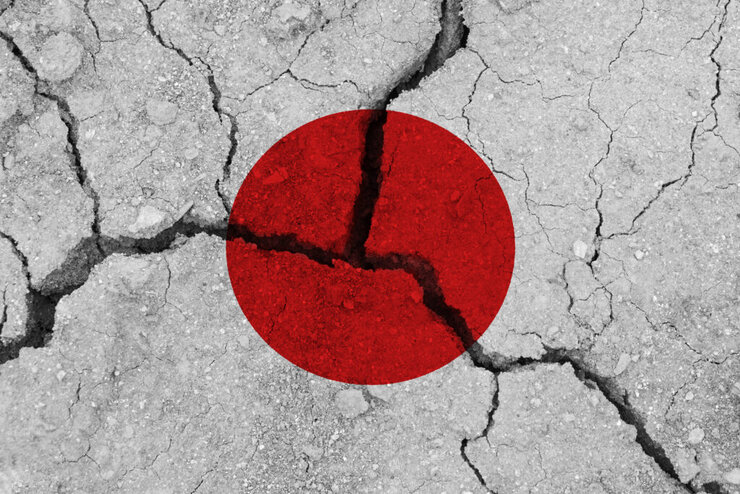
🇯🇵 Japan Earthquake Update — What You Need to Know (December 2025)
Japan Earthquake Update — A powerful magnitude 7.5 earthquake struck off the coast of Aomori, Japan, triggering tsunami warnings and a rare megaquake advisory. Here are the latest updates on damage, aftershocks, government response, and ongoing seismic risks as of December 2025.
🇯🇵 Japan Earthquake Update — What You Need to Know (December 2025)
On December 8, 2025, a powerful earthquake — measured at magnitude 7.5 (7.6 by the U.S. Geological Survey) — struck offshore of Aomori Prefecture in northern Japan around 11:15 p.m. JST. The quake was deep enough (about 44 km) to be felt over a wide area, with intense shaking registering across northern Honshu and parts of Hokkaido.
🌊 Immediate Impact — Tsunami & Injuries
Tsunami Warnings were promptly issued along the Pacific coasts of Hokkaido, Aomori and Iwate. Authorities initially feared waves up to ~3 meters high, prompting evacuations. In the end, only small tsunami waves — up to about 70 cm — were observed, and all warnings were lifted by early Tuesday morning. At least 50 plus people have been injured, mostly lightly, due to falling objects and minor structural impacts from the shaking.
Across the affected prefectures, emergency crews continue damage assessments and are checking roads, buildings, utilities and other infrastructure for safety concerns. Some power outages and transport disruptions (train suspensions) were reported in the aftermath.
🧠 Rare “Megaquake Advisory” Issued
Japan’s meteorological authority, the Japan Meteorological Agency (JMA), has issued a megaquake advisory following the M 7.5 quake — a rare alert indicating elevated seismic risk. This advisory:
Does not predict when (or if) a larger earthquake will occur. Signals that the probability of a more powerful quake (M 8.0+) has increased temporarily for the next several days or week. Specifically, a formerly tiny ~0.1% weekly chance has risen to roughly ~1 %. Applies along a long stretch of Japan’s Pacific coast — from Chiba Prefecture in the south up through Hokkaido in the north — where the Pacific tectonic plate is actively subducting beneath Japan.
Officials emphasize that this is an advisory, not a prediction, and it’s issued to encourage preparedness: securing furniture, reviewing evacuation plans, and keeping emergency kits ready.
🌏 Aftershocks and Continued Seismic Activity
Even after the main quake, strong aftershocks have been recorded in the region — including quakes in the magnitude 5–6 range. This ongoing activity is consistent with a typical aftershock sequence but reinforces the public safety message to stay alert.
Later smaller tremors — including a reported M 6.0 event — have been felt near Aomori and Hokkaido, though none have triggered additional tsunami warnings.
🛡 Government Response & Public Safety
The Japanese government has mobilized an emergency task force to:
Advertisement
Assess damage and coordinate response efforts across affected regions. Monitor infrastructure — including roads, utilities, and nuclear facilities — for any damage or safety issues. Keep the public informed and ready for possible aftershocks or other quakes.
Schools, businesses and local municipalities continue to evaluate safety conditions and may adjust operations accordingly.
📌 What This Means for Residents & Visitors
✔ Immediate tsunami danger has passed, but vigilance is still needed due to aftershocks.
✔ Preparedness is crucial, especially in coastal and northern regions that felt the quake strongest.
✔ If you’re in Japan or planning travel, follow JMA updates and local government advisories for current regional guidance.
🧭 In Summary
Japan is dealing with the impacts of a major offshore earthquake that shook the northern Pacific coast and prompted widespread alerts. Although immediate tsunami threats were limited and damage appears relatively light so far, a rare megaquake advisory remains in effect — not as a definitive forecast, but as a cautionary alert to stay prepared in the coming days.
Despite this elevated alert level, experts stress that while seismic risk is higher than normal, a massive quake is not imminent and the advisory’s purpose is to keep people ready rather than alarmed.
Links open in a new tab. Please follow official JMA updates for real-time alerts.
STM Daily News is a vibrant news blog dedicated to sharing the brighter side of human experiences. Emphasizing positive, uplifting stories, the site focuses on delivering inspiring, informative, and well-researched content. With a commitment to accurate, fair, and responsible journalism, STM Daily News aims to foster a community of readers passionate about positive change and engaged in meaningful conversations. Join the movement and explore stories that celebrate the positive impacts shaping our world.
Hal Machina is a passionate writer, blogger, and self-proclaimed journalist who explores the intersection of science, tech, and futurism. Join him on a journey into innovative ideas and groundbreaking discoveries! View all postsjournalist
Solving the world’s microplastics problem: 4 solutions cities and states are trying after global treaty talks collapsed
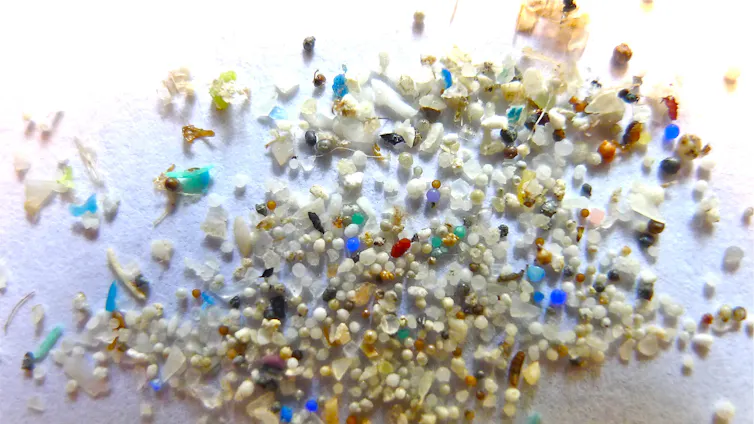
Sarah J. Morath, Wake Forest University Microplastics seem to be everywhere – in the air we breathe, the water we drink, the food we eat. They have turned up in human organs, blood, testicles, placentas and even brains. While the full health consequences of that exposure are not yet known, researchers are exploring potential links between microplastics and negative health effects such as male infertility, inflammation, liver disease and other metabolic problems, and heart attack or stroke. Countries have tried for the past few years to write a global plastics treaty that might reduce human exposure to plastic particles and their harm to wildlife and ecosystems, but the latest negotiations collapsed in August 2025. Most plastics are made with chemicals from fossil fuels, and oil-producing countries, including the U.S., have opposed efforts that might limit plastics production. While U.S. and global solutions seem far off, policies to limit harm from microplastics are gaining traction at the state and local levels.Marine animals ingest microplastics from the water and as they’re eating. These were found in marine animals at the Hellenic Centre for Marine Research near Athens, Greece, in 2025.Milos Bicanski/Getty Images As an environmental lawyer and author of the book “Our Plastic Problem and How to Solve It,” I see four promising policy strategies.
Banning added microplastics: Glitter, confetti and turf
Some microplastics are deliberately manufactured to be small and added to products. Think glitter in cosmetics, confetti released at celebrations and plastic pellet infill, used between the blades in turf fields to provide cushion and stability. These tiny plastics inevitably end up in the environment, making their way into the air, water and soil, where they can be inhaled or ingested by humans and other organisms. California has proposed banning plastic glitter in personal care products. No other state has pursued glitter, however some cities, such as Boca Raton, Florida, have restricted plastic confetti. In 2023, the European Union passed a ban on all nonbiodegradable plastic glitter as well as microplastics intentionally added to products.Personal care products, particularly makeup, have added glitter in recent years. However, when that makeup is washed off, it often goes down drains and into wastewater, adding to plastics in the environment.Rich Fury/Invision/AP Artificial turf has also come under scrutiny. Although turf is popular for its low maintenance, these artificial fields shed microplastics. European regulators targeted turf infill through the same law for glitter, and municipalities in Connecticut and Massachusetts are considering local bans.Infill flies up from artificial turf as a high school soccer player kicks the ball in 2022.Isaac Wasserman for The Washington Post via Getty Images Rhode Island’s proposed law, which would ban all intentionally added microplastics by 2029, is broad enough to include glitter, turf and confetti.
Reducing secondary microplastics: Textiles and tires
Most microplastics don’t start small; rather, they break off from larger items. Two of the biggest culprits of secondary microplastics are synthetic clothing and vehicle tires. A study in 2019 estimated that textiles accounted for 35% of all microplastics entering the ocean – shed from polyester, nylon or acrylic clothing when washed. Microplastics can carry chemicals and other pollutants, which can bioaccumulate up the food chain. In an effort to capture the fibers before they are released, France will require filters in all new washing machines by 2029.A scientist holds a sample showing microfibers captured during a washing machine cycle.Owen Humphreys/PA Images via Getty Images Several U.S. states, including Oregon, Illinois, New York, New Jersey and Pennsylvania, are considering similar legislation. California came close in 2023, passing legislation to require microfiber filters for washing machines, but it was ultimately vetoed due to concerns about the cost of adding the filters. Even so, data submitted in support of the bill showed that such filters could cut microplastic releases from laundry by nearly 80%. Some states, such as California and New York, are considering warnings on clothing made with synthetic fibers that would alert consumers to the shedding of microplastics. Tires are another large source of microplastics. As they wear down, tires release millions of tons of particles annually, many of which end up in rivers and oceans. These particles include 6PPD-quinone, a chemical linked to mass die-offs of salmon in the Pacific Northwest.Synthetic rubber in vehicle tires shed particles into the environment as the tires wear down.Wenson Wei/Wikimedia Commons, CC BY One approach would be to redesign the product to include safer alternatives. California’s Department of Toxic Substances Control recently added 6PPD-quinone to its priority product list, requiring manufacturers to explain how they will either redesign their product or remove it from the market.
Regulating disposal
Microplastics can also be dealt with at the disposal stage. Disposable wipes, for example, contain plastic fibers but are still flushed down toilets, clogging pipes and releasing microplastics. States such as New York, California and Michigan have passed “no-flush” labeling laws requiring clear warnings on packaging, alerting consumers to dispose of these wipes another way. Construction sites also contribute to local microplastic pollution. Towns along the New Jersey shore have enacted ordinances that require builders to prevent microplastics from entering storm drains that can carry them to waterways and the ocean. Such methods include using saws and drills with vacuums to reduce the release of microplastics and cleaning worksites each day. Oregon and Colorado have new producer responsibility laws that require manufacturers that sell products in plastic packaging to fund recycling programs. California requires manufacturers of expanded polystyrene plastic products to ensure increasing levels of recycling of their products.
Statewide strategies and disclosure laws
Some states are experimenting with broader, statewide strategies based on research. California’s statewide microplastic strategy, adopted in 2022, is the first of its kind. It requires standardized testing for microplastics in drinking water and sets out a multiyear road map for reducing pollution from textiles, tires and other sources. California has also begun treating microplastics themselves as a “chemical of concern.” That shifts disclosure and risk assessment obligations to manufacturers, rather than leaving the burden on consumers or local governments. Other states are pursuing statewide strategies. Virginia, New Jersey and Illinois have considered bills to monitor microplastics in drinking water. A Minnesota bill would study microplastics in meat and poultry, and the findings and recommendations could influence future consumer safety regulations in the state. State and local initiatives in the U.S. and abroad – be they bans, labels, disclosures or studies – can help keep microplastics out of our environment and lay the foundation for future large-scale regulation.
Federal ripple effects
These state-level initiatives are starting to influence policymakers in Washington. In June 2025, the U.S. House passed the bipartisan WIPPES Act, modeled on state “no-flush” laws, and sent it to the Senate for consideration. Another bipartisan bill was introduced in July 2025, the Microplastic Safety Act, which would direct the FDA to research microplastics’ human health impacts, particularly on children and reproductive systems. Proposals to require microfiber filters in washing machines, first tested at the state level, are also being considered at the federal level. This pattern is not new. A decade ago, state bans on wash-off cosmetic microbeads paved the way for the Microbead-Free Waters Act of 2015, the only federal law to date that directly bans a type of microplastic. That history suggests today’s state and local actions could again catalyze broader national reform.
Small steps with big impact
Microplastics are a daunting challenge: They come from many sources, are hard to clean up once released, and pose risks to our health and the environment. While global treaties and sweeping federal legislation remain out of reach, local and state governments are showing a path forward. These microsolutions may not eliminate microplastics, but they can reduce pollution in immediate and measurable ways, creating momentum for larger reforms. Sarah J. Morath, Professor of Law and Associate Dean for International Affairs, Wake Forest University This article is republished from The Conversation under a Creative Commons license. Read the original article.
The science section of our news blog STM Daily News provides readers with captivating and up-to-date information on the latest scientific discoveries, breakthroughs, and innovations across various fields. We offer engaging and accessible content, ensuring that readers with different levels of scientific knowledge can stay informed. Whether it’s exploring advancements in medicine, astronomy, technology, or environmental sciences, our science section strives to shed light on the intriguing world of scientific exploration and its profound impact on our daily lives. From thought-provoking articles to informative interviews with experts in the field, STM Daily News Science offers a harmonious blend of factual reporting, analysis, and exploration, making it a go-to source for science enthusiasts and curious minds alike. https://stmdailynews.com/category/science/
A modular, precast system of concrete ‘rings’ can be connected in different ways to build a range of models of energy-efficient homes. Pablo Moyano Fernández, CC BY-SA
To spur the construction of affordable, resilient homes, the future is concrete
Pablo Moyano Fernández, Washington University in St. Louis Wood is, by far, the most common material used in the U.S. for single-family home construction. But wood construction isn’t engineered for long-term durability, and it often underperforms, particularly in the face of increasingly common extreme weather events. In response to these challenges, I believe mass-produced concrete homes can offer affordable, resilient housing in the U.S. By leveraging the latest innovations of the precast concrete industry, this type of homebuilding can meet the needs of a changing world.
Wood’s rise to power
Over 90% of the new homes built in the U.S. rely on wood framing. Wood has deep historical roots as a building material in the U.S., dating back to the earliest European settlers who constructed shelters using the abundant native timber. One of the most recognizable typologies was the log cabin, built from large tree trunks notched at the corners for structural stability.Log cabins were popular in the U.S. during the 18th and 19th centuries.Heritage Art/Heritage Images via Getty Images In the 1830s, wood construction underwent a significant shift with the introduction of balloon framing. This system used standardized, sawed lumber and mass-produced nails, allowing much smaller wood components to replace the earlier heavy timber frames. It could be assembled by unskilled labor using simple tools, making it both accessible and economical. In the early 20th century, balloon framing evolved into platform framing, which became the dominant method. By using shorter lumber lengths, platform framing allowed each floor to be built as a separate working platform, simplifying construction and improving its efficiency. The proliferation and evolution of wood construction helped shape the architectural and cultural identity of the nation. For centuries, wood-framed houses have defined the American idea of home – so much so that, even today, when Americans imagine a house, they typically envision one built of wood.A suburban housing development from the 1950s being built with platform framing.H. Armstrong Roberts/ClassicStock via Getty Images Today, light-frame wood construction dominates the U.S. residential market. Wood is relatively affordable and readily available, offering a cost-effective solution for homebuilding. Contractors are familiar with wood construction techniques. In addition, building codes and regulations have long been tailored to wood-frame systems, further reinforcing their prevalence in the housing industry. Despite its advantages, wood light-frame construction presents several important limitations. Wood is vulnerable to fire. And in hurricane- and tornado-prone regions, wood-framed homes can be damaged or destroyed. Wood is also highly susceptible to water-related issues, such as swelling, warping and structural deterioration caused by leaks or flooding. Vulnerability to termites, mold, rot and mildew further compromise the longevity and safety of wood-framed structures, especially in humid or poorly ventilated environments.
The case for concrete
Meanwhile, concrete has revolutionized architecture and engineering over the past century. In my academic work, I’ve studied, written and taught about the material’s many advantages. The material offers unmatched strength and durability, while also allowing design flexibility and versatility. It’s low-cost and low-maintenance, and it has high thermal mass properties, which refers to the material’s ability to absorb and store heat during the day, and slowly release it during the cooler nights. This can lower heating and cooling costs. Properly designed concrete enclosures offer exceptional performance against a wide range of hazards. Concrete can withstand fire, flooding, mold, insect infestation, earthquakes, hail, hurricanes and tornadoes. It’s commonly used for home construction in many parts of the world, such as Europe, Japan, Mexico, Brazil and Argentina, as well as India and other parts of Southeast Asia. However, despite their multiple benefits, concrete single-family homes are rare in the U.S. That’s because most concrete structures are built using a process called cast-in-place. In this technique, the concrete is formed and poured directly at the construction site. The method relies on built-in-place molds. After the concrete is cast and cured over several days, the formwork is removed. This process is labor-intensive and time-consuming, and it often produces considerable waste. This is particularly an issue in the U.S., where labor is more expensive than in other parts of the world. The material and labor cost can be as high as 35% to 60% of the total construction cost. Portland cement, the binding agent in concrete, requires significant energy to produce, resulting in considerable carbon dioxide emissions. However, this environmental cost is often offset by concrete’s durability and long service life. Concrete’s design flexibility and structural integrity make it particularly effective for large-scale structures. So in the U.S., you’ll see it used for large commercial buildings, skyscrapers and most highways, bridges, dams and other critical infrastructure projects. But when it comes to single-family homes, cast-in-place concrete poses challenges to contractors. There are the higher initial construction costs, along with a lack of subcontractor expertise. For these reasons, most builders and contractors stick with what they know: the wood frame.
A new model for home construction
Precast concrete, however, offers a promising alternative. Unlike cast-in-place concrete, precast systems allow for off-site manufacturing under controlled conditions. This improves the quality of the structure, while also reducing waste and labor. The CRETE House, a prototype I worked on in 2017 alongside a team at Washington University in St. Louis, showed the advantages of a precast home construction. To build the precast concrete home, we used ultra-high-performance concrete, one of the latest advances in the concrete industry. Compared with conventional concrete, it’s about six times stronger, virtually impermeable and more resistant to freeze-thaw cycles. Ultra-high-performance concrete can last several hundred years. The strength of the CRETE House was tested by shooting a piece of wood at 120 mph (193 kph) to simulate flying debris from an F5 tornado. It was unable to breach the wall, which was only 2 inches (5.1 centimeters) thick.The wall of the CRETE House was able to withstand a piece of wood fired at 120 mph (193 kph). Building on the success of the CRETE House, I designed the Compact House as a solution for affordable, resilient housing. The house consists of a modular, precast concrete system of “rings” that can be connected to form the entire structure – floors, walls and roofs – creating airtight, energy-efficient homes. A series of different rings can be chosen from a catalog to deliver different models that can range in size from 270 to 990 square feet (25 to 84 square meters). The precast rings can be transported on flatbed trailers and assembled into a unit in a single day, drastically reducing on-site labor, time and cost. Since they’re built using durable concrete forms, the house can be easily mass-produced. When precast concrete homes are mass-produced, the cost can be competitive with traditional wood-framed homes. Furthermore, the homes are designed to last far beyond 100 years – much longer than typical wood structures – while significantly lowering utility bills, maintenance expenses and insurance premiums. The project is also envisioned as an open-source design. This means that the molds – which are expensive – are available for any precast producer to use and modify.The Compact House is made using ultra-high-performance concrete.Pablo Moyano Fernández, CC BY-SA
Leveraging a network that’s already in place
Two key limitations of precast concrete construction are the size and weight of the components and the distance to the project site. Precast elements must comply with standard transportation regulations, which impose restrictions on both size and weight in order to pass under bridges and prevent road damage. As a result, components are typically limited to dimensions that can be safely and legally transported by truck. Each of the Compact House’s pieces are small enough to be transported in standard trailers. Additionally, transportation costs become a major factor beyond a certain range. In general, the practical delivery radius from a precast plant to a construction site is 500 miles (805 kilometers). Anything beyond that becomes economically unfeasible. However, the infrastructure to build precast concrete homes is already largely in place. Since precast concrete is often used for office buildings, schools, parking complexes and large apartments buildings, there’s already an extensive national network of manufacturing plants capable of producing and delivering components within that 500-mile radius. There are other approaches to build homes with concrete: Homes can use concrete masonry units, which are similar to cinder blocks. This is a common technique around the world. Insulated concrete forms involve rigid foam blocks that are stacked like Lego bricks and are then filled with poured concrete, creating a structure with built-in insulation. And there’s even 3D-printed concrete, a rapidly evolving technology that is in its early stages of development. However, none of these use precast concrete modules – the rings in my prototypes – and therefore require substantially longer on-site time and labor. To me, precast concrete homes offer a compelling vision for the future of affordable housing. They signal a generational shift away from short-term construction and toward long-term value – redefining what it means to build for resilience, efficiency and equity in housing.An image of North St. Louis, taken from Google Earth, showing how vacant land can be repurposed using precast concrete homes.Pablo Moyano Fernández, CC BY-SAThis article is part of a series centered on envisioning ways to deal with the housing crisis.Pablo Moyano Fernández, Assistant Professor of Architecture, Washington University in St. Louis This article is republished from The Conversation under a Creative Commons license. Read the original article.