Connect with us

Health

How to keep dementia from robbing your loved ones of their sense of personhood – tips for caregivers

Learn evidence-based communication strategies to preserve your loved one’s sense of self through dementia’s progression. Discover how to adjust conversations for early, middle, and late-stage dementia while maintaining meaningful connection and dignity.

Published

on

How to keep dementia from robbing your loved ones of their sense of personhood – tips for caregivers
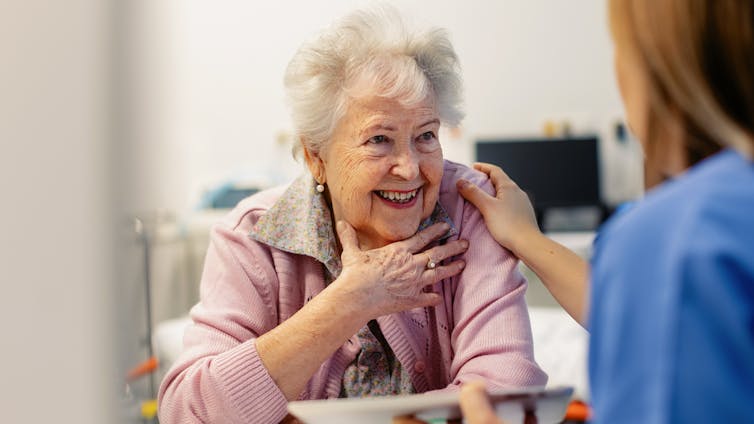
Different communication styles are needed for the progressive phases of dementia.
Halfpoint Images/Moment via Getty Images

How to keep dementia from robbing your loved ones of their sense of personhood – tips for caregivers

R. Amanda Cooper, University of Connecticut

Every three seconds, someone in the world develops dementia. There are over 6 million people living with dementia in the U.S. and 57 million globally.

These figures will only increase in the coming years, as rates of dementia are predicted to double by 2060. If you don’t know someone affected by dementia, you probably will at some point.

Dementia is incredibly difficult both for the person experiencing it and for their loved ones, not only because of the symptoms of the disease but also because of the social stigma associated with cognitive decline. Experiencing stigma makes it difficult for people with dementia to ask for help, increases anxiety and depression, and ultimately leads to social isolation.

Dementia-related stigma is perpetuated through media messages that portray people with dementia as mindless and incapable, as well as through daily interactions in which others dismiss and dehumanize the person living with dementia.

These forms of invalidation – usually unintentional – accelerate and intensify the loss of self-worth and identity that dementia patients are already experiencing.

Fortunately, educating and spreading awareness can help reduce behaviors that propagate stigma and dehumanizing treatment of people with dementia.

As a social scientist and researcher in interpersonal communication and family caregiving, I explore the social and relational side of dementia. Through my work with these patients and families, I’ve learned that reducing stigma and supporting self-worth for people who have dementia is often done through daily conversations.

Back shot of two seniors sitting on edge of bed in front of window, speaking to one another.
People living with dementia can continue to have fulfilling interactions when caregivers carry out person-centered care.
Jessie Casson/DigitalVision via Getty Images

How is dementia defined?

Dementia is an umbrella term that refers to a family of cognitive conditions involving memory loss, difficulty thinking or processing information, changes in ability to communicate and challenges with managing daily tasks.

The most common form of dementia is Alzheimer’s disease, but there are several other forms of dementia that can severely affect a person’s quality of life and that of their loved ones.

Most forms of dementia are progressive, meaning that the symptoms of the disease get steadily worse over time. A person with dementia can live with the disease for several years, and their symptoms will shift as the disease progresses.

People in the early stages of dementia, including mild cognitive impairment, continue to engage socially and participate in many of the activities they have always done. In the middle stage of the disease, people often need more help from others to complete daily tasks and may have more difficulty holding conversations. In the late stage, people with dementia are dependent on others and often lose the ability to communicate verbally.

Advertisement
Get More From A Face Cleanser And Spa-like Massage

Despite the cognitive declines that come with dementia, people living with dementia can maintain many of their former abilities as the disease progresses. Even in the late stages, research shows that people with dementia can understand tone of voice and nonverbal communication such as body language, facial expressions and gentle touch.

This makes it clear that people with dementia can continue having meaningful social connections and a sense of self-worth even as their disease progresses.

Senior man with dementia sitting at table with smiling young girl and colored pencils.
Engaging in meaningful activities that are appropriate to the person’s stage of dementia can help foster a sense of self.
Jessie Casson/DigitalVision

Focusing care around the person

In the 1990s, psychologist Tom Kitwood, who studied dementia patients in long-term care settings, introduced the notion of “personhood.” Personhood is a recognition of a person’s unique experiences and individual worth. He had observed that residents with dementia were sometimes treated as objects rather than people and were dismissed as being “no longer there” mentally. In response, Kitwood advocated for a new model of person-centered care.

In contrast to the medical model of care that was standard at the time, person-centered care aims to provide people with dementia comfort, attachment, inclusion, occupation and identity.

Comfort includes both physical and psychological comfort, ensuring that the person with dementia feels safe and is as pain-free as possible. Attachment and inclusion have to do with supporting a person with dementia’s closest relationships and making sure they feel included in social activities.

Occupation is about giving the person meaningful activities that are suited to their abilities, while identity is about preserving their unique sense of self. According to Kitwood, each of these elements of personhood can be upheld or threatened through a person’s interactions with others.

I find Kitwood’s work particularly important because it suggests that communication is at the heart of personhood.

Communicating to support personhood

So how can family members and friends communicate with their loved one with dementia to help preserve their sense of self?

Researchers have identified several evidence-based communication strategies that support person-centered care both in long-term care settings and within the family.

These include:

Communication shifts as the disease progresses

Supporting personhood requires adjusting to the communication abilities of the person with dementia. Some communication strategies are helpful in one stage of the disease but not in others.

In a recent study, my team and I found that asking the person with dementia to recall the past was affirming for those who were early in the disease and who could still recall the past. But for people who were in later stages of the disease, asking them “Do you remember?” was received more like a test of memory and led to frustration or confusion. Similarly, we found that suggesting words to prompt recall was helpful later in the disease but demeaning for people who were in earlier stages of the disease who could still find their words without help.

Advertisement
Get More From A Face Cleanser And Spa-like Massage

Providing more help in conversation than is needed can lead people with dementia to withdraw, whereas appropriately adjusting to a person’s communication abilities can empower them to continue to engage socially.

Ultimately, supporting a person with dementia’s sense of self and self-worth in conversations is about finding a communication sweet spot – in other words, matching your approach to their current capabilities.

Changing your default approach to conversations can be challenging, but making simple communication changes can make all the difference. Meaningful conversations are the key to helping your loved one live their days to the fullest, with a sense of personal worth and a feeling of meaningful connection with others.

R. Amanda Cooper, Assistant Professor of Communication, University of Connecticut

This article is republished from The Conversation under a Creative Commons license. Read the original article.

STM Daily News is a multifaceted podcast that explores a wide range of topics, from life and consumer issues to the latest in food and beverage trends. Our discussions dive into the realms of science, covering everything from space and Earth to nature, artificial intelligence, and astronomy. We also celebrate the amateur sports scene, highlighting local athletes and events, including our special segment on senior Pickleball, where we report on the latest happenings in this exciting community. With our diverse content, STM Daily News aims to inform, entertain, and engage listeners, providing a comprehensive look at the issues that matter most in our daily lives. https://stories-this-moment.castos.com/


Discover more from Daily News

Subscribe to get the latest posts sent to your email.

Continue Reading
Advertisement Winter Super Sale – Enjoy 25% Off Your Entire Purchase + Free Shipping. Use Code: BPWARM25
Click to comment

Leave a Reply

Your email address will not be published. Required fields are marked *

health and wellness

5 Trends in Heart Health Among Younger Adults: Why Your CoQ10 Level Matters

Published

on

17840 A detail intro

(Feature Impact) Heart disease is something many adults push to the back of their minds if they are not experiencing symptoms; a concern for “later” in life. However, that mindset may be changing. New research suggests younger generations are thinking about their cardiovascular health earlier and with greater urgency.

They’re right to be thinking about it, too. Data from the American Heart Association shows heart disease is still the No. 1 killer of Americans. In fact, someone dies from cardiovascular disease every 34 seconds in the United States.

Risk factors such as obesity, high blood pressure, diabetes, and kidney disease are on the rise, too. Nearly half of U.S. adults have high blood pressure (47%), and obesity (42%), and more than half (57%) have type 2 diabetes or prediabetes.

Despite growing concern about heart health, many adults remain unclear about their personal risk. In fact, a majority of respondents (62%) in a survey conducted by Atomik Research on behalf of Doctor’s Best said they don’t know their current risk for heart disease. To provide context on these findings and highlight emerging heart health trends, Dr. Tania Elliott, a dual board-certified physician in internal medicine, offers some insights.

Feeling Fatigue

In the study, only 50% of respondents reported feeling energetic on a daily basis. Among those who reported feeling fatigued, 46% listed stress as their top perceived contributor, followed by insufficient sleep (38%), both of which are closely tied to cardiovascular health.

Troubling Symptoms

Among Gen Z respondents, 25% reported having shortness of breath during activity or while lying down, compared to just 16% of Baby Boomers, which is commonly associated with compromised heart health.

17840 B detail embed2Statins and Youth

Statins, which help address cardiovascular risk factors such as high cholesterol, are among the most commonly prescribed drugs in America, with more than 92 million Americans currently taking them, according to the Cleveland Clinic. Although most survey respondents (76%) aren’t currently taking a statin, 17% of adults ages 25-34 reported using statin therapy, which is an unexpectedly high proportion given their age and the group’s low anticipated risk of cardiovascular disease.

Side Effects of Statins

Among those taking statins, which are considered a first-line treatment for treating high cholesterol and reducing heart disease risk, 54% reported experiencing side effects, particularly muscle pain (23%) and fatigue (31%). However, taking statins can also affect levels of Coenzyme Q10 (CoQ10), which supports cellular energy and cardiovascular function.

All About CoQ10

Cells use CoQ10 to produce energy and detoxify. Studies have shown people with heart failure who took CoQ10 had around a 50% reduction in mortality. Despite this, awareness is low. Nearly two-thirds (66%) of respondents had never heard of CoQ10 and that number jumps to 76% of adults ages 25-34. Additionally, only a small percentage of respondents (8%) who were on a statin reported having their CoQ10 level tested.

“We have a real opportunity to help younger adults take a more proactive approach to heart health,” Elliott said. “CoQ10 plays a critical role in cellular energy production and heart muscle function, and it can decline with age and statin use.”

If you’re among the 71% of survey respondents who expressed a willingness to learn more about improving your heart health, talk with your health care provider and visit DoctorsBest.com to learn more.

Strategies to Support Heart Health

While some risk factors for heart disease, like age and family history, are out of your control, you can make lifestyle changes to help lower your risk:

Advertisement
Get More From A Face Cleanser And Spa-like Massage
  • Eat Whole Foods: A heart-healthy eating plan includes plenty of lean proteins as well as fruits, vegetables, beans, whole grains and foods high in omega-3s, such as salmon, nuts and plant oils.
  • Know Your CoQ10 Levels: If you’re low, look for a high-quality, bioavailable formula, like Doctor’s Best High Absorption CoQ10 with BioPerine, which supports energy production and muscle function.
  • Get Moving: The American Heart Association recommends 150 minutes of moderate-intensity or 75 minutes of vigorous aerobic activity per week to help control weight and lower the risk for conditions that negatively impact the heart.

Photo courtesy of Shutterstock (woman with hand over chest)


collect?v=1&tid=UA 482330 7&cid=1955551e 1975 5e52 0cdb 8516071094cd&sc=start&t=pageview&dl=http%3A%2F%2Ftrack.familyfeatures
track

SOURCE:

Doctor’s Best

Our Lifestyle section on STM Daily News is a hub of inspiration and practical information, offering a range of articles that touch on various aspects of daily life. From tips on family finances to guides for maintaining health and wellness, we strive to empower our readers with knowledge and resources to enhance their lifestyles. Whether you’re seeking outdoor activity ideas, fashion trends, or travel recommendations, our lifestyle section has got you covered. Visit us today at https://stmdailynews.com/category/lifestyle/ and embark on a journey of discovery and self-improvement.


Discover more from Daily News

Subscribe to get the latest posts sent to your email.

Continue Reading

Lifestyle

How to Practice Thoughtful Grief Etiquette Online

Grief experts advise caution in sharing condolences and loss-related information on social media, emphasizing the importance of prioritizing the grieving family’s needs. Thoughtful posting practices include waiting for family approval, reaching out privately first, and avoiding speculation about the cause of death. Compassionate communication is essential in these sensitive situations.

Published

on

How to Practice Thoughtful Grief Etiquette Online

(Feature Impact) News of a death can spread online in seconds – often before families have notified close family members privately. That’s why grief experts urge people to rethink how they share condolences, tributes and loss-related information on social media, particularly during the winter months when grief can feel especially isolating.

“Grief etiquette is about putting the needs of the grieving family first, not our urge to say something publicly,” said Dr. Camelia L. Clarke, National Funeral Directors Association (NFDA) spokesperson, funeral director and grief educator with nearly 30 years of experience. “Just because information can be shared instantly doesn’t mean it should be.”

Social media has become a common place for sharing condolences, tributes and memories. However, grief experts caution that, without thoughtful consideration, online posts can unintentionally cause harm. Knowing when to post, what to say and when to remain silent can make a meaningful difference for families experiencing loss.

Consider this advice from the experts at the NFDA.

Grief Etiquette in the Digital Age

Grief etiquette refers to the unspoken guidelines for how individuals acknowledge death, loss and mourning, particularly online.

According to Clarke, one of the most important principles is restraint.

“When a death is shared online too quickly, families can feel exposed and overwhelmed at a moment when they’re still processing the loss themselves,” she said. “Waiting is an act of compassion.”

Best Practices for Posting About Loss Online

As social media continues to play a role in modern mourning, grief professionals encourage users to pause before posting and consider a few key guidelines:

  • Let the family lead. Don’t post about a death until the immediate family has made it public.
  • Ask permission. Obtain consent before sharing photos, stories or tributes.
  • Reach out privately first. A direct message, call or handwritten note can be more meaningful than a public comment.
  • Avoid speculation. Don’t ask about or share details regarding the cause of death.
  • Offer ongoing support. Grief extends far beyond the first days or weeks after a loss.

What to Say (and Avoid)

When expressing condolences online, experts recommend simplicity, sincerity and sensitivity. Messages that acknowledge loss without attempting to explain or minimize it are often the most supportive.

Helpful phrases include:

  • “I’m sorry for your loss.”
  • “Thinking of you and your family.”
  • “I’m here if you want to talk or need anything.”

By contrast, well-meaning cliches can unintentionally cause harm. Phrases such as “They’re in a better place” or “Everything happens for a reason” may reflect the speaker’s beliefs, but they can feel dismissive to someone grieving.

“Grieving people don’t need answers – they need presence,” Clarke said. “Listening matters more than saying the perfect thing.”

Resources for Families and Friends

As digital spaces continue to shape how people communicate during life’s most difficult moments, experts agree empathy, patience and respect remain timeless.

Advertisement
Get More From A Face Cleanser And Spa-like Massage

“Grief is deeply personal,” Clarke said. “When we slow down and lead with compassion, we honor both the person who has died and those who are left to grieve.”

To learn more about how to support a grieving person and access free, expert-reviewed resources for navigating grief, expressing condolences and supporting loved ones before, during and after a loss, visit RememberingALife.com, an initiative of the NFDA.

Photo courtesy of Shutterstock

    <img src="https://ssl.google-analytics.com/collect?v=1&amp;tid=UA-482330-7&amp;cid=1955551e-1975-5e52-0cdb-8516071094cd&amp;sc=start&amp;t=pageview&amp;dl=http%3A%2F%2Ftrack.familyfeatures.com%2F17832%2F10240&amp;dt=HOW-TO-PRACTICE-THOUGHTFUL-GRIEF-ETIQUETTE-ONLINE" />
<img src="https://erp.featureimpact.com/api/v1/tracking/17832/10240/track.gif" />

SOURCE:

National Funeral Directors Association


Discover more from Daily News

Subscribe to get the latest posts sent to your email.

Continue Reading

Food and Beverage

Fresh Thinking About Frozen: Bring Quality Meals to the Table While Cutting Food Waste and Stretching Your Budget

For many families, the freezer is for last-minute meal options. However, new federal nutrition guidance and growing scientific consensus reveal a different reality: frozen foods can be the starting point for healthy eating, not a backup plan.

Published

on

Last Updated on February 21, 2026 by Daily News Staff

For many families, the freezer is for last-minute meal options. However, new federal nutrition guidance and growing scientific consensus reveal a different reality: frozen foods can be the starting point for healthy eating, not a backup plan.

(Feature Impact) The key to easy preparation of high-quality meals, wasting less food and saving money may already be sitting in your kitchen.

For many families, the freezer is for last-minute meal options. However, new federal nutrition guidance and growing scientific consensus reveal a different reality: frozen foods can be the starting point for healthy eating, not a backup plan. That’s why the American Frozen Food Institute (AFFI) is launching “Fresh Thinking About Frozen,” a campaign to help families discover these benefits of frozen foods.

Making Nutrition Achievable

The recently released 2025-2030 Dietary Guidelines for Americans, the nation’s top nutrition advice, emphasizes portion control and nutrient-dense foods. Frozen options deliver on both counts.

Families who keep frozen produce on hand tend to eat more fruits and vegetables overall. Pre-portioned frozen meals also help people eat what they need without overdoing it. Plus, the convenience factor matters: frozen berries are ready for a morning smoothie, pre-cut frozen vegetables can be added to tonight’s stir-fry and a balanced frozen meal can be quickly paired with a salad.

That isn’t cutting corners. It’s being smart on how best to feed a family well.

17833 detail embed2
Freezing Hits the Pause Button on Fresh Foods

Freezing food only changes a food’s temperature, not its nutrition. Freezing keeps food close to its original state without requiring additives.

Produce begins to lose nutritional value right after it’s harvested. Freezing fruits and vegetables hours after harvest pauses nutrient degradation and locks in the vitamins and minerals, so the food remains farm fresh even as it travels across the country to your grocery store. Frozen meals are similarly made with real ingredients and turned into just-cooked recipes then frozen for families to eat when they’re ready.

The nutrition community understands this. A recent survey conducted by AFFI found 94% of registered dietitians agree frozen fruits and vegetables are just as nutritious as their fresh counterparts. Another 92% said frozen foods offer a variety of nutritious meal offerings. These findings are central to the “Fresh Thinking About Frozen” message: Frozen is not second-best. It’s simply smart.

Solving the Food Waste Problem

Nearly 40% of food in the United States gets thrown away, according to the nonprofit ReFED. That translates to roughly $1,500 per year per household, straight into the trash along with unused produce and forgotten leftovers.

Frozen helps fix that problem. Eight in 10 consumers agree buying frozen helps reduce food waste at home, AFFI research finds. The reason is simple: You use what you need, when you need it and the rest stays perfectly preserved. No more dreading the refrigerator cleanouts and feeling guilty over the uneaten food going into the trashcan.

Time for Fresh Thinking

Families already making this shift aren’t settling for less. They’re strategic about nutrition, budget and time. They integrate the freezer into regular meal planning. They feel confident about providing quality foods that are simply frozen.

Advertisement
Get More From A Face Cleanser And Spa-like Massage

The freezer isn’t a place of last resort. It’s a tool for eating well in real life. Visit frozenadvantage.org/FTAF for tips, recipes and resources to make the most of your freezer.

Photos courtesy of Shutterstock


collect?v=1&tid=UA 482330 7&cid=1955551e 1975 5e52 0cdb 8516071094cd&sc=start&t=pageview&dl=http%3A%2F%2Ftrack.familyfeatures

SOURCE:

American Frozen Food Institute

At our core, we at STM Daily News, strive to keep you informed and inspired with the freshest content on all things food and beverage. From mouthwatering recipes to intriguing articles, we’re here to satisfy your appetite for culinary knowledge.

Visit our Food & Drink section to get the latest on Foodie News and recipes, offering a delightful blend of culinary inspiration and gastronomic trends to elevate your dining experience. https://stmdailynews.com/food-and-drink/

Author

HUNGRY FOR MORE?

Discover a feast for your senses with our Food & Drink Blog, a tantalizing part of STM Daily News. Get the latest articles, recipes, and foodie news delivered straight to your inbox. Satisfaction guaranteed!

SIGN UP TO RECEIVE THE LATEST RECIPES & FOODIE NEWS, PLUS SOME EXCLUSIVE GOODIES!

We don’t spam! Read our privacy policy for more info.

Food and Drink
Advertisement
Get More From A Face Cleanser And Spa-like Massage

Discover more from Daily News

Subscribe to get the latest posts sent to your email.

Continue Reading

Trending