Connect with us

Space and Tech

AI Spacecraft Propulsion: Machine Learning’s Role in Space Travel

AI Spacecraft Propulsion: Discover how AI and machine learning are transforming spacecraft propulsion systems, from nuclear thermal engines to fusion technology, making interplanetary travel faster and more efficient.

Published

on

AI Spacecraft Propulsion: Machine Learning's Role in Space Travel
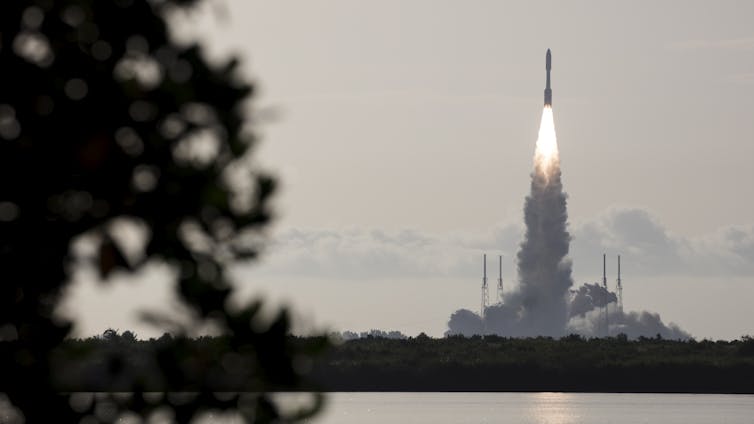
Propulsion technology helps rockets get off the ground.
Joel Kowsky/NASA via AP

AI Spacecraft Propulsion: Machine Learning’s Role in Space Travel

Marcos Fernandez Tous, University of North Dakota; Preeti Nair, University of North Dakota; Sai Susmitha Guddanti, University of North Dakota, and Sreejith Vidhyadharan Nair, University of North Dakota

Every year, companies and space agencies launch hundreds of rockets into space – and that number is set to grow dramatically with ambitious missions to the Moon, Mars and beyond. But these dreams hinge on one critical challenge: propulsion – the methods used to push rockets and spacecraft forward.

To make interplanetary travel faster, safer and more efficient, scientists need breakthroughs in propulsion technology. Artificial intelligence is one type of technology that has begun to provide some of these necessary breakthroughs.

We’re a team of engineers and graduate students who are studying how AI in general, and a subset of AI called machine learning in particular, can transform spacecraft propulsion. From optimizing nuclear thermal engines to managing complex plasma confinement in fusion systems, AI is reshaping propulsion design and operations. It is quickly becoming an indispensable partner in humankind’s journey to the stars.

Machine learning and reinforcement learning

Machine learning is a branch of AI that identifies patterns in data that it has not explicitly been trained on. It is a vast field with its own branches, with a lot of applications. Each branch emulates intelligence in different ways: by recognizing patterns, parsing and generating language, or learning from experience. This last subset in particular, commonly known as reinforcement learning, teaches machines to perform their tasks by rating their performance, enabling them to continuously improve through experience.

As a simple example, imagine a chess player. The player does not calculate every move but rather recognizes patterns from playing a thousand matches. Reinforcement learning creates similar intuitive expertise in machines and systems, but at a computational speed and scale impossible for humans. It learns through experiences and iterations by observing its environment. These observations allows the machine to correctly interpret each outcome and deploy the best strategies for the system to reach its goal.

Reinforcement learning can improve human understanding of deeply complex systems – those that challenge the limits of human intuition. It can help determine the most efficient trajectory for a spacecraft heading anywhere in space, and it does so by optimizing the propulsion necessary to send the craft there. It can also potentially design better propulsion systems, from selecting the best materials to coming up with configurations that transfer heat between parts in the engine more efficiently.

In reinforcement learning, you can train an AI model to complete tasks that are too complex for humans to complete themselves.

Reinforcement learning for propulsion systems

In regard to space propulsion, reinforcement learning generally falls into two categories: those that assist during the design phase – when engineers define mission needs and system capabilities – and those that support real-time operation once the spacecraft is in flight.

Among the most exotic and promising propulsion concepts is nuclear propulsion, which harnesses the same forces that power atomic bombs and fuel the Sun: nuclear fission and nuclear fusion.

Fission works by splitting heavy atoms such as uranium or plutonium to release energy – a principle used in most terrestrial nuclear reactors. Fusion, on the other hand, merges lighter atoms such as hydrogen to produce even more energy, though it requires far more extreme conditions to initiate.
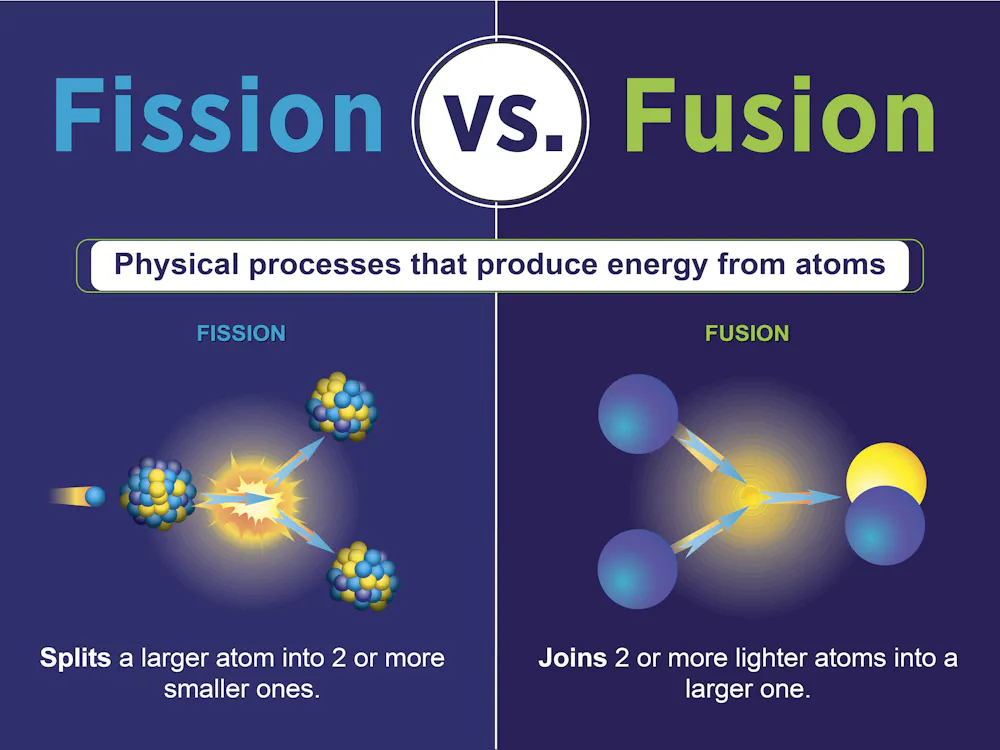
An infographic showing 'fission' on the left, with an atom breaking into two smaller ones and releasing energy. The right shows 'fusion' with two atoms combining together and releasing energy.
Fission splits atoms, while fusion combines atoms.
Sarah Harman/U.S. Department of Energy

Fission is a more mature technology that has been tested in some space propulsion prototypes. It has even been used in space in the form of radioisotope thermoelectric generators, like those that powered the Voyager probes. But fusion remains a tantalizing frontier.

Nuclear thermal propulsion could one day take spacecraft to Mars and beyond at a lower cost than that of simply burning fuel. It would get a craft there faster than electric propulsion, which uses a heated gas made of charged particles called plasma.

Advertisement
Get More From A Face Cleanser And Spa-like Massage

Unlike these systems, nuclear propulsion relies on heat generated from atomic reactions. That heat is transferred to a propellant, typically hydrogen, which expands and exits through a nozzle to produce thrust and shoot the craft forward.

So how can reinforcement learning help engineers develop and operate these powerful technologies? Let’s begin with design.
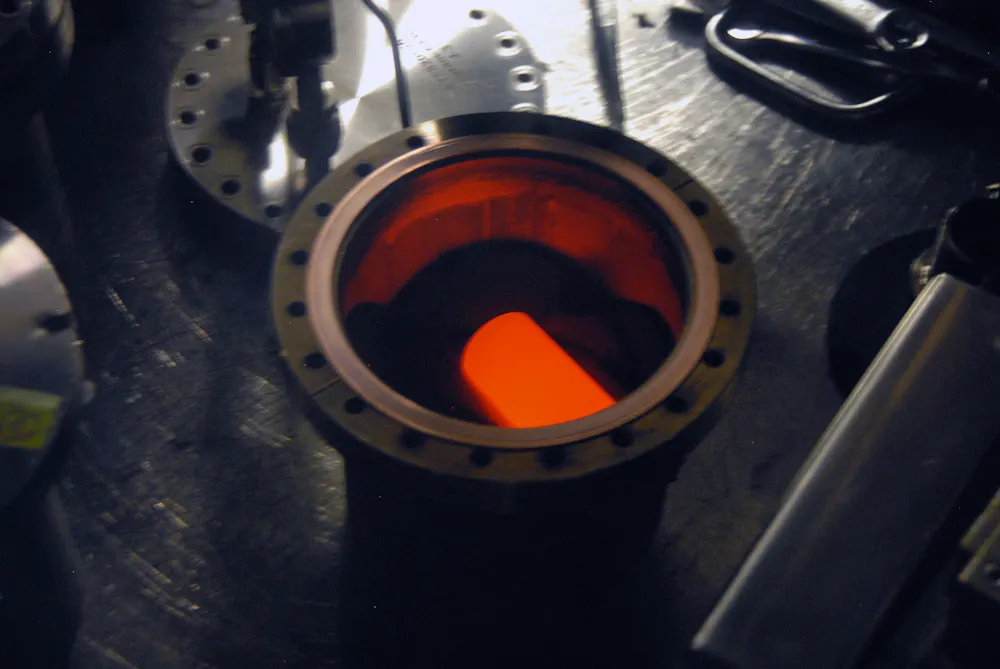
A circular metal container with a glowing cylinder inside.
The nuclear heat source for the Mars Curiosity rover, part of a radioisotope thermoelectric generator, is encased in a graphite shell. The fuel glows red hot because of the radioactive decay of plutonium-238.
Idaho National Laboratory, CC BY

Reinforcement learning’s role in design

Early nuclear thermal propulsion designs from the 1960s, such as those in NASA’s NERVA program, used solid uranium fuel molded into prism-shaped blocks. Since then, engineers have explored alternative configurations – from beds of ceramic pebbles to grooved rings with intricate channels.
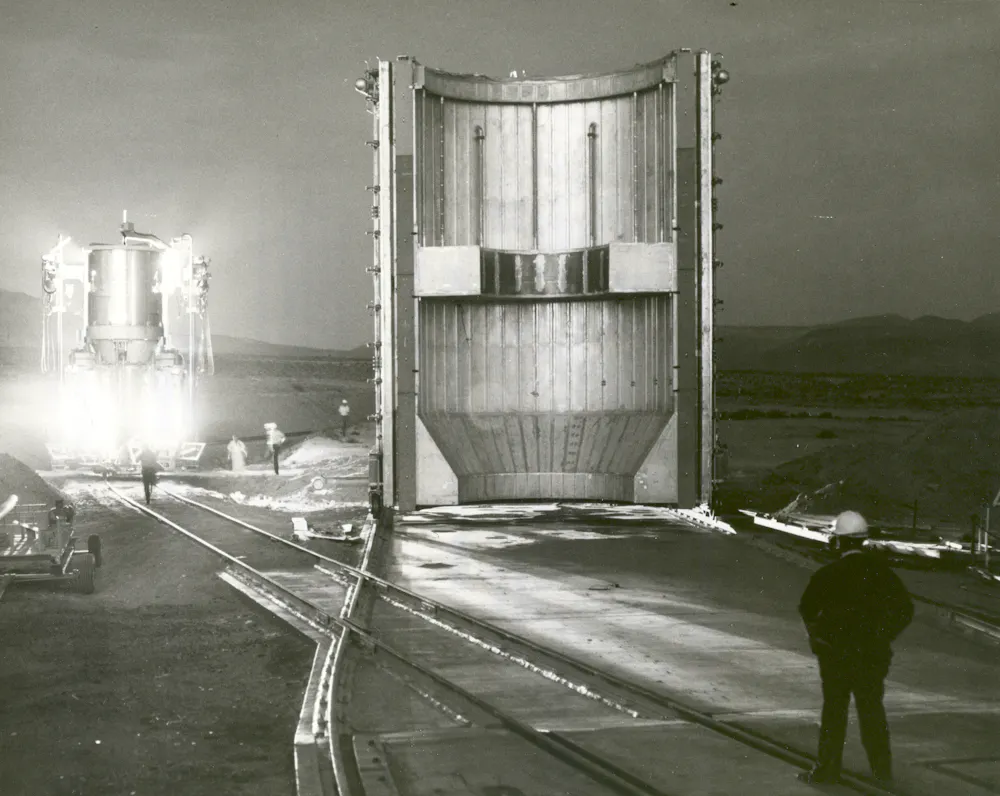
A black and white photo of a large, empty cylindrical structure, with a rocket releasing light in the background.
The first nuclear thermal rocket was built in 1967 and is seen in the background. In the foreground is the protective casing that would hold the reactor.
NASA/Wikipedia

Why has there been so much experimentation? Because the more efficiently a reactor can transfer heat from the fuel to the hydrogen, the more thrust it generates.

This area is where reinforcement learning has proved to be essential. Optimizing the geometry and heat flow between fuel and propellant is a complex problem, involving countless variables – from the material properties to the amount of hydrogen that flows across the reactor at any given moment. Reinforcement learning can analyze these design variations and identify configurations that maximize heat transfer. Imagine it as a smart thermostat but for a rocket engine – one you definitely don’t want to stand too close to, given the extreme temperatures involved.

Reinforcement learning and fusion technology

Reinforcement learning also plays a key role in developing nuclear fusion technology. Large-scale experiments such as the JT-60SA tokamak in Japan are pushing the boundaries of fusion energy, but their massive size makes them impractical for spaceflight. That’s why researchers are exploring compact designs such as polywells. These exotic devices look like hollow cubes, about a few inches across, and they confine plasma in magnetic fields to create the conditions necessary for fusion.

Controlling magnetic fields within a polywell is no small feat. The magnetic fields must be strong enough to keep hydrogen atoms bouncing around until they fuse – a process that demands immense energy to start but can become self-sustaining once underway. Overcoming this challenge is necessary for scaling this technology for nuclear thermal propulsion.

Reinforcement learning and energy generation

However, reinforcement learning’s role doesn’t end with design. It can help manage fuel consumption – a critical task for missions that must adapt on the fly. In today’s space industry, there’s growing interest in spacecraft that can serve different roles depending on the mission’s needs and how they adapt to priority changes through time.

Military applications, for instance, must respond rapidly to shifting geopolitical scenarios. An example of a technology adapted to fast changes is Lockheed Martin’s LM400 satellite, which has varied capabilities such as missile warning or remote sensing.

But this flexibility introduces uncertainty. How much fuel will a mission require? And when will it need it? Reinforcement learning can help with these calculations.

From bicycles to rockets, learning through experience – whether human or machine – is shaping the future of space exploration. As scientists push the boundaries of propulsion and intelligence, AI is playing a growing role in space travel. It may help scientists explore within and beyond our solar system and open the gates for new discoveries.

Marcos Fernandez Tous, Assistant Professor of Space Studies, University of North Dakota; Preeti Nair, Master’s Student in Aerospace Sciences, University of North Dakota; Sai Susmitha Guddanti, Ph.D. Student in Aerospace Sciences, University of North Dakota, and Sreejith Vidhyadharan Nair, Research Assistant Professor of Aviation, University of North Dakota

Advertisement
Get More From A Face Cleanser And Spa-like Massage

This article is republished from The Conversation under a Creative Commons license. Read the original article.

Dive into “The Knowledge,” where curiosity meets clarity. This playlist, in collaboration with STMDailyNews.com, is designed for viewers who value historical accuracy and insightful learning. Our short videos, ranging from 30 seconds to a minute and a half, make complex subjects easy to grasp in no time. Covering everything from historical events to contemporary processes and entertainment, “The Knowledge” bridges the past with the present. In a world where information is abundant yet often misused, our series aims to guide you through the noise, preserving vital knowledge and truths that shape our lives today. Perfect for curious minds eager to discover the ‘why’ and ‘how’ of everything around us. Subscribe and join in as we explore the facts that matter.  https://stmdailynews.com/the-knowledge/

View recent photos

Unlock fun facts & lost history—get The Knowledge in your inbox!

We don’t spam! Read our privacy policy for more info.


Discover more from Daily News

Subscribe to get the latest posts sent to your email.

Continue Reading
Advertisement Sports Research
Click to comment

Leave a Reply

Your email address will not be published. Required fields are marked *

Space and Tech

Blue Origin Launches First Human Spaceflight of 2026 with New Shepard NS-38

Blue Origin successfully completed its first human spaceflight of 2026 with New Shepard NS-38, carrying six private astronauts and marking 98 humans flown to space.

Published

on

Blue Origin successfully completed its first human spaceflight of 2026 with New Shepard NS-38, carrying six private astronauts and marking 98 humans flown to space.
Image Credit: Blue Origin

Blue Origin has officially kicked off its 2026 flight calendar, successfully completing the 38th mission of its New Shepard program and further solidifying its role in commercial human spaceflight.

The suborbital flight, known as NS-38, carried six private astronauts beyond the Kármán line, offering several minutes of weightlessness and sweeping views of Earth before a safe return to West Texas. The mission marks the first New Shepard launch of 2026 and another milestone for Blue Origin’s reusable spaceflight system.

STMDN Podcast 2

Metro Transit Update: Sepulveda Corridor & C Line South Bay Recap STM Daily News Podcast

The NS-38 Crew

The six-person crew aboard NS-38 included:

  • Tim Drexler
  • Dr. Linda Edwards
  • Alain Fernandez
  • Alberto Gutiérrez
  • Jim Hendren
  • Dr. Laura Stiles

With this flight, New Shepard has now flown 98 humans into space, representing 92 individual passengers. The growing total reflects Blue Origin’s emphasis on routine, repeatable access to space—once considered experimental, now becoming operational.

A Reliable Start to 2026

Blue Origin leadership emphasized reliability and customer trust as central priorities moving into the new year.

“As we enter 2026, we’re focused on continuing to deliver transformational experiences for our customers through the proven capability and reliability of New Shepard,” said Phil Joyce, Senior Vice President of New Shepard. “We are grateful for our astronaut customers who put their trust in our team to bring this experience into reality.”

The fully reusable New Shepard rocket and capsule system has demonstrated strong safety performance, autonomous operations, and consistent recovery—key elements in scaling human spaceflight.

Building Toward a Larger Vision

Beyond space tourism, New Shepard plays a foundational role in Blue Origin’s long-term goal of enabling millions of people to live and work in space for the benefit of Earth.

As the company’s first operational human spaceflight system, New Shepard supports:

  • Reusable launch vehicle testing
  • Human-rated safety system validation
  • Increased launch cadence and manufacturing expertise
  • Future Blue Origin programs and missions

Each successful flight expands operational confidence while helping normalize commercial access to space.

What’s Next for Aspiring Astronauts

Blue Origin continues to accept interest from future New Shepard passengers, with additional flights expected throughout 2026. The company also released commemorative merchandise from the NS-38 mission, now available through the Blue Origin Shop.

As commercial spaceflight matures, missions like NS-38 highlight the industry’s shift from novelty to normalcy—bringing space closer to scientists, explorers, and private citizens alike.

Related Articles & Information

For more updates, insights, and in-depth coverage of space exploration and commercial spaceflight, visit the STM Daily News blog at stmdailynews.com. From mission breakdowns to industry trends and technology explainers, STM Daily News keeps you informed about humanity’s journey beyond Earth.

Advertisement
Get More From A Face Cleanser And Spa-like Massage

Discover more from Daily News

Subscribe to get the latest posts sent to your email.

Continue Reading

Blog

NASA Astronaut Jonny Kim to Share Insights from Eight-Month Space Station Mission

NASA astronaut Jonny Kim will discuss his eight-month International Space Station mission during a live news conference on Dec. 19. Discover the science, technology, and teamwork behind his groundbreaking journey, streaming live via NASA and covered by STM Daily News.

Published

on

Last Updated on December 19, 2025 by Daily News Staff

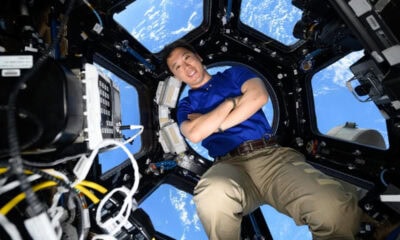
NASA astronaut Jonny Kim inside the International Space Station’s cupola, orbiting above the Indian Ocean near Madagascar.

NASA astronaut Jonny Kim poses inside the International Space Station’s cupola as it orbits 265 miles above the Indian Ocean near Madagascar. Credit: NASA


NASA Astronaut Jonny Kim Recaps Eight-Month International Space Station Mission in Live News Conference

Space exploration continues to push the boundaries of science and human achievement. This month, NASA astronaut Jonny Kim returns from an extraordinary eight-month mission aboard the International Space Station (ISS)—and he’s ready to share his story.
Event Details:
  • What: Jonny Kim’s ISS Mission Recap News Conference
  • When: Friday, Dec. 19, 3:30 p.m. EST
  • Where: NASA’s YouTube channel (also available on other NASA streaming platforms)

A Mission Marked by Discovery

Returning to Earth on Dec. 9 with Roscosmos cosmonauts Sergey Ryzhikov and Alexey Zubritsky, Kim logged an impressive 245 days in space as a flight engineer for Expeditions 72/73. The crew completed a staggering 3,920 orbits—covering nearly 104 million miles—and managed the arrival and departure of multiple spacecraft.
But it’s the science behind the mission that stands out:

Advancing Medicine and Technology

  • Bioprinted Tissues in Microgravity: Kim helped study the behavior of bioprinted tissues containing blood vessels, a step forward in space-based tissue production that could one day revolutionize patient care on Earth.
  • Remote Robotics Operations: Through the Surface Avatar study, Kim tested the remote command of multiple robots in space—work that could lead to more advanced robotic assistants for future missions to the Moon, Mars, and beyond.
  • Nanomaterials for Medicine: Kim contributed to the development of DNA-mimicking nanomaterials, opening doors for improved drug delivery and regenerative medicine both in space and at home.

How to Watch and Participate

NASA invites the public and media to join the news conference. For those interested in direct participation, media accreditation is required (details available via NASA’s newsroom). For everyone else, the event will be streamed live—no registration needed.
Learn more about International Space Station research and ongoing missions: NASA’s ISS Page

Why This Matters

Jonny Kim’s journey is a testament to the power of international collaboration and the relentless pursuit of knowledge. His work aboard the ISS is already shaping the future of medicine, robotics, and exploration—impacting lives both in space and right here on Earth.
Stay tuned to STM Daily News for more updates on science, innovation, and the stories that connect our community to the world beyond.

Want more space and science coverage? Visit STM Daily News for the latest updates, features, and community stories.

Discover more from Daily News

Subscribe to get the latest posts sent to your email.

Continue Reading

astronomy

NASA goes on an ESCAPADE – twin small, low-cost orbiters will examine Mars’ atmosphere

NASA’s ESCAPADE mission launched two small, affordable orbiters to Mars on Blue Origin’s New Glenn rocket. Discover how these twin spacecraft will study Mars’ atmosphere, test new trajectories, and usher in a new era of rapid, low-cost space exploration.

Published

on

NASA’s ESCAPADE mission launched two small, affordable orbiters to Mars on Blue Origin’s New Glenn rocket. Discover how these twin spacecraft will study Mars’ atmosphere, test new trajectories, and usher in a new era of rapid, low-cost space exploration.
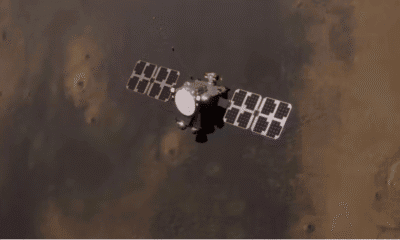
This close-up illustration shows what one of the twin ESCAPADE spacecraft will look like conducting its science operations. James Rattray/Rocket Lab USA/Goddard Space Flight Center

NASA goes on an ESCAPADE – twin small, low-cost orbiters will examine Mars’ atmosphere

Christopher Carr, Georgia Institute of Technology and Glenn Lightsey, Georgia Institute of Technology Envision a time when hundreds of spacecraft are exploring the solar system and beyond. That’s the future that NASA’s ESCAPADE, or Escape and Plasma Acceleration and Dynamics Explorers, mission will help unleash: one where small, low-cost spacecraft enable researchers to learn rapidly, iterate, and advance technology and science. The ESCAPADE mission launched on Nov. 13, 2025 on a Blue Origin New Glenn rocket, sending two small orbiters to Mars to study its atmosphere. As aerospace engineers, we’re excited about this mission because not only will it do great science while advancing the deep space capabilities of small spacecraft, but it also will travel to the red planet on an innovative new trajectory. The ESCAPADE mission is actually two spacecraft instead of one. Two identical spacecraft will take simultaneous measurements, resulting in better science. These spacecraft are smaller than those used in the past, each about the size of a copy machine, partly enabled by an ongoing miniaturization trend in the space industry. Doing more with less is very important for space exploration, because it typically takes most of the mass of a spacecraft simply to transport it where you want it to go.
A patch with a drawing of two spacecraft, one behind the other, on a red background and the ESCAPADE mission title.
The ESCAPADE mission logo shows the twin orbiters. TRAX International/Kristen Perrin
Having two spacecraft also acts as an insurance policy in case one of them doesn’t work as planned. Even if one completely fails, researchers can still do science with a single working spacecraft. This redundancy enables each spacecraft to be built more affordably than in the past, because the copies allow for more acceptance of risk.

Studying Mars’ history

Long before the ESCAPADE twin spacecraft Blue and Gold were ready to go to space – billions of years ago, to be more precise – Mars had a much thicker atmosphere than it does now. This atmosphere would have enabled liquids to flow on its surface, creating the channels and gullies that scientists can still observe today. But where did the bulk of this atmosphere go? Its loss turned Mars into the cold and dry world it is today, with a surface air pressure less than 1% of Earth’s. Mars also once had a magnetic field, like Earth’s, that helped to shield its atmosphere. That atmosphere and magnetic field would have been critical to any life that might have existed on early Mars.
A view of Mars' crater-flecked surface from above.
Today, Mars’ atmosphere is very thin. Billions of years ago, it was much thicker. ©UAESA/MBRSC/HopeMarsMission/EXI/AndreaLuck, CC BY-ND
ESCAPADE will measure remnants of this magnetic field that have been preserved by ancient rock and study the flow and energy of Mars’ atmosphere and how it interacts with the solar wind, the stream of particles that the sun emits along with light. These measurements will help to reveal where the atmosphere went and how quickly Mars is still losing it today.

Weathering space on a budget

Space is not a friendly place. Most of it is a vacuum – that is, mostly empty, without the gas molecules that create pressure and allow you to breathe or transfer heat. These molecules keep things from getting too hot or too cold. In space, with no pressure, a spacecraft can easily get too hot or too cold, depending on whether it is in sunlight or in shadow. In addition, the Sun and other, farther astronomical objects emit radiation that living things do not experience on Earth. Earth’s magnetic field protects you from the worst of this radiation. So when humans or our robotic representatives leave the Earth, our spacecraft must survive in this extreme environment not present on Earth. ESCAPADE will overcome these challenges with a shoestring budget totaling US$80 million. That is a lot of money, but for a mission to another planet it is inexpensive. It has kept costs low by leveraging commercial technologies for deep space exploration, which is now possible because of prior investments in fundamental research. For example, the GRAIL mission, launched in 2011, previously used two spacecraft, Ebb and Flow, to map the Moon’s gravity fields. ESCAPADE takes this concept to another world, Mars, and costs a fraction as much as GRAIL. Led by Rob Lillis of UC Berkeley’s Space Sciences Laboratory, this collaboration between spacecraft builders Rocket Lab, trajectory specialists Advanced Space LLC and launch provider Blue Origin – all commercial partners funded by NASA – aims to show that deep space exploration is now faster, more agile and more affordable than ever before.
NASA’s ESCAPADE represents a partnership between a university, commercial companies and the government.

How will ESCAPADE get to Mars?

ESCAPADE will also use a new trajectory to get to Mars. Imagine being an archer in the Olympics. To hit a bull’s-eye, you have to shoot an arrow through a 15-inch – 40-centimeter – circle from a distance of 300 feet, or 90 meters. Now imagine the bull’s-eye represents Mars. To hit it from Earth, you would have to shoot an arrow through the same 15-inch bull’s-eye at a distance of over 13 miles, or 22 kilometers. You would also have to shoot the arrow in a curved path so that it goes around the Sun. Not only that, but Mars won’t be at the bull’s-eye at the time you shoot the arrow. You must shoot for the spot that Mars will be in 10 months from now. This is the problem that the ESCAPADE mission designers faced. What is amazing is that the physical laws and forces of nature are so predictable that this was not even the hardest problem to solve for the ESCAPADE mission. It takes energy to get from one place to another. To go from Earth to Mars, a spacecraft has to carry the energy it needs, in the form of rocket fuel, much like gasoline in a car. As a result, a high percentage of the total launch mass has to be fuel for the trip. When going to Mars orbit from Earth orbit, as much as 80% to 85% of the spacecraft mass has to be propellant, which means not much mass is dedicated to the part of the spacecraft that does all the experiments. This issue makes it important to pack as much capability into the rest of the spacecraft as possible. For ESCAPADE, the propellant is only about 65% of the spacecraft’s mass. ESCAPADE’s route is particularly fuel-efficient. First, Blue and Gold will go to the L2 Lagrange point, one of five places where gravitational forces of the Sun and Earth cancel out. Then, after about a year, during which they will collect data monitoring the Sun, they will fly by the Earth, using its gravitational field to get a boost. This way, they will arrive at Mars in about 10 more months. This new approach has another advantage beyond needing to carry less fuel: Trips from Earth to Mars are typically favorable to save fuel about every 26 months due to the two planets’ relative positions. However, this new trajectory makes the departure time more flexible. Future cargo and human missions could use a similar trajectory to have more frequent and less time-constrained trips to Mars. ESCAPADE is a testament to a new era in spaceflight. For a new generation of scientists and engineers, ESCAPADE is not just a mission – it is a blueprint for a new collaborative era of exploration and discovery. This article was updated on Nov. 13, 2025 to reflect the ESCAPADE launch’s date and success. Christopher Carr, Assistant Professor of Aerospace Engineering, Georgia Institute of Technology and Glenn Lightsey, Professor of Space Systems Technology, Georgia Institute of Technology This article is republished from The Conversation under a Creative Commons license. Read the original article.
Space Force Faces New Challenge: Tracking Debris from Intelsat 33e Breakdown
Link: https://stmdailynews.com/space-force-faces-new-challenge-tracking-debris-from-intelsat-33e-breakdown/

Discover more from Daily News

Subscribe to get the latest posts sent to your email.

Continue Reading

Trending