

Foodie News
How beef became a marker of American identity
Beef is central to American identity, history, and culture, leading to significant consumption and environmental impacts, while efforts to promote sustainable practices and alternative diets are emerging.


Hannah Cutting-Jones, University of Oregon
Beef is one of America’s most beloved foods. In fact, today’s average American eats three hamburgers per week.
American diets have long revolved around beef. On an 1861 trip to the United States, the English novelist Anthony Trollope marveled that Americans consumed twice as much beef as Englishmen. Through war, industry, development and settlement, America’s love of beef continued. In 2022, the U.S. as a whole consumed almost 30 billion pounds (13.6 billion kilograms) of it, or 21% of the world’s beef supply.
Beef has also reached iconic status in American culture. As “Slaughterhouse-Five” author Kurt Vonnegut once penned, “Being American is to eat a lot of beef, and boy, we’ve got a lot more beef steak than any other country, and that’s why you ought to be glad you’re an American.”
In part, the dominance of beef in American cuisine can be traced to settler colonialism, a form of colonization in which settlers claim – and then transform – lands inhabited by Indigenous people. In America, this process centered on the systemic and often violent displacement of Native Americans. Settlers brought with them new cultural norms, including beef-heavy diets that required massive swaths of land for grazing cattle.
As a food historian, I am interested in how, in the 19th century, the beef industry both propelled and benefited from colonialism, and how these intertwined forces continue to affect our diets, culture and environment today.
Cattle and cowboys
Beginning in the 16th century, the first Europeans to settle across the Americas – and later, Australia and New Zealand – brought their livestock with them. A global economy built on appropriated Indigenous territories allowed these nations to become among the highest consumers and producers of meat in the world.
The United States in particular tied its burgeoning national identity and westward expansion to the settlement and acquisition of cattle-ranching lands. Until 1848, Arizona, California, Texas, Nevada, Utah, western Colorado and New Mexico were part of Mexico and inhabited by numerous tribes, Indigenous cowboys and Mexican ranchers.
The Mexican-American War, which lasted from 1846-48, led to 525,000 square miles being ceded to the United States – land that became central to American beef production. Gold, discovered in the northern Sierra by 1849, drew hundreds of thousands more settlers to the region.
The desire for cattle-supporting land played an integral role in the systematic decimation of bison populations, as well. For thousands of years, Native Americans relied on bison for physical and cultural survival. At least 30 million roamed the western United States in 1800; by 1890, 60 million head of cattle had taken their place.
Beef replaces bison
It is no coincidence that the rise of an extensive and powerful American beef industry coincided with the near-elimination of bison across the United States.
Bison populations were already in steep decline by the mid-1800s, but after the Civil War, as industrialization transformed transportation, communication and mass production, the U.S. Army actively encouraged the wholesale slaughter of bison herds.
In 1875, Philip Sheridan, a general in the U.S. Army, applauded the impact bison hunters could have on the beef industry. Hunters “have done more in the last two years, and will do more in the next year, to settle the vexed Indian question, than the entire regular army has done in the last forty years,” Sheridan said. “They are destroying the Indians’ commissary … (and so) for a lasting peace, let them kill, skin and sell until the buffaloes are exterminated. Then your prairies can be covered with speckled cattle.”
In 1884, with no hint of irony, the U.S. Department of Indian Affairs constructed a slaughterhouse on the Blackfeet Reservation in Montana and required tribal members to provide the factory’s labor in exchange for its beef.
By 1888, New York politician and sometimes rancher Theodore Roosevelt described Western stockmen as “the pioneers of civilization,” who with “their daring and adventurousness make the after settlement of the region possible.” Later, during Roosevelt’s presidency – from 1900 to 1908 – the U.S. claimed another 230 million acres of Indigenous lands for public use, further opening the West to ranching and settlement.
The Union Stock Yards in Chicago, the most modern slaughterhouse of the era, opened on Christmas Day in 1865 and marked a turning point for industrial beef production. No longer delivered “on the hoof” to cities, cattle were now slaughtered in Chicago and sent East as tinned meat or, after the 1870s, in refrigerated railcars.
Processing over 1 million head of cattle annually at its height, the Union Stock Yards, a global technological marvel and international tourist attraction, symbolized industrial progress and inspired national pride.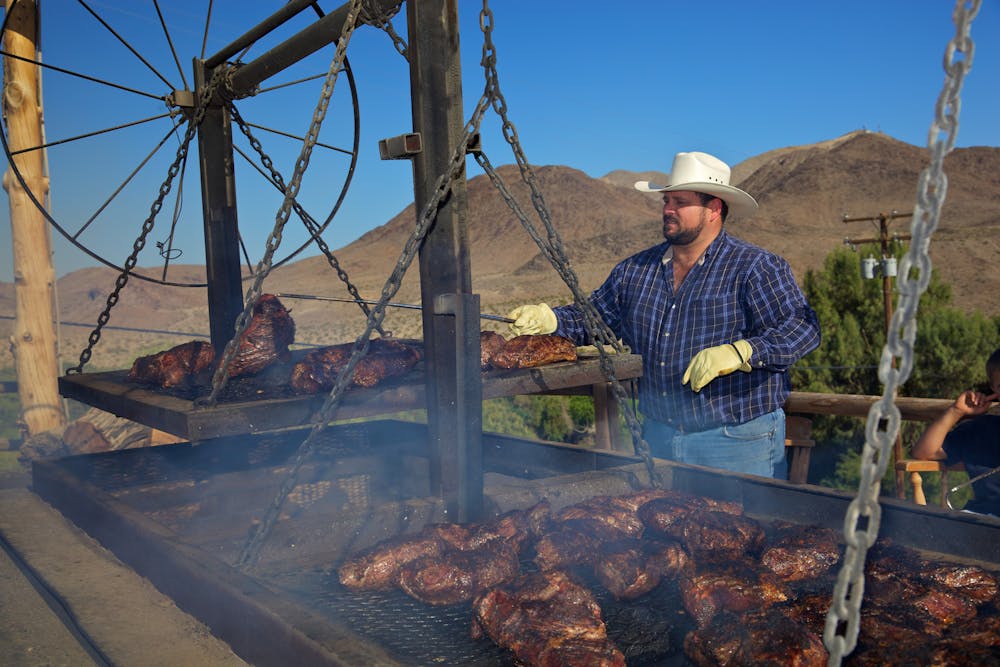
Where’s the beef?
By the turn of the 20th century, beef was solidly linked to American identity both at home and globally. In 1900, the average American consumed over 100 pounds of beef per year, almost twice the amount eaten by Americans today.
Canadian food writer Marta Zaraska argues in her 2021 book “Meathooked” that beef became a key part of the American origin myth of rugged individualism that was emerging at this time. And cowboys, working the grueling cattle drives, came to embody values linked to the frontier: self-reliance, strength and independence.
Popular for decades as a street food, America’s proudest culinary invention – the hamburger – debuted at the St. Louis World’s Fair in 1904 alongside other novelties such as Dr. Pepper and ice cream.
After World War II, suburban markets and fast-food chains dominated the American foodscape, where beef burgers reigned supreme. By the end of the century, more people around the globe recognized the golden arches of McDonald’s than the Christian cross.
At the same time, national programs reinforced food insecurity for Native Americans. In efforts to eventually dissolve reservations and open these lands to private development, for example, in 1952 the U.S. government launched the Voluntary Relocation Program, in which the Bureau of Indian Affairs persuaded many living on reservations to move to cities. The promised well-paying jobs did not materialize, and most of those who relocated traded rural for urban poverty.
The true cost of a burger

Policies encouraging settler colonialism ultimately led to more sedentary lifestyles and a dependence on fast, convenient and processed foods – such as hamburgers – regardless of the individual or environmental costs.
In recent decades, scientists have warned that industrial meat production, and beef in particular, fuels climate change and leads to deforestation, soil erosion, species extinction, ocean dead zones and high levels of methane emissions. It is also a threat to biodiversity. Nutritionist Diego Rose believes the best way “to reduce your carbon footprint (is to) eat less beef,” a view shared by other sustainability experts.
As of January 2022, about 10% of Americans over the age of 18 considered themselves vegetarian or vegan. Another recent study found that 47% of American adults are “flexitarians” who eat primarily, but not wholly, plant-based diets.
At the same time, small-scale farmers and cooperatives are working to restore soil health by reintegrating cows and other grazing animals into sustainable farming practices to produce more high-quality, environmentally friendly meat.
More encouraging still, tribes in Montana – Blackfeet Nation, Fort Belknap Indian Community, Fort Peck Assiniboine and Sioux Tribes, and South Dakota’s Rosebud Sioux – have reintroduced bison to the northern Great Plains to revive the prairie ecosystem, tackle food insecurity and lessen the impacts of climate change.
Even so, in the summer of 2024, Americans consumed 375 million hamburgers in celebration of Independence Day – more than any other food.
Hannah Cutting-Jones, Assistant Professor, Department of Global Studies; Director of Food Studies, University of Oregon
This article is republished from The Conversation under a Creative Commons license. Read the original article.
At our core, we at STM Daily News, strive to keep you informed and inspired with the freshest content on all things food and beverage. From mouthwatering recipes to intriguing articles, we’re here to satisfy your appetite for culinary knowledge.
Visit our Food & Drink section to get the latest on Foodie News and recipes, offering a delightful blend of culinary inspiration and gastronomic trends to elevate your dining experience.
Discover more from Daily News
Subscribe to get the latest posts sent to your email.





Food and Beverage
Usher in Cool Weather with Easy Pumpkin Soup
Pumpkin may be a classic fall flavor, but there’s no reason you can’t satisfy your craving for savory comfort foods all year long. Its smooth, creamy texture is a go-to ingredient for a variety of recipes, including this heartwarming and simple easy Pumpkin Soup.

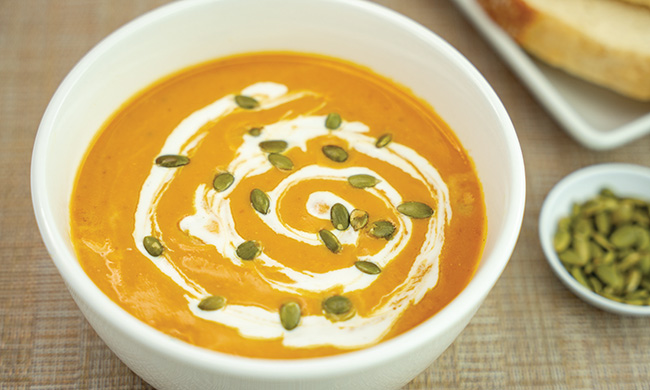
Usher in Cool Weather with Easy Pumpkin Soup
(Family Features) Pumpkin may be a classic fall flavor, but there’s no reason you can’t satisfy your craving for savory comfort foods all year long. Forget spiced latte; with its wholesome nutrition and plenty of earthy flavor, pumpkin is the perfect ingredient for all kinds of flavorful dishes. It may inspire a warm, fall feeling but it’s much more than a seasonal product. Pumpkin puree can be enjoyed all year long mixed into your favorite baked goods, stirred into chilis or even scooped into your morning smoothie. The smooth, creamy texture of Green Giant 100% Pure Pumpkin, made in the United States with premium quality in mind, is a go-to ingredient for a variety of recipes, including this heartwarming and simple Pumpkin Soup. Simply simmer the pumpkin puree with coconut cream, vegetable stock, garlic and ginger for a soup that is comfort in a bowl. Explore new ways to enjoy seasonal recipes at greengiantvegetables.com.Watch video to see how to make this recipe!
 Pumpkin
Soup Cook time: 10 minutes
Servings: 4
Pumpkin
Soup Cook time: 10 minutes
Servings: 4- 1 can (15 ounces) Green Giant 100% Pure Pumpkin
- 1/2 cup coconut cream
- 1 cup vegetable stock
- 1 tablespoon garlic paste or 1 teaspoon garlic powder
- 1 tablespoon ginger paste or 1 teaspoon ground ginger
- salt, to taste
- pepper, to taste
- coconut rice, for serving (optional)
- bread, for serving (optional)
- In saucepan over medium heat, combine pumpkin, coconut cream, vegetable stock, garlic, ginger and salt and pepper, to taste. Stir until well incorporated, cook 10 minutes.
- Serve over coconut rice or with bread, if desired.
The fate of Lucky Supermarkets in SoCalLink: https://stmdailynews.com/the-fate-of-lucky-supermarkets-in-socal/
Author

Discover more from Daily News
Subscribe to get the latest posts sent to your email.
Food and Beverage
Quick Teriyaki Chicken Bowl Recipe Using Foster Farms Precooked Strips
Quick 10-minute teriyaki chicken bowl using Foster Farms precooked chicken strips, store-bought teriyaki sauce, and rice. Fast, easy, and customizable weeknight meal.

Last Updated on December 13, 2025 by Daily News Staff
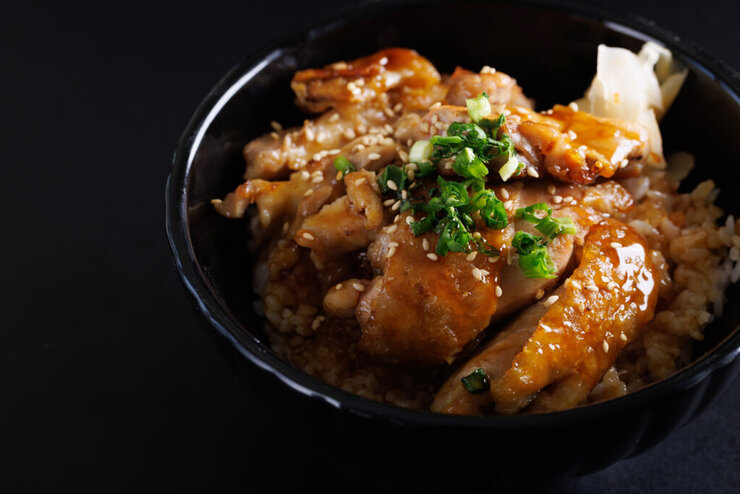
Grilled Chicken teriyaki rice (Adobe Sock)
When you need a fast, flavorful meal without the fuss, a teriyaki chicken bowl is one of the easiest dishes you can throw together. Using Foster Farms precooked chicken breast strips, store-bought teriyaki sauce, and ready-to-heat rice, you can have dinner on the table in about ten minutes — no chopping, marinating, or complicated prep required.
A Weeknight Staple
This recipe is ideal for busy weeknights, work-from-home lunches, or those moments when you want something warm and satisfying without relying on takeout. With precooked chicken, most of the work is already done for you. All you’re really doing is heating, mixing, and assembling.
“A complete teriyaki bowl in ten minutes — no takeout required.”
Ingredients
1–2 cups cooked rice (microwaveable rice packets work great) 1 cup Foster Farms precooked chicken breast strips ¼–½ cup teriyaki sauce, depending on how saucy you like it 1 cup of vegetables (fresh, steamed, or frozen) Optional toppings: sesame seeds, green onion, pineapple chunks, spicy mayo, red pepper flakes

Instructions
1. Prep the Base
Start with your rice. If you’re using microwave rice, it heats up in about 60–90 seconds. Leftover rice works just as well — just warm it in a bowl before assembling the dish.
2. Heat the Chicken
Foster Farms precooked chicken strips make this step incredibly simple. Just heat them in a skillet for a couple of minutes or microwave them for under a minute. Add a few tablespoons of teriyaki sauce and stir to coat the chicken evenly.
3. Add the Vegetables
This bowl works with almost any vegetable you enjoy. Frozen stir-fry mixes are quick and convenient, while steamed broccoli or carrots add color and crunch. Toss the veggies into the pan with the chicken so they absorb the teriyaki flavor.
4. Build Your Bowl
Add your rice to a serving bowl and top it with the teriyaki chicken and vegetables. If you want a richer flavor, drizzle on a little extra teriyaki sauce.
5. Customize With Toppings
Finish with sesame seeds, sliced green onions, or a drizzle of spicy mayo. Pineapple adds a sweet touch that pairs perfectly with teriyaki, giving your bowl a subtle Hawaiian twist.
👉 Download the Teriyaki Chicken Bowl Recipe PDF
Why This Recipe Works
What makes this meal so appealing is its flexibility. Use whatever rice you have on hand, swap in your favorite veggies, and adjust the sauce level to your own taste. It’s fast, affordable, and customizable — ideal for anyone looking to simplify their cooking without sacrificing flavor.
Do you have your own fast weeknight recipes or kitchen shortcuts? Share them with us in the comments or tag @STM Daily News on social media. We love spotlighting great ideas from our readers!
The fate of Lucky Supermarkets in SoCal
Further Reading & Resources
Discover more from Daily News
Subscribe to get the latest posts sent to your email.
Food and Beverage
Gingerbread Honey Cupcakes: A Sweet Spin on Tradition
Bake up holiday joy with Gingerbread Honey Cupcakes! This easy recipe swaps molasses for raw honey and features a luscious honey cream cheese frosting—perfect for festive gatherings.

Gingerbread Honey Cupcakes: A Sweet Spin on Tradition
(Family Features) In a holiday season crowded with everything from mouthwatering cakes, cookies and pies to “fa-la-la-la” forgettable fruitcakes, the dessert table can bring you comfort and joy or sweet-tooth dismay. Here’s the secret to spicy, sweet cupcakes that “sleigh” at the dessert table: These gingerbread cupcakes with honey cream cheese frosting swap molasses for raw honey to deliver bold flavor and buzzworthy bragging rights. Just like most legendary desserts, every drop of Busy Bee Raw Honey comes with a story. Sourced entirely in the U.S. and tested for safety, quality and three times for purity, it comes with a peel-away back label and Real Honey Code so you can trace your honey’s journey from flower to hive to your holiday dessert table. To bring the journey to your home this holiday season, visit BusyBeeHoney.com to find more inspiration, information and availability.
Gingerbread Cupcakes with Honey Cream Cheese Frosting
Yield: 12 cupcakes- 1 3/4 cups all-purpose flour
- 1/2 cup packed dark brown sugar
- 1 1/2 teaspoons baking powder
- 2 teaspoons ground ginger
- 1 teaspoon ground cinnamon
- 1/8 teaspoon ground cloves
- 1/2 teaspoon salt
- 1/2 cup (1 stick) unsalted butter, softened
- 1/2 cup Busy Bee Raw Honey
- 1 egg, lightly beaten
- 1/2 cup buttermilk, at room temperature
- 1 teaspoon vanilla extract
- 8 ounces cream cheese, softened
- 1/2 cup (1 stick) unsalted butter, softened
- 1/4 cup Busy Bee Raw Honey
- 1 teaspoon vanilla extract
- 4-6 cups powdered sugar
- Preheat oven to 350 F.
- Line 12 regular-size muffin cups with paper baking cups.
- In medium bowl, whisk flour, brown sugar, baking powder, ginger, cinnamon, cloves and salt.
- In large bowl, using hand or stand mixer, beat softened butter and honey until smooth and slightly fluffy, 1-2 minutes. Beat in egg then mix in buttermilk and vanilla until combined.
- Add dry ingredients to wet mixture and stir gently until no streaks of flour remain; don’t overmix.
- Divide batter evenly among muffin cups, filling each about two-thirds full.
- Bake 20-22 minutes, or until toothpick inserted in center of cupcake comes out clean.
- Let cupcakes cool in pan about 5 minutes then transfer to wire rack to cool completely.
- To make frosting: Beat cream cheese and butter until smooth and creamy. Add honey and vanilla then gradually beat in powdered sugar until fluffy, spreadable and reaching desired sweetness. Chill for firmer consistency before piping or spreading, if desired.
At our core, we at STM Daily News, strive to keep you informed and inspired with the freshest content on all things food and beverage. From mouthwatering recipes to intriguing articles, we’re here to satisfy your appetite for culinary knowledge.
Visit our Food & Drink section to get the latest on Foodie News and recipes, offering a delightful blend of culinary inspiration and gastronomic trends to elevate your dining experience. https://stmdailynews.com/food-and-drink/
Discover more from Daily News
Subscribe to get the latest posts sent to your email.





