

love and romance
Skip the Reservation: Kroger’s Surf-and-Turf Deals Make Valentine’s Day Easy (and Affordable)

Valentine’s Day doesn’t have to mean fighting for a last-minute reservation, overpaying for a fixed menu, or rushing through dinner because your table is booked for the next couple. Kroger is leaning into a simpler (and honestly more romantic) idea for 2026: bring date night home with a restaurant-style surf and turf dinner—plus flowers, dessert, and weekly deals that keep the whole plan budget-friendly.

Kroger shares expert meat and seafood tips, special offers for date night at home
In a new announcement released Feb. 10, The Kroger Co. says it’s making it easy for couples to pull off an impressive meal at home with premium meat and seafood options, expert counter tips, and limited-time savings starting Feb. 11.
A steakhouse-style dinner—without the steakhouse price tag
Kroger’s pitch is straightforward: quality ingredients are the foundation of a great meal, and shoppers can get “night out” vibes from the meat and seafood counter without the hassle.
“Quality ingredients are the foundation of any romantic dinner and Kroger consistently delivers on quality and affordability,” said Carlo Baldan, Group Vice President of Fresh Merchandising at Kroger.
To help home chefs level up, Kroger’s culinary experts shared practical tips for building a surf-and-turf plate that looks (and tastes) like it came from a restaurant.
Kroger’s surf-and-turf tips: what to buy and how to nail it
1) Choosing the right steak
If you’re shopping the meat case and want a tender, flavorful steak, Kroger recommends looking for marbling—those thin white flecks throughout the cut. More marbling typically means more flavor and tenderness.
For surf and turf, Kroger points to classic picks:
- Ribeye
- New York strip
- Filet mignon
- Sirloin
For seasoning, Kroger suggests Private Selection® Cracked Peppercorn seasoning (a blend designed to hit that steakhouse-style balance of salt, garlic, and pepper). One pro move: salt your steak 30–60 minutes before cooking to help deepen the seasoning and improve the crust.
2) Lobster tails and crab legs: what to look for
Seafood can feel intimidating, but Kroger’s guidance keeps it simple:
- For lobster tails, look for solidly frozen tails with no heavy ice crystals.
- Aim for a 4–6 oz. tail, which tends to cook more evenly and stay tender.
- For crab legs, look for intact shells and minimal ice buildup.
3) Sides and finishing touches that make it feel “special”
Surf and turf doesn’t need complicated sides—just the right supporting cast:
- Roasted asparagus or broccolini
- Garlic mashed potatoes
- A salad with citrus vinaigrette
To finish like a steakhouse, Kroger recommends a quick garlic-herb butter baste after cooking your steak. For seafood, keep it clean and classic: melted butter, fresh lemon, and a light sprinkle of salt and parsley.
Don’t sleep on the in-store experts
If you’re not sure what to buy (or how much), Kroger is also encouraging customers to use the best resource in the building: the butchers behind the meat and seafood counters. They can help with portion sizes, selecting cuts, and picking the right seafood for a special occasion.
For more ideas, Kroger says shoppers can visit its blog for surf-and-turf recipes and inspiration.
Flowers delivered on-demand (and a deal to go with it)
Dinner is only part of the Valentine’s Day equation. Kroger—America’s largest florist—also highlights on-demand floral delivery from more than 1,700 locations nationwide through DoorDash and Uber Eats.
Orders are prepared and packed by in-store floral associates, then delivered by couriers straight to the recipient’s door. Kroger is also promoting a limited-time offer: $25 off $75 on the Bloom Haus storefront on DoorDash and Uber Eats through Feb. 14.
Dessert is handled, too
To round out the night, Kroger is pointing shoppers to its bakery for Valentine’s-ready sweets, including:
- Chocolate dipped strawberries
- Cakes
- New cupcake bouquets
Valentine’s week deals to watch (starting Feb. 11)
Kroger’s announcement includes a lineup of weekly promotions and digital deals designed to make the surf-and-turf plan (and the rest of the week’s grocery run) more affordable. Highlights include:
- Boneless strip steak: $9.99 per pound
- Wild caught lobster tails: 2 for $10
- Wild caught snow crab clusters: as low as $9.99 per pound with a digital or in-store accessible coupon
- Kroger Russet Potatoes: $1.99 for five pounds
- 20% off any six bottles of wine
Plus, additional weekly staples and BOGOs, including blueberries, apples, cereals, cheese, yogurt, cage-free eggs, and ground chuck.
Prices are valid beginning Feb. 11, and prices/products may vary by geography.
The takeaway
Kroger’s Valentine’s Day message is clear: skip the reservation, keep the romance, and build a date-night meal around premium meat and seafood—without turning it into an all-day project. Add flowers delivered on-demand, a bakery dessert, and a few well-timed weekly deals, and you’ve got a full Valentine’s plan that feels elevated but still practical.
At our core, we at STM Daily News, strive to keep you informed and inspired with the freshest content on all things food and beverage. From mouthwatering recipes to intriguing articles, we’re here to satisfy your appetite for culinary knowledge.
Visit our Food & Drink section to get the latest on Foodie News and recipes, offering a delightful blend of culinary inspiration and gastronomic trends to elevate your dining experience. https://stmdailynews.com/food-and-drink/
Authors


Discover more from Daily News
Subscribe to get the latest posts sent to your email.


love and romance
Love Your Space: 4 Valentine’s Day Home Decor Ideas
Valentine’s Day offers an opportunity to enhance home decor with love-themed touches. Key ideas include using a classic red and pink palette, incorporating soft lighting and inviting textures, adding fresh flowers and heartfelt accents, and personalizing decor with meaningful items. Each element contributes to a romantic and welcoming atmosphere.

Last Updated on February 14, 2026 by Daily News Staff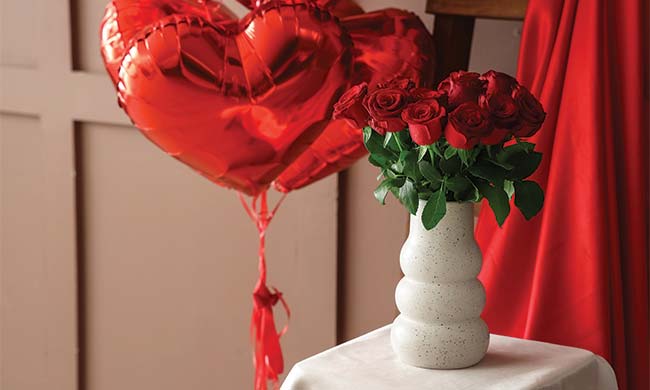
Love Your Space: 4 Valentine’s Day Home Decor Ideas
(Family Features) From planning a romantic night in with your significant other to hosting friends for Galentine’s Day, Valentine’s Day is a perfect opportunity to fill your home with love and heartfelt style.
Whether you add subtle accents or bold pops of color, decorating for the season of love is about adding intentional touches that make your spaces feel special.
1. Choose a Valentine’s Palette
The classic red and pink motif is a perfect starting point. A few heart-shaped throw pillows, blush pink accessories or a rich red accent blanket can capture the spirit without overwhelming. If bold colors don’t match your current design style, ground them with neutrals like soft whites, creams or grays to create a romantic look that feels intentional and cohesive.
2. Set the Mood with Lighting and Texture
Soft lighting – think string lights draped along a mantel, clusters of warm-hued candles or a table lamp with a rosy glow – can make rooms feel cozier, as can layering sensual textures like velvet pillows, knit throws and lace or crochet accents. These elements feel inviting and chic, creating a relaxed, intimate ambience perfect for a celebratory evening at home.
3. Fresh Florals and Heartfelt Accents
A timeless Valentine’s Day tradition, fresh flowers can bring life, color and fragrance to any room. A vase of red roses, pink tulips or mixed seasonal blooms can serve as a centerpiece on your dining room table or entry console. For an added seasonal touch, consider heart-shaped garlands or DIY paper hearts on shelves, mirrors or around picture frames.
4. Personalize With Love
Much like heart-warming gifts, the most meaningful decor often has a personal story. Frame a favorite photo, display a handwritten love note or incorporate a treasured keepsake into your Valentine’s arrangement to make your space feel uniquely yours.
For more ideas to celebrate love every time you walk through the door, visit eLivingtoday.com.
Photo courtesy of Shutterstock
SOURCE:
Discover more from Daily News
Subscribe to get the latest posts sent to your email.
adult relationships
How Valentine’s Day was transformed by the Industrial Revolution and ‘manufactured intimacy’

Last Updated on February 14, 2026 by Daily News Staff
Christopher Ferguson, Auburn University
When we think of Valentine’s Day, chubby Cupids, hearts and roses generally come to mind, not industrial processes like mass production and the division of labor. Yet the latter were essential to the holiday’s history.
As a historian researching material culture and emotions, I’m aware of the important role the exchange of manufactured greeting cards played in the 19th-century version of Valentine’s Day.
At the beginning of that century, Britons produced most of their valentines by hand. By the 1850s, however, manufactured cards had replaced those previously made by individuals at home. By the 1860s, more than 1 million cards were in circulation in London alone.
The British journalist and playwright Andrew Halliday was fascinated by these cards, especially one popular card that featured a lady and gentleman walking arm-in-arm up a pathway toward a church.
Halliday recalled watching in fascination as “the windows of small booksellers and stationers” filled with “highly-coloured” valentines, and contemplating “how and where” they “originated.” “Who draws the pictures?” he wondered. “Who writes the poetry?”
In 1864 he decided to find out.
Manufactured intimacy
Today Halliday is most often remembered for his writing on London beggars in a groundbreaking 1864 social survey, “London Labour and the London Poor.” However, throughout the 1860s he was a regular contributor to Charles Dickens’ popular journal “All the Year Round,” in which he entertained readers with essays addressing various facets of ordinary British daily existence, including family relations, travel, public services and popular entertainments.
In one essay for that journal – “Cupid’s Manufactory,” which was later reprinted in 1866 in the collection “Everyday Papers” – Halliday led his readers on a guided tour of one of London’s foremost card manufacturers.
Inside the premises of “Cupid and Co.,” they followed a “valentine step by step” from a “plain sheet of paper” to “that neat white box in which it is packed, with others of its kind, to be sent out to the trade.”
Touring ‘Cupid’s Manufactory’
“Cupid and Co.” was most likely the firm of Joseph Mansell, a lace-paper and stationary company that manufactured large numbers of valentines between the 1840s and 1860s – and also just happened to occupy the same address as “Mr. Cupid’s” in London’s Red Lion Square.
The processes Halliday described, however, were common to many British card manufacturers in the 1860s, and exemplified many industrial practices first introduced during the late 18th century, including the subdivision of tasks and the employment of women and child laborers.
Halliday moved through the rooms of “Cupid’s Manufactory,” describing the variety of processes by which various styles of cards were made for a range of different people and price points.
He noted how the card with the lady and gentleman on the path to the church began as a simple stamped card, in black and white – identical to one preserved today in the collections of the London Museum – priced at one penny.
A portion of these cards, however, then went on to a room where a group of young women were arranged along a bench, each with a different color of “liquid water-colour at her elbow.” Using stencils, one painted the “pale brown” pathway, then handed it to the woman next to her, who painted the “gentleman’s blue coat,” who then handed it to the next, who painted the “salmon-coloured church,” and so forth. It was much like a similar group of female workers depicted making valentines in the “Illustrated London News” in the 1870s.
These colored cards, Halliday noted, would be sold for “sixpence to half-a-crown.” A portion of these, however, were then sent on to another room, where another group of young women glued on feathers, lace-paper, bits of silk or velvet, or even gold leaf, creating even more ornate cards sometimes sold for 5 shillings and above.
All told, Halliday witnessed “about sixty hands” – mostly young women, but also “men and boys,” who worked 10 hours a day in every season of the year, making cards for Valentine’s Day.
Yet, it was on the top floor of the business that Halliday encountered the people who arguably fascinated him the most: the six artists who designed all the cards, and the poets who provided their text – most of whom actually worked offsite.
Here were the men responsible for manufacturing the actual sentiments the cards conveyed – and in the mid-19th century these encompassed a far wider range of emotions than the cards produced by Hallmark and others in the 21st century.
A spectrum of ‘manufactured emotions’
Many Victorians mailed cards not only to those with whom they were in love, but also to those they disliked or wished to mock or abuse. A whole subgenre of cards existed to belittle the members of certain trades, like tailors or draper’s assistants, or people who dressed out of fashion.

Cards were specifically designed for discouraging suitors and for poking fun of the old or the unattractive. While some of these cards likely were exchanged as jokes between friends, the consensus among scholars is that many were absolutely intended to be sent as cruel insults.
Furthermore, unlike in the present day, in the 19th century those who received a Valentine were expected to send one in return, which meant there were also cards to discourage future attentions, recommend patience, express thanks, proclaim mutual admiration, or affirm love’s effusions.
Halliday noted the poet employed by “Cupid’s” had recently finished the text for a mean-spirited comic valentine featuring a gentleman admiring himself in a mirror:
Looking at thyself within the glass,
You appear lost in admiration;
You deceive yourself, and think, alas!
You are a wonder of creation.
This same author, however, had earlier completed the opposite kind of text for the card Halliday had previously highlighted, featuring the “lady and gentleman churchward-bound”:
“The path before me gladly would I trace,
With one who’s dearest to my constant heart,
To yonder church, the holy sacred place,
Where I my vows of Love would fain impart;
And in sweet wedlock’s bonds unite with thee,
Oh, then, how blest my life would ever be!”
These were very different texts by the very same man. And Halliday assured his readers “Cupid’s laureate” had authored many others in every imaginable style and sentiment, all year long, for “twopence a line.”
Halliday showed how a stranger was manufacturing expressions of emotions for the use of other strangers who paid money for them. In fact, he assured his readers that in the lead up to Valentine’s Day “Cupid’s” was “turning out two hundred and fifty pounds’ worth of valentines a week,” and that his business was “yearly on the increase.”
Halliday found this dynamic – the process of mass producing cards for profit to help people express their authentic emotions – both fascinating and bizarre. It was a practice he thought seemed like it ought to be “beneath the dignity of the age.”
And yet it thrived among the earnest Victorians, and it thrives still. Indeed, it remains a core feature of the modern holiday of Valentine’s Day.
This year, like in so many others, I will stand at a display of greeting cards, with many other strangers, as we all try to find that one card designed by someone else, mass-produced for profit, that will convey our sincere personal feelings for our friends and loved ones.
Christopher Ferguson, Associate Professor of History, Auburn University
This article is republished from The Conversation under a Creative Commons license. Read the original article.
The Legacy of the Datsun 510: How a Game-Changing Car Helped Nissan Conquer the US Market
Discover more from Daily News
Subscribe to get the latest posts sent to your email.
adult relationships
‘For the very first time I really enjoyed sex!’ − how lesbian escort agencies became a form of self-care in Japan
The Lesbian Girls Club in Japan offers legal female-to-female sex services, addressing women’s unmet sexual desires while challenging traditional views on female sexuality and intimacy.

Marta Fanasca, Università di Bologna
In Japanese society, prostitution is often framed as a necessary evil – a way to maintain social harmony by providing men with an outlet for their pent-up sexual desires.
While there are a number of issues with this view – such as the implication that men are inherently unable to control their sexual impulses – it also has a critical flaw: It frames prostitution as something that only men want or need.
In Japan, female sexuality is often seen through the narrow lens of heterosexual romance and motherhood.
“Rezu fūzoku” upends this view.
Rezu fūzoku, which roughly translates to “lesbian sexual entertainment,” refers to agencies where female sex workers provide sex to female clients. And in Japan, it’s entirely legal. I began investigating female-to-female commercial sex and escort services in 2023. After initially studying the phenomenon of female-to-male crossdressers offering nonsexual, romantic dates to female clients, I decided to expand the investigation to focus on clients seeking sex and romance. The names of the sex workers and clients I interviewed in my research have been changed in this article to protect their anonymity.
Tapping into a niche market
Unlike in many countries that historically criminalized homosexual acts, Japan only briefly outlawed them in the 1870s, during an era of rapid Western-inspired legal reforms.
After that period, the country did not reintroduce laws criminalizing homosexual acts, allowing same-sex relationships to exist largely without legal interference – even if they remained frowned upon in Japanese society.
Furthermore, homosexual prostitution has never been illegal. Japan did enact a strict anti-prostitution law in 1956 that bans the practice, which it exclusively defines as penetrative, paid sex between a man and a woman. As a result, any paid-for activity that falls outside of this definition – such as homosexual sex – is not considered illegal.
For my research, I interviewed a man named Obō, the founder of the Lesbian Girls Club, an agency with branches in Osaka and Tokyo providing female sex workers for female clients.
Obō started out his career as a web developer but soon became burned out and disillusioned.
“I wanted to start my own business, and since I was building websites for several adult entertainment shops, I decided to try something similar. It quickly became clear that while the market was flooded with services for men, there were almost none for women.”
So Obō opened Lesbian Girls Club in 2007, an agency arranging meetups between sex workers and female clients in hotels, rather than at a brothel. Since then, it’s become an institution in Japan, with some of his original sex workers still working for Obō.
A diverse clientele
Initially a niche market, rezu fūzoku gained wider attention when the manga artist Nagata Kabi used Obō’s agency and later chronicled her experience in her work “My Lesbian Experience with Loneliness.”
The award-winning manga, which was also released in the U.S. and Europe, introduced the service to many Japanese women who hadn’t previously known about it.
Despite the term “rezu” – lesbian – in the name, Obō’s agency welcomes women of all sexual orientations.
“Some of our clients are lesbians,” he told me. “But many are straight, also married. Most are between 26 and 35 years old, though we also have clients in their 60s and 70s.”
Many Japanese women still find it difficult to explore their sexuality and express their sexual desires, even with their partners. This often leads to unsatisfactory sexual experiences, which can pave the way for sexless relationships– something which is increasingly commonplace in Japan and a situation that many users of rezu fūzoku services shared with me.
As Yuriko, a 35-year-old heterosexual client of rezu fūzoku, explained, “For the very first time I really enjoyed sex! Rezu fūzoku gave me the chance to try new things and to feel good.”
Sex is wellness
In my interviews, the term “iyashi” often popped up.
It means “healing” and refers to activities or services that provide relief from daily stress and negative feelings. Just as yoga classes or massages are seen as forms of iyashi, sex – especially commercial sex – is also branded this way in Japan.
“Men do not understand women and their bodies,” Yuriko said. “But sexuality is a fundamental part of life, and ignoring it only leads to frustration and dissatisfaction. Sex is iyashi.”
The use of this word shows how prostitution in Japan is not always viewed as something to be ashamed of but can also be seen as a form of self-care.
For instance, the practice of dispatching a sex worker to a hotel where she meets the client is called in Japanese “deriheru,” or delivery health, stressing the connection with the iyashi realm. Also, a 90-minute session with a professional sex worker for women is often called “wellness course,” which ties sex to physical and psychological well-being.
Sex workers themselves also emphasize the connection between their occupation and iyashi practices, often referring to themselves as “therapists” or “cast” and downplaying the sexual aspects of their work, instead highlighting the wellness-related ones. Aware of the positive impact their services have on women, many of them expressed pride in their work during our interviews.
“It’s rewarding,” Moe, who has been in the industry for six years, told me. “When a customer tells me she was really struggling but now feels she can try a little harder because we met, I feel glad I chose this job.”
Her colleague, Makiko, agreed. “I am proud of this job. It’s very important to me, and I believe it’s quite needed in society.”
Despite the widespread stigma against sex workers in Japanese society, the legal status of rezu fūzoku services offers employees greater protection and ensures clear working conditions.
And as a marker of how the industry has grown, Tokyo alone is currently home to over 10 rezu fūzoku agencies, according to my research.
‘A refuge for the heart’
Yet, despite the existence of services aimed at women’s sexual well-being, gender inequality remains rampant in Japan.
Women still face significant social and economic barriers. According to the World Economic Forum’s 2024 Global Gender Gap Report, Japan ranks 118th out of 146 countries for gender equality and holds the lowest position among G7 nations.
By catering to women’s sexual desires outside of the traditional heterosexual framework, rezu fūzoku challenges conventional narratives about women’s sexuality. In a country that has been experiencing falling marriage and birth rates, listening to women and understanding their needs has become increasingly important.
This legal form of sex work clearly fills a need, offering women a safe place to try new things and entrust their sexual pleasure to an expert – who happens to be another woman. One thing that stood out in my research was how popular the service was among women in heterosexual relationships who seemed eager to explore desires that may be difficult to share with a partner.
But what female clients seek often goes beyond sex itself. Many women simply want intimacy – being hugged, cuddled and cared for in a way that is missing not only in the lives of single women but also in those of women in relationships.
“I use this service for comfort and healing,” said Sachi, a 42-year-old woman who’s married to a man. “It is a kind of refuge for the heart offering emotional richness.”
Marta Fanasca, Marie Curie Global Fellow, Università di Bologna
This article is republished from The Conversation under a Creative Commons license. Read the original article.
Discover more from Daily News
Subscribe to get the latest posts sent to your email.





